Chindia Alert: You’ll be Living in their World Very Soon
aims to alert you to the threats and opportunities that China and India present. China and India require serious attention; case of ‘hidden dragon and crouching tiger’.
Without this attention, governments, businesses and, indeed, individuals may find themselves at a great disadvantage sooner rather than later.
The POSTs (front webpages) are mainly 'cuttings' from reliable sources, updated continuously.
The PAGEs (see Tabs, above) attempt to make the information more meaningful by putting some structure to the information we have researched and assembled since 2006.
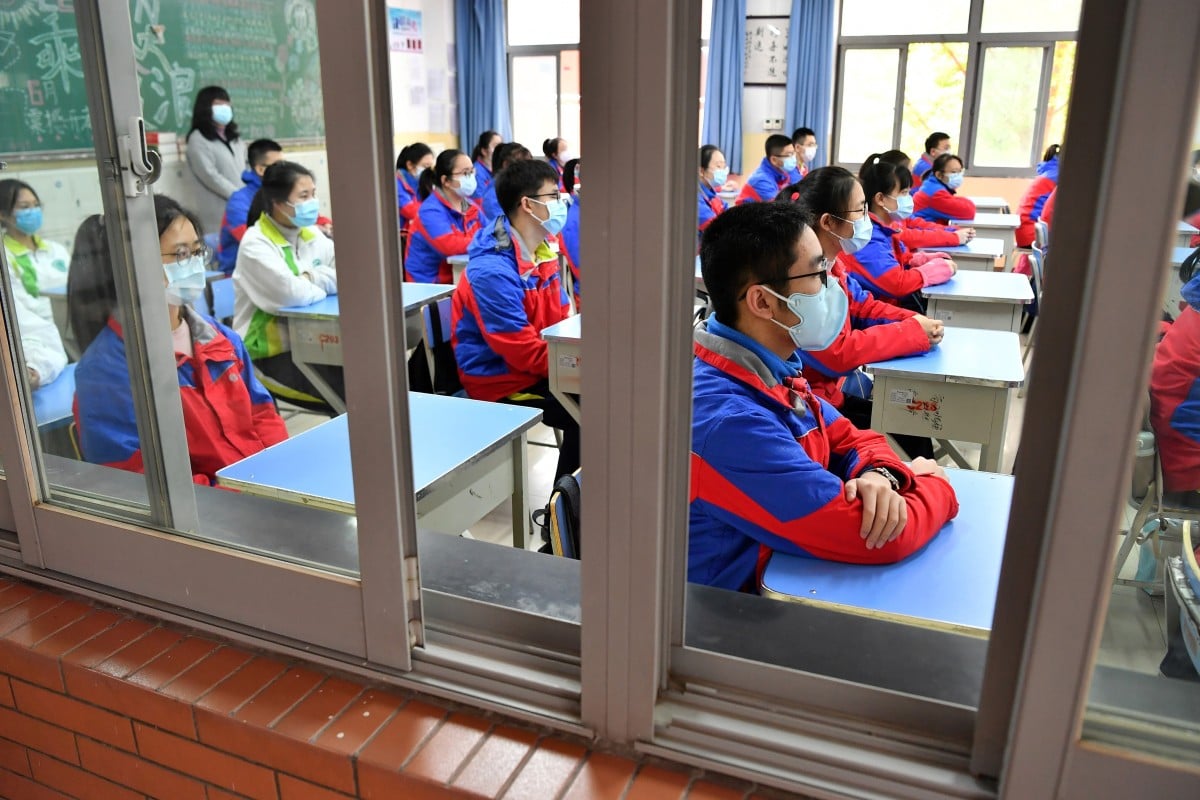
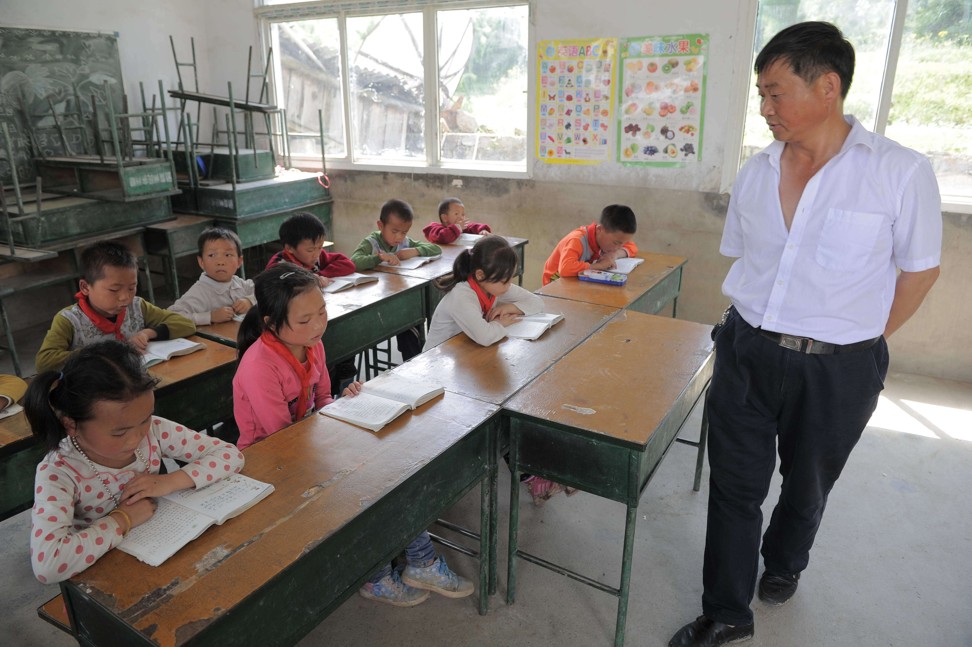
Students attend a class at a primary school in Dahua Yao Autonomous County, south China’s Guangxi Zhuang Autonomous Region, May 29, 2020. Guangxi, one of the major battlefields in China’s poverty alleviation campaign, has been making painstaking efforts to improve education for poverty-stricken children, as schooling is believed to be the best way to empower the youngsters to lift their families out of poverty. The region has taken various measures in this regard, including granting students stipends, improving school facilities and nutritional conditions of rural students, and helping more students from rural and impoverished areas have access to higher education. As many households from inhospitable areas have moved into relocation sites built for poverty alleviation in the county seats, relocated children can study in schools in and near resettlements, instead of trekking hours back and forth in mountains for schooling. The faculty is a key to education. The regional government has called in capable teachers to help schools in rural areas, and has been committed to guaranteeing payment to teachers and filling vacancies of teachers in rural areas through special programs. Reducing poverty must begin with reducing ignorance. Therefore, giving rural children a good education is an important task in poverty relief, and also a crucial means to stop poverty being passed on through generations.
Xie Haifeng’s story is one of luck and resilience and he has made it his mission to help others through adversity
Professional dancer owes part of his success to the city of Hong Kong and one of its doctors who helped survivors through recovery
Xie Haifeng was 15 when he lost his leg in one of modern China’s most devastating disasters. Photo: Handout
When the rumbling began, Xie Haifeng thought someone was shaking his bed. Perhaps one of the other 800 children in the school dormitory was being naughty. Or maybe it was a small quake. Then came the unmistakable sound of screams.
Xie, then a 15-year-old pupil at Muyi Town Middle School in the southwestern Chinese province of Sichuan, started running. He fell as the dorm building collapsed around him. When he tried to stand up, he realised something was missing. His left leg was gone.
What Xie thought was a small quake turned out to be one of the most devastating disasters in modern Chinese history.
The Sichuan earthquake of May 2008 left at least 87,000 people dead and shook the country to its core. It was less than three month before Beijing would host its first Olympic Games, an opportunity to show the world its strength and ambition.
Instead, 7,444 schools had crumbled like tofu in an area known to be seismically active. Their rubble was a stark demonstration of the weak foundation of China’s progress and its tragic consequences. At Xie’s school, the shoddily built walls and ceilings crushed 600 children. Only 300 survived.
It still frightens me to recall the earthquake.Xie Haifeng, dancer
Xie considers himself lucky. “If I had run just one second more slowly, I would have been dead. If I had run one second faster, I would have been completely fine. But anyway, I am lucky to be alive,” he said. A dozen years later, his story is also one of resilience. Defying all the odds, Xie is now a professional dancer for a troupe in Sichuan and has made it his mission to help others through adversity.
The journey from his hospital bed to the stage was long and difficult and even though many years have passed, “it still frightens me to recall the earthquake”. But, he said: “I have forgiven fate and accepted the reality that I have only one leg.”
Xie’s trauma was a particularly difficult blow to his family. His older sister was already handicapped, after injuring her arm in an accident. When his mother, a migrant worker in the northwestern province of Gansu, arrived at the hospital a few days after the earthquake, she had no idea of the extent of Xie’s condition.
“When I woke up in the evening, I saw my mother weeping beside my bed. I told myself I should be strong,” Xie said, adding that his mother initially thought he had suffered only bruises. He was sent for treatment to a hospital in the prosperous southern city of Shenzhen, along with other survivors who had been left with disabilities by the earthquake.
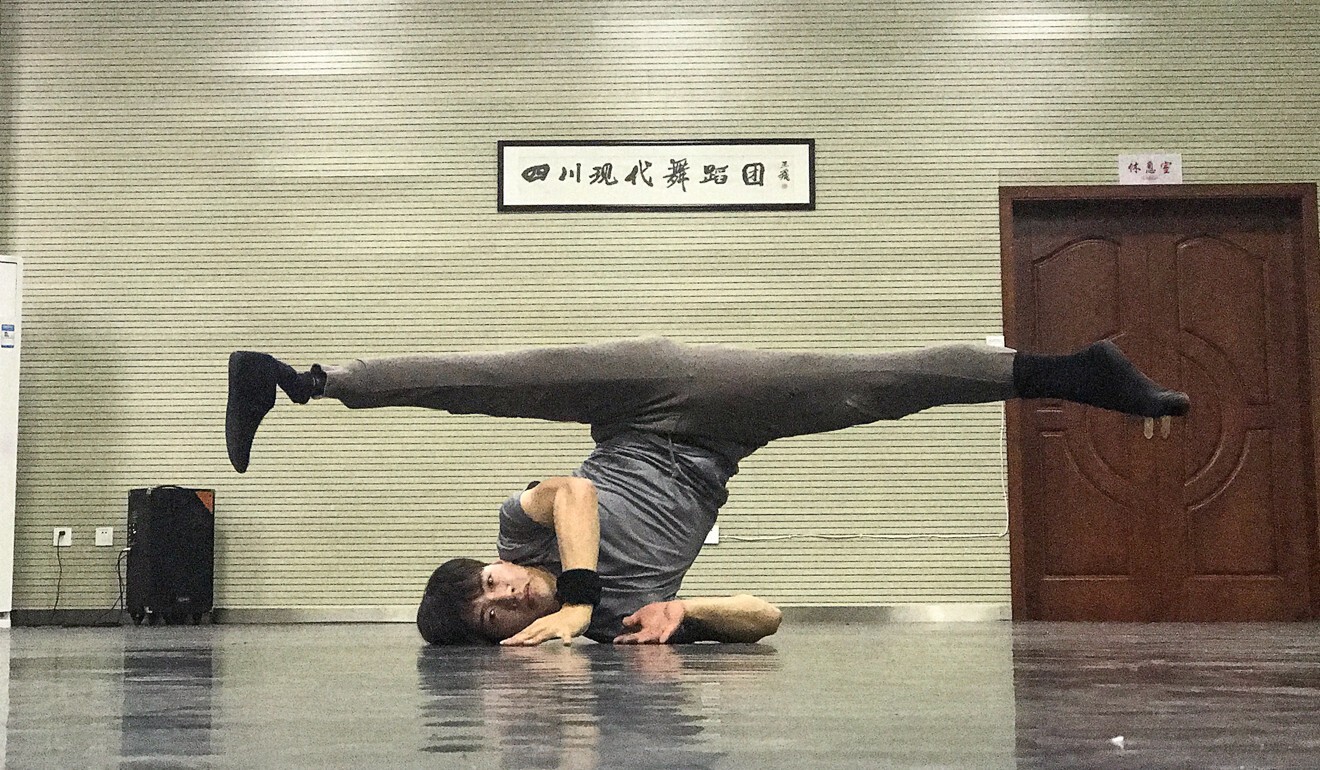
Defying all the odds, Xie Haifeng is now a professional dancer. Photo: Handout
It was there that Xie was inspired to make the most of his life. A team of athletes visited the hospital and he was shocked to see one of them, a volleyball player, walking on a prosthetic leg.
Xie began to wear a prosthesis and after rehabilitation training returned to his hometown in 2009 where he was admitted to Qingchuan High School. At first, he was self-conscious and felt inferior to his peers. He did not dare to wear shorts in summer and said he seldom talked to the other students.
The following year he was introduced to members of the Chengdu Disabled People’s Art Troupe, where he found a new and welcoming home. Xie quit school and joined the troupe, despite his parents’ opposition. They were convinced study was the only way for rural students like their son to get out of poverty.
Xie learned Sichuan opera and was soon performing its art of bian lian, or
– a skill that requires rapid mask changes in a dazzling sleight of hand – on stage until the troupe was disbanded in 2011, leaving him unemployed for six months.
China marks 10-year anniversary of Sichuan earthquake
But the misfortune led to an improbable opportunity when he was hired by the Sichuan Provincial Disabled People’s Art Troupe and trained to dance. At 19, and with no experience, Xie found the training far more difficult than those who had started at the more usual age of five or six.
His body was too stiff, he said, and in the first months he spent 10 hours each day just stretching and building flexibility. It was just the beginning of a long and often arduous process.
“That agony is too much to be described,” Xie said about the pain of dancing on a prosthetic leg. “During the first six months’ training, I broke three artificial legs.”
More than once, he wondered whether he had chosen the right path. But, ultimately, his gruelling effort paid off and Xie has performed in Singapore, Hong Kong and Macau. In 2013, he won a gold medal at a national dancing competition for people with disabilities.
“My dances won me applause and recognition from the audience. I feel relieved and I think my heart belongs to the stage,” he said.
Xie broke three artificial legs during his first six months of dance training. Photo: Handout
Xie said he owed part of his success to Hong Kong which in 2008 donated HK$20 billion (US$2.5 billion) in aid to Sichuan and sent doctors to treat the injured. Among the volunteers was Poon Tak-lun, a Hong Kong orthopaedist who flew to Sichuan every two weeks from 2008 to 2013 to treat patients.
At a gala show in 2013 to express gratitude from the people of Sichuan to Hong Kong, Xie met Poon and the two became good friends, thanks to their common interest in the arts.
“Dr Poon promised to pay for all the costs of installing and repairing my artificial leg in the future. He told me to focus on dancing without worrying about the leg’s costs,” Xie said.
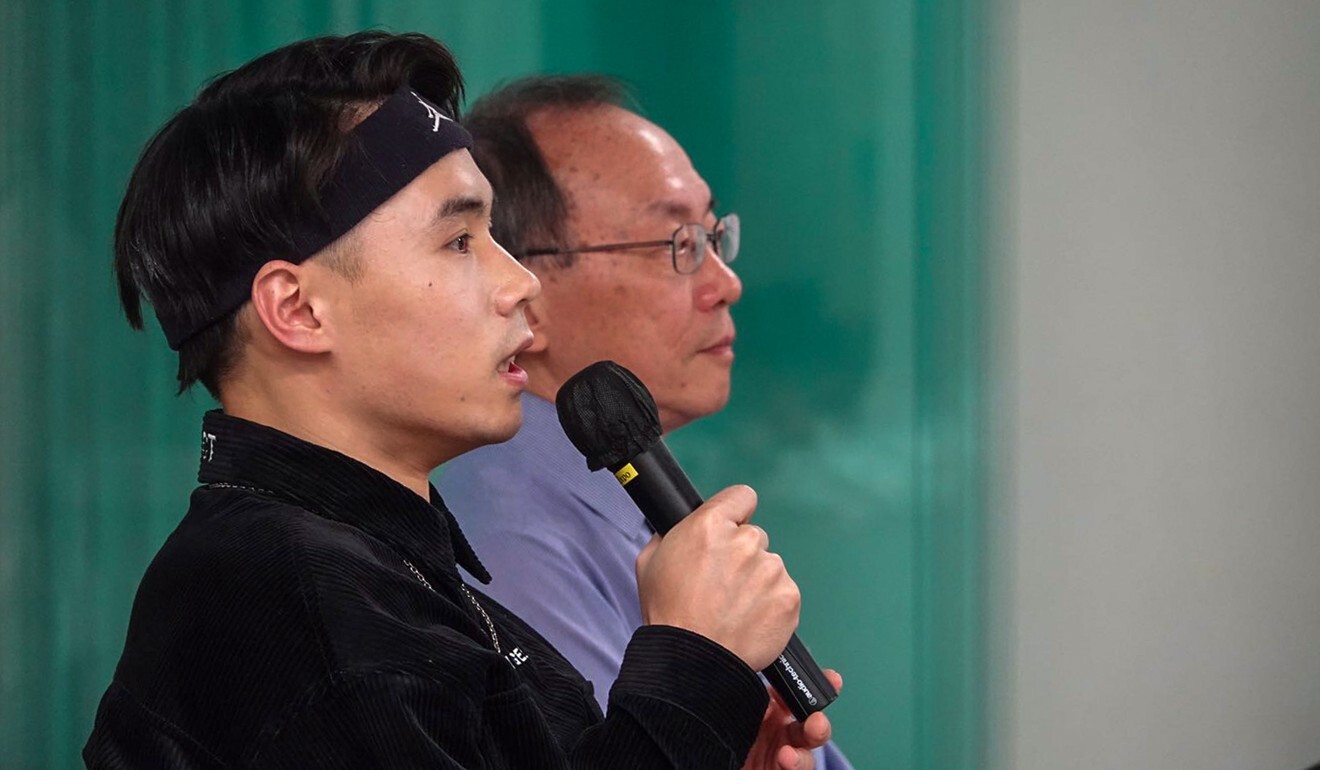
Xie Haifeng (pictured left with friend Poon Tak-lun) gives a speech to students in Hong Kong. Photo: Handout
Grateful for the help he received from Poon and Hong Kong, Xie has sought to return the favour by doing what he does best.
“I have no other skills except dancing and performing. So I thought of sharing my experience to encourage young students in Hong Kong,” he said.
Xie travels to Hong Kong about twice a year to perform and visit schools. In 2019, he visited the city four times, performing dances and Sichuan opera, and giving speeches at more than 10 primary and secondary schools.
“I encourage them to study hard. I said there are many people in this world who have more difficulties than them but still insist on pursuing their dreams, so they should not give up their dreams,” Xie said.
When he is not dancing and giving inspirational speeches, Xie said he lived a life like everyone else – climbing mountains, swimming and proudly walking on the leg he gained after almost losing everything in Sichuan’s deadly earthquake.
A graduating foreign student takes selfies at Zhejiang University in Hangzhou, east China’s Zhejiang Province, June 28, 2018. (Xinhua/Long Wei)
BEIJING, May 18 (Xinhua) — Chinese President Xi Jinping extended welcome to excellent youth from all countries in the world to study in China in his Sunday reply to a letter from all Pakistani students studying in the University of Science and Technology Beijing (USTB).
In his letter, Xi encouraged the students to communicate more with their Chinese peers and join hands with youth from all countries to contribute to promoting people-to-people connectivity and building a community with a shared future for humanity.
Learning that the students have enriched their knowledge and made quite a few Chinese friends while studying in China, Xi said he felt happy for the achievements they have made.
“As you have felt, since the COVID-19 epidemic broke out, the Chinese government and schools have always cared for the lives and health of foreign students studying in China, providing all-round help for them,” Xi noted.
The Chinese government and people put people’s lives first and treat foreigners in the country the same as Chinese nationals, making no exception in offering them care, Xi wrote.
Photo taken on Nov. 7, 2019 shows the autumn scenery of the University of Science and Technology Beijing in Beijing, capital of China. (Xinhua/Chen Yehua)
Xi said he learned that many foreign students have expressed their support to the Chinese people in various ways during China’s fight against COVID-19.
“A friend in need is a friend indeed,” he said, adding that China will continue providing various help to all foreign students studying in the country.
While welcoming excellent youth from other countries to study in China, Xi encouraged them to learn more about the country, communicate more with their Chinese peers and tell the world more about the China they see.
The USTB currently has 52 Pakistani students. They recently wrote about their experiences and feelings of studying in China in a letter to Xi and expressed their gratitude to the university for providing care and help for them after the COVID-19 outbreak.
They also expressed their aspirations to join in building the Belt and Road after graduation and contribute to enhancing China-Pakistan friendship.
KATHMANDU, April 19 (Xinhua) — A German scholar has recently found that the right to education for Uygurs and people of other ethnic groups is well protected in China’s Xinjiang region, as young people there enjoy increasingly better opportunities.
Michael Heinrich, who has been teaching German in Minzu University of China for more than five years, said in an article published on Online Khabar news website in March that he has “paid close attention to the development of Chinese education in recent years, especially the education situation in ethnic minority areas.”
Heinrich said he has taught a Xinjiang Uygur student, who often talks with him about the education situation in her hometown and appreciates government policies on education.
The Uygur student has told Heinrich that she lives in a place where she receives Islamic religious education and China’s nine-year compulsory education, and the Uygur students in Xinjiang can enjoy preferential policies, such as extra points in college entrance examination, special policies for college admissions, and employment policy support.
In recent years, the Chinese government has intensified policy support on education in Xinjiang Uygur Autonomous Region, and increased investment in educational resources, especially those on vocational education, the article read.
“Through vocational education, more Uyghur Muslim students can enhance their survival skills and work harder by themselves and improve their living standards with these hands,” it said.
For some time, Xinjiang has been plagued by terrorism, religious extremism and separatism, according to the passage, and carrying out vocational education and training in Xinjiang is an effective measure to promote the rule of law and a practical action to protect the vital interests of people of all ethnic groups there.
It is also a just move in fighting extremism and terrorism to contribute to the stability in Xinjiang, it added.
Some Western media outlets as well as some U.S. politicians often slander the Chinese government under the guise of “human rights,” which does not only disregard the facts but also interferes with China’s sovereignty, Heinrich pointed out.
The situation in Xinjiang that they saw was completely different from the stories told by some Western politicians and media, Heinrich quoted some people who have visited Xinjiang and witnessed its development as saying.
The rights to life and development of people of all ethnic groups in Xinjiang are protected to the largest extent, Heinrich added.
Embassy says those flown back must pay for themselves, and praises the US health system, in a departure from the war of words with Washington
More than a million Chinese students remain overseas, but China is on alert against the threat of imported infections
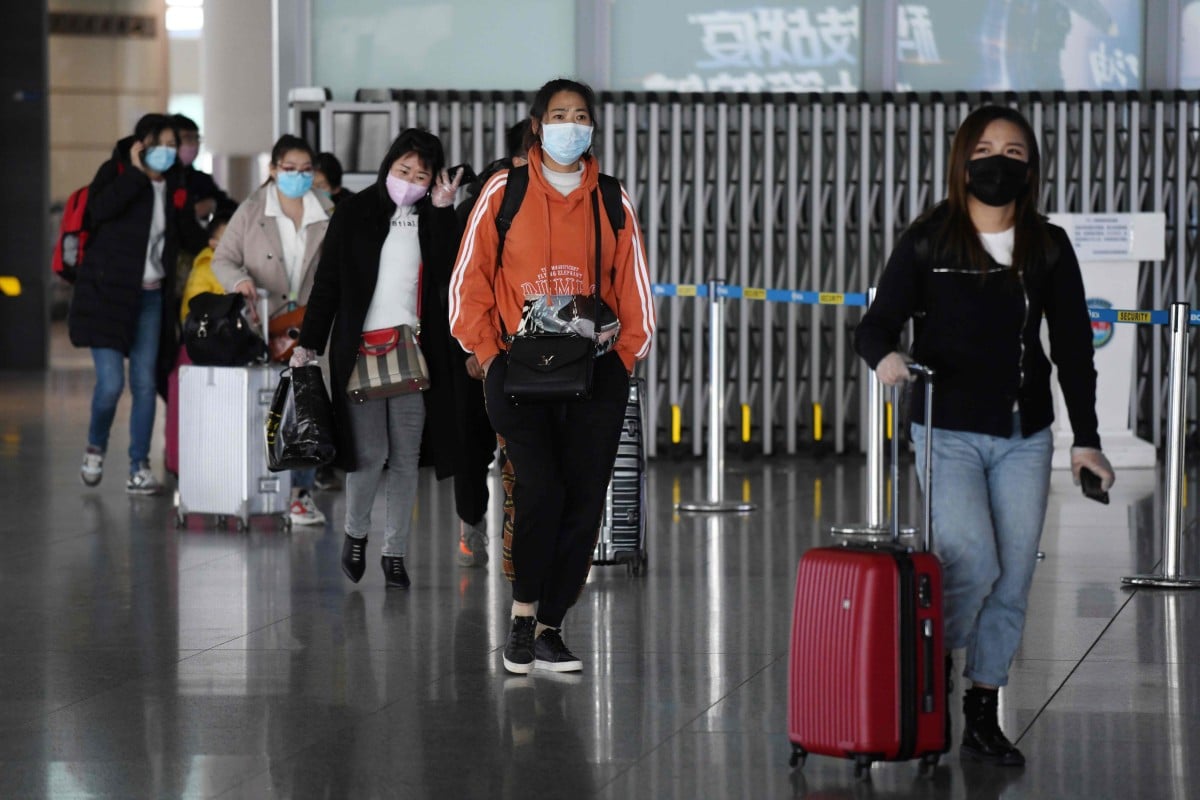
China has drastically cut flights to try to prevent people who arrive from abroad importing the coronavirus. Photo: AFP
Chinese students could be flown home from coronavirus hotspots such as the United States but will have to pay their own expenses, amid efforts by Beijing to persuade some to remain overseas rather than risk bringing the infection with them.
A statement posted on the website of China’s Washington embassy on Monday said that the Chinese government was aware that many school and university students had encountered difficulties in travelling back to China and was taking steps to arrange charter flights for those who needed to return urgently.
With the initial coronavirus outbreak appearing to have been largely contained in mainland China, some Chinese students have travelled home despite soaring air ticket prices and the requirement that those who have been overseas enter quarantine.
Students brought back on charter flights would still need to pay for the ticket and the costs of the mandatory 14-day quarantine upon arrival in China.
Trump says US approaching a ‘horrendous’ time as coronavirus death toll rises
More than 1.6 million Chinese are studying overseas, including about 410,000 in the US. At least 1.42 million Chinese students remained overseas, vice foreign minister Ma Zhaoxu said on Thursday.
Having initially boasted of its success in stopping the virus, Beijing has become notably cautious in recent weeks about welcoming overseas students back home, especially with imported cases continuing to rise.
China’s foreign ministry and its overseas missions have urged students considering travelling home to exercise caution. The embassy in the US issued a notice on Friday speaking highly of the American medical system and its response to the pandemic, in a marked departure from Beijing’s narrative, which has included pinning the blame for the pandemic on the United States.
Friday’s embassy notice also dismissed rumours that Chinese students had been targeted because of the coronavirus during the closures of universities, and pledged help if students had trouble communicating with universities about campus accommodation.
China advises foreign diplomats to stay away from Beijing until May 15
3 Apr 2020
Ma said that most overseas students had heeded his government’s advice and chosen not to go back to China, but an online survey late last month that was cited by Caixin magazine on Saturday showed nearly 60 per cent of Chinese students in the US wanted to return home.
Most of the 4,000 students polled said they were unable to make the trip because of concerns about contracting the coronavirus during the journey and air fares that had more than doubled recently. Both China and the US have drastically cut back long-haul international flights.
After weeks stranded in Peru, 65 Hongkongers return home
6 Apr 2020
Students under 18 years of age who want to return to China are required by the embassy to register online.
The initial evacuation plan announced on Monday proposed to prioritise school-age children whose parents were not in the US with them. The proposed arrangement appeared to include students from Hong Kong, Macau and Taiwan.
Education ministry says they will be held a month later than planned – on July 7 and 8 – when there is ‘a lower risk’ for students and staff
It will also give them more time to prepare after months of online learning due to school closures
Students were back in class at the Xian Middle School in Shaanxi province on Monday after a nationwide closure because of the coronavirus outbreak. Photo: Xinhua
China’s all-important annual college entrance exams have been postponed by a month because of the coronavirus crisis – the first time they have been disrupted since the Cultural Revolution.
Universities in mainland China base enrolments solely on the results of the gruelling examinations, known as the gaokao, and they are seen as tests that can make or break a student’s future.
This year, they will be held on July 7 and 8 for most of the country – a month later than planned, the Ministry of Education announced on Tuesday.
A date has not yet been set for the capital Beijing or for Hubei, the province worst-hit by the virus. The ministry said authorities in the two places would decide later when they would hold the gaokao, based on their public health situations.
Wang Hui, a ministry official who handles the university sector, said 10.71 million students were expected to sit the exams this summer.
He said the ministry decided to postpone this year’s gaokao to put students’ “health and fairness first”.
Coronavirus: Decoding Covid-19
Wang said although the spread of the coronavirus had slowed to almost a halt in the mainland, there was still a risk of isolated cases and localised outbreaks. China’s focus now is preventing imported cases among people who arrive in the country from overseas.
“[Disease control and] prevention experts suggest that if the gaokao is postponed for a month, there will be a lower risk from … the epidemic,” Wang said.
“We must adopt the most appropriate and the least risky plan in order to protect the safety and health of the students as well as the staff involved in the tests.”
The ministry official said the delay was also about fairness, by giving students more time to study at school and prepare for the exams.
“We hope to reduce the impact of the epidemic on students, especially those from rural and poverty-stricken regions, as much as possible,” Wang said.
“Third-year high school students have had to stay home [because of the coronavirus outbreak] so their preparation for the gaokao has been affected,” he said. “The internet [access] divide between urban and rural areas means some students in rural and poorer regions have been more affected by this epidemic.”
With schools remaining closed during coronavirus outbreak, China launches national remote learning platforms
18 Feb 2020
Beijing imposed a nationwide school closure after the Lunar New Year holiday in late January as the pneumonia-like illness rapidly spread. Schools were told to postpone the new term that was due to start in mid- or late February, meaning millions of students – from primary school to university – had to turn to online learning. Several provinces began reopening schools this month and more are set to follow in early to mid-April, but authorities in Beijing and Guangdong have yet to set a date for classes to resume.
The last time the gaokao was disrupted was during the Cultural Revolution, a decade of political and social turmoil that ended in 1976. It was cancelled during this time and since it resumed in 1979 until 2002 it has been held nearly every year from July 7 to 9. From 2003, the ministry moved the gaokao forward to June 7 and 8 to avoid hot weather and potential natural disasters. The severe acute respiratory syndrome outbreak (Sars) in 2002-03 did not delay the exams.
China’s university entry exam, gaokao: elliptical, obscure and confusing
8 Jun 2018
According to an online survey conducted by microblogging website Sina Weibo on Tuesday, some 537,000 users said they were “shocked” by the ministry’s decision and were “experiencing history”.
About 282,000 people said it was a good thing for students since it gave them more time to prepare for the exams. But it was bad news for another 153,000 users, who said they would have to endure an extra month of exhausting preparation.
Image copyright GETTY IMAGESImage caption Millions are workers are defying a curfew and returning home
When I spoke to him on the phone, he had just returned home to his village in the northern state of Rajasthan from neighbouring Gujarat, where he worked as a mason.
In the rising heat, Goutam Lal Meena had walked on macadam in his sandals. He said he had survived on water and biscuits.
In Gujarat, Mr Meena earned up to 400 rupees ($5.34; £4.29) a day and sent most of his earnings home. Work and wages dried up after India declared a 21-day lockdown with four hours notice on the midnight of 24 March to prevent the spread of coronavirus. (India has reported more than 1,000 Covid-19 cases and 27 deaths so far.) The shutting down of all transport meant that he was forced to travel on foot.
“I walked through the day and I walked through the night. What option did I have? I had little money and almost no food,” Mr Meena told me, his voice raspy and strained.
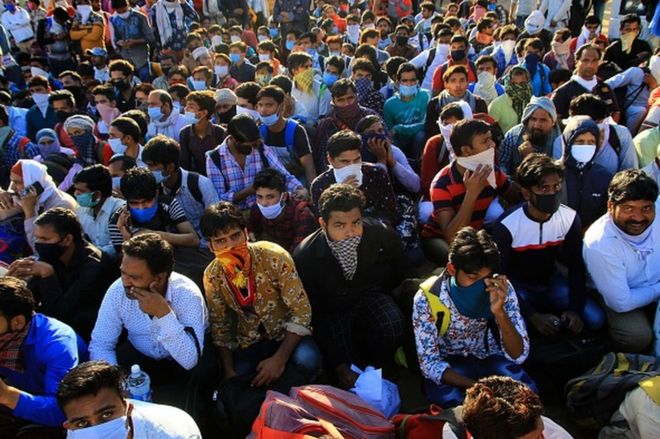
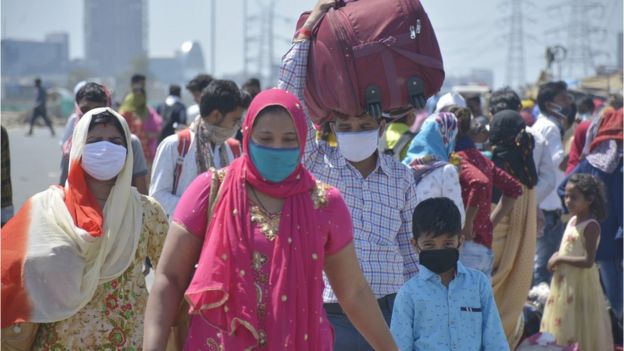
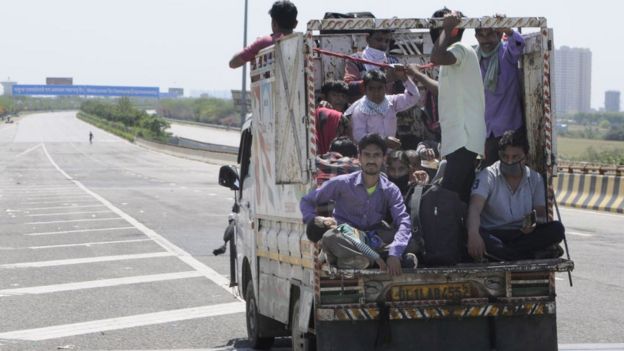
He was not alone. All over India, millions of migrant workers are fleeing its shuttered cities and trekking home to their villages.
These informal workers are the backbone of the big city economy, constructing houses, cooking food, serving in eateries, delivering takeaways, cutting hair in salons, making automobiles, plumbing toilets and delivering newspapers, among other things. Escaping poverty in their villages, most of the estimated 100 million of them live in squalid housing in congested urban ghettos and aspire for upward mobility.
Image copyright GETTY IMAGESImage caption Informal workers are the backbone of India’s big city economies
Last week’s lockdown turned them into refugees overnight. Their workplaces were shut, and most employees and contractors who paid them vanished.
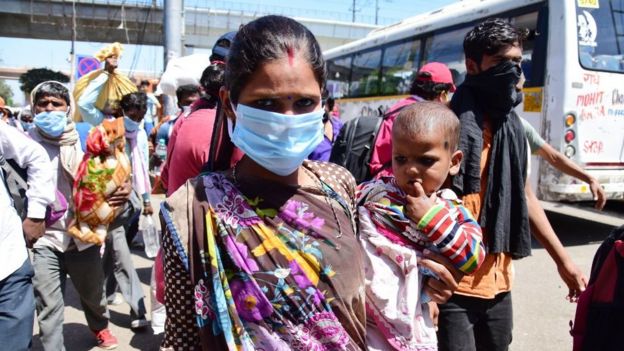
Sprawled together, men, women and children began their journeys at all hours of the day last week. They carried their paltry belongings – usually food, water and clothes – in cheap rexine and cloth bags. The young men carried tatty backpacks. When the children were too tired to walk, their parents carried them on their shoulders.
They walked under the sun and they walked under the stars. Most said they had run out of money and were afraid they would starve. “India is walking home,” headlined The Indian Express newspaper.
The staggering exodus was reminiscent of the flight of refugees during the bloody partition in 1947. Millions of bedraggled refugees had then trekked to east and west Pakistan, in a migration that displaced 15 million people.
Image copyright GETTY IMAGESImage caption Migrant labourers feel they have more social security in their villages
This time, hundreds of thousands of migrant workers are desperately trying to return home in their own country. Battling hunger and fatigue, they are bound by a collective will to somehow get back to where they belong. Home in the village ensures food and the comfort of the family, they say.
Clearly, a lockdown to stave off a pandemic is turning into a humanitarian crisis.
Among the teeming refugees of the lockdown was a 90-year-old woman, whose family sold cheap toys at traffic lights in a suburb outside Delhi.
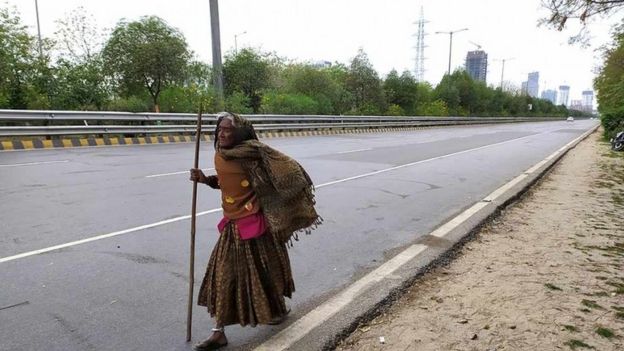
Kajodi was walking with her family to their native Rajasthan, some 100km (62 miles) away. They were eating biscuits and smoking beedis, – traditional hand-rolled cigarettes – to kill hunger. Leaning on a stick, she had been walking for three hours when journalist Salik Ahmed met her. The humiliating flight from the city had not robbed her off her pride. “She said she would have bought a ticket to go home if transport was available,” Mr Ahmed told me.
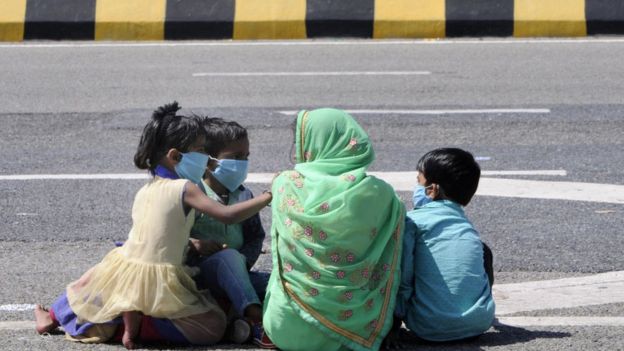
Others on the road included a five-year-old boy who was on a 700km (434 miles) journey by foot with his father, a construction worker, from Delhi to their home in Madhya Pradesh state in central India. “When the sun sets we will stop and sleep,” the father told journalist Barkha Dutt. Another woman walked with her husband and two-and-a-half year old daughter, her bag stuffed with food, clothes and water. “We had a place to stay but no money to buy food,” she said.
Then there was Rajneesh, a 26-year-old automobile worker who walking 250km (155 miles) to his village in neighbouring Uttar Pradesh. It would take him four days, he reckoned. “We will die walking before coronavirus hits us,” the man told Ms Dutt.
He was not exaggerating. Last week, a 39-year-old man on a 300km (186 miles) trek from Delhi to Madhya Pradesh complained of chest pain and exhaustion and died; and a 62-year-old man, returning from a hospital by foot in Gujarat, collapsed outside his house and died. Four other migrants, turned away at the borders on their way to Rajasthan from Gujarat, were mowed down by a truck on a dark highway.
As the crisis worsened, state governments scrambled to arrange transport, shelter and food.
Image copyright SALIK AHMED/OUTLOOKImage caption Ninety-year-old Kajodi Devi is walking from Delhi to her village
But trying to transport them to their villages quickly turned into another nightmare. Hundreds of thousands of workers were pressed against each other at a major bus terminal in Delhi as buses rolled in to pick them up.
Delhi chief minister Arvind Kejriwal implored the workers not to leave the capital. He asked them to “stay wherever you are, because in large gatherings, you are also at risk of being infected with the coronavirus.” He said his government would pay their rent, and announced the opening of 568 food distribution centres in the capital. Prime Minister Narendra Modi apologised for the lockdown “which has caused difficulties in your lives, especially the poor people”, adding these “tough measures were needed to win this battle.”
Whatever the reason, Mr Modi and state governments appeared to have bungled in not anticipating this exodus.
Mr Modi has been extremely responsive to the plight of Indian migrant workers stranded abroad: hundreds of them have been brought back home in special flights. But the plight of workers at home struck a jarring note.
“Wanting to go home in a crisis is natural. If Indian students, tourists, pilgrims stranded overseas want to return, so do labourers in big cities. They want to go home to their villages. We can’t be sending planes to bring home one lot, but leave the other to walk back home,” tweeted Shekhar Gupta, founder and editor of The Print.
Image copyright GETTY IMAGESImage caption There is a precedent for this kind of exodus during crisis
The city, says Chinmay Tumbe, author of India Moving: A History of Migration, offers economic security to the poor migrant, but their social security lies in their villages, where they have assured food and accommodation. “With work coming to a halt and jobs gone, they are now looking for social security and trying to return home,” he told me.
Also there’s plenty of precedent for the flight of migrant workers during a crisis – the 2005 floods in Mumbai witnessed many workers fleeing the city. Half of the city’s population, mostly migrants, had also fled the city – then Bombay – in the wake of the 1918 Spanish flu.
When plague broke out in western India in 1994 there was an “almost biblical exodus of hundreds of thousands of people from the industrial city of Surat [in Gujarat]”, recounts historian Frank Snowden in his book Epidemics and Society.
Half of Bombay’s population deserted the city, during a previous plague epidemic in 1896. The draconian anti-plague measures imposed by the British rulers, writes Dr Snowden, turned out to be a “blunt sledgehammer rather than a surgical instrument of precision”. They had helped Bombay to survive the epidemic, but “the fleeing residents carried the disease with them, thereby spreading it.”
More than a century later, that same fear haunts India today. Hundreds of thousands of the migrants will eventually reach home, either by foot, or in packed buses. There they will move into their joint family homes, often with ageing parents. Some 56 districts in nine Indian states account for half of inter-state migration of male workers, according to a government report. These could turn out to be potential hotspots as thousands of migrants return home.
Image copyright GETTY IMAGESImage caption The fleeing migrants could spread the disease all over the country
Partha Mukhopadhyay, a senior fellow at Delhi’s Centre for Policy Research, suggests that 35,000 village councils in these 56 potentially sensitive districts should be involved to test returning workers for the virus, and isolate infected people in local facilities.
In the end, India is facing daunting and predictable challenges in enforcing the lockdown and also making sure the poor and homeless are not fatally hurt. Much of it, Dr Snowden told me, will depend on whether the economic and living consequences of the lockdown strategy are carefully managed, and the consent of the people is won. “If not, there is a potential for very serious hardship, social tension and resistance.” India has already announced a $22bn relief package for those affected by the lockdown.
The next few days will determine whether the states are able to transport the workers home or keep them in the cities and provide them with food and money. “People are forgetting the big stakes amid the drama of the consequences of the lockdown: the risk of millions of people dying,” says Nitin Pai of Takshashila Institution, a prominent think tank.
“There too, likely the worst affected will be the poor.”
WUHAN, China (Reuters) – China reported a drop in new coronavirus infections for a fourth day as drastic curbs on international travellers reined in the number of imported cases, while policymakers turned their efforts to healing the world’s second-largest economy.
The city of Wuhan, at the centre of the outbreak, reported no new cases for a sixth day, as businesses reopened and residents set about reclaiming a more normal life after a lockdown for almost two months.
Smartly turned out staff waited in masks and gloves to greet customers at entrances to the newly-reopened Wuhan International Plaza, home to boutiques of luxury brands such as Cartier and Louis Vuitton.
“The Wuhan International Plaza is very representative (of the city),” said Zhang Yu, 29. “So its reopening really makes me feel this city is coming back to life.”
Sunday’s figure of 31 new cases, including one locally transmitted infection, was down from 45 the previous day, the National Health Commission said.
As infections fall, policymakers are scrambling to revitalise an economy nearly paralysed by months-long curbs to control the spread of the flu-like disease.
On Monday, the central bank unexpectedly cut the interest rate on reverse repurchase agreements by 20 basis points, the largest in nearly five years.
The government is pushing businesses and factories to reopen, as it rolls out fiscal and monetary stimulus to spur recovery from what is feared to be an outright economic contraction in the quarter to March.
China’s exports and imports could worsen as the pandemic spreads, depressing demand both at home and abroad, Xin Guobin, the vice minister of industry and information technology, said on Monday.
The country has extended loans of 200 billion yuan (22.75 billion pounds) to 5,000 businesses, from 300 billion allocated to help companies as they resume work, Xin said.
Authorities in Ningbo said they would encourage national banks to offer preferential credit of up to 100 billion yuan to the eastern port city’s larger export firms. The city government will subsidize such loans, it said in a notice.
VIRUS CONCERNS
While new infections have fallen sharply from February’s peak, authorities worry about a second wave triggered by returning Chinese, many of them students.
China cut international flights massively from Sunday for an indefinite period, after it began denying entry to almost all foreigners a day earlier.
Average daily arrivals at airports this week are expected to be about 4,000, down from 25,000 last week, an official of the Civil Aviation Administration of China told a news conference in Beijing on Monday.
The return to work has also prompted concern about potential domestic infections, especially over carriers who exhibit no, or very mild, symptoms of the highly contagious virus.
Northwestern Gansu province reported a new case of a traveller from the central province of Hubei, who drove back with a virus-free health code, national health authorities said.
Hubei authorities say 4.6 million people in the province returned to work by Saturday, with 2.8 million of them heading for other parts of China.
Most of the departing migrant workers went to the southern provinces of Guangdong and Fujian, the eastern provinces of Zhejiang and Jiangsu, and northeast China.
In Hubei’s capital of Wuhan, more retail complexes and shopping streets reopened.
Electric carmaker Tesla Inc has also reopened a showroom in Wuhan, a company executive said on Weibo.
Shoppers queued 1-1/2 metres (5 ft) apart for temperature checks at Wuhan International Plaza, while flashing “green” mobile telephone codes attesting to a clean bill of health.
To be cleared to resume work, Wuhan residents have been asked to take nucleic acid tests twice.
“Being able to be healthy and leave the house, and meet other colleagues who are also healthy is a very happy thing,” said Wang Xueman, a cosmetics sales representative.
Mainland China’s coronavirus outbreak exposed a huge digital divide, with some students from poorer regions lacking resources for online learning
Access to the internet is not considered a daily necessity at China’s policy level, unlike in European countries such as Norway and Iceland
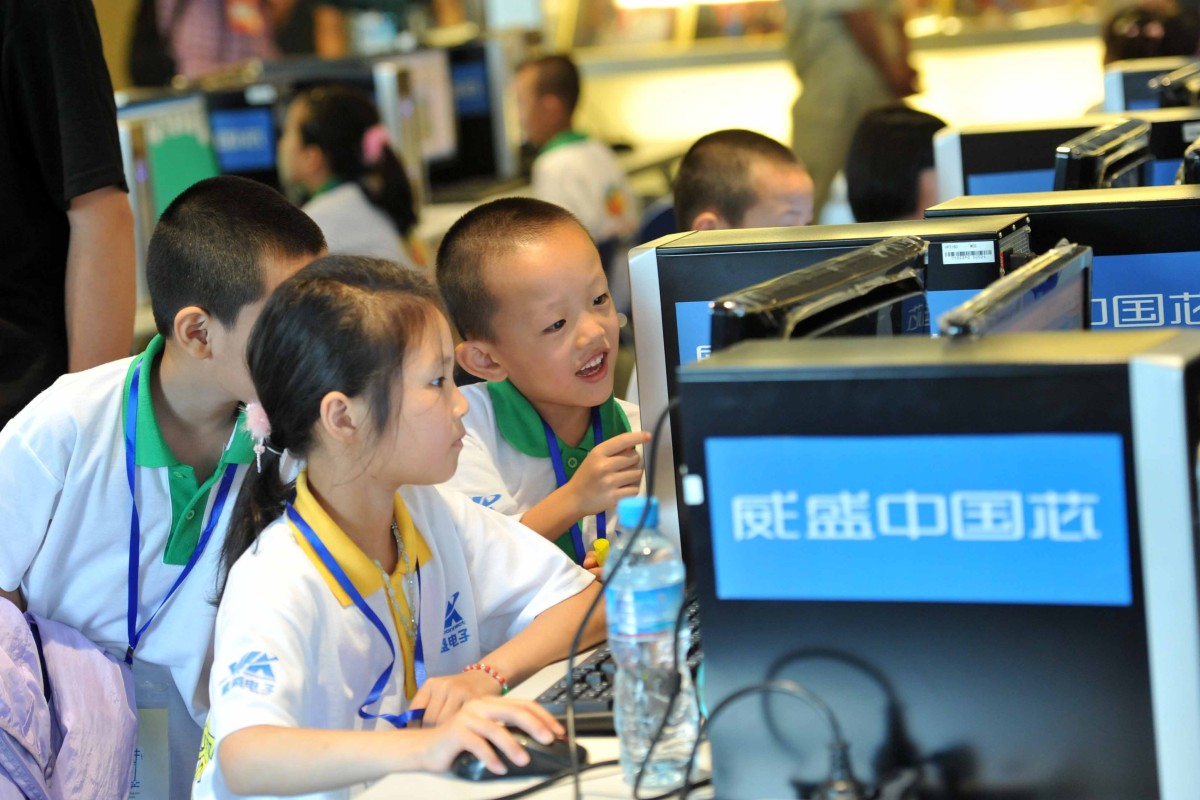
Chinese children attend a computer class in Beijing to learn how to properly use the internet. Those in poorer parts of the country lack sufficient access to the internet, as the switch to online teaching during the coronavirus outbreak in China showed. Photo: AFP
The coronavirus outbreak in mainland China highlighted the huge digital divide that exists between richer and poorer regions.
When schools shut and online learning was made compulsory, many students living in remote areas found they didn’t have sufficient internet access.
There were 1.6 billion mobile phone subscribers in China in 2019, with many people having more than one subscription, and optical fibre and 4G covered 98 per cent of the population, according to official data.
These figures fail to show the large regional disparity between the country’s rich and poor provinces, says Jack Chan Wing-kit, associate professor of the school of government at Sun Yat-sen University in Guangzhou province.
“In poor areas, a family [often] has to share one mobile phone among all members,” says Chan, who has done extensive research on China’s social problems.
It is easier for service providers to offer blanket coverage in densely populated cities where most people live in high-rise buildings, Chan explains.
“In rural areas, people live in bungalows that are widely spread out. It is not economically efficient for phone service providers like China Mobile to install transmission stations there, which explain their spotty coverage,” he says.
While the universal social security net in China covers people including the old and disabled, access to the internet is not considered a daily necessity at the policy level. That’s unlike European countries such as Norway and Iceland, who see the internet as a basic human right and ensure their entire populations have proper access to it.
Though some wealthier coastal cities within the Pearl River Delta recently conducted local surveys to identify less-well-off households and handed out tablet computers, inland provinces in central and western China cannot afford these measures, Chan says.
The Chinese government does not encourage [the setting up of] charities – Erwin Huang, founder of WebOrganic and EdFuture
Philanthropic efforts could help address this problem, as shown by Hong Kong’s experience in tackling the digital divide.
About 900,000 kindergarten, primary and secondary students in the city have been affected by school suspensions that are likely to last until at least April 20.
While families of disadvantaged students have received support from the government through Comprehensive Social Security Assistance and other welfare schemes, many children still lack digital resources as their parents don’t see it as a priority, says Erwin Huang, founder of both WebOrganic, a charity promoting computer access to such youngsters, and education alliance EdFuture.
That has left it up to charities to make sure all students have enough resources at home for online learning, Huang says. For instance, this month EdFuture worked with local mobile service provider SmarTone to give out free phone data SIM cards lasting two months to 10,000 students.
“It’s for those who live in subdivided flats and those who have to go to McDonald’s for Wi-fi access,” says Huang, who is also associate professor of engineering at the Hong Kong University of Science and Technology.
Many students in China’s poorer regions have been left at a disadvantage by the shift to online learning. Photo: Getty Images
The Hong Kong Jockey Club also recently launched a HK$42 million (US$5.4 million) scheme to provide free mobile internet data to 100,000 underprivileged primary- and secondary-school students to help with online learning while schools are closed.
Huang says while such charities help fill gaps in the provision of digital resources in Hong Kong, a similar philanthropic culture is lacking in China.
“The Chinese government does not encourage [the setting up of] charities,” he says.
Huang initiated several digital resources projects in China after the Sichuan earthquake in 2008, but says frequent media reports of scandals involving charities such as China’s Red Cross have made it harder forNGOs to operate in the country, with the government preferring to provide social services through its own departments.
A government task force has estimated a US$5 billion loss if Chinese students – angered and frustrated by the ban – cannot enrol for university
The tourism sector is also likely to be hit by restrictions on travel from the mainland as Chinese visitors spend about U$8 billion in Australia each year
Some 150,000 Chinese nationals are enrolled at Australian universities, making up around 11 per cent of the student population. Photo: Shutterstock
Abbey Shi knows first hand the anger and frustration felt by Chinese students left stranded by the Australian government’s decision to ban travel from the mainland in response to the coronavirus outbreak.
Shi, general secretary of the Students’ Representative Council at the University of Sydney, is in contact with more than 2,000 Chinese students who went home for the Lunar New Year holiday and now cannot return to Australia with just weeks to go until the start of the new academic year.
“There is a lot of confusion about the ban and anger towards the government,” said Shi, an international student from Shanghai. Currently in Australia, she is sharing information with the stranded students via WeChat.
How to beat the coronavirus? Re-creating it in Singapore, Australia is vital first step
3 Feb 2020
“The education sector in Australia is being commercialised and students are being treated like cash cows,” she said. “Universities don’t care about our affected career path, life, tenancy issues, our pets at home.”
Prime Minister Scott Morrison on Saturday announced that non-citizens – excluding permanent residents and their immediate family members – who arrived from or passed through mainland China within the previous 14 days would be denied entry to Australia as part of efforts to halt the spread of the coronavirus, which was first detected in December in the Chinese city of Wuhan.
Other countries including the United States, Singapore and the Philippines have introduced similar travel restrictions in response to the outbreak, which has sickened more than 19,000 people in at least 26 countries and territories outside mainland China and claimed 425 lives.
The travel ban, which is due to be reviewed on February 15, has upended the plans of numerous Chinese students who were due to begin or return to their studies from late February following the summer break.
Tony Yan, a mathematics undergraduate at Australian National University (ANU), said he had been left out of pocket for several weeks’ rent after being stranded in his home province of Jiangsu, but hoped he could return before classes started on February 24.
“I think the Australian government should have given a few days earlier notice,” Yan said. “I haven’t paid the tuition yet, many others haven’t as well.”
About 150,000 Chinese nationals are enrolled at Australian universities, making up around 11 per cent of the student population – a far greater proportion than in Britain and the United States, which came in at 6 per cent and 2 per cent respectively, in a 2017 report from an Australian think tank.
Coronavirus: Australia evacuates 243 people from China as deaths mount
3 Feb 2020
ANU Vice-Chancellor Brian Schmidt on Saturday described the travel ban as “disappointing”, pledging that the university would be “generous and flexible in supporting our students” through the coming weeks.
Monash University in Melbourne has delayed the start of its academic year, while other universities are exploring options such as online tuition and intensive summer courses.
Australian universities, some of which rely on Chinese students for nearly one-quarter of their revenue, are bracing to take a major financial hit due to the ban.
Phil Honeywood, the head of a government task force initially set up to manage the reputation of Australia’s international education sector in the wake of the country’s bush fires crisis, on Sunday warned the ban could cost universities A$8 billion (US$5.34 billion) if Chinese students could not enrol for the first semester of the year.
Coronavirus: what we know so far about the outbreak spreading in China and abroad
Education minister Dan Tehan on Monday met with peak body Universities Australia to discuss ways to minimise fallout for the sector.
“Australia will remain an attractive study destination for Chinese students, but it may take several years for Chinese student numbers to recover,” said Salvatore Babones, associate professor at the University of Sydney and adjunct scholar at the Centre for Independent Studies. “Students who are already in the middle of a degree are likely to return at the first possible opportunity, even at the cost of missing one semester, but students who have not yet started may make other plans.”
But ANU tertiary education expert Andrew Norton said there remained too many unknowns, including the number of Chinese students stranded abroad, to gauge the impact of the ban.
How the coronavirus spread anti-Chinese racism like a disease through Asia
17 Feb 2020
“This travel ban is a short-term policy to minimise the risk of disease spreading, which would be a more serious problem than a disruption to university timetables,” he said. “One of Australia’s major [education] competitors – the US – has a similar policy, and due to travel restrictions within China and the cancelling of commercial flights to and from China Australia’s competitors are unlikely to be able to take advantage.”
Norton noted that the sector had weathered previous outbreaks such as the 2003 outbreak of severe acute respiratory syndrome (Sars), and “although there were sometimes short-term dips in numbers, none of them have changed the long-term trend towards growth”.
The ban has also sent jitters throughout the tourism industry, which relies on Chinese visitors for a quarter of international spending. Nearly 1.5 million
visited Australia in 2018-19, Australian Bureau of Statistics records show, accounting for about one in eight arrivals.
Nearly 1.5 million Chinese nationals visited Australia in 2018-19, according to Australian Bureau of Statistics records. Photo: SCMP / Alkira Reinfrank
With Chinese tourists spending about A$12 billion (US$8 billion) in Australia each year, according to Tourism Research Australia, every month the travel ban remains in place could amount to billion-dollar losses for the sector.
Tourism Tropical North Queensland on Monday said the outbreak had already cost operators for Cairns and the Great Barrier Reef 25,000 direct bookings worth A$10 million. Chief executive Mark Olsen said the situation constituted a crisis for the industry that called for “unprecedented action” by the government.
David Beirman, senior lecturer in tourism at the University of Technology Sydney, said the ban was especially damaging for the industry as it came on the heels of devastating bush fires that had kept visitors away.
Coronavirus: how Facebook clickbait fuels a perfect storm of fake news
15 Feb 2020
“There is no doubt that the coronavirus outbreak following on so closely to the bush fires will combine to hit international tourism to Australia very hard,” Beirman said. “Later this month the Australian Bureau of Statistics will reveal the December 2019 tourism figures, which are expected to show at best a 25 per cent downturn in international visitor arrivals compared to December 2018. January 2020 is likely to be far worse as the impact of coronavirus will certainly be a factor.”
Others have raised concerns about the impact of the travel restrictions on public attitudes toward Chinese and Chinese-Australians, warning they could stoke latent prejudices.
“This is an overreaction from the Australian government, and in many ways it feels like it is a form of racial targeting,” said Erin Chew, national convenor of the Asian Australian Alliance. “When previous viruses happened such as mad cow disease or the swine flu, Australia didn’t ban non-citizens from Britain and the US. Nor was the blame placed on the people in [those countries].
“Since the coronavirus outbreak it has been coined that this virus is the fault of Chinese people, not just in mainland China, but really all over the world.”













 CHINDIA ALERT: You'll be living in their world, very soon