Chindia Alert: You’ll be Living in their World Very Soon
aims to alert you to the threats and opportunities that China and India present. China and India require serious attention; case of ‘hidden dragon and crouching tiger’.
Without this attention, governments, businesses and, indeed, individuals may find themselves at a great disadvantage sooner rather than later.
The POSTs (front webpages) are mainly 'cuttings' from reliable sources, updated continuously.
The PAGEs (see Tabs, above) attempt to make the information more meaningful by putting some structure to the information we have researched and assembled since 2006.
Indian security forces have killed a prominent militant leader in disputed Kashmir, officials say.
Riyaz Naikoo had taken over command of the banned Hizbul Mujahideen group, succeeding Burhan Wani who was killed by security forces in 2016.
Wani’s death triggered massive protests in the region, which is claimed in its entirety by both India and Pakistan.
The region has seen an armed insurgency against Indian rule since 1989, which has flared following Wani’s killing.
Naikoo was shot dead in his home village of Beigh Pora in Pulwama district after militants killed eight security personnel in two separate attacks, part of a recent surge of violence in Indian-administered Kashmir.
Locals said the militant leader had been trapped in a joint siege laid by army, paramilitary and police forces. He had been on the run for eight years.
“At least 76 militants including Naikoo have been killed since January this year. But we also lost 20 soldiers including senior army and police officers,” a security official told BBC Urdu on condition of anonymity.
Under a new policy, militants who are killed are not identified and their bodies are not handed over to their families.
Officials had accused Riyaz Naikoo of plotting attacks against the security establishment in the valley.
Disputed Kashmir has been a flashpoint for more than 60 years, sparking two wars between India and Pakistan.
In August 2019, the Indian government stripped the region of its semi-autonomous status and split it into two federally-run territories.
Thousands of people were detained and the region remains under severe security restrictions.
NEW DELHI (Reuters) – For years, Hindus and Muslims lived and worked peacefully together in Yamuna Vihar, a densely populated Delhi district.
But the riots that raged through the district last month appear to have cleaved lasting divisions in the community, reflecting a nationwide trend as tensions over the Hindu nationalist agenda of Prime Minister Narendra Modi boil over.
Many Hindus in Yamuna Vihar, a sprawl of residential blocks and shops dotted with mosques and Hindu temples, and in other riot-hit districts of northeast Delhi, say they are boycotting merchants and refusing to hire workers from the Muslim community. Muslims say they are scrambling to find jobs at a time when the coronavirus pandemic has heightened pressure on India’s economy.
“I have decided to never work with Muslims,” said Yash Dhingra, who has a shop selling paint and bathroom fittings in Yamuna Vihar. “I have identified new workers, they are Hindus,” he said, standing in a narrow lane that was the scene of violent clashes in the riots that erupted on Feb. 23.
The trigger for the riots, the worst sectarian violence in the Indian capital in decades, was a citizenship law introduced last year that critics say marginalises India’s Muslim minority. Police records show at least 53 people, mostly Muslims, were killed and more than 200 were injured.
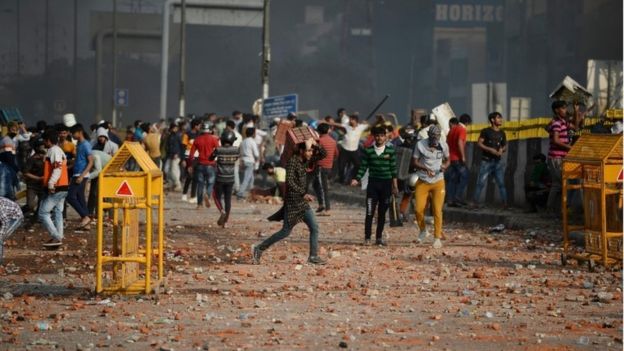
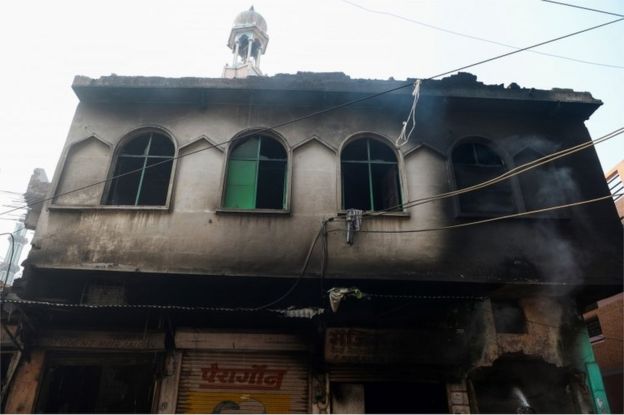
Dhingra said the unrest had forever changed Yamuna Vihar. Gutted homes with broken doors can be seen across the neighbourhood; electricity cables melted in the fires dangle dangerously above alleys strewn with stones and bricks used as makeshift weapons in the riots.
Most Hindu residents in the district are now boycotting Muslim workers, affecting everyone from cooks and cleaners to mechanics and fruit sellers, he said.
“We have proof to show that Muslims started the violence, and now they are blaming it on us,” Dhingra said. “This is their pattern as they are criminal-minded people.”
Those views were widely echoed in interviews with 25 Hindus in eight localities in northeast Delhi, many of whom suffered large-scale financial damages or were injured in the riots. Reuters also spoke with about 30 Muslims, most of whom said that Hindus had decided to stop working with them.
Suman Goel, a 45-year-old housewife who has lived among Muslim neighbours for 23 years, said the violence had left her in a state of shock.
“It’s strange to lose a sense of belonging, to step out of your home and avoid smiling at Muslim women,” she said. “They must be feeling the same too but it’s best to maintain a distance.”
Mohammed Taslim, a Muslim who operated a business selling shoes from a shop owned by a Hindu in Bhajanpura, one of the neighbourhoods affected by the riots, said his inventory was destroyed by a Hindu mob.
He was then evicted and his space was leased out to a Hindu businessman, he said.
“This is being done just because I am a Muslim,” said Taslim.
Many Muslims said the attack had been instigated by hardline Hindus to counter protests involving tens of thousands of people across India against the new citizenship law.
“This is the new normal for us,” said Adil, a Muslim research assistant with an economic think tank in central Delhi. “Careers, jobs and business are no more a priority for us. Our priority now is to be safe and to protect our lives.”
He declined to disclose his full name for fear of reprisals.
Emboldened by Modi’s landslide electoral victory in 2014, hardline groups began pursuing a Hindu-first agenda that has come at the expense of the country’s Muslim minority.
Vigilantes have attacked and killed a number of Muslims involved in transporting cows, which are seen as holy animals by Hindus, to slaughterhouses in recent years. The government has also adopted a tough stance with regard to Pakistan, and in August withdrew semi-autonomous privileges for Jammu and Kashmir, India’s only Muslim-majority state.
In November, the Supreme Court ruled that a Hindu temple could be built at Ayodhya, where a right-wing mob tore down a 16th-century mosque in 1992, a decision that was welcomed by the Modi government.
The citizenship law, which eases the path for non-Muslims from neighbouring Muslim-majority nations to gain citizenship in India, was the final straw for many Muslims, as well as secular Indians, sparking nationwide protests.
Modi’s office did not respond to questions from Reuters about the latest violence.
NIGHT VIGILANTES
During the day, Hindus and Muslims shun each other in the alleys of the Delhi districts that were hardest hit by the unrest in February. At night, when the threat of violence is greater, they are physically divided by barricades that are removed in the morning.
And in some areas, permanent barriers are being erected.
On a recent evening, Tarannum Sheikh, a schoolteacher, sat watching two welders install a high gate at the entrance of a narrow lane to the Muslim enclave of Khajuri Khas, where she lives. The aim was to keep Hindus out, she said.
“We keep wooden batons with us to protect the entrance as at any time, someone can enter this alley to create trouble,” she said. “We do not trust the police anymore.”
In the adjacent Hindu neighbourhood of Bhajanpura, residents expressed a similar mistrust and sense of insecurity.
“In a way these riots were needed to unite Hindus, we did not realise that we were surrounded by such evil minds for decades,” said Santosh Rani, a 52-year-old grandmother.
She said she had been forced to lower her two grandchildren from the first floor of her house to the street below after the building was torched in the violence, allegedly by a Muslim.
“This time the Muslims have tested our patience and now we will never give them jobs,” said Rani who owns several factories and retail shops. “I will never forgive them.”
Hasan Sheikh, a tailor who has stitched clothing for Hindu and Muslim women for over 40 years, said Hindu customers came to collect their unstitched clothes after the riots.
“It was strange to see how our relationship ended,” said Sheikh, who is Muslim. “I was not at fault, nor were my women clients, but the social climate of this area is very tense. Hatred on both sides is justified.”
Image copyright AFPImage caption Delhi remains on edge after three days of rioting
The religious violence which has roiled Delhi since the weekend is the deadliest in decades.
What began as small clashes between supporters and opponents of a controversial citizenship law quickly escalated into full-blown religious riots between Hindus and Muslims, in congested working class neighbourhoods on the fringes of the sprawling capital.
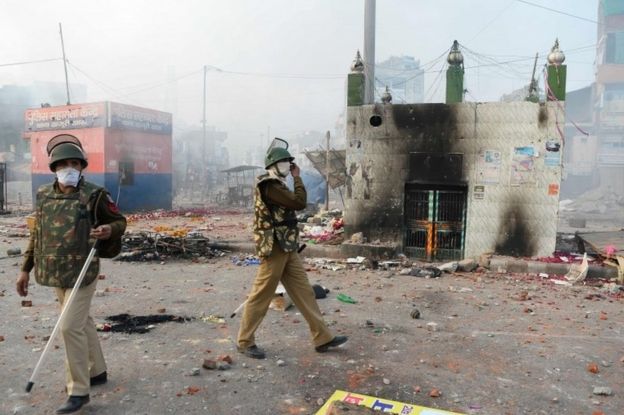
Armed Hindu mobs rioted with impunity as the police appeared to look the other way. Mosques and homes and shops of Muslims were attacked, sometimes allegedly with the police in tow. Journalists covering the violence were stopped by the Hindu rioters and asked about their religion. Videos and pictures emerged of the mob forcing wounded Muslim men to recite the national anthem, and mercilessly beating up a young Muslim man. Panicky Muslims began leaving mixed neighbourhoods.
On the other side, Muslim rioters have also been violent – some of them also armed – and a number of Hindus, including security personnel, are among the dead and injured.
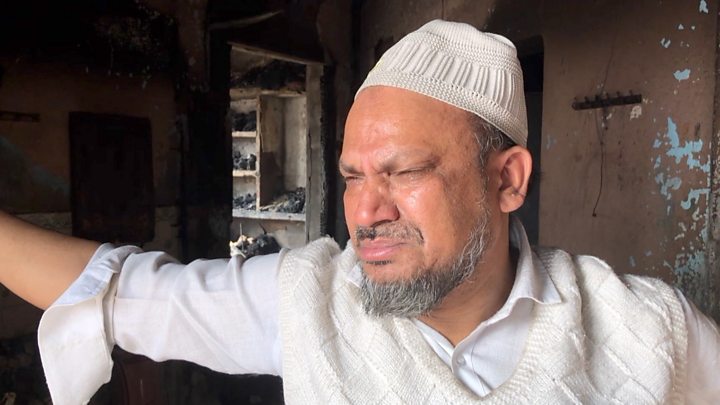
Media caption Delhi religious riots: ‘Mobs set fire to my house and shop’
Three days and 20 deaths later, Prime Minister Narendra Modi tweeted his first appeal for peace. There were no commiserations for the victims. Delhi’s governing Aam Aadmi Party was criticised for not doing much either. Many pointed to the egregious failure of Delhi’s police – the most well-resourced in India – and the inability of opposition parties to rally together, hit the streets and calm tensions. In the end, the rioters operated with impunity, and the victims were left to their fate.
Image copyright AFPImage caption More than 20 people have been killed in the rioting
Not surprisingly, the ethnic violence in Delhi has drawn comparisons with two of India’s worst sectarian riots in living memory. Nearly 3,000 people were killed in anti-Sikh riots in the capital in 1984 after the then prime minister Indira Gandhi was assassinated by her Sikh bodyguards. And in 2002, more than 1,000 people, mostly Muslims, died after a train fire killed 60 Hindu pilgrims in Gujarat – Mr Modi was then the chief minister of the state. The police were accused of complicity in both riots. The Delhi High Court, which is hearing petitions about the current violence, has said it cannot let “another 1984” happen on its “watch”.
Ashutosh Varshney, a professor of political science at Brown University who has extensively researched religious violence in India, believes that the Delhi riots are beginning to “look like a pogrom” – much like the ones in 1984 and 2002.
Pogroms happen, according to Prof Varshney, when the police do not act neutrally to stop riots, look on when mobs go on the rampage and sometimes “explicitly” help the perpetrators. Evidence of police apathy in Delhi has surfaced over the past three days. “Of course, the violence thus far has not reached the scale of Gujarat or Delhi. Our energies should now focus on preventing further escalation,” he says.
Political scientist Bhanu Joshi and a team of researchers visited constituencies in Delhi ahead of February’s state elections. They found the BJP’s “perfectly oiled party machinery constantly giving out the message about suspicion, stereotypes and paranoia”. In one neighbourhood, they found a party councillor telling people: “You and your kids have stable jobs, money. So stop thinking of free, free. [She was alluding to free water and electricity being given to people by the incumbent government.] If this nation doesn’t remain, all the free will also vanish.” Such paranoia about the security of the nation at a time when India has been at its most secure has “widened” existing ethnic divisions and “made people suspicious”, Mr Joshi said.
Image copyright AFPImage caption Mosques have been vandalised in the clashes
In the run-up to the Delhi elections Mr Modi’s party embarked on a polarising campaign around a controversial new citizenship law, the stripping of Kashmir’s autonomy and building a grand new Hindu temple on a disputed holy site. Party leaders freely indulged in hate speech, and were censured by poll authorities. A widely reported protest against the citizenship law by women in Shaheen Bagh, a Muslim-dominated neighbourhood in Delhi, was especially targeted by the BJP’s campaign, which sought to show the protesters as “traitors”.
“The repercussion of this campaign machine is the normalisation of suspicion and hate reflected in WhatsApp groups, Facebook pages, and conversations families have among themselves,” says Mr Joshi.
It was only a matter of time before Delhi’s fragile stability would be shaken. On Sunday a BJP leader issued a threat, telling the Delhi police they had three days to clear the sites where people had been protesting against the citizenship law and warned of consequences if they failed to do so. The first reports of clashes emerged later that day. The ethnic violence that followed was a tragedy foretold.
Seven people have been killed in Delhi in protests against India’s controversial new citizenship law, as US President Donald Trump made his first official visit to the country.
Violence has erupted again in parts of north-east Delhi, which saw deadly clashes between supporters and opponents of the law on Monday night.
Two journalists have been attacked and BBC reporters in the area say mobs are throwing stones and shouting slogans.
There are fears of further clashes.
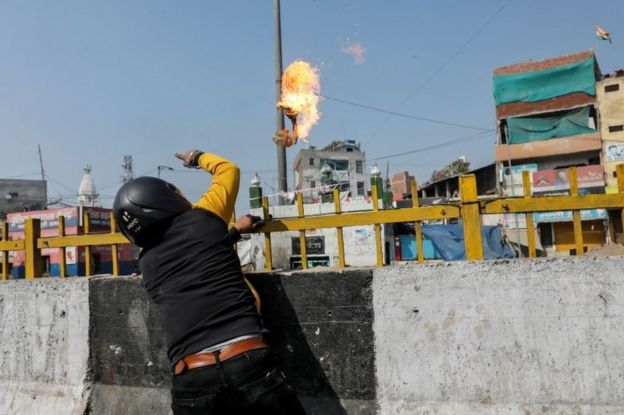
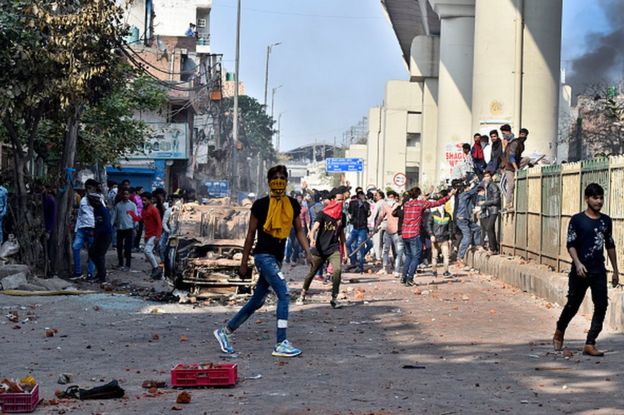
Mobs in parts of north-east Delhi are throwing stones at each other, and the situation remains tense, according to BBC correspondents.
Gokulpuri, in #Delhi today. The BBC saw mobs of people with sticks and stones chanting ‘Jai Shri Ram’. Parts of Delhi are witnessing the worst violence and rioting India’s capital has seen in decades. Seven confirmed dead. #DelhiViolence
A policeman and six civilians have died in Delhi’s deadliest violence since the Citizenship Amendment Act (CAA) – which critics say is anti-Muslim – was passed last year.
Around 150 people, including 48 policemen, are reportedly injured.
Image copyright AFP
“There are around 200 people, some are holding the Indian flag in their hands, others are holding saffron flags, generally associated with right-wing Hindu groups. They are chanting Jai Shri Ram [hail Lord Ram],” BBC Hindi reporter Faisal Mohammed said.
The crowd was also shouting “shoot the traitors”, our reporter added.
Correspondents say the timing of the unrest is an embarrassment to Prime Minister Narendra Modi as he hosts the US president and the violence has taken the spotlight away from Mr Trump’s visit.
Where is the violence?
It broke out in three Muslim-majority areas in north-east Delhi on Sunday and has continued since.
The violence in the area has seen protesters firmly split along religious lines, BBC reporters at the scene say.
Both sides have blamed each other for starting the clashes.
Image copyright REUTERSImage caption The violence in the Muslim-majority areas in north-east Delhi began on Sunday
The violence has been linked to a BJP leader, Kapil Mishra, who had threatened a group of protesters staging a sit-in against the CAA over the weekend, telling them that they would be forcibly evicted once Donald Trump had left India.
The clashes spilled into Monday and police fired tear gas shells and led baton charges to disperse the stone-throwing crowds. TV footage showed flames and smoke billowing from buildings.
Eyewitnesses said they saw charred vehicles and streets full of stones in areas like Jaffrabad and Chand Bagh on Tuesday morning. Police were allowing people to enter only after checking their identity cards. Some Metro stations have also been shut.
Who are the dead and injured?
Six civilians and one policeman have been killed in the violence so far.
“One of the seriously injured is a senior police officer. He has now been moved to another hospital for specialised treatment,” an official said.
Two journalists belonging to the NDTV news channel were badly beaten while they were out reporting on Tuesday morning.
Shahid Alvi, an auto rickshaw driver, died because of a bullet injury he suffered during the protest. His brother Rashid told BBC Hindi that Shahid was married just a month ago.
“He was shot in the stomach and died while we were taking him to the hospital,” he said.
Another victim has been identified as Rahul Solanki.
His brother, Rohit Solanki, told BBC Hindi that he died after being shot as he tried to escape from a mob.
“He had gone out to buy groceries when he was suddenly surrounded. He was shot at point blank range. We tried taking him to four hospitals but we were turned away,” he said.
What are officials doing?
Delhi’s freshly re-elected Chief Minister Arvind Kejriwal, called on the federal government to restore law and order.
“There are not enough police on the streets [in the affected areas]. Local police are saying they are not getting orders from above to control the situation, and they are not able to take action,” he told reporters.
The capital’s police force reports directly to Mr Modi’s ruling Bharatiya Janata Party (BJP)-led government.
Home Minister Amit Shah, who is in-charge of Delhi’s police forces, is holding a meeting with Mr Kejriwal to discuss the situation.
Image copyright GETTY IMAGESImage caption The police and protesters fought pitched battles on the streets of Delhi
What is the citizenship act about?
The Citizenship Amendment Act (CAA) grants amnesty to non-Muslim immigrants from three nearby Muslim-majority countries.
The new law has raised fears that India’s secular status is at risk.
Critics say it discriminates against Muslims. But the government says the protests are unnecessary as it only seeks to give amnesty to persecuted minorities.
Protests so far have been largely led by Muslim women and men, but a lot of Hindus have also joined them.
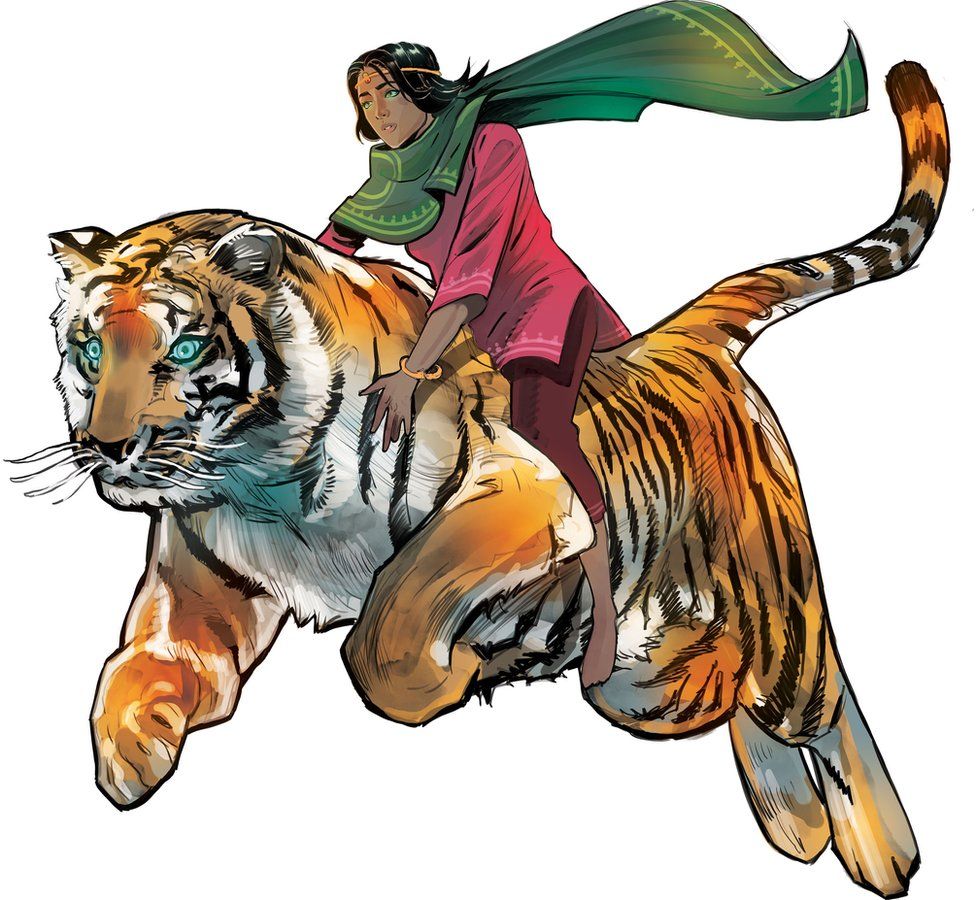
Comic crusader Priya, a gang-rape survivor who earlier campaigned against rape and acid attack, is back in a new avatar. This time she is fighting the trafficking of girls and women for sex.
The “modern-day female superhero” was first launched in December 2014, exactly two years after the horrific gang rape of a young woman on a bus in Delhi, to focus attention on the problems of gender and sexual violence in India.
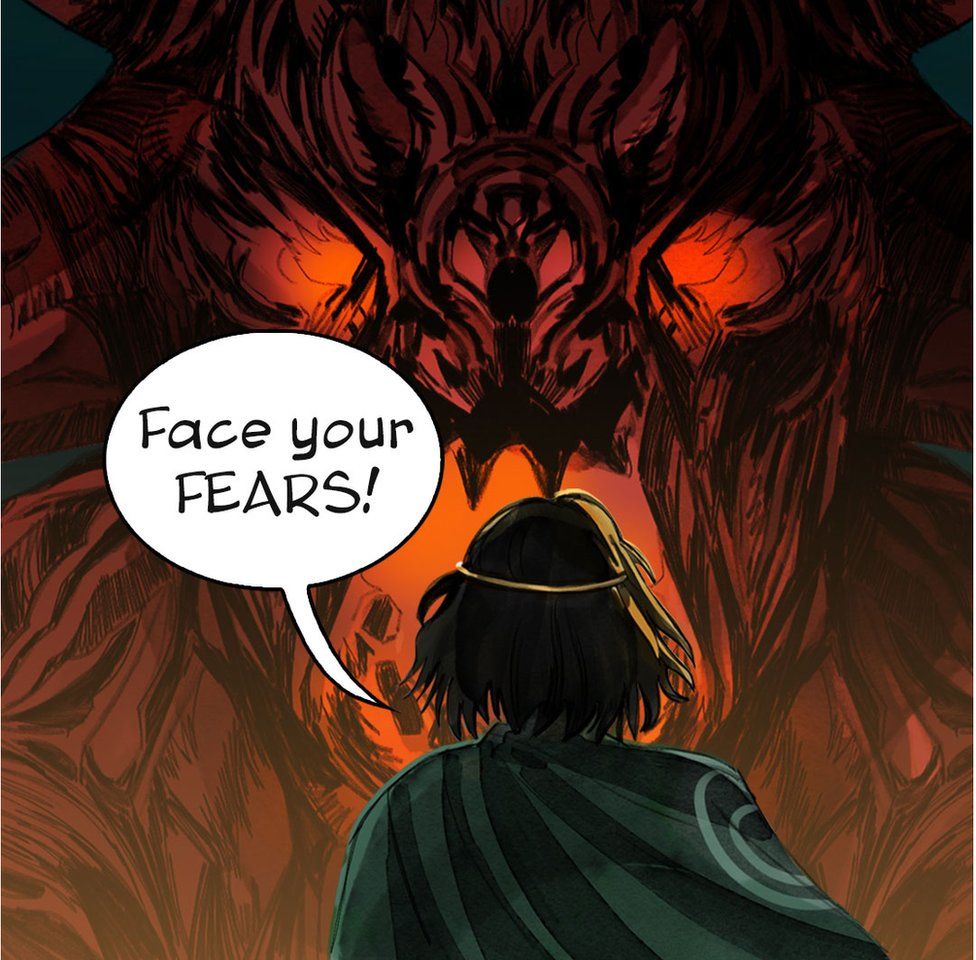
In the latest edition – Priya and the Lost Girls – she takes on the powerful sex-trafficker Rahu, the evil demon who runs an underworld brothel city where he has entrapped many women, including Priya’s sister Lakshmi.
Indian-American actor and writer Dipti Mehta, who wrote the script of the comic, draws on ancient Indian mythology to create larger-than-life fantastical characters and delivers a powerful feminist statement.
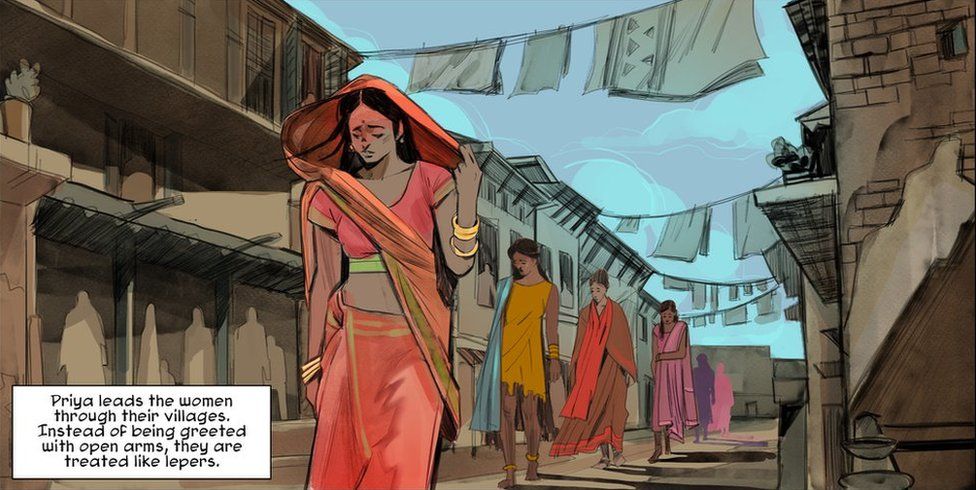
The story of Lost Girls begins when the protagonist returns home to find that there are no girls in her village.
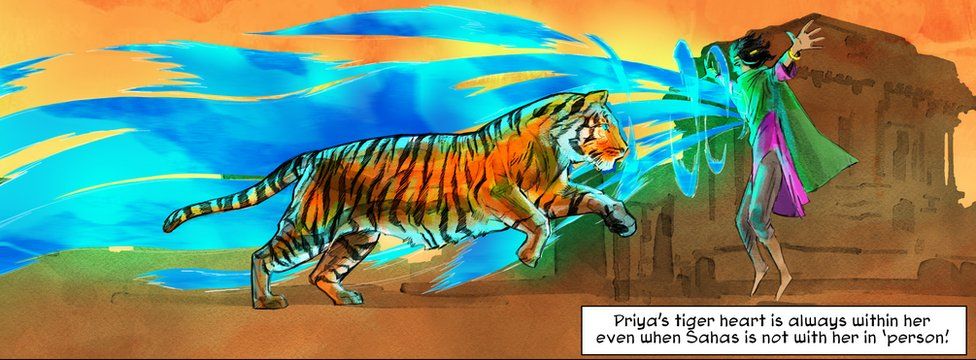
She then mounts her flying tiger Sahas (Hindi for courage) and arrives in Rahu’s den. It’s a city ruled by greed, jealousy and lust, where women exist only to serve and please men – and those who resist are turned into stone.
Image copyright PRIYASHAKTI
Priya is threatened and attacked, a woman who works for Rahu tries to lure her into the sex trade saying: “If you work for us, you’d serve only five to six men and not 20”, but in the end, good wins over evil and she manages to vanquish Rahu and liberate her sister and all the other trafficked girls.
But victory still eludes her. The families of rescued girls refuse to take them back. The survivors are treated like “lepers”, facing stigma, scorn and ridicule.
But Priya and the other girls stand up to confront patriarchy, says Ms Mehta, “just as women have broken their silence to talk about MeToo”, the campaign against sexual harassment and abuse that started in Hollywood in October 2107 and later spread to many other parts of the world.
“I was very clear from the start that Lost Girls can’t be just another comic book where good guy wins and evil dies, it had to be much more than that,” Ms Mehta says.
Image copyright PRIYASHAKTI
Ram Devineni, the Indian-American creator of the comic series, told the BBC that he had decided to focus on sex trafficking in this edition after visiting Sonagachi, India’s largest red-light area in the eastern city of Kolkata, where he met several women engaged in sex work.
“Half of them told me they had been tricked into coming there and, once there, they were forced into the sex trade. The other half said they’d agreed to do this for a living because they were dirt poor and they had no alternative.
“Often there were two to three women sharing a small dingy room, many of them had young children who lived with them, and some of them said their children slept in the same bed where they serviced clients.
Mr Devineni says that from his conversations with them, he realised that many of the women there could leave, but chose not to.
“Most believed in the idea of sacrifice, for the sake of their families, their children. The shackles that hold them back are mostly emotional and psychological coercion.”
Some of their stories, he says, have found their way into the Lost Girls, which will be launched digitally on Monday to coincide with the start of United Nation’s 16 Days of Activism Against Gender-based Violence.
Image copyright PRIYASHAKTIAccording to the United Nations Office on Drugs and Crime, human trafficking is the second largest organised criminal business in the world after the arms trade. It is even ahead of the drugs trade.
“It’s a multi-billion-dollar industry,” anti-trafficking activist Ruchira Gupta told the BBC on the phone from New York.
Ms Gupta, who supports trafficked girls and women in India through her charity Apne Aap Women Worldwide, says there are 100 million people trapped in human trafficking globally, of which 27 million are in India alone, and most of the trafficking is in girls and young women.
India, Bangladesh and Nepal, she says, make up “the epicentre” of global sex trafficking.
Ms Gupta, who collaborated on Priya and the Lost Girls, says she plans to take the comic to schools and colleges in India and the US to use it as a talking tool, “as a conversation starter on what is a very difficult topic”.
The only way to fight trafficking, she believes, is to “de-normalise” sex trade – and cinema, art and pop culture are tools that can help do that.
The comic is made to appeal to young people. After its launch, it can be downloaded for free anywhere in the world; it also has “augmented reality features”, which means people can see special animation and movies by scanning the artwork with their smartphones.
Image copyright PRIYASHAKTI
“People often make flippant comments to say that prostitution is the oldest occupation in the world, but they don’t realise that trafficking is not some poor woman getting money in exchange for having sex with a man. It is the extreme exploitation of most vulnerable girls,” Ms Gupta says.
To stop this “commodification” of girls, she adds, we need to create revulsion in men’s minds about sex trade – and it’s best to catch them young.
“We must work with young boys and teenagers, 13 to 14 year olds, through storytelling and pop culture. They learn about sex from porn sites which portray sex workers as happy hookers, and no-one sees the girl behind her.
“I want to demolish that myth of the happy hooker. I want to ensure that people see the girl behind her.”
Artwork by Syd Fini and Neda Kazemifar
You may also be interested in…
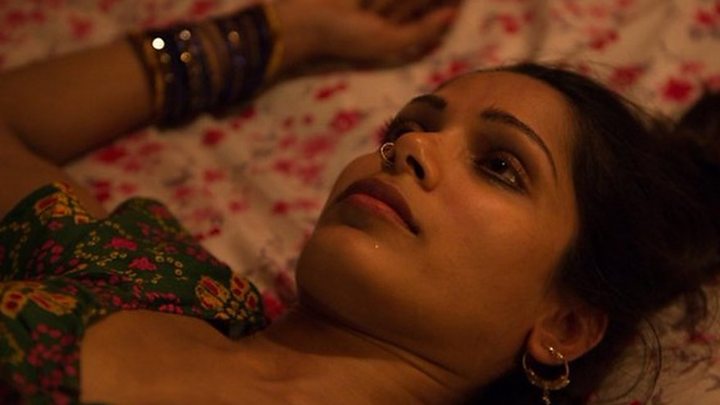
Media caption Freida Pinto: Why I made a film about sex slaves
BEIJING, Nov. 15 (Xinhua) — President Xi Jinping’s latest remarks on the Hong Kong situation are the strongest voice from the central government on the work of ending violence and chaos in Hong Kong, a spokesperson said Friday.
Xi’s remarks on Thursday in Brazil have pointed the way to stabilizing the situation in the Hong Kong Special Administrative Region (SAR), said Yang Guang, a spokesperson for the Hong Kong and Macao Affairs Office of the State Council.
The president’s words came as the disturbances in Hong Kong have lasted more than five months and radical violent crimes have been escalating recently, the spokesperson said.
His remarks are a strong support to the Hong Kong SAR government led by Chief Executive Carrie Lam, a great inspiration to Hong Kong residents, and a stern warning to the rioters and their backroom supporting forces, Yang said.
The office will work with resolve to implement the president’s requirements to firmly support the chief executive in leading the SAR government to govern in accordance with the law, firmly support the Hong Kong police in strictly enforcing the law, and firmly support the Hong Kong judicial bodies in severely punishing the violent criminals in accordance with the law, Yang said.
The spokesperson pledged various means of supporting and encouraging the Hong Kong people from all walks of life to build up “overwhelming positive energy” in countering violence and safeguarding rule of law, for the end of chaos and the restoration of social stability in Hong Kong as soon as possible.
“The central government and 1.4 billion people of China will always be the strongest backing for Hong Kong to overcome any challenges and risks,” he said.
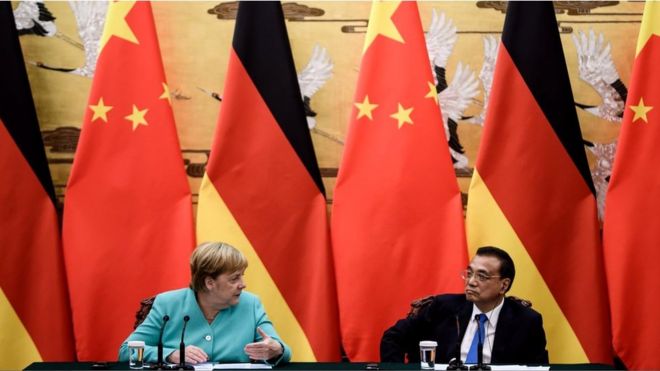
Image copyright EPAImage caption Ms Merkel calls for dialogue while Mr Li says China can handle its own matters
China’s Premier Li Keqiang has said Beijing supports the Hong Kong government “to end the violence and chaos”.
He is the most senior Chinese official to comment on the unrest which has rocked Hong Kong for months.
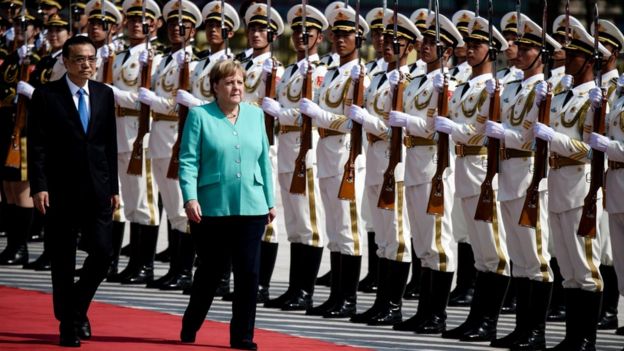
His comments came during a joint press conference with German Chancellor Angela Merkel in Beijing.
Hong Kong has seen months of often-violent protests calling for democracy and less influence from China.
The protests were sparked by changes to a law that would allow extradition to mainland China, but have since widened to include calls for an independent inquiry into police brutality and demands for greater democracy.
Image copyright EPAImage caption Hong Kong activists hope for Western support
Instead, protests continued on Friday evening, when clashes erupted between police and the demonstrators outside a subway station on the Kowloon peninsula.
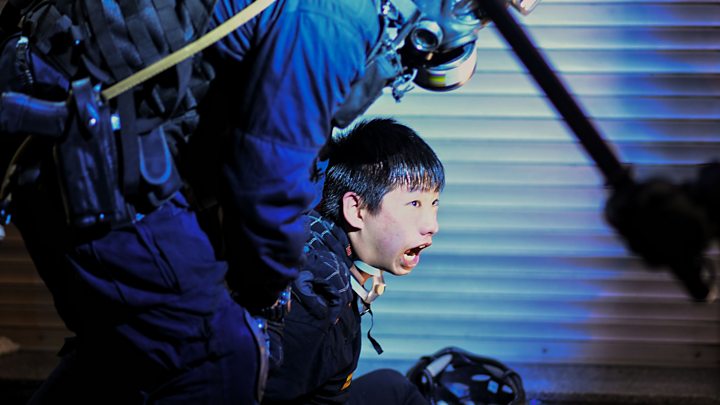
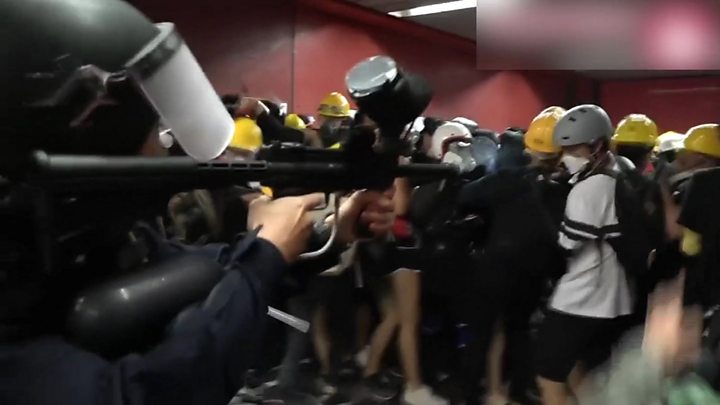
Riot police fired both tear gas and rubber bullets at protesters before clearing the nearby streets as the crowd of protesters was forced to retreat.
What did the Chinese premier say?
In August, China had likened to protests to terrorism, warning activists not to “underestimate the firm resolve” of the Beijing government.
Li Keqiang, China’s second highest-ranking leader, told reporters on Friday: “The Chinese government unswervingly safeguards ‘one country, two systems’ and ‘Hong Kong people govern Hong Kong people’.”
He said China backed Hong Kong “to end the violence and chaos in accordance with the law, to return to order, which is to safeguard Hong Kong’s long-term prosperity and stability”.
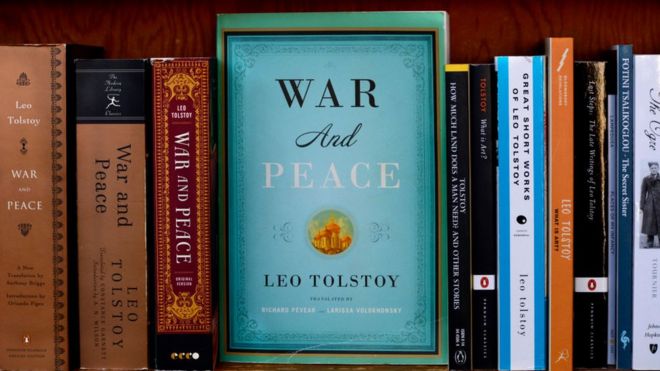
Leo Tolstoy’s War and Peace is in the news in India after a judge asked an activist to explain why he had a book “about war in another country”.
Vernon Gonsalves had appeared in the high court in Mumbai city on Wednesday for a hearing on his bail plea.
The judge’s question sparked a flurry of tweets, with users both outraged and bemused by it.
Five activists, including Mr Gonsalves, were arrested in August 2018 in connection with caste-based violence.
Police raided and searched their homes at the time and submitted a list of books, documents and other belongings to the court. The public prosecutor told the court that police had found “incriminating evidence” in Mr Gonsalves’ home, including “books and CDs with objectionable titles”.
“Why were you having these books and CDs at your home? You will have to explain this to the court,” the judge told Mr Gonsalves.
Police said that all five activists incited Dalits (formerly untouchables) at a large public rally on 31 December 2017, leading to violent clashes that left one person dead. They accused them of “radicalising youth” and taking part in “unlawful activities” which led to violence and showed “intolerance to the present political system”.
The arrests had been criticised by many at the time who saw them as an attack on free speech, and even a “witch hunt” against those who challenged the governing Bharatiya Janata Party (BJP).
So the judge’s question quickly made news and War and Peace was soon trending on Twitter.
The tweets ranged from jokes to shock over the state of India’s judiciary.
Others wondered how they would fare in a courtroom given what’s on their bookshelf, and some have issued a call out asking people to share books from their own “subversive” collection.
People from all walks of life take part in a rally to voice their opposition to violence and call for restoring social order, expressing the people’s common will to protect and save the city at Tamar Park in south China’s Hong Kong, Aug. 17, 2019. (Xinhua/Lui Siu Wai)
HONG KONG, Aug. 17 (Xinhua) — “Anti-violence!”, “Save Hong Kong!” Over 470,000 people gathered on Saturday in a rally held at Tamar Park, Admiralty of Hong Kong, to voice out their demand for peace and stability in Hong Kong.
At around 4 p.m. local time, the metro station near Tamar Park was swarming with people. An hour later, the rally started as the Chinese national anthem was ringing out.
Waving the Chinese national flag and the flag of the Hong Kong Special Administrative Region (HKSAR) and holding signs written with slogans including “Stop Riots”, “Anti-violence” and “Save Hong Kong”, the crowd was enthusiastic and impassioned despite the rain. They chanted the slogans to express their views.
At the beginning of the rally, a video was played, featuring a recording of a policeman’s wife who spoke, choking back sobs, of how violent protesters stormed the police stations and attacked the police. She appealed to the public to support the police and Hong Kong during this difficult time. “Police, keep it up!”, “Save Hong Kong!” the crowd cried out at the end of the video.
Tam Yiu-chung, a member of the Standing Committee of China’s National People’s Congress, called upon people from all walks of life to firmly oppose violence.
The national flag and emblem represent the dignity of the country, and those who insult the national flag and emblem are turning themselves into enemies of the people in the whole country, Tam added.
Rebuking the recent illegal assemblies and violent acts at Hong Kong International Airport as “the ugliest riot in the world”, Maria Tam Wai-chu deputy director of the National People’s Congress Standing Committee Basic Law Committee from Hong Kong, stressed that everyone should respect the freedoms of others and the exercise of freedom does not include wanton destruction of public properties or obstruction of public transport.
Wong Kam-leung, chairman of Hong Kong Federation of Education Workers, said that the violence in Hong Kong has been escalating over the past two months and he was distressed to see young people using force and violating laws.
He called on the young people to “stop and think twice” before engaging in violent or illegal acts.
A 57-year-old gardener surnamed Chan said sometimes she could not go to work because radical demonstrators disrupted the traffic, “which was very annoying.”
“Hong Kong has always been a peaceful society. I hope the extremist radicals stop violent acts so that people can return to peaceful life,” she said.
A finance professional surnamed Lee said his business has been badly hit by the illegal demonstrations since many of his clients are too concerned to invest in Hong Kong.
“The common aspiration of the overwhelming majority of people in Hong Kong is that the violence and chaos will stop soon. Our community has been torn apart and can not afford any more of it,” he said. “We urge the demonstrators and mobs to stop it immediately; otherwise, the whole community has to pay for the consequences.”
A local resident, Wendy, a mother of a young boy, told the reporter that her life was largely affected by the violent protests going on in the recent two months.
“For the sake of our future generations and Hong Kong getting back on track, we refuse to be in silence, we must let the world hear our voice,” she said firmly.
The assembly ended at around 6 p.m. local time, with the participants singing the chorus Below the Lion Rock, a famous song in Hong Kong that represents the spirit of unity and hard-working.
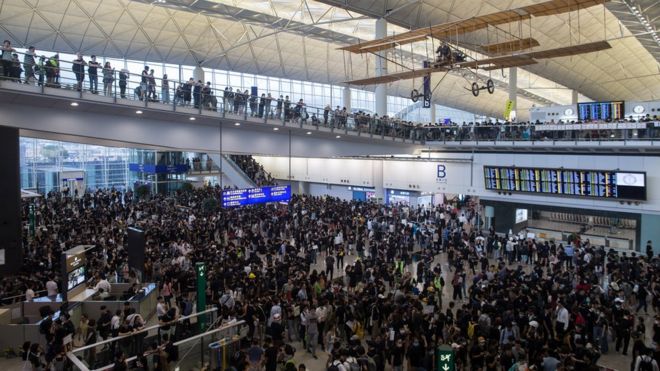
Image copyright EPAImage caption Officials say about 5,000 gathered for the fourth day of protests at the airport
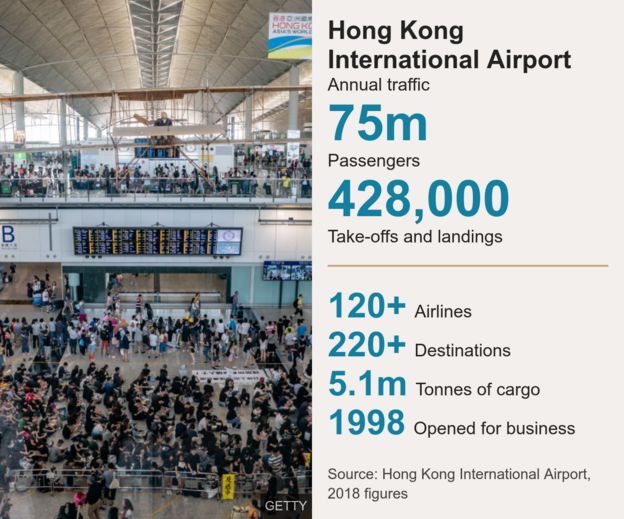
Hong Kong International Airport cancelled all departures on Monday, as thousands of anti-government protesters occupied and caused disruption.
Passengers have been told not to travel to the airport, which is one of the world’s busiest transport hubs.
In a statement, officials blamed “seriously disrupted” operations.
Many of those protesting are critical of the actions of police, who on Sunday were filmed firing tear gas and rubber bullets at close range.
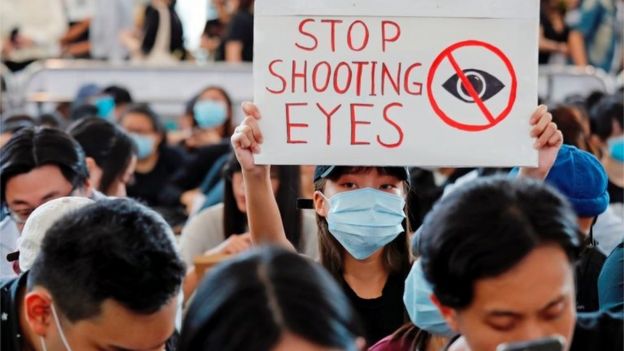
Some protesters wore bandages over their eyes in response to images of a woman bleeding heavily from her eye on Sunday, having reportedly been shot by a police projectile.
In a statement on Monday afternoon, Hong Kong’s Airport Authority said they were cancelling all flights that were not yet checked in.
More than 160 flights scheduled to leave after 18:00 local time (10:00 GMT) will now not depart.
Arrivals already heading into Hong Kong will still be allowed to land, but other scheduled flights have been cancelled.
Officials are now working to reopen the airport by 06:00 on Tuesday, a statement said.
Some passengers expressed annoyance at the disruption. “It’s very frustrating and scary for some people,” one man from Pakistan told the BBC. “We’ll just have to wait for our next flight.”
Helena Morgan, from the UK, said she was set to return to the UK to get her exam results on Thursday. “I’m hoping we get back for them and we’re not on a flight,” she said.
But others were more understanding of the protests. “I was expecting something, given all the news,” one arrival, Gurinda Singh, told Reuters news agency.
As rumours spread that police plan to move in on protesters on Monday evening, thousands opted to leave on foot. There are large backlogs for transport back into the centre, local reports say.
The BBC’s Stephen McDonell, who is at the scene, says the airport has effectively shut down while authorities work out how to deal with the crisis.
Hong Kong’s mass demonstrations and unrest show no sign of abating, more than two months after they were sparked by a controversial extradition bill.
Beijing officials have strongly condemned Sunday’s violence and linked violent protesters to “terrorism”.
Image copyright REUTERSImage caption Many of those who gathered carried signs condemning police conduct
What happened on Sunday?
On Sunday afternoon, a peaceful rally in the city’s Victoria Park led to clashes when protesters moved out of the area and marched along a major road despite a police ban.
There were confrontations in several central districts and police used rubber bullets in an attempt to disperse the demonstrators.
In the bustling central Wan Chai district, petrol bombs and bricks were thrown at police, who responded by charging at protesters.
A number of people, including a police officer, were injured in the clashes.
Videos on social media also showed officers storming enclosed railway stations and firing tear gas.
Footage inside another station showed officers firing what appeared to be rubber bullets at close range and several police officers beating people with batons.
Media caption Violence erupts in HK train stations
Local media outlets reported that suspected undercover police officers had dressed-up as protesters to make surprise arrests.
While protests in the city have turned increasingly violent, there were no reports of arrests during the three previous days of the airport sit-in.
What has the reaction been?
On Monday the Chinese authorities, who have not yet physically intervened to quell the unrest, used their strongest language yet to condemn violent protesters.
“Hong Kong’s radical demonstrators have repeatedly used extremely dangerous tools to attack police officers, which already constitutes a serious violent crime, and also shows the first signs of terrorism emerging,” Yang Guang, a spokesman for the Hong Kong and Macau Affairs Office (HKMAO), said at a press briefing.
“This wantonly tramples on Hong Kong’s rule of law and social order.”
Demonstrations started in June in opposition to a proposed extradition bill, which would have allowed suspected criminals to be sent to mainland China for trial.
Critics said it would undermine Hong Kong’s legal freedoms, and could be used to silence political dissidents.
Although the government has now suspended the bill, demonstrators want it to be fully withdrawn.
Their demands have broadened to include calls for an independent inquiry into alleged police brutality, and an amnesty for all arrested protesters.
Hong Kong is part of China but its citizens have more autonomy than those on the mainland.
It has a free press and judicial independence under the so-called “one country, two systems” approach – freedoms which activists fear are being increasingly eroded.


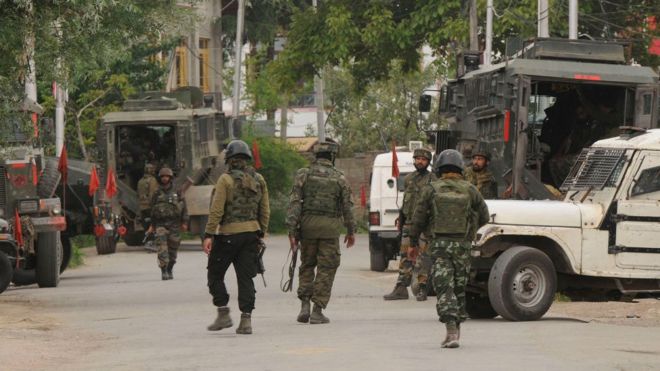 Image copyright GETTY IMAGES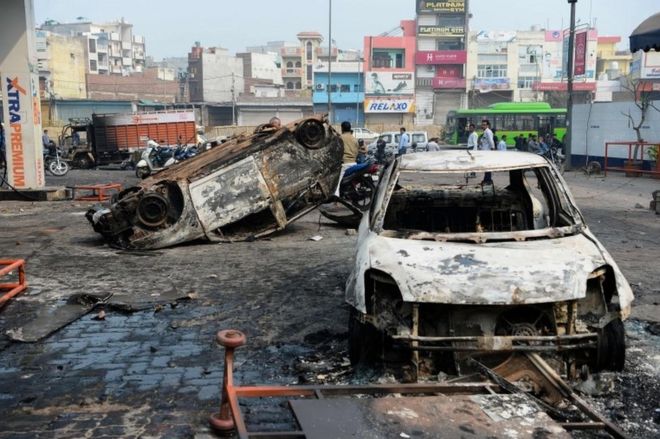








 CHINDIA ALERT: You'll be living in their world, very soon