Chindia Alert: You’ll be Living in their World Very Soon
aims to alert you to the threats and opportunities that China and India present. China and India require serious attention; case of ‘hidden dragon and crouching tiger’.
Without this attention, governments, businesses and, indeed, individuals may find themselves at a great disadvantage sooner rather than later.
The POSTs (front webpages) are mainly 'cuttings' from reliable sources, updated continuously.
The PAGEs (see Tabs, above) attempt to make the information more meaningful by putting some structure to the information we have researched and assembled since 2006.
People’s Liberation Army has officially recorded no infections but disease fears have delayed recruitment, training and operations
Analysts say Sars experience guided military’s prompt response, but combat effectiveness has been affected
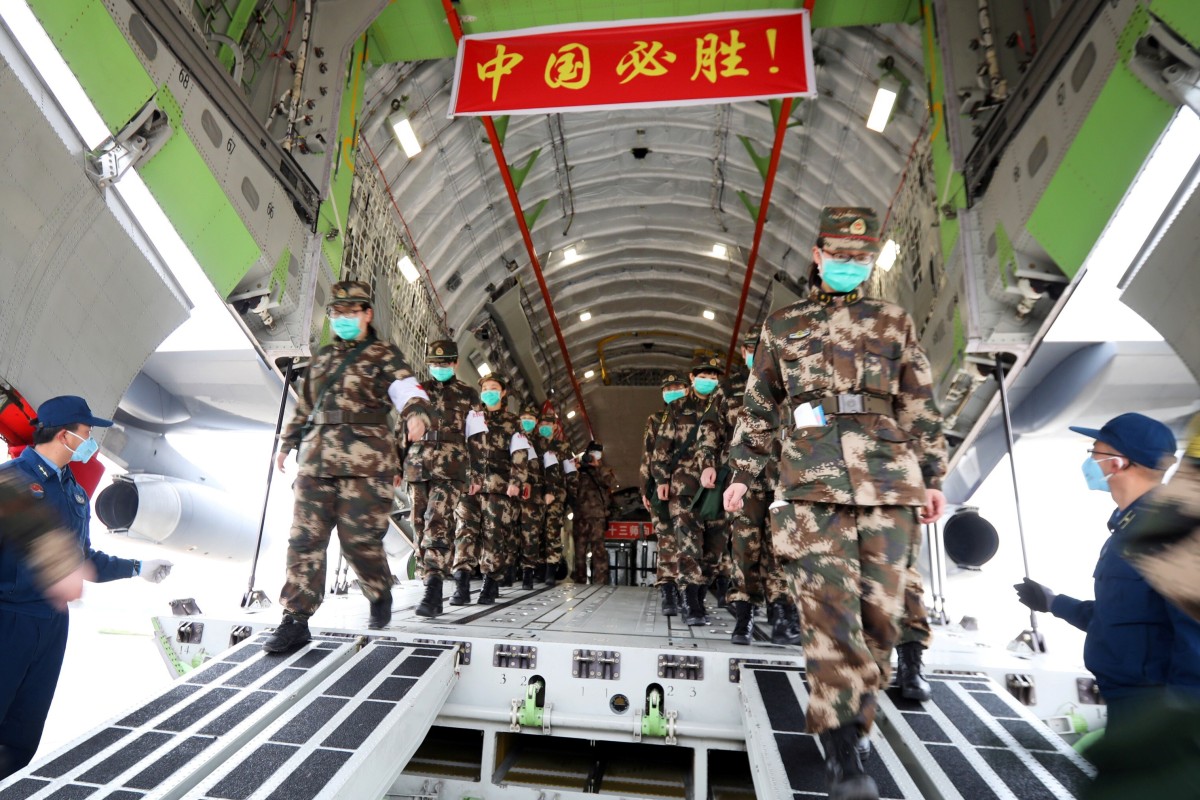
Chinese military medical personnel arriving in Wuhan in February to assist with the coronavirus outbreak response to the February. Photo: Reuters
China’s military may have been spared any coronavirus infections, but the global health crisis has slowed the progress of Chinese President Xi Jinping’s plan to transform the People’s Liberation Army into a modern fighting force capable of long-range power-projecting operations, experts say.
According to China’s defence ministry, the world’s largest armed force – with about 2.3 million personnel – has had zero confirmed cases of Covid-19. In contrast, the US and Russian militaries, ranked second- and third-largest in the world, have reported more than 4,000 and 1,000 respectively.
But the PLA has been affected in other ways by the disease, which was first reported in Wuhan in December before going on to infect 3.9 million people around the world to date.
Safety concerns delayed its annual spring recruitment programme – it has been rescheduled for August – while the PLA Navy was forced to change its training arrangements, switching to classroom study of military theory and tactics, according to Xinhua.
“The PLA is still a conscription army and, given its large turnover of soldiers every year and the late recruitment and training plan this year, the coronavirus pandemic has already affected combat effectiveness,” said Adam Ni, director of the China Policy Centre, an independent, non-profit research organisation based in Canberra, Australia.
China’s military budget will still rise despite coronavirus, experts predict
3 May 2020
The navy’s operations, in particular, would have been affected, according to Charlie Lyons Jones, a researcher from the Australian Strategic Policy Institute’s defence and strategy programme.
“The Chinese navy, short of highly effective disease control measures, is unlikely to avoid similar outbreaks of the novel coronavirus on board its warships,” he said.
“Therefore, even if the PLA Navy currently has zero personnel infected by the novel coronavirus, its position as a navy that can operate effectively in a period of higher-than-normal tension remains precarious at best,” Jones said. He also questioned Beijing’s claims that the military was virus-free.
“The PLA played an important role in China’s response to the coronavirus outbreak in Wuhan … The idea that none of these personnel working on the front lines in Wuhan became infected by the novel coronavirus would be inconsistent with the experiences of countries from around the world,” he said.
More than 4,000 military medical workers were sent to Wuhan as part of China’s effort to contain the outbreak at ground zero – which included the rapid-built emergency field facility, the Huoshenshan hospital – and their efforts were highlighted in a documentary screened recently by state broadcaster CCTV.
China opens coronavirus hospital built in 10 days
At the time, rumours were rampant that the Chinese military had been affected by the coronavirus, fuelled by a report on February 17 by the official PLA Daily that some soldiers had been placed in quarantine and Yu Qiusong, captain of the Changzhou type 054A frigate, was isolating in a guest house. The news report did not mention why the personnel were in quarantine.
But analysts said that whether the official numbers were accurate, the PLA’s closed management, fast response and past experience with severe acute respiratory syndrome (Sars) gave China’s military an advantage in keeping the coronavirus at bay.
Zhou Chenming, a Beijing-based military observer, said a key reason for the less serious hit to the PLA compared to other forces was its speed in recognising the severity of the situation.
“What’s more, the PLA has its own logistic support system that can help minimise its contact with the outside world, thus reducing the possibility of contracting the virus,” he said.
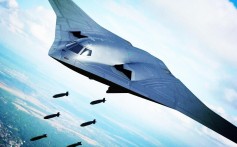
China’s long-range stealth bomber could make its debut this year
4 May 2020
According to Xinhua, the PLA’s Centre for Disease Control and Prevention drew up an emergency response plan and mobilisation arrangements on January 20, the same day Xi issued an instruction to the public that the virus must be “resolutely contained”.
Timothy Heath, a senior international defence research analyst with the Rand Corporation, a US think tank, said China’s military had benefited from its less international role, compared to US forces.
“The US is a globally distributed force while the Chinese military largely operates on the mainland. The US thus faces challenges in containing the disease that the Chinese military does not have to face … and the US military has a large range of missions and tasks it carries out to counter threats to its allies and partners, as well as to US security. This complicates efforts by the US military to carry out disease control measures,” he said.
European nations are divided over how best to deal with Beijing, which looms larger in their policy and public debates
Think tanks came together and reported on China’s much-touted medical aid and ‘mask diplomacy’ during Covid-19 crisis
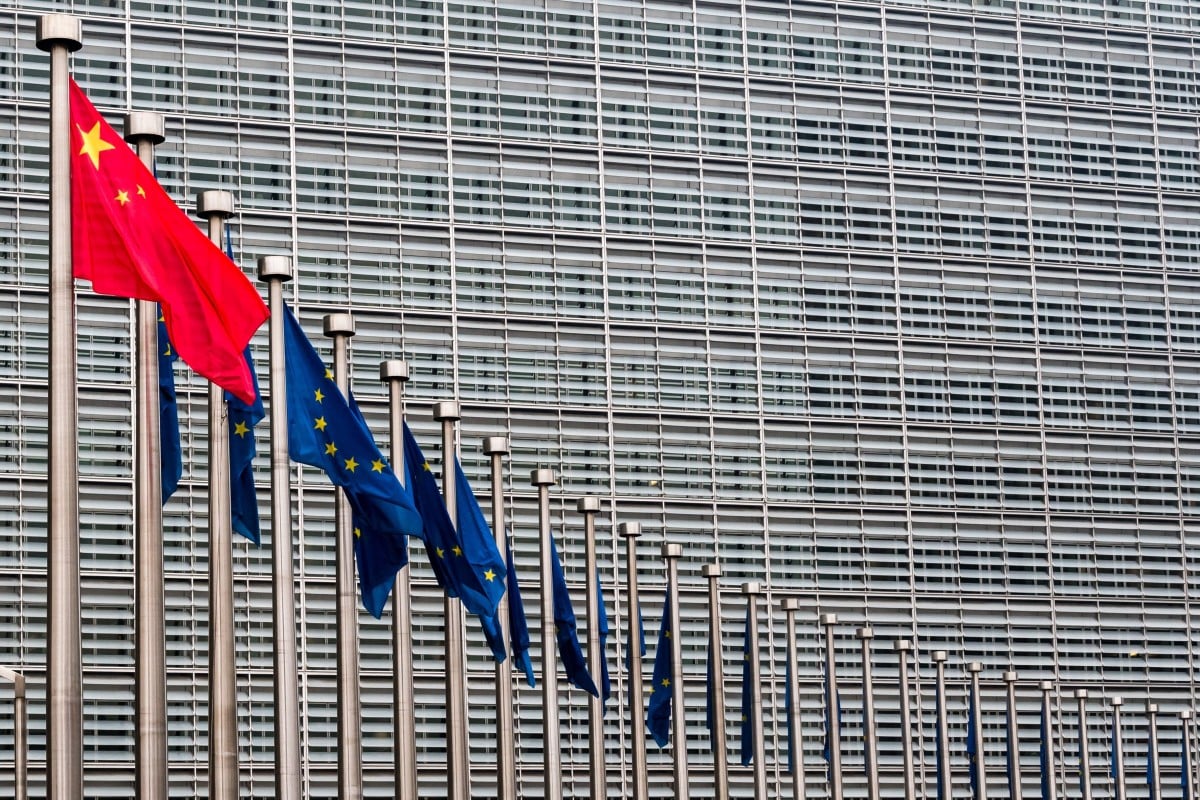
European nations are looking to be more cohesive in their approach towards relations with China. Photo: Bloomberg
As Beijing steps up its pressure campaign on Europe in the wake of the Covid-19 pandemic, their relations look set to become more diverse and contested amid growing distrust and wariness of China’s expanding influence, according to new research.
The study, based on analysis of China’s role in 19 European countries’ handling of the coronavirus crisis, showed that Europe remained largely divided over how to deal with Beijing, which has figured ever more prominently in policy and public debates in many parts of the continent.
A total of 28 experts from 21 think tanks across the continent, collectively known as the European Think-tank Network on China, were involved in the research.
It came on the heels of a diplomatic debacle in the past week that saw the European Union reportedly bowing to pressure by China. The EU reportedly toned down part of a report documenting Beijing’s disinformation efforts to deflect the blame and rewrite the global coronavirus narrative.
Although a spokesperson for the EU denied those allegations, the saga has “moreover revealed the pressures that China has placed on
officials during the crisis”, according to John Seaman, editor of the report and a research fellow at the French Institute of International Relations.
In a phone call on Wednesday, Chinese Premier Li Keqiang and European Commission President Ursula von der Leyen shrugged off concerns about their discord and vowed to boost the fight against the virus and boost economic recovery, according to Xinhua.
Germany ‘rejected China’s bid for positive spin’ on pandemic response
27 Apr 2020
According to Seaman, the Covid-19 crisis hit at a time when traditionally trade-driven China-EU relations had grown more complex and competitive after the European Commission said for the first time last year that Beijing was a systemic rival.
“Debates over the need to adopt more coherent strategies towards China have been emerging across Europe. In many ways, the current crisis has become a catalyst for a number of trends that have been shaping Europe-China relations in recent years, while in other ways it has turned the tables,” he said in the report.
“It has simultaneously brought Europe and China into closer cooperation, pushed them further apart, and seemingly underlined the fractures that exist within Europe on how to approach an increasingly influential China.”
A growing number of European countries, including Sweden and Britain, have joined the United States and Australia in calling for an international inquiry into China’s handling of the pandemic. Leaders from Germany and France have also pressed Beijing for greater transparency about the origin of the deadly virus.
The European think tanks’ report was also focused on China’s unusually aggressive coronavirus diplomacy, with Chinese embassies and ambassadors shifting the blame on to Western democracies and promoting Beijing’s messaging “with varying degrees of dogmatism, divisiveness and moderation” on Twitter and in traditional media.
“While China’s increasingly proactive public diplomacy is widespread, and there appears to be a relative degree of consistency in messaging, there is a diversity in method that ranges from low key (Latvia or Romania) to charm offensive (Poland, Portugal, Italy or Spain) to provocative or aggressive (Sweden, Germany or France),” the report said.
It examined China’s much-touted medical aid and “mask diplomacy” and found “a correlation between Chinese companies with commercial interests in the country and donations from these companies” in countries including Greece, Hungary, Italy, Portugal and Spain.
Boxes of medical supplies from China in Rome. Some European nations are growing wary about China’s diplomatic overreach and apparent willingness to alter the coronavirus narrative. Photo: Xinhua
Many countries have pushed back against China’s diplomatic overreach and its preferred narrative that has served to “[underline] the apparent successes of its autocratic governance model, ignoring its clear downfalls in managing the crisis initially, while sowing doubt on the effectiveness of liberal democracies”, according to Seaman.
While the European Union’s foreign policy chief Josep Borrell warned of Beijing’s geopolitical game to expand its influence through spinning and “politics of generosity”, countries such as Germany and Sweden have moved to tighten investment screening, 5G and industrial policies targeting Chinese firms.
Zhang Ming, China’s top envoy to the EU, last week dismissed the concerns about China’s alleged ploy to use the vulnerabilities of other countries to advance China’s geopolitical interests, such as with the country’s embattled tech giant Huawei and the ambitious Belt and Road Initiative.
“Disinformation is our common enemy and we need to make joint efforts to eradicate it,” Zhang said, claiming China had been a victim of unspecified disinformation campaigns.
The report also noted that China’s actions towards Europe in times of crisis looked set to amplify the fractures across the continent and prompt further debates about the need for a coherent EU strategy on China.
A poll of more than 12,000 people across the 28 EU member countries by German think tank Bertelsmann Stiftung in September last year showed 45 per cent of Europeans saw China as a competitor while only 9 per cent believed their countries shared the same political interests or values with China.
Another survey of 16 European countries released by the Pew Research Centre in December also showed the continent remained deeply divided over how to approach China.
While people in most of western Europe and some of Central and Eastern Europe, such as Slovak and Czech, saw China negatively, 51 per cent in Greece had a positive view of China and those in Russia, Ukraine, Poland, Bulgaria and Lithuania tended to see China more favourably.
BEIJING (Reuters) – China announced on Wednesday that its parliament will open a key annual session on May 22, signalling that Beijing sees the country returning to normal after being reduced to a near-standstill for months by the COVID-19 epidemic.
During the gathering of the National People’s Congress in the capital, delegates will ratify major legislation, and the government will unveil economic targets, set defence spending projections and make personnel changes. The ruling Communist Party also typically announces signature policy initiatives.
The session was initially scheduled to start on March 5 but was postponed due to COVID-19, which has infected nearly 83,000 people and killed more than 4,600 on the mainland after emerging late last year in the central city of Wuhan.
As the epidemic has subsided, economic and social life gradually returned to normal, making it possible for the congress to convene, the official Xinhua news agency quoted the standing committee of the NPC, the legislature’s top decision-making body, as saying.
The committee also appointed Huang Runqiu as the new minister for ecology and environment, a post vacated when predecessor Li Ganjie became deputy Communist Party chief for Shandong province earlier this month, Xinhua reported.
Tang Yijun was also named as the new justice minister to replace Fu Zhenghua, who has reached the retirement age of 65 for ministers.
The Chinese People’s Political Consultative Conference (CPPCC), an advisory body to parliament, has proposed starting its annual session a day before the parliamentary session opens.
Analysts expect China to roll out additional fiscal stimulus in order to cushion the blow from COVID-19, which has developed in to a worldwide pandemic that some fear will trigger a severe global recession.
China’s economy contracted for the first time on record during the January-March period, when the government imposed severe travel and transport restriction to curb the spread of the epidemic.
Parliament is also expected to discuss the anti-government protests in Hong Kong, amid growing speculation that Beijing take steps to strengthen its grip on the city.
It is unclear how long parliament and its advisory body will meet for this time, and people familiar with the matter have told Reuters that this year’s annual sessions could be the shortest in decades due to COVID-19 concerns. Usually more than 5,000 delegates descend on Beijing from all over China for at least 10 days.
Beijing city plans to ease quarantine rules as early as Thursday, two sources familiar with the situation told Reuters, ahead of the key political meetings.
People arriving in the capital from other parts of China will no long have to be quarantined for two weeks unless they come from high-risk areas such as Heilongjiang in the north and some parts of Guangdong in the southeast, the sources said.
Pupils given headwear modelled on a style worn by officials a thousand years ago to reinforce the message that they must stay a metre away from each other
One legend says the hats were given long extensions to stop courtiers whispering among themselves when meeting the emperor
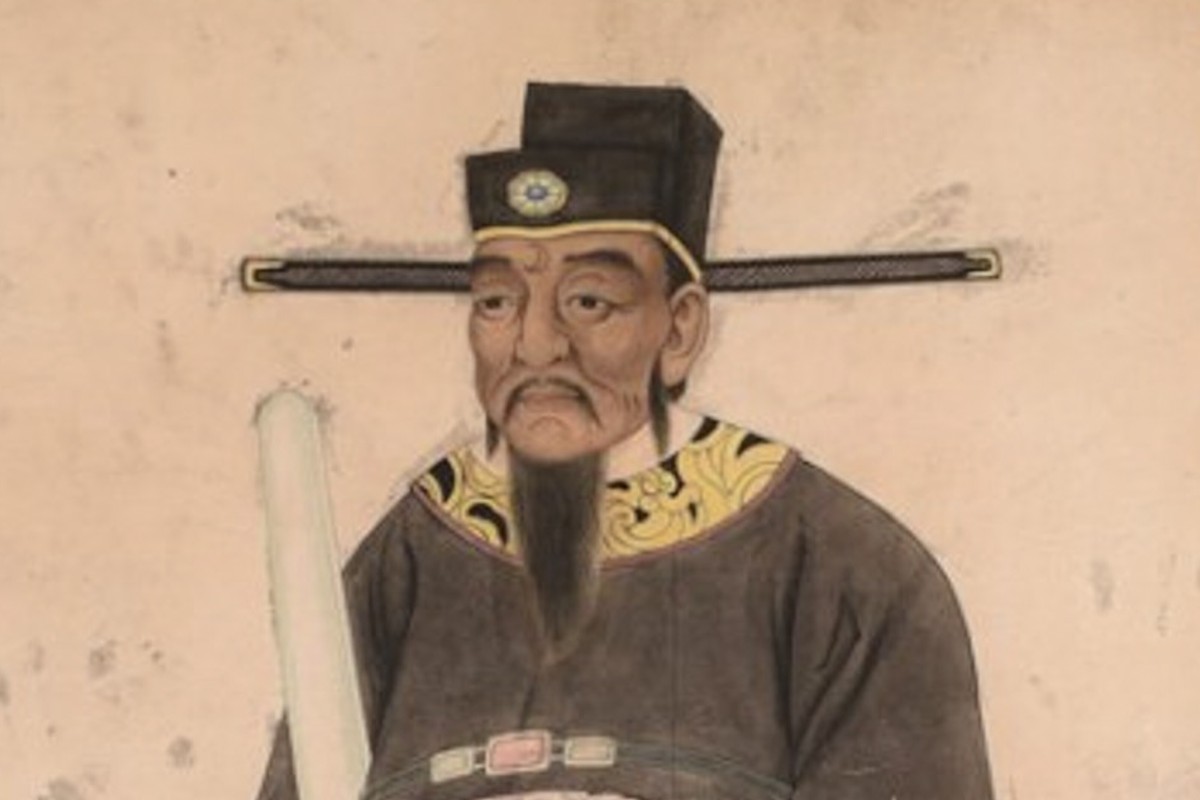
Hats with long extensions were worn by officials during the Song dynasty. Photo: Handout
An ancient Chinese hat has joined face masks and hand sanitisers as one of the weapons in the fight against Covid-19.
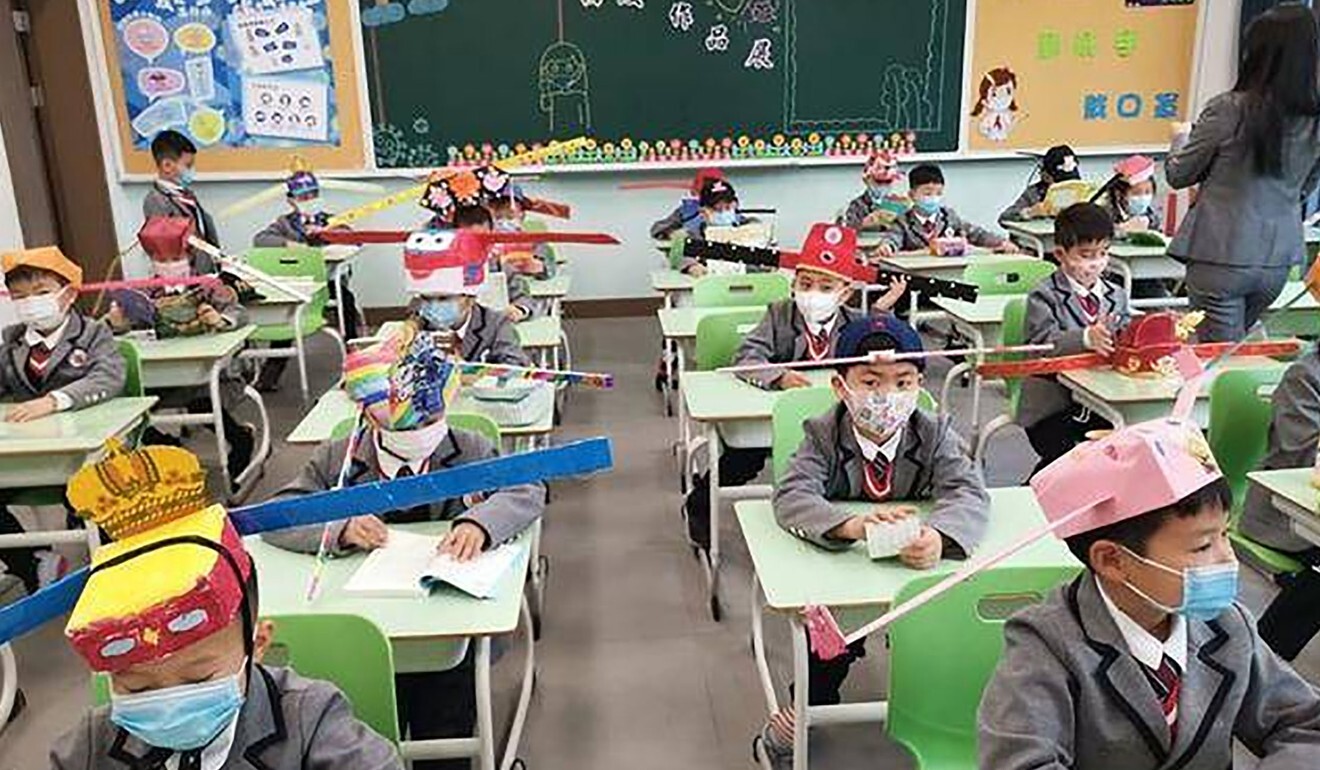
A primary school in Hangzhou in the east of the country took inspiration from the headgear worn by officials in the Song dynasty, which ruled China between 960 and 1279, to reinforce lessons on social distancing.
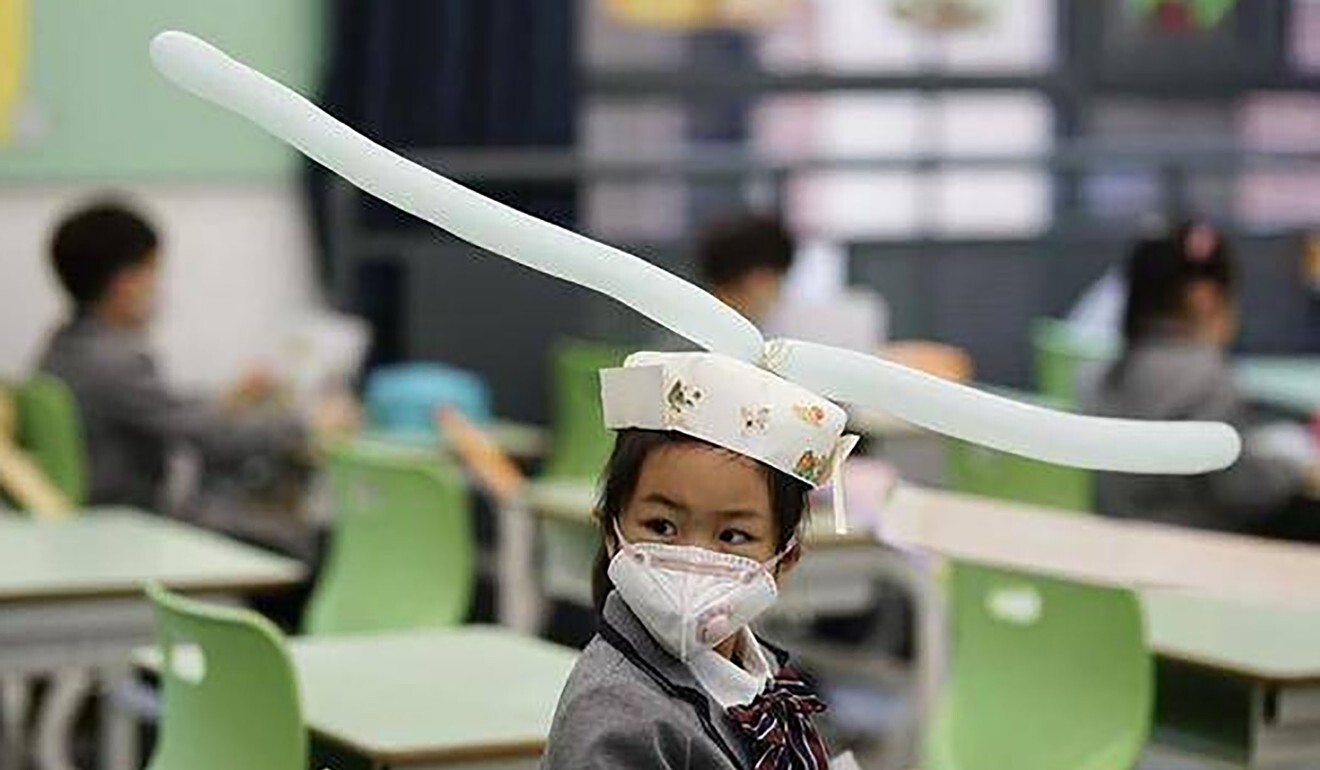
Pupils at the school wore their own handmade versions of the hats, which have long extensions, or wings, to keep them at least a metre (3ft) apart when they returned to school on Monday, state news agency Xinhua reported.
One legend says that the first Song emperor ordered his ministers to wear hats with two long wings on the sides so that they could not chitchat in court assemblies without being overheard, according to Tsui Lik-hang, a historian at City University of Hong Kong.
Pupils at a school in Hangzhou made their own versions of the hats. Photo: Weibo
However, he warned that this story came from a much later source, adding: “The Song emperors, in fact, were also depicted to have worn this kind of headwear with wing-like flaps.”
The World Health Organisation recommends that people stay at least a metre apart to curb the spread of the coronavirus that causes Covid-19.
Coronavirus droplets may travel further than personal distancing guidelines, study finds
16 Apr 2020
“If you are too close, you can breathe in the droplets, including the Covid-19 virus if the person coughing has the disease,” the global health body advises.
An early childhood education specialist said the hats were a good way to explain the concept of social distancing to young children, who find it difficult to understand abstract concepts.
The pupil’s head gear is designed to drive home the social distancing message. Photo: Weibo
“As children can see and feel these hats, and when the ‘wings’ hit one another, they may be more able to understand the expectations and remember to keep their physical distance,” said Ian Lam Chun-bun, associate head of the department of early childhood
Using pictures of footprints to indicate the right distance to keep when queuing, standing, and even talking to schoolmates was also helpful, said Lam, who recommended visual aids and aids that stimulate other senses, such as hearing and touch.
“We can use sharp colours or special textures, like tactile paving,” he added.
Residents of nine regions, including Wuhan, Beijing and Shanghai, to be sampled using both nucleic acid and antibody tests, state media reports
Research ‘very important as it will help us to direct our countermeasures in the future’, molecular virologist says
China is using dual testing to determine how many people have been infected with Covid-19 but recovered without showing symptoms. Photo: AP
China has begun a major survey to determine how many people might have been infected with the coronavirus and then recovered without ever showing symptoms, while also assessing immunity levels within different communities, state media reported.
The research will be conducted in six provinces, including Hubei which was the focus of the initial outbreak, as well as Beijing, Shanghai and Chongqing.
, the capital of Hubei and home to about 60 per cent of all infections reported in mainland China, is taking the lead in the study, which involves giving both nucleic acid and antibody tests to 11,000 of its 11 million residents, state news agency Xinhua reported on Wednesday.
Health workers collected throat swabs and blood samples from about 900 people randomly selected from eight subdistricts of the city on Tuesday, Ding Gangqiang, head of the Wuhan epidemiological survey team, was quoted as saying.
“The purpose is to learn about the immunity level in communities and provide scientific support on how we should adjust our disease control strategies,” he said.
Professor Lu Hongzhou, a specialist in infectious diseases who heads the Shanghai Public Health Clinical Centre where Covid-19 patients are being treated, said he supported the research though the collection of samples had yet to start in the city.
“We haven’t received notification from the top [to start],” he said. “The number of infections [in Shanghai] is not very big, but I think we’d better do this so as to have an idea of the scale of asymptomatic carriers.”
Professor Jin Dong-yan, a molecular virologist at the Li Ka Shing Faculty of Medicine at the University of Hong Kong, said that the use of both nucleic acid and antibody tests would enable scientists to determine those people who had been infected but recovered without medical aid and without showing symptoms.
The study into asymptomatic infections got under way in Wuhan in Tuesday. Photo: Simon Song
If a person tested positive in a nucleic acid test, it meant they were carrying the virus, and if positive in an antibodies test, it meant that they had contracted the virus and had recovered, he told the South China Morning Post.
“This is very important as it will help us to direct our countermeasures in the future,” Jin said.
“If we find, say 60 per cent, of the population has acquired immunity, then lockdowns will no longer be meaningful. If it turns out that there are many people with a high viral load but without symptoms, then we should be on high alert and take stricter measures.
“For people in Hubei, the tests can also save them from discrimination when they get back to work – those who prove to have developed immunity are very unlikely to get infected [again] for at least a year,” he said.
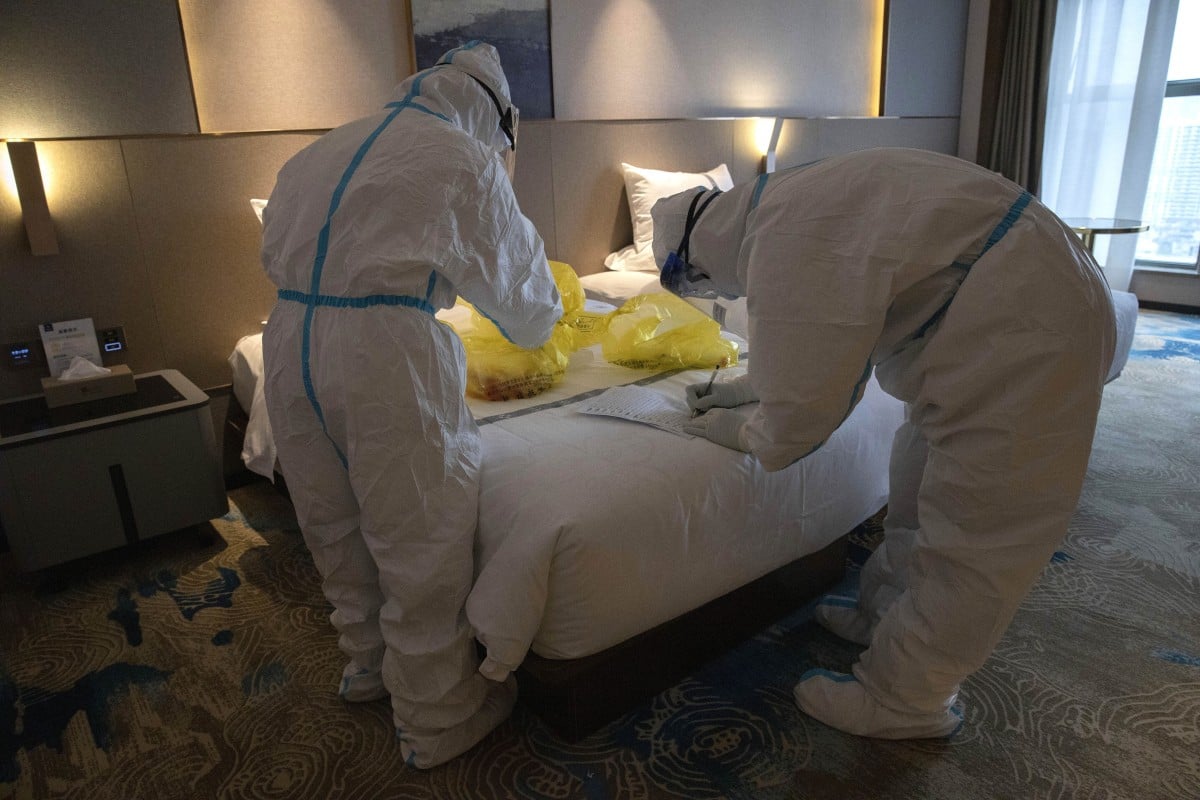
Wuhan hotel owners say they’re on the brink of going bust
to the nation’s daily infections tally at the start of April amid concerns that such people could trigger a second outbreak once the widespread lockdowns in cities like Wuhan and elsewhere were lifted.
China reported 103 new coronavirus infections on Wednesday, of which 39 were imported. Of the total, 57 people had no symptoms, including three of the imported cases.
Since the outbreak began, China has reported 82,295 cases, of which 95 per cent have recovered and been discharged from hospital.
Malfunction happened during third stage of launch after earlier stages were completed successfully, state media says
Failed mission is second in less than a month after Long March-7A encountered problems after lift-off on March 16
A Long March-3B carrier rocket blasts off from the Xichang Satellite Launch Centre in Sichuan province in November. A similar launch on Thursday ended in failure. Photo: Xinhua
China’s space programme suffered another setback on Thursday night with its second rocket launch failure in less than a month.
Officials are investigating what caused a malfunction during the third stage of the Long March-3B launch after lift-off from the Xichang Satellite Launch Centre in southwest Sichuan province at 7.46pm with an Indonesian Palapa-N1 satellite, Xinhua reported.
“The first and second stages of the rocket performed well, but the third stage malfunctioned,” the report said.
“Debris from the third stage of the rocket and the satellite fell [to the ground]. The launch mission failed.”
Debris from the failed mission rained down over Guam on Thursday night. Photo: Twitter
China’s state media did not say where the rocket landed, but the office of Guam Homeland Security and Civil Defence said “a fiery object over the Marianas sky” observed on Thursday evening was likely connected to the failed launch.
Video footage of the burning debris falling from the sky was widely circulated on social media.
The setback follows another failed launch on March 16, when China’s new Long March-7A, a three-stage, medium-lift, liquid-fuel rocket, encountered an “abnormality” minutes after lifting off from its launch site in the southern island province of Hainan.
China’s BeiDou system one satellite closer to full operation
11 Mar 2020
The satellite lost on Thursday – the Nusantara 2 – was built in China for Indonesian telecommunication companies Pasifik Satelit Nusantara and Indosat Ooredoo. It was intended to replace an older satellite to provide internet and broadcasting services in Indonesia and across the Asia-Pacific region to Australia, The Jakarta Post reported earlier this month.
It is not known if the failed launch will have an impact on other Long March-3B satellite launches planned for later in the year.
Introduced in 1996, the Long March-3B – also known as the CZ-3B or LM-3B – has been the main orbital carrier rocket of China’s space programme. It was used to carry many of the satellites that make up China’s BeiDou navigation system, with the latest addition being in March.
For that launch, engineers used parachutes to control where the rocket’s boosters would land after being discarded after lift-off so as to minimise the impact on people living below, state media reported.
The latest version of the Long March-3B entered service in 2007 and is dedicated to launching heavy communications satellites of up to 5.5 tonnes into geostationary transfer orbits.
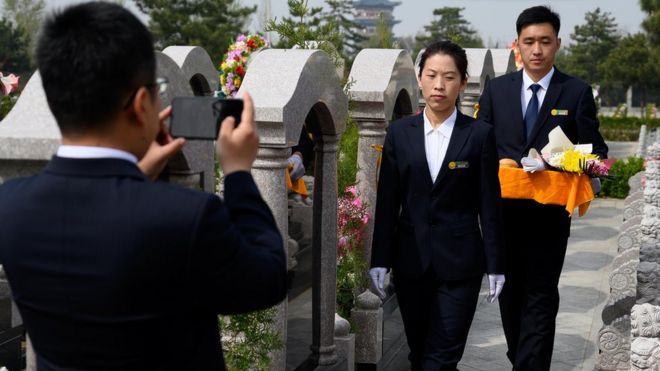
Image copyright GETTY IMAGESImage caption Staff film a tomb sweeping ceremony for a customer
People in China are paying their respects to dead ancestors digitally as the country continues to face the coronavirus outbreak.
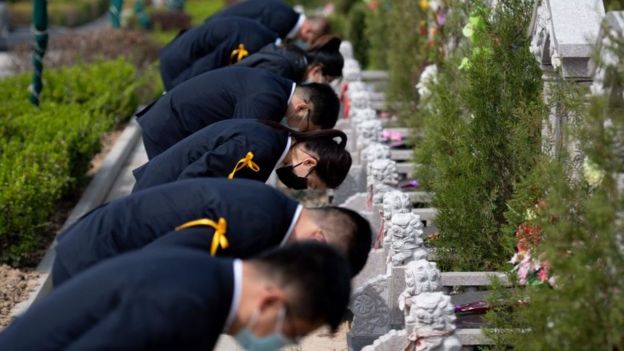
The Qingming festival, also known as Tomb Sweeping Day, is usually a time when people visit the graves of friends and family, sprucing up the area and making offerings to their spirits.
But amid fears of another outbreak, the government has advised people to stay away and maintain social distancing.
That’s led to some cemeteries allowing people to come as long as they’ve booked a slot, while others are banning visits completely.
But other companies and burial places have turned to modern technology as they look for ways for families to continue the centuries-old tradition.
Li Quanxi, an official at Beijing’s civil affairs bureau, said: “We want to encourage people to transform social traditions amid the coronavirus outbreak.”
What is Qingming festival?
Qingming festival is one of the most important events in the calendar to commemorate ancestors who are no longer with you.
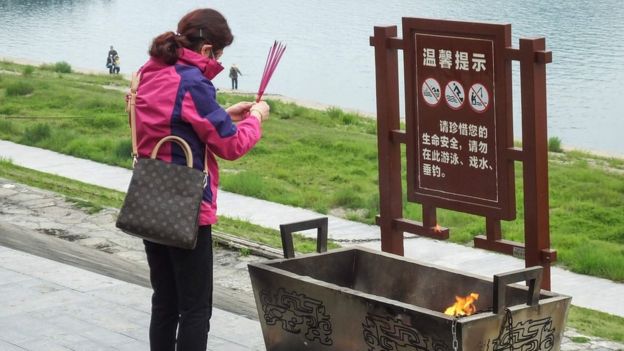
People clean the graves and burn items such as joss sticks and paper offerings – sometimes quite large ones – to honour the dead and transmit money and other goods to loved ones in the afterlife.
Image copyright AFPImage caption A woman burns incense ahead of the tomb sweeping festival
The tomb sweeping period falls between 28 March and 12 April.
Making offerings online
It is not completely unknown for pay their respects online, however, with the spread of Covid-19, there are now people who have no other option.
“Cloud tomb sweeping” allows people to “virtually” clean graves and make offerings to spirits.
One website providing this service is Heavenly Cemetery. On the surface, the website looks like any usual shopping site, although it also allows people to have their own memorial halls for their loved one so family and friends can join.
Relatives can light a candle, burn money and offer objects such as Chinese rice wine and beer. There is even an option for online tomb cleaning.
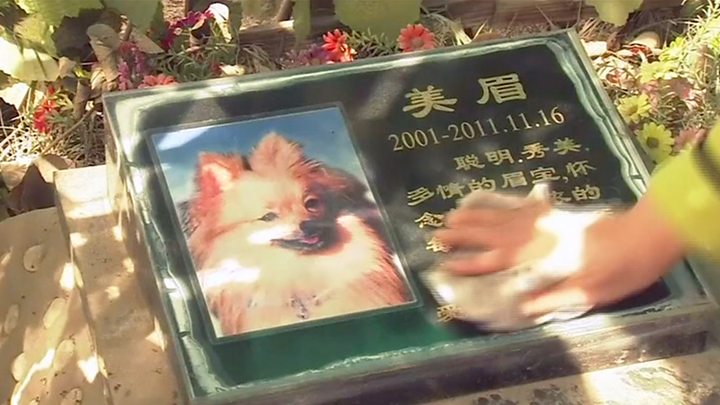
Media caption Watch: People pay respect to their deceased pets ahead of Tomb Sweeping Day
Funeral company Fu Shou Yuan International launched its own online tomb sweeping service on 12 March. It operates in more than 30 Chinese cities. In its first week, its website had about 87,000 visitors.
George Chen, whose grandparents are buried in Shanghai, visits their tombs every year but will be marking this year’s Tomb Sweeping Day online for the time being.
He told Shanghai Daily: “Old traditions are deeply rooted, but it is quite understandable because it is a special period. I will pay virtual respect and visit the scene once the epidemic ends.”
Getting someone to do it for you via livestream
While taking part in “cloud tomb sweeping” does mean you get to send offerings, it does not include the physical cleaning of a loved one’s tomb.
So some burial spots are now offering relatives a chance to watch a member of staff clean the tomb via a live stream. Others will send you photographs of the cleaned grave.
One cemetery in Shanghai is offering packages where a “valet sweep” starts from as little as 35 yuan (£4).
Image copyright GETTY IMAGESImage caption Staff hold a ceremony on behalf of a customer
Babaoshan funeral parlour, in Beijing, also offers live stream services.
Zhou Weihua, deputy director of the parlour, told Chinese news agency Xinhua that live streaming could become a future trend.
“Helping clients sweep tombs and holding online commemorative activities not only meets the demand in this special period but also offers more options for people to remember their deceased family members in the future.”
What about Wuhan?
China reported 3,199 deaths from coronavirus with 2,559 of those in Wuhan, where the first cases were recorded late last year.
The city is still in a lockdown which is expected to end on 8 April, and the government has announced that cemeteries will remain closed until 30 April.
Wuhan’s civil affairs department said it would make “unified arrangements to organise staff at cemeteries to hold a collective ceremony to pay tribute to the deceased”.
Official news agency Xinhua says the three died in Saturday’s attack in the province of Ituri
Central African country is major source of cobalt and copper but armed rebels pose a persistent risk
Mines have been targeted by armed rebels in the past. Photo: Reuters
A gun attack in a mining area in the Democratic Republic of Congo (DRC) has killed three Chinese nationals, the official news agency Xinhua reported on Monday.
The attack took place on Saturday in the northeastern province of Ituri, which borders Uganda and South Sudan, Xinhua said, citing the Chinese embassy.
It did not name the mine in question or the company operating it.
The DRC is the world’s biggest producer of mined cobalt – a key ingredient in batteries for electric vehicles – and one of Africa’s biggest copper producers, although its key copper-cobalt producing region is in the southwest, far from the site of the attack.
The country has attracted billions of dollars in investment from Chinese miners in recent years despite security risks.
Congo sends in troops to guard Chinese-owned copper mine amid fears of human rights abuses
20 Jun 2019
Canadian gold miner Banro, which owns mines in Maniema, a DRC province south of Ituri, suspended operations last year after several of its mines were overrun by armed rebels.
The Chinese embassy has asked the Congolese government to “take effective measures to protect the lives and property of Chinese citizens” in the DRC, as well as to expedite an investigation into the killings, Xinhua said, noting that the embassy had repeatedly advised Chinese citizens against travel to Ituri due to the presence of armed groups.
The embassy did not immediately respond to a request for comment on Monday, a public holiday in China.
CHANGSHA, March 30 (Xinhua) — Railway repair is well underway after a train derailed in the city of Chenzhou in central China’s Hunan Province Monday that killed one and injured 127.
The accident happened in Yongxing County at 11:40 a.m. when the train ran into a landslide, leaving five carriages derailed. The power generation car caught on fire.
The fire has been put out and all of the injured have been sent to hospital, with four in serious condition, local authorities said.
There were 691 people on board the train when the derailment occurred, rescuers said. Except for those injured that were sent to hospital, other passengers took shelter in a nearby primary school until buses were sent to deliver them to a high-speed railway station.
“We volunteered to cook noodles and dress the wounds of several hundred passengers in the school until they were picked up,” said Liu Guijiao, a local villager.
He Zhiwen from China Railway Guangzhou Group told Xinhua that about 380 meters of tracks need repair. The engineering department has prepared 450 meters of tracks and 1,600 railroad ties.
Carriages will be removed after the repairs are completed, but the time for the traffic to resume has not been decided yet.
He said over 1,000 workers have been sent along with seven excavators, six railcars, two large tampers and three relief trains.
“We will try our best to resume traffic as soon as possible,” said an engineer on site.
The train, T179, was running from the city of Jinan, east China’s Shandong Province, to Guangzhou in south China’s Guangdong Province.
The group said 88 trains on the southern section of the Beijing-Guangzhou railway have been affected, including 54 suspensions, 22 returns and 12 detours.
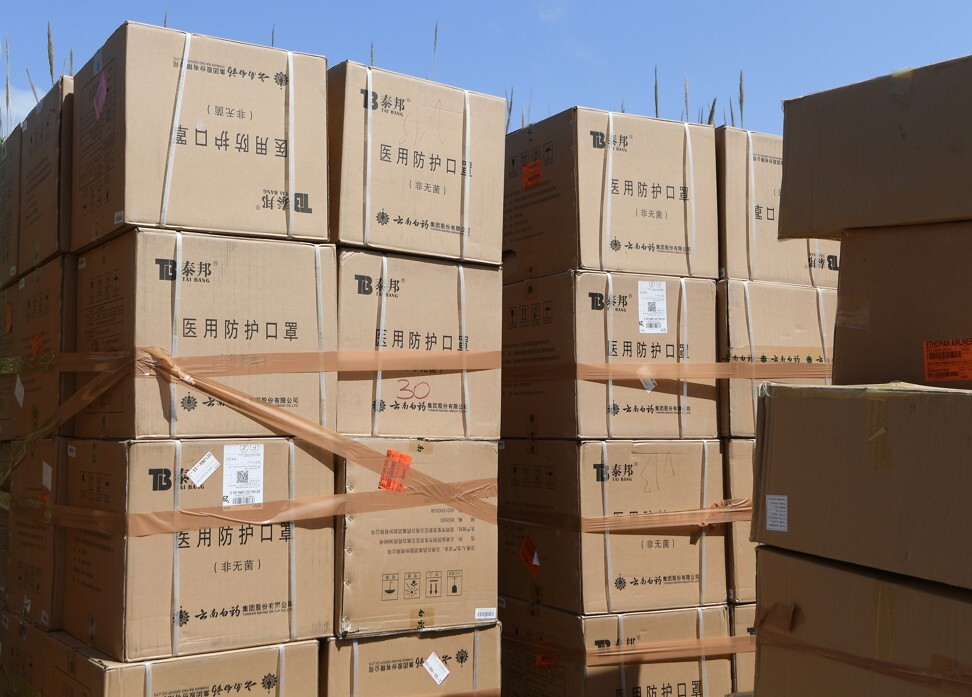
KATHMANDU, March 29 (Xinhua) — The emergency epidemic prevention materials donated by the Chinese side arrived here on Sunday to help Nepal fight the COVID-19 pandemic.
The supplies that arrived at Tribhuvan International Airport in Nepali capital city Kathmandu in the wee hours of Sunday were formally handed over to the Nepali Health Minister Bhanu Bhakta Dhakal by the Chinese Ambassador to Nepal Hou Yanqi.
Dhakal welcomed the Chinese support and expressed gratitude to the northern neighbor for helping the Himalayan country overcome the epidemic.
“I would like to thank the Chinese people and the Chinese government for supporting Nepal in this difficult time to fight the COVID-19,” the minister said during the handover ceremony.
At a time when many countries are fighting against this battle, China keeping Nepal in the priority list and sending supplies immediately is really commendable, the minister expressed, adding that Nepal expects China’s support in the coming days as well.
The donations from China’s Sichuan Province and the Chinese Embassy include different kinds of masks, thermometers, Chloroquine phosphate tablets, protective clothing and portable ventilators weighing 1.1 tons.
Similarly, the donation from Alibaba Foundation, Jack Ma Foundation includes 100,200 N95 masks and 20,064 PCR test kits weighing 1.4 tons.
“We will try our best to send other necessary supplies as soon as possible. In case of any emergency, we can send a medical expert team or arrange a video conference meeting as well to help the health workers here,” the Chinese ambassador said.
She also welcomed the national lockdown enforced by the Nepal government, stating that it has received encouraging support from the general public.
Nepal is reportedly in dire need for medical supplies as the entire situation escalates in the country. Nepal, facing the shortage of test kits and personal protective equipment for health workers, has recorded five confirmed cases of the COVID-19 so far.
But there is a growing concern over a possible spike in the cases due to the relatively low number of tests. Nepal has enforced a week-long nationwide lockdown since March 24 to prevent the spread of infection.
The health ministry said that the received support materials will be distributed to federal and provincial levels hospitals immediately and will be useful for the prevention and management of the COVID-19 in Nepal.
Mahendra Shrestha, director general at the Department of Health Services under the Health Ministry, told Xinhua on Saturday, “The procured test kits from China will help us in the situation of spike in positive cases of the COVID-19.”










 CHINDIA ALERT: You'll be living in their world, very soon