15/07/2019
Villagers clean a house damaged by floods at Jiangbei Village of Banlan Township, Rongan County, south China’s Guangxi Zhuang Autonomous Region,July 14, 2019. A series of reconstructing and rescuing works have been done since Rong’an was hit by heavy rains recently. (Xinhua/Huang Xiaobang)
BEIJING, July 14 (Xinhua) — At least 17 people were killed or missing and thousands evacuated as torrential downpours unleashed floods and toppled houses in central, eastern and southern China.
The National Meteorological Center on Sunday renewed a blue alert for rainstorms, predicting heavy rain in Zhejiang, Fujian, Jiangxi, Hunan, Guangdong, Yunnan, Sichuan provinces, as well as Guangxi Zhuang Autonomous Region and Tibet Autonomous Region.
Some of those regions will see up to 120 mm of torrential rainfall, it said.
China has a color-coded weather warning system, with red representing the most severe, followed by orange, yellow and blue.
As of 8 a.m. Sunday, at least 17 people died or were reported missing following rain-triggered floods in central Hunan Province, which also forced more than 470,000 people to be relocated and 179,000 were in urgent need of aid.
Four hydrometric stations along the Yangtze River in Xianning city, central Hubei Province, have reported the river water reaching or surpassing a level that can activate local anti-flood work.
In eastern Anhui Province, rain-triggered floods have affected more than 51,000 people and damaged over 2,700 hectares of crops.
The floods have forced the evacuation of 926 people, and caused a direct economic loss of more than 59.6 million yuan (8.66 million U.S. dollars) in the province.
As of Saturday noon, 330,000 people in 18 counties of Jiangxi Province have been affected by rainstorm-triggered floods, with over 10,500 residents relocated.
Poyang Lake, China’s largest freshwater lake in the lower reaches of the Yangtze, is swelling above the alarming level, according to the hydrographic department in Jiangxi.
The water level of the lake reached 20.08 meters as of 8 a.m. Saturday, 1.08 m above the warning level, as recorded by Xingzi Hydrometric Station on the lake.
In south China’s Guangxi Zhuang Autonomous Region, rainstorm has affected more than 360,000 people as of 5 p.m. Sunday, damaging over 35,000 hectares of crops, according to the region’s emergency management department.
The disastrous weather in Guangxi has prompted the region to activate a level-II emergency response and send special work teams and relief materials to the ravaged areas.
In some of the disaster-hit towns, flood water from subterranean rivers has inundated roads.
“After torrential downpours, waters on mountains and underground rivers converge into low-lying lands, which may lead to waterlogging. In affected villages, the water depth in some people’s houses can exceed two meters,” said Liao Bin, an official with Jiuwei Town, Hechi City.
Local authorities have dispatched boats and wooden rafts to transfer the stranded people, set up temporary relocation sites, and deliver living supplies to blocked villages.
Since June, the southwestern province of Guizhou has allocated a total of 16.5 million yuan for its hardest-hit 16 counties.
Source: Xinhua
Posted in Anhui province, blue, central, east, south China, China's largest freshwater lake, color-coded weather warning system, dead or missing, Fujian Province, guangdong province, Guangxi Zhuang Autonomous Region, Guizhou Province, Hechi City, hubei province, Hunan Province, Jiangxi Province, Jiuwei Town, National Meteorological Center (NMC), Orange, orange alert, Poyang Lake, rainstorms, red, sichuan province, sweep, Tibet Autonomous Region, Uncategorized, Xianning city, Yangtze River, yellow alert, Yunnan Province, zhejiang province |
Leave a Comment »
07/07/2019
WUHAN, July 6 (Xinhua) — The middle and lower reaches of the Yangtze River, China’s longest river, is likely to see flooding as a new round of sustained strong rainfall is forecast to lash the region from Sunday to next Wednesday, the Changjiang Water Resources Commission said Saturday.
Hydrometeorological forecasts show heavy rain with a precipitation ranging between 120 mm and 210 mm will hit the Yangtze’s middle and lower reaches in the following four days, causing the water levels of the mighty river’s many tributaries to reach alarming levels.
Some small and medium-sized rivers in Chongqing Municipality and the provinces of Hunan, Hubei, Jiangxi, Anhui, Jiangsu and Guizhou are also likely to see relatively serious flooding, according to the commission.
The commission activated an emergency response for flooding Saturday noon and advised local governments in affected areas to take precautions against possible disasters.
Source: Xinhua
Posted in Anhui province, Changjiang Water Resources Commission, Chongqing Municipality, emergency response, Floods threaten, Guizhou Province, heavy rain, hubei province, Hunan Province, Hydrometeorological forecasts, jiangsu province, Jiangxi Province, middle and lower reaches, serious flooding, Uncategorized, Yangtze River |
Leave a Comment »
07/07/2019
- Five thousand-year-old ruins in Zhejiang province are the earliest known example of Chinese civilisation
- Country passes Italy to become home to the largest number of World Heritage Sites
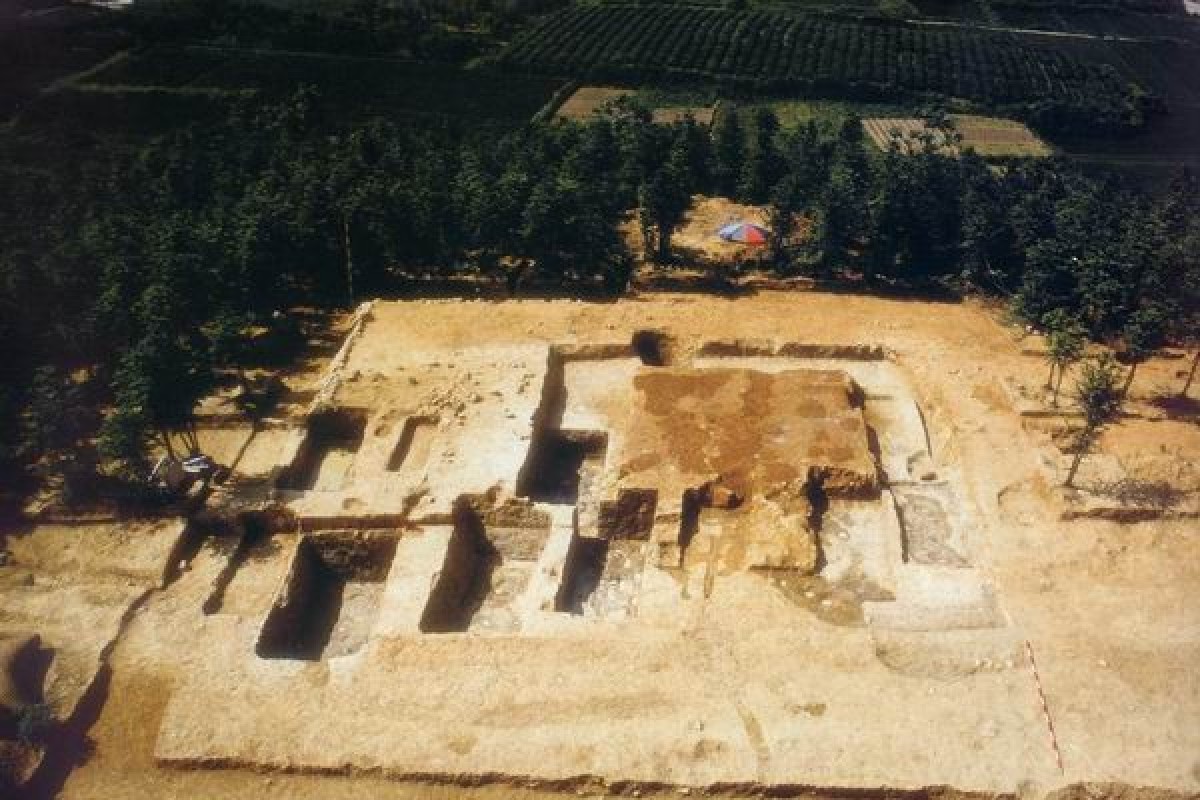
The Liangzhu site in Zhejiang dates back to 3,500BC. Photo: Thepaper.cn
A 5,300-year old Chinese city that provides the earliest example of civilisation in the country has been named as the country’s latest Unesco World Heritage Site.
The Liangzhu Archaeological Site in Zhejiang province was designated a “cultural site” at the latest Unesco meeting in Azerbaijan, bringing the total number of Chinese heritage sites to 55 – passing Italy as the country with the largest number in the world.
The ruins, located on the outskirts of the modern city of Hangzhou, sits on the plain of river networks in the basin of the Yangtze River and date back to 3,300BC.
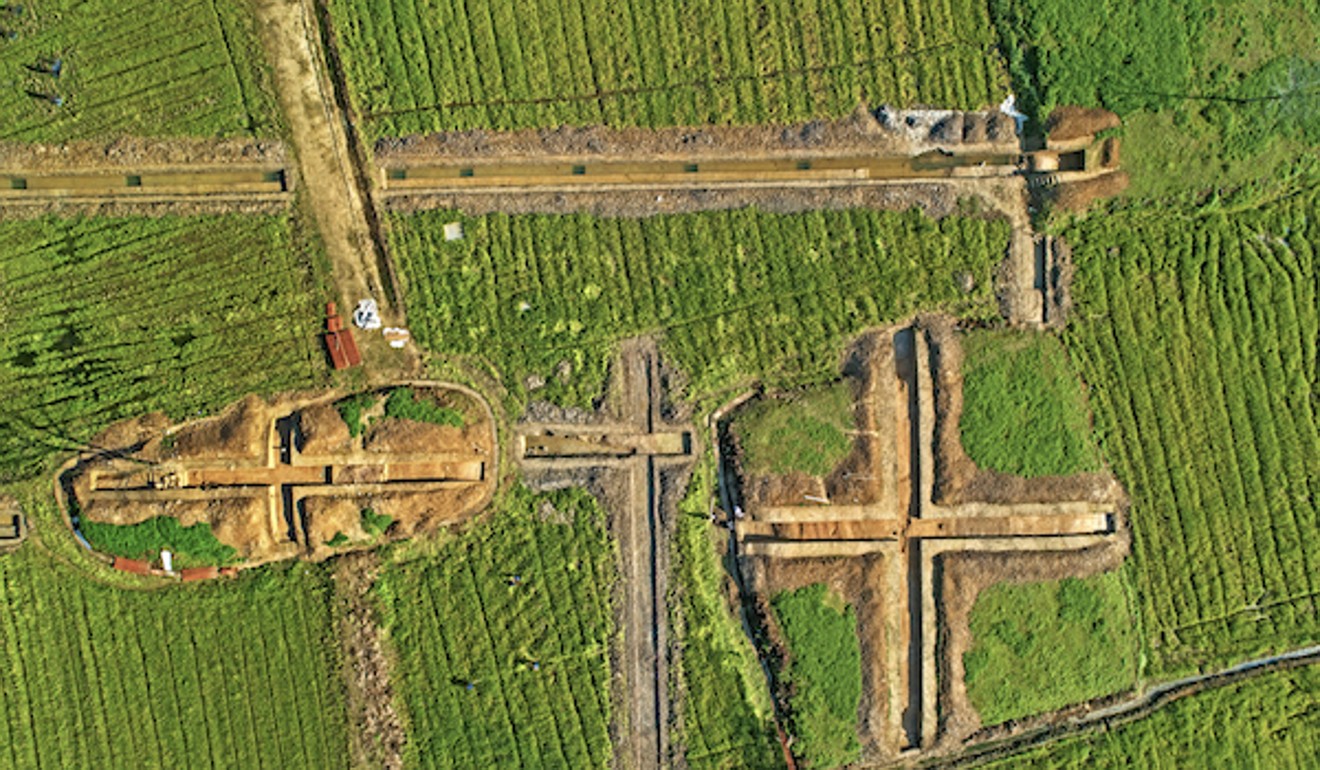
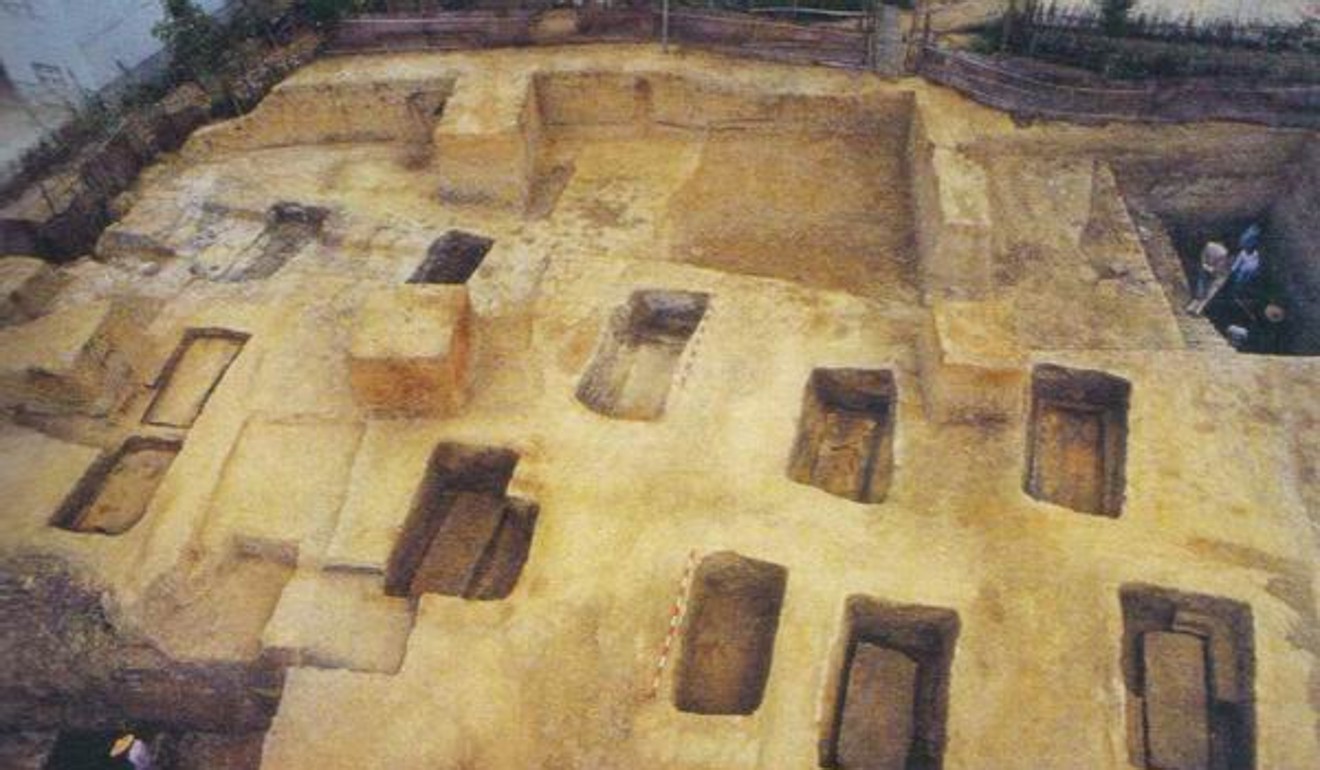
The site covers an area of 14.3 square kilometres, and mainly consists relics of 11 dams, cemetery sites, water conservancy system and walls that gives evidence to an early Chinese urban civilisation, with rice cultivation as the economic foundation.
An aerial view of the site. Photo: Thepaper.cn
The discovery of the site was of “primary importance” as it provides evidence of compelling evidence that Chinese civilisation started 5,000 years ago, 1,000 years earlier than previously thought, Colin Renfrew, a retired professor of archaeology at University of Cambridge, told state news agency Xinhua.
“So when we are talking of the origins of state society in China, we can think of the Liangzhu … instead of the Shang civilisation around 1,500BC.
The site was first discovered in 1936 when a team of archaeologists unearthed some pottery and began searching for further evidence
Liangzhu is China’s 55th Unesco World Heritage Site. Photo: Thepaper.cn
A breakthrough came in 1986 when a burial site with around 1,200 artefacts made from jade, pottery and ivory was uncovered.
The walls of the city were discovered in 2007 and the surrounding water conservancy system was unearthed in 2015.
Archaeologists estimate that it would have taken 4,000 people working for a decade to build the system, according to Xinhua.
The decision to add the site to the Unesco list is the culmination of more than two decades’ work, with preliminary work starting in 1994.
The site is now open to tourists, but a maximum number allowed to visit the site is limited to 3,000 a day and bookings must be made online.
Source: SCMP
Posted in Ancient Chinese city ruins, Archaeologists, Azerbaijan, bookings, burial site, cemetery sites, Chinese civilisation, dams, economic foundation, Hangzhou, Italy, Liangzhu Archaeological Site, professor of archaeology, rice cultivation, Shang civilisation, tourists, Uncategorized, unesco world heritage site, University of Cambridge, urban civilisation, walls, water conservancy system, Yangtze River, zhejiang province |
Leave a Comment »
25/06/2019
XINING, June 24 (Xinhua) — Northwest China’s Qinghai Province completed a 15-day all clean energy power supply trial, setting a new record following a successful nine-day trial last year, the State Grid Qinghai Electric Power Company announced on Monday.
Nearly 6 million people in the province, which borders Tibet Autonomous Region, only used electricity generated from wind, solar and hydro power stations, from June 6 to 23.
During the 15 days, Qinghai achieved zero carbon emission in power use.
This is the third province-wide clean energy trial in Qinghai. It relied solely on renewable energy for nine and seven consecutive days in 2018 and 2017.
Qinghai is the source of China’s three major rivers, the Yellow, Yangtze and Lancang, and has strong hydro and solar-power facilities.
During the trial, the whole province consumed a total 2.84 billion kwh, with the maximum load hitting 8.47 million kw, said Fang Baoming from the company.
The province’s cumulative capacity during the period reached nearly 4 billion kwh, with new energy taking a large share of 34.7 percent.
Power generated by thermal power plants only accounted for 1.8 percent of the gross generation in Qinghai during the period, and was all transmitted out of the province on demand of the market.
“The 15-day all clean energy power supply reduced coal burning of up to 1.29 million tonnes, and carbon dioxide emission of 2.32 million tonnes,” Fang said.
Qi Taiyuan, general manager of the company, said Qinghai’s electric grid has been expanded this year, with an installed capacity of 2.4 million kilowatts, up 50 percent from last year’s trial.
Qinghai’s installed capacity of new energy has reached 13.9 million kw, accounting for 46.7 percent, surpassing hydropower as the province’s largest power source.
According to the provincial 13th five-year plan, Qinghai will expand its solar and wind capacity to 35 million kilowatts by 2020 and supply 110 billion kilowatt hours of clean electricity every year to central and eastern parts of China, preventing the burning of 50 million tonnes of coal.
China’s enthusiasm for clean energy is pushing the world to transition toward a low-carbon future, with plans to invest 2.5 trillion yuan (370 billion U.S. dollars) in renewable energy by 2020, creating more than 13 million jobs, according to the National Energy Administration.
Source: Xinhua
Posted in Lancang River, National Energy Administration, Northwest China, Qinghai Province, State Grid Qinghai Electric Power Company, Tibet Autonomous Region, Uncategorized, Yangtze River, Yellow River |
Leave a Comment »
04/06/2019
- Brahma Chellaney writes that excessive damming and drastic overuse of water resources are causing the world’s major waterways to run dry
Vessels head for the lock of the Three Gorges Dam in Yichang, in central China’s Hubei province. Sediment build-up in the dam’s reservoir stems from silt flow disruption in the Yangtze River, Brahma Chellaney writes. Photo: Xinhua
Thanks to excessive damming and drastic overuse of water resources, an increasing number of major rivers across the world are drying up before reaching the sea.
Nowhere is this more evident than in China, where the old saying, “Follow the river and it will eventually lead you to a sea,” is no longer wholly true.
While a number of smaller rivers in China have simply disappeared, the Yellow River – the cradle of the Chinese civilisation – now tends to run dry before reaching the sea.
This has prompted Chinese scientists to embark on a controversial rainmaking project to help increase the Yellow’s flow. By sucking moisture from the air, however, the project could potentially affect monsoon rains elsewhere.
For large sections of the world’s population, major river systems serve as lifelines. The rivers not only supply the most essential of all natural resources – water – but also sustain biodiversity, which in turn supports human beings.
Yet an increasing number of rivers, not just in China, are drying up before reaching the sea.
A major new United Nations study published early this month offers grim conclusions: human actions are irremediably altering rivers and other ecosystems and driving increasing numbers of plant and animal species to extinction.
“Nature across the globe has now been significantly altered,” according to the study’s summary of findings.
The Yangtze and Jialing rivers come together in the southwestern city of Chongqing. Photo: Simon Song
Water sustains life and livelihoods and enables economic development.
If the world is to avert a thirsty future and contain the risks of greater intrastate and interstate water conflict, it must protect freshwater ecosystems, which harbour the greatest concentration of species.
The Mekong is mighty no more: book charts river’s demise
Yet, according to another study published in Nature this month humans have modified the flows of most long rivers, other than those found in the remote regions of the
Amazon and Congo basins and the Arctic.
Consequently, only a little more than one-third of the world’s 246 long rivers are still free-flowing, meaning they remain free from dams, levees and other man-made water-diversion structures that leave them increasingly fragmented.
Humans have modified the flows of most long rivers, including the Yangtze, home to some of China’s most spectacular natural scenery. Photo: WWF
Such fragmentation is affecting river hydrology, flow of nutrient-rich sediment from the mountains where rivers originate, riparian vegetation, migration of fish and quality of water.
Take the Colorado River, one of the world’s most diverted and dammed rivers. Broken up by more than 100 dams and thousands of kilometres of diversion canals, the Colorado has not reached the sea since 1998.
Sinking sands along the Mekong River leave Vietnamese homeless
The river, which originates in the Rocky Mountains and is the lifeblood for the southwestern United States, used to empty into the Sea of Cortez in Mexico.
But now, owing to the upstream diversion of 9.3 billion cubic metres (328.4 billion cubic feet) of water annually, the Colorado’s flow into its delta has been reduced to a trickle.
Altering the flow characteristics of rivers poses a serious problem for sustainable development, because they affect the ecosystem services on which both humans and wildlife depend. Photo: AP
Other major rivers that run dry before reaching the sea include the Amu Darya and the Syr Darya, the two lifelines of Central Asia; the Euphrates and the Tigris in the Middle East; and the Rio Grande, which marks the border between Texas and Mexico before heading to the Gulf of Mexico.
The overused Murray in Australia and Indus in Pakistan are at risk of meeting the same fate.
Are China’s Mekong dams washing away Cambodian livelihoods?
More fundamentally, altered flow characteristics of rivers are among the most serious problems for sustainable development, because they seriously affect the ecosystem services on which both humans and wildlife depend.
Free-flowing rivers, while supporting a wealth of biodiversity, allow billions of fish – the main source of protein for the poor – to trek through their waters and breed copiously.
Urgent action is needed to save the world’s rivers, including improving agricultural practices, which account for the bulk of freshwater withdrawals
Free-flowing rivers also deliver nutrient-rich silt crucial to agriculture, fisheries and marine life.
Such high-quality sediment helps to naturally re-fertilise overworked soils in the plains, sustain freshwater species and, after rivers empty into seas or oceans, underpin the aquatic food chain supporting marine life.
China’s hyperactive dam building illustrates the high costs of river fragmentation. No country in history has built more dams than China. In fact, China today boasts more large dams than the rest of the world combined.
China’s chain of dams and reservoirs on each of its long rivers impedes the downstream flow of sediment, thereby denying essential nutrients to agricultural land and aquatic species.
A case in point is China’s Three Gorges Dam – the world’s largest – which has a problematic build-up of sediment in its own massive reservoir because it has disrupted silt flows in the Yangtze River.
Likewise, China’s cascade of eight giant dams on the Mekong, just before the river enters Southeast Asia, is affecting the quality and quantity of flows in the delta, in Vietnam.
Yangtze dams may spell end to sturgeon in a decade
Undeterred, China is building or planning another 20 dams on the Mekong.
How the drying up of rivers affects seas and oceans is apparent from the Aral Sea, which has shrunk 74 per cent in area and 90 per cent in volume, with its salinity growing nine-fold.
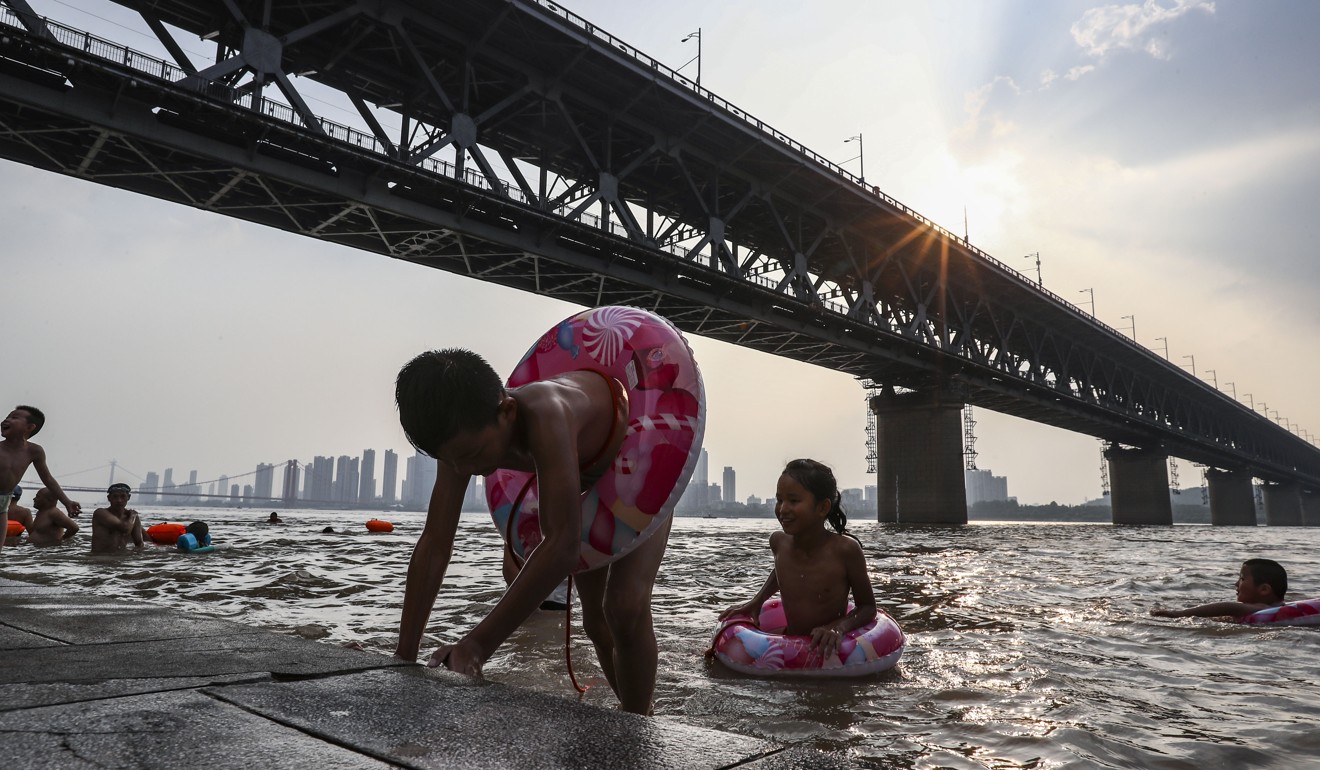
People beat the heat by cooling off in the Yangtze River in Wuhan, in central China’s Hubei province. Photo: Nora Tam
This change is the result of the Aral Sea’s principal water sources, the Amu Darya and Syr Darya, being so overexploited for irrigation that they are drying up before reaching what was once the world’s fourth-largest inland lake.
Compounding the challenges is the increasing pollution of rivers. Aquatic ecosystems have lost half of their biodiversity since the mid-1970s alone.
Chinese court jails nine for dumping toxic waste in Yangtze
Urgent action is needed to save the world’s rivers. This includes action on several fronts, including improving practices in agriculture, which accounts for the bulk of the world’s freshwater withdrawals.
Without embracing integrated water resource management and other sustainable practices, the world risks a parched future.
Source: SCMP
Posted in Amazon, Amu Darya, Aral Sea, Arctic, Australia, Brahma Chellaney, Cambodian, China alert, Chinese civilisation, Chongqing, Colorado River, Congo, drastic overuse, drying up, ecosystems, especially, Euphrates, excessive damming, extinction, Gulf of Mexico, hubei province, hyperactive dam building, Indus River, Jialing, major waterways, Mekong, Mexico, Middle East, Murray, nature, No time to waste, Pakistan, Rio Grande, Rocky Mountains, run dry, saving, Sea of Cortez, Syr Darya, Texas, Three Gorges Dam, Tigris, Uncategorized, United Nations, United States, Water resources, world’s rivers, Yangtze River, Yellow River, Yichang |
Leave a Comment »
24/05/2019
Chinese State Councilor Wang Yong (L) and Igor Komarov, Russia’s Presidential Plenipotentiary Envoy to the Volga Federal District, co-chair the third meeting of the Council of Cooperation between the upper and middle reaches of the Yangtze River and the Volga Federal District in Cheboksary, Russia, May 23, 2019. (Xinhua/Bai Xueqi)
CHEBOKSARY, Russia, May 23 (Xinhua) — China and Russia pledged to strengthen cooperation along the Yangtze and Volga rivers as local governments from these areas on Thursday signed an array of cooperation deals.
The third meeting of the Council of Cooperation between the upper and middle reaches of the Yangtze River and the Volga Federal District was co-chaired by Chinese State Councilor Wang Yong and Igor Komarov, Russia’s Presidential Plenipotentiary Envoy to the Volga Federal District, in the Russian city of Cheboksary.
Wang said that both sides should work to achieve more outcomes from local governments cooperation and make such partnership a new growth area for China-Russia relations.
Komarov said the unique “Volga-Yangtze” mechanism has been fruitful in trade and investment cooperation as well as people-to-people exchanges, and Russia is ready to work with China for more achievements.
Source: Xinhua
Posted in "Volga-Yangtze" mechanism, BMW, Cheboksary, China alert, Chinese State Councilor, Council of Cooperation, Igor Komarov, Presidential Plenipotentiary Envoy to the Volga Federal District, Russia, Trivium China, Uncategorized, Volga, Volga Federal District, Wang Yong, Yangtze River |
Leave a Comment »
22/05/2019
- Researchers say history of China’s biggest ethnic group is more complex than many believe
- DNA study involving 20,000 unrelated people points to three river origins
The study of Han DNA by the team from the Kunming institute challenges a long-held view of the early origins of Chinese civilisation. Photo: Xinhua
The origins of China’s biggest ethnic group can be traced back to three river valleys, deposing the Yellow River as the sole cradle of Chinese civilisation, according to a new study.
The Yellow has long been hailed as the mother river of Han Chinese, who make up nearly 92 per cent of the country’s population today.
But research published in the online journal Molecular Biology and Evolution on Wednesday said the Yangtze and Pearl rivers – as well as the Yellow – gave rise to genetically separate groups about 10,000 years ago. Those ancestors then mingled to become the largest ethnic group in the world today, it said.
“The history of Han Chinese is more sophisticated than thought,” said Professor Kong Qingdong, a researcher with the Kunming Institute of Zoology at the Chinese Academy of Sciences and lead scientist in the study. “Many details need investigation.”
A DNA study suggests the Yellow River (above) may have to share its place as a cradle for Han Chinese with the Yangtze and the Pearl. Photo: Xinhua
After analysing DNA samples from more than 20,000 unrelated Han Chinese, examining their dialects and family geography and comparing those to archaeological DNA records, scientists concluded that the Yangtze and Pearl had equal claim with the Yellow to Han origins.
Progenitors from the three river valleys evolved independently, the Kunming team said, and distinctions found in the mitochondrial DNA (the mother’s line) of study volunteers added weight to their assertion.
Who are you? DNA tests help Chinese retrace ancient steps
About 0.07 per cent of the DNA examined in the Han Chinese study differed according to river valley origin. By comparison, the difference was much lower – 0.02 per cent – when the study volunteer data was assessed by dialect, the researchers said.
Earlier studies of genetic markers and microsatellite data that mapped the prevalence of DNA revealed that Han Chinese can be generally divided into two groups: North and South. The latest study found that the genetic variation between North and South Han Chinese is 0.03 per cent, considerably less significant than the distinction by rivers.
Dr Li Yuchun, lead author of the paper, said the findings helped trace the history of Han to the dawn of civilisation, the emergence of agriculture and the sustainable growth of population.
The earliest migrants from Africa to China arrived in what is now the southwest between 60,000 and 100,000 years ago, studies said. The genes of this group of hunter-gatherers were largely unchanged for tens of thousands years.
About 10,000 years ago, agricultural practices began to emerge in the valleys of the three rivers. Archaeologists found evidence of millet cultivation around the Yellow River, rice in the Yangtze, and roots and tubers in the Pearl.
The busy Yangtze River flows through Chongqing in southwest China. Photo: Xinhua
“Increasing food led to a population boom in these areas. We can see it in the separate path of gene evolution,” Li said.
The research also found that women were able to preserve their genetic story better than men as they stayed at home to tend the fields, while men went to explore, trade or wage war.
“Females are resilient to invasion,” she said.
The cultural significance of knowing one’s ancestry
The research team planned to examine the Y-chromosome, which passed from father to son, to study the expansion of the Han civilisation, Li said.
“It will be interesting to hear the story from a male perspective,” she said.
As the Han empires expanded, many ancient ethnic groups such as Huns, Siberians, Khitan in northern China and the Thai-Khadai speaking peoples in the south, passed from the record.
Some researchers think these minorities become extinct, but others believe they were absorbed into the Han Chinese population.
Source: SCMP
Posted in africa, Archaeologists, Chinese Academy of Sciences, DNA, Han Chinese, Huns, Khitan, Kunming Institute of Zoology, new story, origins, Pearl River, Siberians, Thai-Khadai, Uncategorized, Yangtze River, Yellow River |
Leave a Comment »
12/03/2019
Ecology and Environment Minister Li Ganjie attends a press conference on “fighting resolutely to prevent and control pollution” for the second session of the 13th National People’s Congress (NPC) in Beijing, capital of China, March 11, 2019. (Xinhua/Shen Bohan)
BEIJING, March 11 (Xinhua) — China has made sound progress in addressing the prominent problems over environmental protection along the Yangtze River Economic Belt, the country’s Ecology and Environment Minister Li Ganjie said Monday.
After two years of work, 99.9 percent of the 1,474 drinking water sources in cities above the county-level along the Yangtze River Economic Belt, stringing up 11 provinces and municipalities from west to east, have had their problems resolved, Li told a news conference on the sidelines of the annual legislative session.
Meanwhile, over 90 percent of the 12 “black and malodorous water bodies” in the provincial capital cities have been cleaned up, while prefecture-level cities are catching up on this front, Li said.
A special campaign targeting illegal disposal of solid and hazardous waste along the Yangtze, China’s longest river, has also been successful, the minister said, adding that the country has made notable progress in enhancing protection of the nature reserves in the Yangtze River basin.
The country will continue to improve the supervision system for Yangtze protection, Li said.
China has made the “defense of lucid waters” a primary task in the battle against pollution for 2019. Research will be conducted for the drafting of laws on bio-security and Yangtze River conservation this year, according to the work report of the Standing Committee of the 13th National People’s Congress.
Source: Xinhua
Posted in bio-security, China alert, China's longest river, Ecology and Environment Minister, Li Ganjie, National People's Congress, Standing Committee, Uncategorized, Yangtze environment, Yangtze River, Yangtze River basin, Yangtze River conservation, Yangtze River Economic Belt |
Leave a Comment »
07/03/2019
LHASA, March 6 (Xinhua) — To conserve the ecosystem while eradicating poverty, southwest China’s Tibet Autonomous Region hired 309,000 farmers and herders as forest rangers in 2018, bringing the total number of people engaged in environmental protection to 667,000.
Average annual subsidies in the jobs increased to 3,500 yuan (522 U.S. dollars), according to the regional department of ecology and environment.
Last year, Tibet invested 10.7 billion yuan in environmental protection funds, with 74,133 hectares of trees planted and forest coverage rising to 12.14 percent.
The region also invested 100 million yuan in enhancing the ecology along the upper reaches of the Yangtze, China’s longest river.
“Protecting the forests is equal to protecting our homeland,” said a local Tibetan forest ranger.
The implementation of a series of measures contributed to environmental protection, making Tibet one of the areas with the best ecological environment in the world, authorities said.
Source: Xinhua
Posted in China alert, ecosystem, Environmental protection, eradicating poverty, farmers, forest rangers, herders, regional department of ecology and environment, Southwest China, Tibet, Tibet Autonomous Region, Uncategorized, Yangtze River |
Leave a Comment »
04/03/2019
- Police say woman told toddler to use a rubbish bin when he needed to go to the toilet then got into argument with driver after he called her ‘uncivilised’
- Security camera footage shows her bashing on compartment door and grabbing the man’s coat as he is driving
The woman is seen in security camera footage grabbing the bus driver’s coat while he is behind the wheel. Photo: Weibo
A mother in central China has been detained after she allowed her two-year-old son to urinate in a rubbish bin on a bus then attacked the driver when he told her she was “uncivilised”.
Security camera footage of the incident in Dazhi, Hubei province on Saturday shows the woman supporting the toddler by the bin on the floor of the bus while he urinates in front of the other passengers.
She is then seen rushing up to the driver and arguing with him after he complains about her behaviour, bashing on the compartment door and grabbing the man’s coat as he is driving.
A police officer told news website PearVideo on Sunday that the woman, identified only by her surname Chen, said the boy needed to go to the toilet while they were on the bus so she took him over to the bin.
“The driver saw them and said she was uncivilised, and they got into an argument over it,” the officer said. “Chen became agitated – she hit the driver’s compartment door and reached around to attack him while he was driving.”
The driver, who was not identified, is seen in the security footage calmly pulling over and calling the police while the woman is attacking him.
Chen has been placed under criminal detention for posing a threat to public security and Dazhi police are investigating the case, according to the report.
It comes after a series of recent
attacks on bus drivers in China, including an accident in October when an angry passenger who missed her stop assaulted the driver, causing the bus to veer off a bridge and crash into the Yangtze River in Chongqing, killing all 15 people on board.
A police investigation found that the 48-year-old woman had been fighting with the driver as he tried to steer the bus when the crash happened.
Reacting to the latest case, some social media users said they understood the mother’s situation, but it has angered others, who say she should have used a diaper or got off the bus at the next stop.
“Anyone might need to use the toilet [on a bus], especially a kid, but parents should take heed of the criticism – she was clearly in the wrong,” one person wrote on Weibo, China’s Twitter.
There have been other cases in recent years of Chinese parents sparking anger for letting their children urinate in public – on the mainland and elsewhere. Last month, photos of a Chinese tourist allowing her
son to pee on the floor of the Forbidden City in Beijing triggered a strong reaction on social media, with many people criticising the woman.
Source: SCMP
Posted in Bus, bus driver attack, China alert, Chinese mother, Chinese tourist, Chongqing, Dazhi, detained, diaper, Forbidden City in Beijing, letting son, rubbish bin, security camera, social media, toddler, Twitter, Uncategorized, urinate, Weibo, Yangtze River |
Leave a Comment »







 CHINDIA ALERT: You'll be living in their world, very soon