Chindia Alert: You’ll be Living in their World Very Soon
aims to alert you to the threats and opportunities that China and India present. China and India require serious attention; case of ‘hidden dragon and crouching tiger’.
Without this attention, governments, businesses and, indeed, individuals may find themselves at a great disadvantage sooner rather than later.
The POSTs (front webpages) are mainly 'cuttings' from reliable sources, updated continuously.
The PAGEs (see Tabs, above) attempt to make the information more meaningful by putting some structure to the information we have researched and assembled since 2006.
SYDNEY (Reuters) – The Australian government said on Friday it would meet a week ahead of schedule to decide whether to ease social distancing restrictions, as the numbers of new coronavirus infections dwindle and pressure mounts for business and schools to reopen.
Australia has reported about 6,700 cases of the new coronavirus and 93 deaths, well below the levels reported in the United States and Europe. Growth in new infections has slowed to less 0.5% a day, compared to 25% a month ago.
Prime Minister Scott Morrison said it was imperative to lift social distancing restrictions as early as possible as 1.5 million people were now on unemployment benefits and the government forecast the unemployment rate to top 10% within months.
“We need to restart our economy, we need to restart our society. We can’t keep Australia under the doona,” Morrison said, using an Australian word for quilt.
Morrison’s government has pledged spending of more than 10% of GDP to boost the economy but the central bank still warns the country is heading for its worst contraction since the 1930s.
With less than 20 new coronavirus cases discovered each day, Morrison said state and territory lawmakers would meet on May 8 – a week earlier than expected – to determine whether to lift restrictions.
“Australians deserve an early mark for the work that they have done,” Morrison told reporters in Canberra.
Australia attributes its success in slowing the spread of COVID-19 to social distancing restrictions imposed in April, including the forced closures of pubs, restaurants and limiting the size of indoor and outdoor gatherings.
Morrison said 3.5 million people had downloaded an app on their smartphones designed to help medics trace people potentially exposed to the virus, though the government is hoping for about 40% of the country’s 25.7 million population to sign up to ensure it is effective.
Cabinet will also decide next week how to restart sport across the country, the prime minister said.
The government says any resumption of sport should not compromise the public health, and recommends a staggered start beginning with small groups that play non-contact contact sport outdoors.
The recommendations suggests Australia’s National Rugby League (NRL) competition may not get permission to restart its competition as soon as many in the sports-mad country would like.
European nations are divided over how best to deal with Beijing, which looms larger in their policy and public debates
Think tanks came together and reported on China’s much-touted medical aid and ‘mask diplomacy’ during Covid-19 crisis
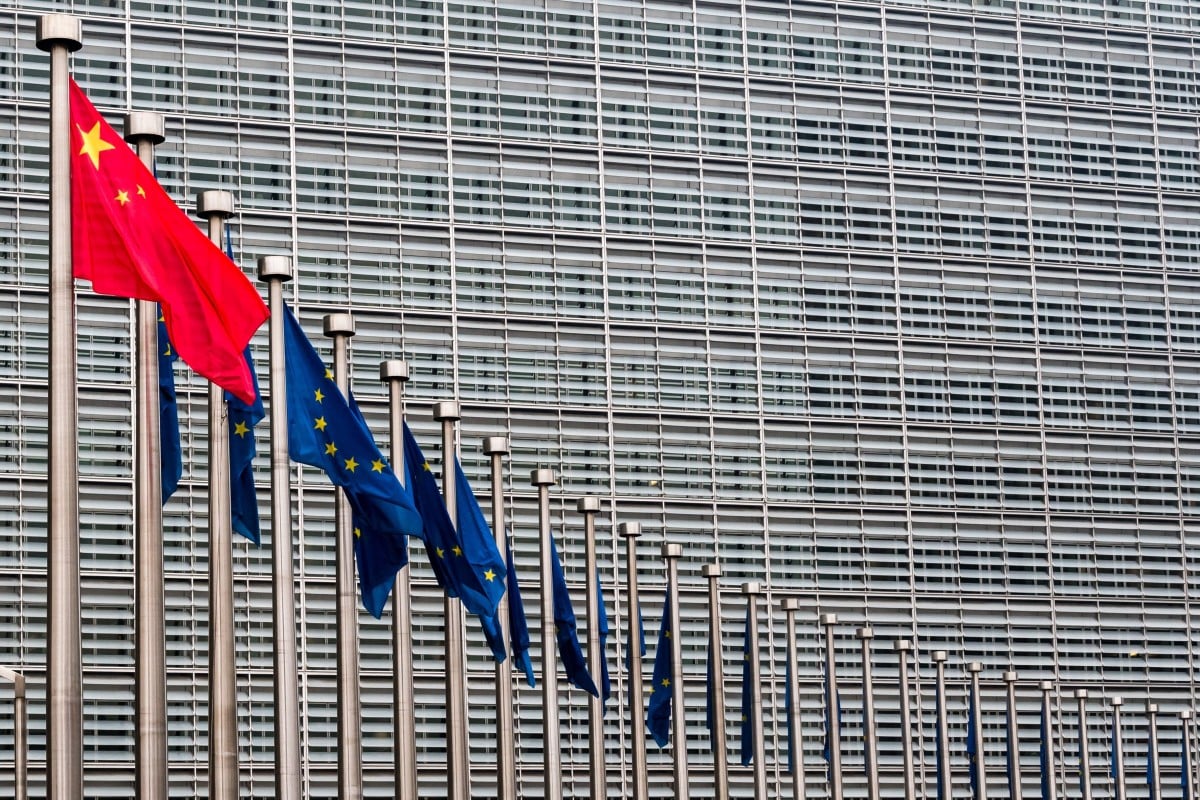
European nations are looking to be more cohesive in their approach towards relations with China. Photo: Bloomberg
As Beijing steps up its pressure campaign on Europe in the wake of the Covid-19 pandemic, their relations look set to become more diverse and contested amid growing distrust and wariness of China’s expanding influence, according to new research.
The study, based on analysis of China’s role in 19 European countries’ handling of the coronavirus crisis, showed that Europe remained largely divided over how to deal with Beijing, which has figured ever more prominently in policy and public debates in many parts of the continent.
A total of 28 experts from 21 think tanks across the continent, collectively known as the European Think-tank Network on China, were involved in the research.
It came on the heels of a diplomatic debacle in the past week that saw the European Union reportedly bowing to pressure by China. The EU reportedly toned down part of a report documenting Beijing’s disinformation efforts to deflect the blame and rewrite the global coronavirus narrative.
Although a spokesperson for the EU denied those allegations, the saga has “moreover revealed the pressures that China has placed on
officials during the crisis”, according to John Seaman, editor of the report and a research fellow at the French Institute of International Relations.
In a phone call on Wednesday, Chinese Premier Li Keqiang and European Commission President Ursula von der Leyen shrugged off concerns about their discord and vowed to boost the fight against the virus and boost economic recovery, according to Xinhua.
Germany ‘rejected China’s bid for positive spin’ on pandemic response
27 Apr 2020
According to Seaman, the Covid-19 crisis hit at a time when traditionally trade-driven China-EU relations had grown more complex and competitive after the European Commission said for the first time last year that Beijing was a systemic rival.
“Debates over the need to adopt more coherent strategies towards China have been emerging across Europe. In many ways, the current crisis has become a catalyst for a number of trends that have been shaping Europe-China relations in recent years, while in other ways it has turned the tables,” he said in the report.
“It has simultaneously brought Europe and China into closer cooperation, pushed them further apart, and seemingly underlined the fractures that exist within Europe on how to approach an increasingly influential China.”
A growing number of European countries, including Sweden and Britain, have joined the United States and Australia in calling for an international inquiry into China’s handling of the pandemic. Leaders from Germany and France have also pressed Beijing for greater transparency about the origin of the deadly virus.
The European think tanks’ report was also focused on China’s unusually aggressive coronavirus diplomacy, with Chinese embassies and ambassadors shifting the blame on to Western democracies and promoting Beijing’s messaging “with varying degrees of dogmatism, divisiveness and moderation” on Twitter and in traditional media.
“While China’s increasingly proactive public diplomacy is widespread, and there appears to be a relative degree of consistency in messaging, there is a diversity in method that ranges from low key (Latvia or Romania) to charm offensive (Poland, Portugal, Italy or Spain) to provocative or aggressive (Sweden, Germany or France),” the report said.
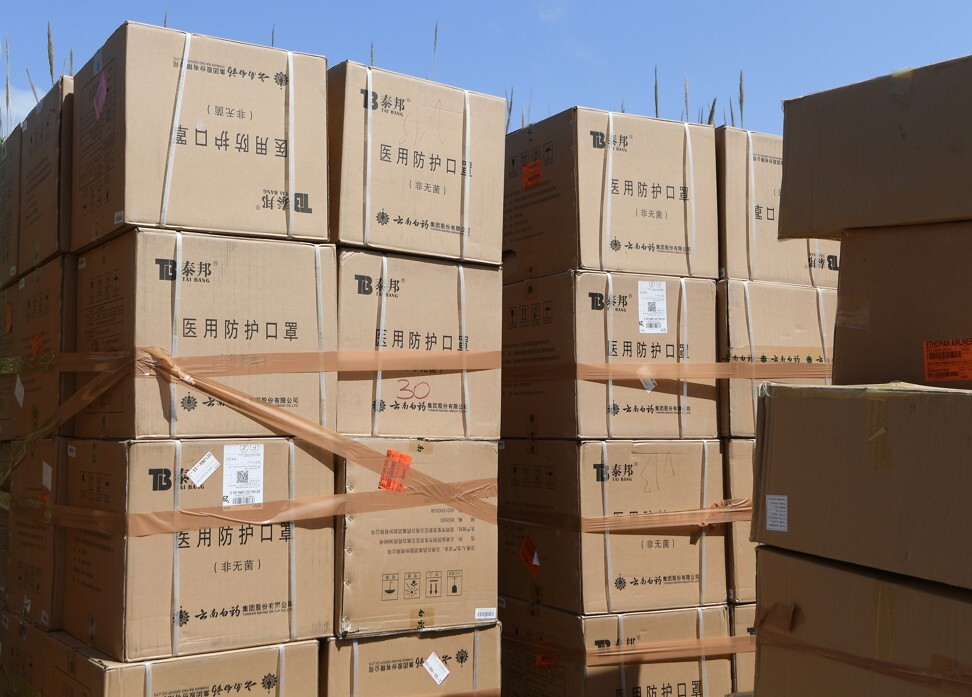
It examined China’s much-touted medical aid and “mask diplomacy” and found “a correlation between Chinese companies with commercial interests in the country and donations from these companies” in countries including Greece, Hungary, Italy, Portugal and Spain.
Boxes of medical supplies from China in Rome. Some European nations are growing wary about China’s diplomatic overreach and apparent willingness to alter the coronavirus narrative. Photo: Xinhua
Many countries have pushed back against China’s diplomatic overreach and its preferred narrative that has served to “[underline] the apparent successes of its autocratic governance model, ignoring its clear downfalls in managing the crisis initially, while sowing doubt on the effectiveness of liberal democracies”, according to Seaman.
While the European Union’s foreign policy chief Josep Borrell warned of Beijing’s geopolitical game to expand its influence through spinning and “politics of generosity”, countries such as Germany and Sweden have moved to tighten investment screening, 5G and industrial policies targeting Chinese firms.
Zhang Ming, China’s top envoy to the EU, last week dismissed the concerns about China’s alleged ploy to use the vulnerabilities of other countries to advance China’s geopolitical interests, such as with the country’s embattled tech giant Huawei and the ambitious Belt and Road Initiative.
“Disinformation is our common enemy and we need to make joint efforts to eradicate it,” Zhang said, claiming China had been a victim of unspecified disinformation campaigns.
The report also noted that China’s actions towards Europe in times of crisis looked set to amplify the fractures across the continent and prompt further debates about the need for a coherent EU strategy on China.
A poll of more than 12,000 people across the 28 EU member countries by German think tank Bertelsmann Stiftung in September last year showed 45 per cent of Europeans saw China as a competitor while only 9 per cent believed their countries shared the same political interests or values with China.
Another survey of 16 European countries released by the Pew Research Centre in December also showed the continent remained deeply divided over how to approach China.
While people in most of western Europe and some of Central and Eastern Europe, such as Slovak and Czech, saw China negatively, 51 per cent in Greece had a positive view of China and those in Russia, Ukraine, Poland, Bulgaria and Lithuania tended to see China more favourably.
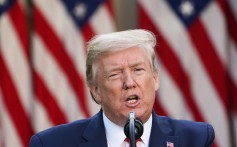
WASHINGTON (Reuters) – President Donald Trump said on Wednesday he believes China’s handling of the coronavirus is proof that Beijing “will do anything they can” to make him lose his re-election bid in November.
In an interview with Reuters in the Oval Office, Trump talked tough on China and said he was looking at different options in terms of consequences for Beijing over the virus. “I can do a lot,” he said.
Trump has been heaping blame on China for a global pandemic that has killed at least 60,000 people in the United States according to a Reuters tally, and thrown the U.S. economy into a deep recession, putting in jeopardy his hopes for another four-year term.
The Republican president, often accused of not acting early enough to prepare the United States for the spread of the virus, said he believed China should have been more active in letting the world know about the coronavirus much sooner.
Asked whether he was considering the use of tariffs or even debt write-offs for China, Trump would not offer specifics. “There are many things I can do,” he said. “We’re looking for what happened.”
RELATED COVERAGE
China says it has no interest in meddling in U.S. election
“China will do anything they can to have me lose this race,” said Trump. He said he believes Beijing wants his Democratic opponent, Joe Biden, to win the race to ease the pressure Trump has placed on China over trade and other issues.
“They’re constantly using public relations to try to make it like they’re innocent parties,” he said of Chinese officials.
He said the trade deal that he concluded with Chinese President Xi Jinping aimed at reducing chronic U.S. trade deficits with China had been “upset very badly” by the economic fallout from the virus.
A senior Trump administration official, speaking on condition of anonymity, said on Wednesday that an informal “truce” in the war of words that Trump and Xi essentially agreed to in a phone call in late March now appeared to be over.
The two leaders had promised that their governments would do everything possible to cooperate to contain the coronavirus. In recent days, Washington and Beijing have traded increasingly bitter recriminations over the origin of the virus and the response to it.
However, Trump and his top aides, while stepping up their anti-China rhetoric, have stopped short of directly criticizing Xi, who the U.S. president has repeatedly called his “friend.”
Trump also said South Korea has agreed to pay the United States more money for a defense cooperation agreement but would not be drawn out on how much.
“We can make a deal. They want to make a deal,” Trump said. “They’ve agreed to pay a lot of money. They’re paying a lot more money than they did when I got here” in January 2017.
The United States stations roughly 28,500 troops in South Korea, a legacy of the 1950-53 Korean War that ended in an armistice, rather than a peace treaty.
Trump is leading a triage effort to try to keep the U.S. economy afloat through stimulus payments to individuals and companies while nudging state governors to carefully reopen their states as new infections decline.
Trump sounded wistful about the strong economy that he had enjoyed compared with now, when millions of people have lost their jobs and GDP is faltering.
“We were rocking before this happened. We had the greatest economy in history,” he said.
He said he is happy with the way many governors are operating under the strain of the virus but said some need to improve. He would not name names.
Trump’s handling of the virus has come under scrutiny. Forty-three percent of Americans approved of Trump’s handling of the coronavirus, according to the Reuters/Ipsos poll from April 27-28.
But there was some good coronavirus news, as Gilead Sciences Inc said its experimental antiviral drug remdesivir was showing progress in treating virus victims.
Trump has also seeking an accelerated timetable on development of a vaccine.
“I think things are moving along very nicely,” he said.
At the end of the half-hour interview, Trump offered lighthearted remarks about a newly released Navy video purportedly showing an unidentified flying object.
“I just wonder if it’s real,” he said. “That’s a hell of a video.”
Researchers conclude that the virus was circulating undetected in France in February
Findings highlight the difficulties governments face in tracing the source of coronavirus outbreaks
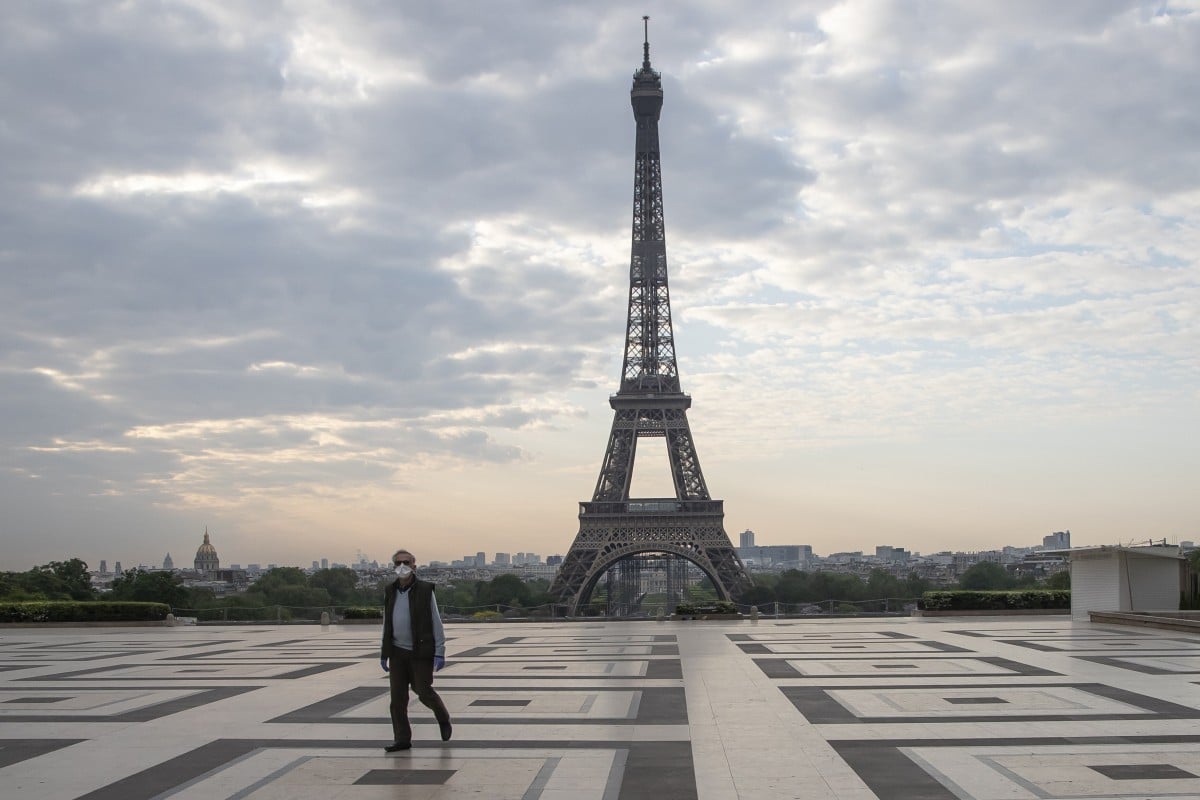
Researchers in France have carried out genetic analysis and found that the dominant types of the viral strains in the country did not come from China or Italy. Photo: AP
The coronavirus outbreak in France was not caused by cases imported from China, but from a locally circulating strain of unknown origin, according to a new study by French scientists at the Institut Pasteur in Paris.
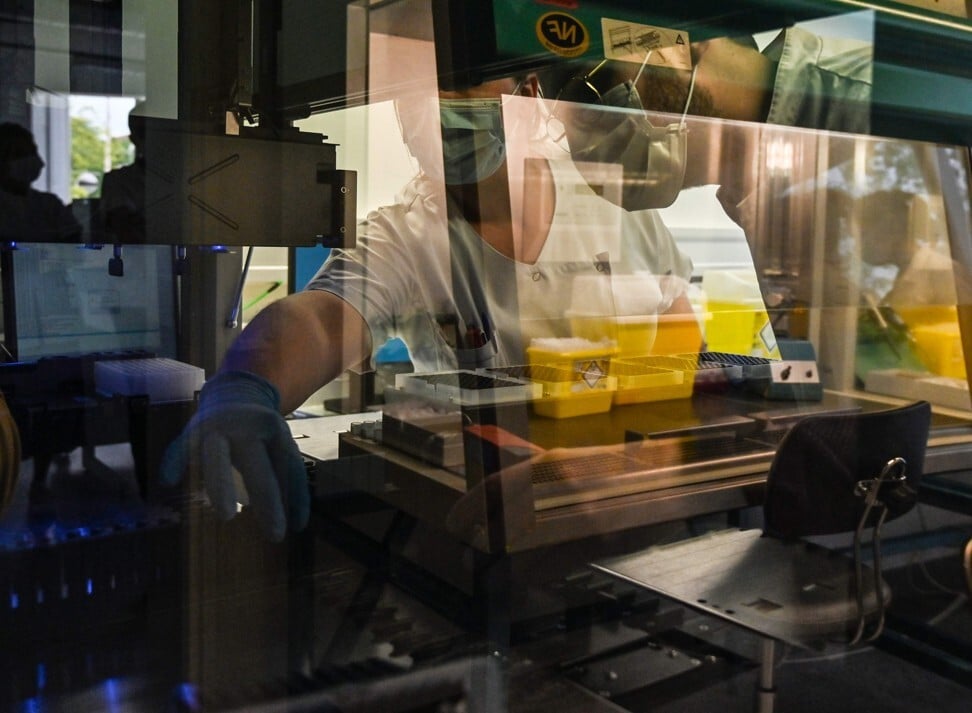
Genetic analysis showed that the dominant types of the viral strains in France belonged to a clade – or group with a common ancestor – that did not come from China or Italy, the earliest hotspot in Europe.
“The French outbreak has been mainly seeded by one or several variants of this clade … we can infer that the virus was silently circulating in France in February,” said researchers led by Dr Sylvie van der Werf and Etienne Simon-Loriere in a non-peer reviewed paper released on bioRxiv.org last week.
The Covid-19 pandemic has infected more than 128,000 people in France and caused more than 23,000 deaths.
France detected the virus in late January, before any other country in Europe. A few patients with a travel history that included China’s Hubei province were sampled on January 24 and tested positive.
The Covid-19 pandemic has infected more than 128,000 people in France and caused more than 23,000 deaths. Photo: AFP
The French government took quick and decisive measures to trace contacts of the infected people and shut down the chance of further infection.
However, these strains were not found in patients tested after the initial imported cases, suggesting “the quarantine imposed on the initial Covid-19 cases in France appears to have prevented local transmission”, the researchers said.
The Pasteur institute collected samples from more than 90 other patients across France and found the strains all came from one genetic line. Strains following this unique path of evolution had so far only been detected in Europe and the Americas.
Singapore Covid-19 cases to rise as not all migrant workers being tested
28 Apr 2020
The earliest sample in the French clade was collected on February 19 from a patient who had no history of travel and no known contact with returned travellers.
Several patients had recently travelled to other European countries, the United Arab Emirates, Madagascar and Egypt but there was no direct evidence that they contracted the disease in these destinations.
To the researchers’ surprise, some of the later strains collected were genetically older – or closer to the ancestral root – than the first sample in this clade.
Spanish official cries reading names of health workers killed by coronavirus
A possible explanation, according to the authors, was that local transmission had been occurring in France for some time without being detected by health authorities.
The French government may have missed detecting the transmission. According to the researchers, a large proportion of those patients might have had mild symptoms or none at all.
The researchers also found that three sequences later sampled in Algeria were closely related to those in France, suggesting that travellers from France might have introduced the virus to the African country and caused an outbreak.
China says US politicians are lying as Trump calls for Covid-19 damages
29 Apr 2020
Benjamin Neuman, professor and chair of biological sciences with the Texas A&M University-Texarkana, said the French strains might have come from Belgium, where some sequences most closely related to the original strain from China were clustered.
“Since the earliest European strains of [the coronavirus] Sars-CoV-2 seem to be associated with Belgium, the idea that the virus spread from Belgium to both Italy and France at around the same time seems plausible, as this paper contends,” he said.
France is the latest in a growing number of countries and areas where no direct link between China and local outbreaks could be established.
The dominant strains in Russia and Australia, for instance, came from Europe and the United States, respectively, according to some studies.
These findings have drawn fire from some politicians who have tried to deflect domestic anger over their handling of the crisis by blaming China.
Is this the next big hotspot for the ‘little flu’?
28 Apr 2020
“So now the Fake News @nytimes is tracing the CoronaVirus origins back to Europe, NOT China. This is a first!” he tweeted on April 11, referring to a story about the studies in the The New York Times’ science section.
The findings also highlight the difficulties governments face in tracing the source of coronavirus outbreaks.
Less-developed countries may never know where their strains came from due to inadequate testing and sequencing capability.
India, for example, has released the genetic sequence of fewer than 40 samples to the public so far, a small number considering its huge population.
Most of the strains sampled in 35 early cases came from clades that could be traced to Italy and Iran, with only a few from China, according to a recent study. But researchers were not able to track further because of the lack of data.
A scientist on the study, Dr Mukesh Thakur, of the Zoological Survey of India, said it was too early to rule out China as the source of outbreaks in India because the number of samples at hand was limited.
A 20-year-old student studying medicine in Wuhan, for instance, might have come in contact with many people on the way home before she was tested positive on January 30.
Thakur said local media reported that the Indian government quarantined 3,500 people possibly linked to three positive cases imported from Wuhan.
“God knows how many of them tested positive in the subsequent stages,” Thakur said in an email response to the Post’s queries on Tuesday.
Some prominent scientists, including Francis Collins, director of the US National Institutes of Health, said the virus might have been spreading quietly in humans for years, or even decades, without causing a detectable outbreak.
The virus had thus adapted well to the human body. Some genes regulating its binding to host cells were similar, or even identical, to those found in some other highly infectious human viruses, such as HIV and Ebola.
According to some estimates, the ancestor of Sars-CoV-2, the virus causing Covid-19, might have left bats between 50 and 70 years ago. A recent study by a team of geneticists in Oxford University estimated the first outbreak of the current pandemic could have occurred as early as September last year.
They found that the dominant strains circulating in China and Asia were genetically younger than some popular strains in the United States.
NEW YORK/SAN FRANCISCO (Reuters) – Amazon.com Inc (AMZN.O) has bought cameras to take temperatures of workers during the coronavirus pandemic from a firm the United States blacklisted over allegations it helped China detain and monitor the Uighurs and other Muslim minorities, three people familiar with the matter told Reuters.
China’s Zhejiang Dahua Technology Co Ltd (002236.SZ) shipped 1,500 cameras to Amazon this month in a deal valued close to $10 million, one of the people said. At least 500 systems from Dahua – the blacklisted firm – are for Amazon’s use in the United States, another person said.
The Amazon procurement, which has not been previously reported, is legal because the rules control U.S. government contract awards and exports to blacklisted firms, but they do not stop sales to the private sector.
However, the United States “considers that transactions of any nature with listed entities carry a ‘red flag’ and recommends that U.S. companies proceed with caution,” according to the Bureau of Industry and Security’s website. Dahua has disputed the designation.
The deal comes as the U.S. Food and Drug Administration warned of a shortage of temperature-reading devices and said it wouldn’t halt certain pandemic uses of thermal cameras that lack the agency’s regulatory approval. Top U.S.-based maker FLIR Systems Inc (FLIR.O) has faced an up to weeks-long order backlog, forcing it to prioritize products for hospitals and other critical facilities.
Amazon declined to confirm its purchase from Dahua, but said its hardware complied with national, state and local law, and its temperature checks were to “support the health and safety of our employees, who continue to provide a critical service in our communities.”
The company added it was implementing thermal imagers from “multiple” manufacturers, which it declined to name. These vendors include Infrared Cameras Inc, which Reuters previously reported, and FLIR, according to employees at Amazon-owned Whole Foods who saw the deployment. FLIR declined to comment on its customers.
Dahua, one of the biggest surveillance camera manufacturers globally, said it does not discuss customer engagements and it adheres to applicable laws. Dahua is committed “to mitigate the spread of the COVID-19” through technology that detects “abnormal elevated skin temperature — with high accuracy,” it said in a statement.
The U.S. Department of Commerce, which maintains the blacklist, declined comment. The FDA said it would use discretion when enforcing regulations during the public health crisis as long as thermal systems lacking compliance posed no “undue risk” and secondary evaluations confirmed fevers.
Dahua’s thermal cameras have been used in hospitals, airports, train stations, government offices and factories during the pandemic. International Business Machines Corp (IBM.N) placed an order for 100 units, and the automaker Chrysler placed an order for 10, one of the sources said. In addition to selling thermal technology, Dahua makes white-label security cameras resold under dozens of other brands such as Honeywell, according to research and reporting firm IPVM.
Honeywell said some but not all its cameras are manufactured by Dahua, and it holds products to its cybersecurity and compliance standards. IBM and Chrysler’s parent Fiat Chrysler Automobiles NV (FCHA.MI) did not comment.
The Trump Administration added Dahua and seven other tech firms last year to the blacklist for acting against U.S. foreign policy interests, saying they were “implicated” in “China’s campaign of repression, mass arbitrary detention, and high-technology surveillance against Uighurs, Kazakhs, and other members of Muslim minority groups.”
More than one million people have been sent to camps in the Xinjiang region as part of China’s campaign to root out terrorism, the United Nations has estimated.
Dahua has said the U.S. decision lacked “any factual basis.” Beijing has denied mistreatment of minorities in Xinjiang and urged the United States to remove the companies from the list.
A provision of U.S. law, which is scheduled to take effect in August, will also bar the federal government from starting or renewing contracts with a company using “any equipment, system, or service” from firms including Dahua “as a substantial or essential component of any system.”
Amazon’s cloud unit is a major contractor with the U.S. intelligence community, and it has been battling Microsoft Corp (MSFT.O) for an up to $10 billion deal with the Pentagon.
Top industry associations have asked Congress for a year-long delay because they say the law would reduce supplies to the government dramatically, and U.S. Secretary of State Mike Pompeo said last week that policies clarifying the implementation of the law were forthcoming.
FACE DETECTION & PRIVACY
The coronavirus has infected staff from dozens of Amazon warehouses, ignited small protests over allegedly unsafe conditions and prompted unions to demand site closures. Temperature checks help Amazon stay operational, and the cameras – a faster, socially distant alternative to forehead thermometers – can speed up lines to enter its buildings. Amazon said the type of temperature reader it uses varies by building.
To see if someone has a fever, Dahua’s camera compares a person’s radiation to a separate infrared calibration device. It uses face detection technology to track subjects walking by and make sure it is looking for heat in the right place.
An additional recording device keeps snapshots of faces the camera has spotted and their temperatures, according to a demonstration of the technology in San Francisco. Optional facial recognition software can fetch images of the same subject across time to determine, for instance, who a virus patient may have been near in a line for temperature checks.
Amazon said it is not using facial recognition on any of its thermal cameras. Civil liberties groups have warned the software could strip people of privacy and lead to arbitrary apprehensions if relied on by police. U.S. authorities have also worried that equipment makers like Dahua could hide a technical “back door” to Chinese government agents seeking intelligence.
In response to questions about the thermal systems, Amazon said in a statement, “None of this equipment has network connectivity, and no personal identifiable information will be visible, collected, or stored.”
Dahua made the decision to market its technology in the United States before the FDA issued the guidance on thermal cameras in the pandemic. Its supply is attracting many U.S. customers not deterred by the blacklist, according to Evan Steiner, who sells surveillance equipment from a range of manufacturers in California through his firm EnterActive Networks LLC.
“You’re seeing a lot of companies doing everything that they possibly can preemptively to prepare for their workforce coming back,” he said.
SHANGHAI (Reuters) – Apple Inc’s (AAPL.O) discounts on the iPhone 11 in China and the release of a new low-price SE model have put the company in a better position than rivals to weather a coronavirus-related plunge in global smartphone demand.
While China, which accounts for roughly 15% of Apple’s revenue, appears to be a rare bright spot, investors will be keen to get a picture of global demand when the Cupertino, California-headquartered company reports second-quarter results on Thursday.
The iPhone maker has shut retail stores in the United States and Europe following the COVID-19 outbreak, and China is the only major market where it has been able to reopen all shops.
Consumer spending is expected to be muted as the pandemic has crippled economies and Apple, the world’s second-most valuable tech company, is better armed with the launch of its new price-conscious iPhone model, analysts said.
“Apple is better positioned than most to experience a rapid recovery in a post COVID world,” Evercore analyst Amit Daryanani said in a research note. “We see demand as pushed out, not canceled.”
He added that the launch of the $399 iPhone SE suggested that Apple’s supply chain was getting back on its feet after weeks of shutdown earlier this year.
Analysts expect Apple to report a 6% drop in revenue and an 11% fall in net income in its fiscal second quarter, according to Refinitiv data.
On the other hand, Chinese brands such as Oppo and Vivo who have steadily moved to offer high-end models to challenge iPhones, stand to lose marketshare as bargain hunters choose Apple.
Earlier this month, several online retailers in China slashed prices of the iPhone 11 by as much as 18% – a tactic Apple has used in the past to boost demand. And while initial social media reaction to the new iPhone SE was muted, analysts said they were seeing a pick up in demand.
The cheaper iPhone SE could tempt iPhone owners to opt for a newer device, something they might have otherwise delayed in a weak economy, said Nicole Peng, who tracks the smartphone sector at research firm Canalys.
“People want to avoid uncertainty in a downturn,” she said. “Having a brand like Apple that can showcase quality and make people less worried about breakdowns or after-sales service can bring in buyers.”
CHEAP IS GOOD
Early data suggests that the Chinese smartphone market is recovering rapidly in the aftermath of the virus, and Apple has emerged relatively unscathed.
Sales of iPhones in China jumped 21% last month from a year earlier and more than three fold from February, government data showed, meaning March-quarter sales in the country were likely to have slipped just 1%.
To be sure, a recovery in Chinese demand won’t offset sales lost in the United States and Europe. And the company is yet to launch a smartphone enabled with 5G wireless technology like those offered by Asian rivals, a disadvantage for Apple so far.
But those same expensive 5G models may not sell well in the current climate of frugality, analysts said.
“If there are no massive subsidies (in China), I doubt there will be many smartphone users who will be eager to upgrade to 5G,” said Linda Sui, who tracks the smartphone sector at research firm Strategy Analytics.
Sui expects iPhone shipments in 2020 to be down 2 percentage points at the most, versus double digit declines at Chinese firms.
Apple also has revenue from its services business to fall back on. It has leveraged its large iPhone customer base to boost services revenue from music, apps, gaming and video.
“Apple’s Services segment should remain resilient in today’s work-from-home environment, thereby demonstrating the durability of Apple’s model,” Cowen analyst Krish Sankar said.
SEOUL (Reuters) – South Korean officials are calling for caution amid reports that North Korean leader Kim Jong Un may be ill or is being isolated because of coronavirus concerns, emphasising that they have detected no unusual movements in North Korea.
At a closed door forum on Sunday, South Korea’s Unification Minister Kim Yeon-chul, who oversees engagement with the North, said the government has the intelligence capabilities to say with confidence that there was no indications of anything unusual.
Rumours and speculation over the North Korean leader’s health began after he made no public appearance at a key state holiday on April 15, and has since remained out of sight.
South Korea media last week reported that Kim may have undergone cardiovascular surgery or was in isolation to avoid exposure to the new coronavirus.
Unification minister Kim cast doubt on the report of surgery, arguing that the hospital mentioned did not have the capabilities for such an operation.
Still, Yoon Sang-hyun, chairman of the foreign and unification committee in South Korea’s National Assembly, told a gathering of experts on Monday that Kim Jong Un’s absence from the public eye suggests “he has not been working as normally”.
“There has not been any report showing he’s making policy decisions as usual since April 11, which leads us to assume that he is either sick or being isolated because of coronavirus concerns,” Yoon said.
North Korea has said it has no confirmed cases of the new coronavirus, but some international experts have cast doubts on that claim.
On Monday, North Korean state media once again showed no new photos of Kim nor reported on his whereabouts.
However, they did carry reports that he had sent a message of gratitude to workers building a tourist resort in Wonsan, an area where some South Korean media reports have said Kim may be staying.
“Our government position is firm,” Moon Chung-in, the top foreign policy adviser to South Korean President Moon Jae-in, said in comments to news outlets in the United States.
“Kim Jong Un is alive and well. He has been staying in the Wonsan area since April 13. No suspicious movements have so far been detected.”
Satellite images from last week showed a special train possibly belonging to Kim at Wonsan, lending weight to those reports, according to 38 North, a Washington-based North Korea monitoring project.
Though the group said it was probably the North Korean leader’s personal train, Reuters has not been able to confirm that independently, or whether he was in Wonsan.
A spokeswoman for the Unification Ministry said on Monday she had nothing to confirm when asked about reports that Kim was in Wonsan.
Last week China dispatched a team to North Korea including medical experts to advise on Kim Jong Un, according to three people familiar with the situation.
Reuters was unable to immediately determine what the trip by the Chinese team signalled in terms of Kim’s health.
On Friday a South Korean source told Reuters their intelligence was that Kim Jong Un was alive and would likely make an appearance soon.
Experts have cautioned that Kim has disappeared from state media coverage before, and that gathering accurate information in North Korea is notoriously difficult.
North Korea’s state media last reported on Kim’s whereabouts when he presided over a meeting on April 11.
Kim, believed to be 36, vanished from state media for more than a month in 2014 and North Korean state TV later showed him walking with a limp.
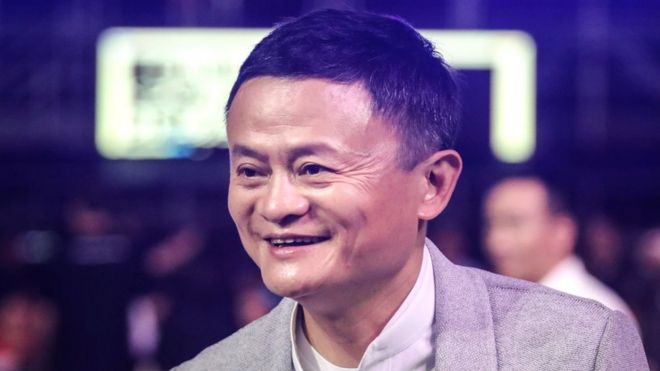
The richest man in China opened his own Twitter account last month, in the middle of the Covid-19 outbreak. So far, every one of his posts has been devoted to his unrivalled campaign to deliver medical supplies to almost every country around the world.
“One world, one fight!” Jack Ma enthused in one of his first messages. “Together, we can do this!” he cheered in another.
The billionaire entrepreneur is the driving force behind a widespread operation to ship medical supplies to more than 150 countries so far, sending face masks and ventilators to many places that have been elbowed out of the global brawl over life-saving equipment.
But Ma’s critics and even some of his supporters aren’t sure what he’s getting himself into. Has this bold venture into global philanthropy unveiled him as the friendly face of China’s Communist Party? Or is he an independent player who is being used by the Party for propaganda purposes? He appears to be following China’s diplomatic rules, particularly when choosing which countries should benefit from his donations, but his growing clout might put him in the crosshairs of the jealous leaders at the top of China’s political pyramid.
Other tech billionaires have pledged more money to fight the effects of the virus – Twitter’s Jack Dorsey is giving $1bn (£0.8bn) to the cause. Candid, a US-based philanthropy watchdog that tracks private charitable donations, puts Alibaba 12th on a list of private Covid-19 donors. But that list doesn’t include shipments of vital supplies, which some countries might consider to be more important than money at this stage in the global outbreak.
The world’s top coronavirus financial donors
How Alibaba compares to the top five. No one else other than the effervescent Ma is capable of dispatching supplies directly to those who need them. Starting in March, the Jack Ma foundation and the related Alibaba foundation began airlifting supplies to Africa, Asia, Europe, Latin America and even to politically sensitive areas including Iran, Israel, Russia and the US.
Ma has also donated millions to coronavirus vaccine research and a handbook of medical expertise from doctors in his native Zhejiang province has been translated from Chinese into 16 languages. But it’s the medical shipments that have been making headlines, setting Ma apart.
“He has the ability and the money and the lifting power to get a Chinese supply plane out of Hangzhou to land in Addis Ababa, or wherever it needs to go,” explains Ma’s biographer, Duncan Clark. “This is logistics; this is what his company, his people and his province are all about.”
A friendly face
Jack Ma is famous for being the charismatic English teacher who went on to create China’s biggest technology company. Alibaba is now known as the “Amazon of the East”. Ma started the company inside his tiny apartment in the Chinese coastal city of Hangzhou, in the centre of China’s factory belt, back in 1999. Alibaba has since grown to become one of the dominant players in the world’s second largest economy, with key stakes in China’s online, banking and entertainment worlds. Ma himself is worth more than $40bn.
Officially, he stepped down as Alibaba’s chairman in 2018. He said he was going to focus on philanthropy. But Ma retained a permanent seat on Alibaba’s board. Coupled with his wealth and fame, he remains one of the most powerful men in China.
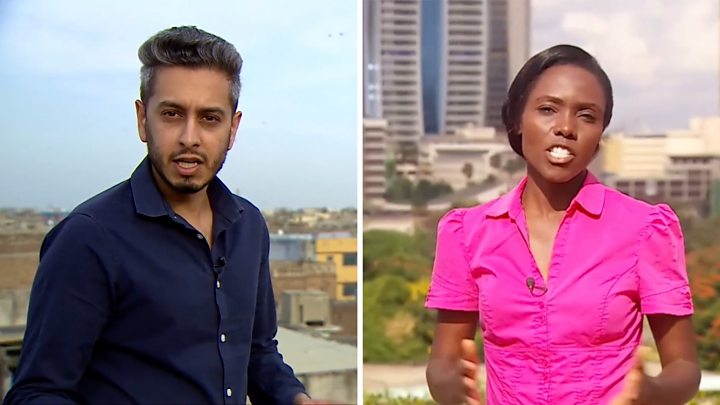
Media caption The BBC’s Secunder Kermani and Anne Soy compare how prepared Asian and African countries are
It appears that Ma’s donations are following Party guidelines: there is no evidence that any of the Jack Ma and Alibaba Foundation donations have gone to countries that have formal ties with Taiwan, China’s neighbour and diplomatic rival. Ma announced on Twitter that he was donating to 22 countries in Latin America. States that side with Taiwan but who have also called for medical supplies – from Honduras to Haiti – are among the few dozen countries that do not appear to be on the list of 150 countries. The foundations repeatedly refused to provide a detailed list of countries that have received donations, explaining that “at this moment in time, we are not sharing this level of detail”.
However, the donations that have been delivered have certainly generated a lot of goodwill. With the exception of problematic deliveries to Cuba and Eritrea, all of the foundations’ shipments dispatched from China appear to have been gratefully received. That success is giving Ma even more positive attention than usual. China’s state media has been mentioning Ma almost as often as the country’s autocratic leader, Xi Jinping.
AFP
So far…
Over 150 countries have received donations from Jack Ma, including about:
120.4mface masks
4,105,000testing kits
3,704ventilators
Source: Alizila
It’s an uncomfortable comparison. As Ma soaks up praise, Xi faces persistent questions about how he handled the early stages of the virus and where, exactly, the outbreak began.
The Chinese government has dispatched medical teams and donations of supplies to a large number of hard-hit countries, particularly in Europe and South-East Asia.
However, those efforts have sometimes fallen flat. China’s been accused of sending faulty supplies to several countries. In some cases, the tests it sent were being misused but in others, low-quality supplies went unused and the donations backfired.
In contrast, Jack Ma’s shipments have only boosted his reputation.
“It’s fair to say that Ma’s donation was universally celebrated across Africa,” says Eric Olander, managing editor of the China Africa Project website and podcast. Ma pledged to visit all countries in Africa and has been a frequent visitor since his retirement.
“What happens to the materials once they land in a country is up to the host government, so any complaints about how Nigeria’s materials were distributed are indeed a domestic Nigerian issue,” Olander adds. “But with respect to the donation itself, the Rwandan leader, Paul Kagame, called it a “shot in the arm” and pretty much everyone saw it for what it was which was: delivering badly-needed materials to a region of the world that nobody else is either willing or capable of helping at that scale.”
Walking the tightrope
But is Ma risking a backlash from Beijing? Xi Jinping isn’t known as someone who likes to share the spotlight and his government has certainly targeted famous faces before. In recent years, the country’s top actress, a celebrated news anchor and several other billionaire entrepreneurs have all “disappeared” for long periods. Some, including the news anchor, end up serving prison sentences. Others re-emerge from detention, chastened and pledging their allegiance to the Party.
“There’s a rumour that [Jack Ma] stepped down in 2018 from being the chairman of the Alibaba Group because he was seen as a homegrown entrepreneur whose popularity would eclipse that of the Communist Party,” explains Ashley Feng, research associate at the Centre for New American Security in Washington DC. Indeed, Ma surprised many when he suddenly announced his retirement in 2018. He has denied persistent rumours that Beijing forced him out of his position.
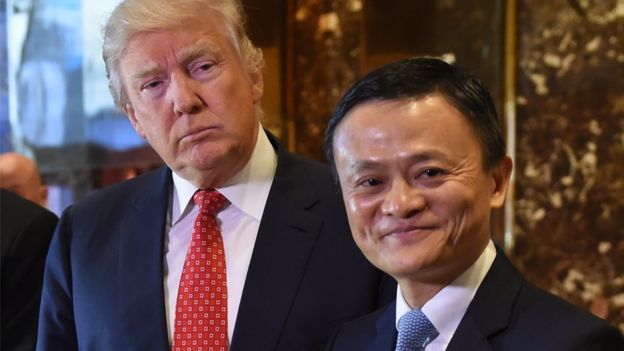
Image copyright GETTY IMAGESImage caption Ma discussed trade with then-President-elect Donald Trump in January 2017
Duncan Clark, Ma’s biographer, is also aware of reports that Ma was nudged away from Alibaba following a key incident in January 2017. The Chinese billionaire met with then-President-elect Donald Trump in Trump Tower, ostensibly to discuss Sino-US trade. The Chinese president didn’t meet with Trump until months later.
“There was a lot of speculation of time that Jack Ma had moved too fast,” Clark says. “So, I think there’s lessons learned from both sides on the need to try to coordinate.”
“Jack Ma represents a sort of entrepreneurial soft power,” Clark adds. “That also creates challenges though, because the government is quite jealous or nervous of non-Party actors taking that kind of role.”
Technically, Ma isn’t a Communist outsider: China’s wealthiest capitalist has actually been a member of the Communist Party since the 1980s, when he was a university student.
But Ma’s always had a tricky relationship with the Party, famously saying that Alibaba’s attitude towards the Party was to “be in love with it but not to marry it”.
Even if Ma and the foundations connected to him are making decisions without Beijing’s advance blessing, the Chinese government has certainly done what it can to capitalise on Ma’s generosity. Chinese ambassadors are frequently on hand at airport ceremonies to receive the medical supplies shipped over by Ma, from Sierra Leone to Cambodia.
China has also used Ma’s largesse in its critiques of the United States. “The State Department said Taiwan is a true friend as it donated 2 million masks,” the Chinese Foreign Ministry tweeted in early April. “Wonder if @StateDept has any comment on Jack Ma’s donation of 1 million masks and 500k testing kits as well as Chinese companies’ and provinces’ assistance?”
Perhaps Ma can rise above what’s happened to so many others who ran afoul of the Party. China might just need a popular global Chinese figure so much that Ma has done what no one else can: make himself indispensable.
“Here’s the one key takeaway from all that happened with Jack Ma and Africa: he said he would do something and it got done,” explains Eric Olander. “That is an incredibly powerful optic in a place where foreigners often come, make big promises and often fail to deliver. So, the huge Covid-19 donation that he did fit within that pattern. He said he would do it and mere weeks later, those masks were in the hands of healthcare workers.”
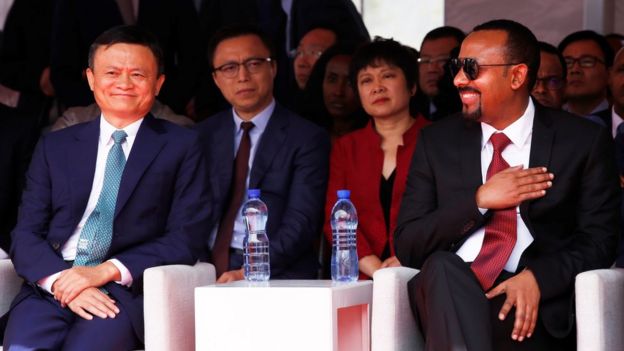
Image copyright GETTY IMAGESImage caption Ma at an Electronic World Trade Platform event with Ethiopian Prime Minister Abiy Ahmed last year
Duncan Clark argues that Ma already had a seat at China’s high table because of Alibaba’s economic heft. However, his first-name familiarity with world leaders makes him even more valuable to Beijing as China tries to repair its battered image.
“He has demonstrated the ability, with multiple IPOs under his belt, and multiple friendships overseas, to win friends and influence people. He’s the Dale Carnegie of China and that certainly, we’ve seen that that’s irritated some in the Chinese government but now it’s almost an all hands on deck situation,” Clark says.
There’s no doubt that China’s wider reputation is benefiting from the charitable work of Ma and other wealthy Chinese entrepreneurs. Andrew Grabois from Candid, the philanthropic watchdog that’s been measuring global donations in relation to Covid-19, says that the private donations coming from China are impossible to ignore.
“They’re taking a leadership role, the kind of thing that used to be done by the United States,” he says. “The most obvious past example is the response to Ebola, the Ebola outbreak in 2014. The US sent in doctors and everything to West Africa to help contain that virus before it left West Africa.”
Chinese donors are taking on that role with this virus.
“They are projecting soft power beyond their borders, going into areas, providing aid, monetary aid and expertise,” Grabois adds.
So, it’s not the right time for Beijing to stand in Jack Ma’s way.
“You know, this is a major crisis for the world right now,” Duncan Clark concludes. “But obviously, it’s also a crisis for China’s relationship with the rest of the world. So they need anybody who can help dampen down some of these those pressures.”
But trade with partner countries might not be as badly affected as with countries elsewhere in the world, observers say
China’s trade with belt and road countries rose by 3.2 per cent in the January-March period, but second-quarter results will depend on how well they manage to contain the pathogen, academic says
China’s investment in foreign infrastructure as part of its Belt and Road Initiative has been curtailed because of the coronavirus pandemic. Photo: Xinhua
The coronavirus pandemic is set to cause a slump in Chinese investment in its signature
and a dip in trade with partner countries that could take a year to overcome, analysts say.
But the impact of the health crisis on China’s economic relations with nations involved in the ambitious infrastructure development programme might not be as great as on those that are not.
China’s total foreign trade in the first quarter of 2020 fell by 6.4 per cent year on year, according to official figures from Beijing.
Trade with the United States, Europe and Japan all dropped in the period, by 18.3, 10.4 and 8.1 per cent, respectively, the commerce ministry said.
By comparison, China’s trade with belt and road countries increased by 3.2 per cent in the first quarter, although the growth figure was lower than the 10.8 per cent reported for the whole of 2019.
China’s trade with 56 belt and road countries – located across Africa, Asia, Europe and South America – accounts for about 30 per cent of its total annual volume, according to the commerce ministry.
Despite the first-quarter growth, Tong Jiadong, a professor of international trade at Nankai University in Tianjin, said he expected China’s trade with belt and road countries to fall by between 2 and 5 per cent this year.
His predictions are less gloomy than the 13 to 32 per cent contraction in global trade forecast for this year by the World Trade Organisation.
“A drop in [China’s total] first-quarter trade was inevitable but it slowly started to recover as it resumed production, especially with Southeast Asian, Eastern European and Arab countries,” Tong said.
“The second quarter will really depend on how the epidemic is contained in belt and road countries.”
Nick Marro, Hong Kong-based head of global trade at the Economist Intelligence Unit, said he expected China’s total overseas direct investment to fall by about 30 per cent this year, which would be bad news for the belt and road plan.
“This will derive from a combination of growing domestic stress in China, enhanced regulatory scrutiny over Chinese investment in major international markets, and weakened global economic prospects that will naturally depress investment demand,” he said.
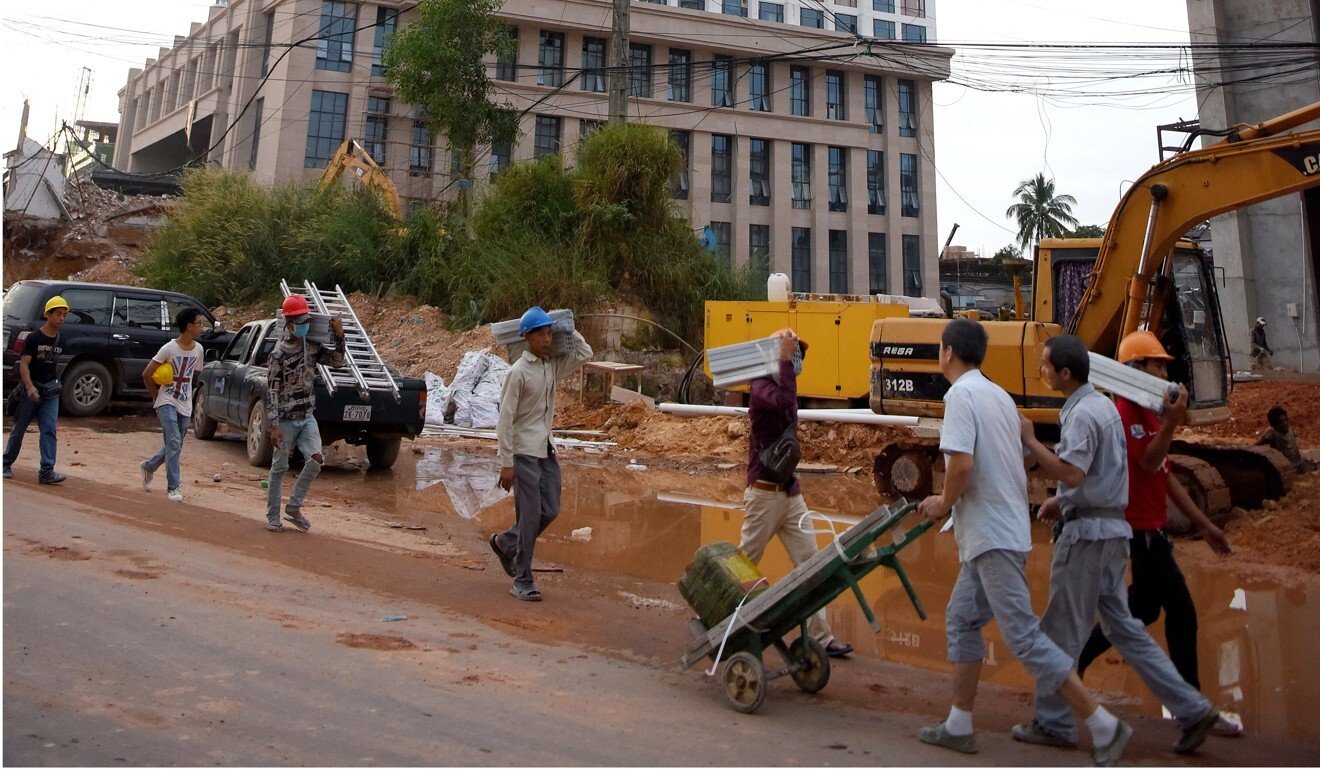
The development of the Chinese built and operated special economic zone in the Cambodian town of Sihanoukville is reported to have slowed, while infrastructure projects in Bangladesh, including the Payra coal-fired power plant, have been put on hold.
The development of the Chinese built and operated special economic zone in the Cambodian town of Sihanoukville is reported to have slowed. Photo: AFP
Marro said the reduction of capital and labour from China might complicate other projects for key belt and road partner, like Pakistan, which is home to infrastructure projects worth tens of billions of US dollars, and funded and built in large part by China.
“Pakistan looks concerning, particularly in terms of how we’ve assessed its sovereign and currency risk,” Marro said.
“Public debt is high compared to other emerging markets, while the coronavirus will push the budget deficit to expand to 10 per cent of GDP [gross domestic product] this year.”
Last week, Pakistan asked China for a 10-year extension to the repayment period on US$30 billion worth of loans used to fund the development of infrastructure projects, according to a report by local newspaper Dawn.
China’s overseas investment has been falling steadily from its peak in 2016, mostly as a result of Beijing’s curbs on capital outflows.
Last year, the direct investment by Chinese companies and organisations other than banks in belt and road countries fell 3.8 per cent from 2018 to US$15 billion, with most of the money going to South and Southeast Asian countries, including Singapore, Vietnam, Indonesia and Pakistan.
Tong said the pandemic had made Chinese investors nervous about putting their money in countries where disease control measures were becoming increasingly stringent, but added that the pause in activity would give all parties time to regroup.
“Investment in the second quarter will decline and allow time for the questions to be answered,” he said.
“Past experience along the belt and road has taught many lessons to both China and its partners, and forced them to think calmly about their own interests. The epidemic provides both parties with a good time for this.”
Dr Frans-Paul van der Putten, a senior research fellow at Clingendael Institute in the Netherlands, said China’s post-pandemic strategy for the belt and road in Europe
might include a shift away from investing in high-profile infrastructure projects like ports and airports.
Investors might instead cooperate with transport and logistics providers rather than invest directly, he said.
“Even though in the coming years the amount of money China loans and invests abroad may be lower than in the peak years around 2015-16, I expect it to maintain the belt and road plan as its overall strategic framework for its foreign economic relations,” he said.
SEOUL (Reuters) – South Korean and Chinese officials on Tuesday cast doubt on reports North Korean leader Kim Jong Un was ill after media outlets said he had undergone a cardiovascular procedure and was in “grave danger”.
Daily NK, a Seoul-based speciality website, reported late on Monday, citing one unnamed source in North Korea, that Kim was recovering after undergoing the procedure on April 12. The North Korean leader is believed to be about 36.
CNN cited a U.S. official with direct knowledge of the matter as saying Washington was “monitoring intelligence” that Kim was in grave danger after surgery. Bloomberg quoted an unnamed U.S. official as saying the White House was told that Kim took a turn for the worse after the surgery.
However, two South Korean government officials rejected the CNN report without elaborating on whether Kim had undergone surgery. The presidential Blue House said there were no unusual signs coming from the reclusive, nuclear-capable state.
Kim is the unquestioned leader of North Korea and the sole commander of its nuclear arsenal. He has no clear successor and any instability in the country could be a major international risk.
RELATED COVERAGE
Factbox: Questions hang over North Korea succession amid reports on Kim health
The state KCNA news agency gave no indication of the whereabouts of Kim in routine dispatches on Tuesday, but said he had sent birthday gifts to prominent citizens.
An official at the Chinese Communist Party’s International Liaison Department, which deals with North Korea, told Reuters the source did not believe Kim was critically ill. China is North Korea’s only major ally.
Chinese foreign ministry spokesman Geng Shuang said Beijing was aware of reports about the health of Kim, but said it does not know their source, without commenting on whether it has any information about the situation.
South Korean shares exposed to North Korea tumbled and the Korean won fell on the reports. The won traded down more than 1% against the dollar even as South Korean government sources said Kim was not gravely ill.
U.S. stock futures were trading 0.5% lower, but it was not clear how much of that weakness was owing to the collapse in U.S. oil prices and consequent concerns over global demand.
Daily NK said Kim had been admitted to hospital on April 12, just hours before the cardiovascular procedure, as his health had deteriorated since August due to heavy smoking, obesity and overwork.
It said he was now receiving treatment at a villa in the Mount Myohyang resort north of the capital Pyongyang.
“My understanding is that he had been struggling (with cardiovascular problems) since last August but it worsened after repeated visits to Mount Paektu,” a source was quoted as saying, referring to the country’s sacred mountain.
Accompanied by senior North Korean figures, Kim took two well-publicised rides on a stallion on the snowy slopes of the mountain in October and December.
KIM’S HEALTH KEY TO STABILITY
An authoritative U.S. source familiar with internal U.S. government reporting on North Korea questioned the CNN report that Kim was in “grave danger”.
“Any credible direct reporting having to do with Kim would be highly compartmented intelligence and unlikely to leak to the media,” a Korea specialist working for the U.S. government said on condition of anonymity.
Japan’s top government spokesman, Yoshihide Suga, declined to comment on the reports of Kim’s health.
“We are regularly gathering and analysing information about North Korea with great concern,” he said. “We will keep gathering and analysing information regarding North Korea by collaborating with other countries such as the U.S.”
Kim’s potential health issues could fuel uncertainty over the future of the reclusive state’s dynastic rule and stalled denuclearisation talks with the United States, issues in which Kim wields absolute authority.
With no details known about his young children, analysts say his sister and loyalists could form a regency until a successor is old enough to take over.
Speculation about Kim’s health first arose following his absence from the anniversary of the birthday of its founding father and Kim’s grandfather, Kim Il Sung, on April 15.
On April 12, North Korean state media reported that Kim Jong Un had visited an airbase and observed drills by fighter jets and attack aircraft.
Two days later North Korea launched multiple short-range anti-ship cruise missiles into the sea and Sukhoi jets fired air-to-surface missiles as part of military exercises.
The missile launches were part of the celebrations for Kim’s grandfather, Seoul officials said, but there was no North Korea state media report on his attendance or the tests.
Reporting from inside North Korea is notoriously difficult, especially on matters concerning the country’s leadership, given tight controls on information. There have been false and conflicting reports in the past on matters related to its leaders.
Kim is a third-generation hereditary leader who rules North Korea with an iron-fist, taking over the titles of head of state and commander in chief of the military since late 2011.
In recent years Kim has launched a diplomatic offensive to promote both himself as a world leader and his hermit kingdom, holding three meetings with U.S. President Donald Trump, four with South Korean President Moon Jae-in and five with China’s President Xi Jinping.
He was the first North Korean leader to cross the border into South Korea to meet Moon in 2018. Both Koreas are technically still at war, as the Korean War of 1950-53 ended in an armistice, not a peace treaty.
Kim has sought to have international sanctions against his country eased, but has refused to dismantle his nuclear weapons programme, a steadfast demand by the United States.








 CHINDIA ALERT: You'll be living in their world, very soon
South Korean officials call for caution amid reports that North Korean leader Kim is ill
SEOUL (Reuters) – South Korean officials are calling for caution amid reports that North Korean leader Kim Jong Un may be ill or is being isolated because of coronavirus concerns, emphasising that they have detected no unusual movements in North Korea.
At a closed door forum on Sunday, South Korea’s Unification Minister Kim Yeon-chul, who oversees engagement with the North, said the government has the intelligence capabilities to say with confidence that there was no indications of anything unusual.
Rumours and speculation over the North Korean leader’s health began after he made no public appearance at a key state holiday on April 15, and has since remained out of sight.
South Korea media last week reported that Kim may have undergone cardiovascular surgery or was in isolation to avoid exposure to the new coronavirus.
Unification minister Kim cast doubt on the report of surgery, arguing that the hospital mentioned did not have the capabilities for such an operation.
Still, Yoon Sang-hyun, chairman of the foreign and unification committee in South Korea’s National Assembly, told a gathering of experts on Monday that Kim Jong Un’s absence from the public eye suggests “he has not been working as normally”.
“There has not been any report showing he’s making policy decisions as usual since April 11, which leads us to assume that he is either sick or being isolated because of coronavirus concerns,” Yoon said.
North Korea has said it has no confirmed cases of the new coronavirus, but some international experts have cast doubts on that claim.
On Monday, North Korean state media once again showed no new photos of Kim nor reported on his whereabouts.
However, they did carry reports that he had sent a message of gratitude to workers building a tourist resort in Wonsan, an area where some South Korean media reports have said Kim may be staying.
“Our government position is firm,” Moon Chung-in, the top foreign policy adviser to South Korean President Moon Jae-in, said in comments to news outlets in the United States.
“Kim Jong Un is alive and well. He has been staying in the Wonsan area since April 13. No suspicious movements have so far been detected.”
Satellite images from last week showed a special train possibly belonging to Kim at Wonsan, lending weight to those reports, according to 38 North, a Washington-based North Korea monitoring project.
Though the group said it was probably the North Korean leader’s personal train, Reuters has not been able to confirm that independently, or whether he was in Wonsan.
A spokeswoman for the Unification Ministry said on Monday she had nothing to confirm when asked about reports that Kim was in Wonsan.
Last week China dispatched a team to North Korea including medical experts to advise on Kim Jong Un, according to three people familiar with the situation.
Reuters was unable to immediately determine what the trip by the Chinese team signalled in terms of Kim’s health.
On Friday a South Korean source told Reuters their intelligence was that Kim Jong Un was alive and would likely make an appearance soon.
Experts have cautioned that Kim has disappeared from state media coverage before, and that gathering accurate information in North Korea is notoriously difficult.
North Korea’s state media last reported on Kim’s whereabouts when he presided over a meeting on April 11.
Kim, believed to be 36, vanished from state media for more than a month in 2014 and North Korean state TV later showed him walking with a limp.
Source: Reuters
Posted in "unusual", 11, 15, 2014, 36, 38 North, absence, alive and well, amid, anything, appearance, April, area, arguing, assume, avoid, because, began, being isolated, belonging, Building, call for, calling, capabilities, cardiovascular, cast, caution, Chairman, China, claim, closed door, comments, concerns, confidence, confirmed cases, coronavirus, detected, disappeared, dispatched, doubt, emphasising, engagement, experts, exposure, firm, foreign and unification committee, foreign policy adviser, forum, Friday, gathering, Government, gratitude, health, Hospital, ill, including, independently, indications, intelligence, international experts, isolation, key, Kim, Kim Jong Un, last week, leaders, lending weight, limp, media, medical experts, meeting, mentioned, message, minister, Monday, monitoring project, month, movements, National Assembly, new coronavirus, news outlets, Normally, North, North Korea, North Korean leader, North Korean state TV, officials, operation, out of sight, oversees, personal train, photos, policy decisions, presided, President Moon Jae-in, public appearance, public eye, remained, reported, reports, Resort, Reuters, Rumours, Seoul, showed, sick, signalled, since, South Korea’s, South Korean, South Korean President, special train, speculation, spokeswoman, state holiday, State media, staying, suggests, Sunday, surgery, team, tourist, Uncategorized, undergone, unification, Unification minister, Unification Ministry, United States, unusual, vanished, walking, Washington-based, whereabouts, Wonsan, workers, working | Leave a Comment »