Chindia Alert: You’ll be Living in their World Very Soon
aims to alert you to the threats and opportunities that China and India present. China and India require serious attention; case of ‘hidden dragon and crouching tiger’.
Without this attention, governments, businesses and, indeed, individuals may find themselves at a great disadvantage sooner rather than later.
The POSTs (front webpages) are mainly 'cuttings' from reliable sources, updated continuously.
The PAGEs (see Tabs, above) attempt to make the information more meaningful by putting some structure to the information we have researched and assembled since 2006.
Seven classrooms, eight other buildings crushed as part of former factory topples over dividing wall
School has 400 pupils but incident happened on Sunday when they were all at home
Seven classrooms, four toilet blocks, three kitchens and a first aid room were levelled. Photo: Weibo
A kindergarten in northwest China has been forced to close temporarily after several of its classrooms and other buildings were flattened by falling debris from an adjacent building site, according to a local media report.
The incident, in Xianyang, Shaanxi province, happened on Sunday so there were no children in any of the rooms at the time, and there were no reports of any injuries.
Staff at the privately owned Xintou Kindergarten contacted the parents of its 400 pupils later the same day to tell them classes had been suspended, Shaanxi Transportation Radio reported.
The school is next to the site of a former textile factory which is being demolished to make room for a new housing project by Country Garden, China’s largest residential property developer.
The kindergarten is next to a former factory that is being redeveloped by Country Garden. Photo: Weibo
The report said that one of the buildings being demolished toppled over a wall separating the school from the factory, crushing seven classrooms, four toilet blocks, three kitchens and a first aid room.
After an investigation by the emergency services and local authorities, the developer agreed to compensate the school’s owners for the damage caused and plans are being drawn up to restore the property to its original state.
Two children stabbed to death outside primary school
Several parents gathered at the site to inquire about when it would reopen. The report did not give a precise date but said it was likely to be early next week.
According to figures from the local land resources authority, Country Garden bought the former factory site for a city record price of 1.99 billion yuan (US$297 million) last year.
The school was closed at the time of the accident and there were no reports of anyone being injured. Photo: Weibo
Doctors say drink contained anti-bacteria compound used by catering industry
Woman took ‘one sip and found it tasted bad’
Fast food chain McDonald’s apologised to a customer who was served milk tea contaminated with disinfectant at one of its stores in eastern China. Photo: Weibo
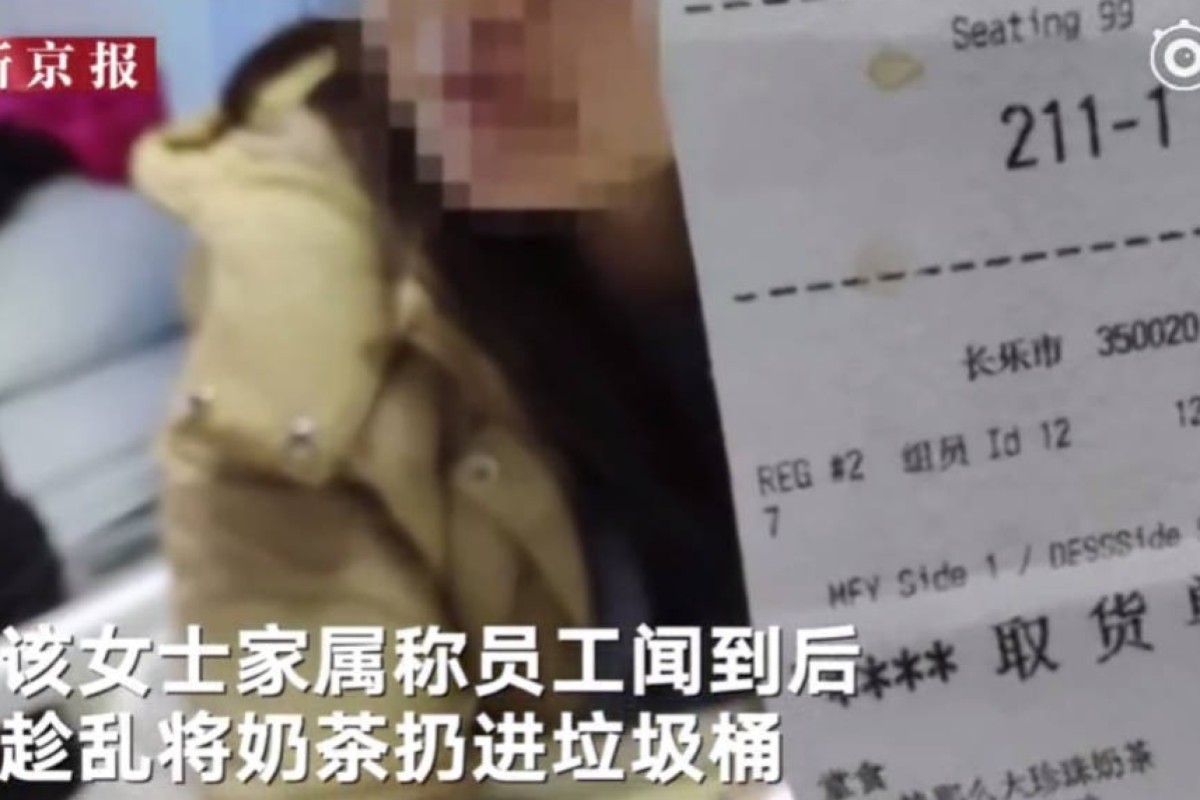
Fast food chain McDonald’s apologised to a customer who was served milk tea contaminated with disinfectant in one of its stores in eastern China, damaging her digestive tract.
The restaurant said on Monday that it had reached a settlement with the customer, a woman surnamed Huang, after she suffered vomiting, a sore throat, a stomach ache and was taken to hospital on Friday for treatment.
Huang – who was still in hospital – suffered the symptoms shortly after taking a sip of the drink in a restaurant at Changle Airport in Fuzhou, the capital of Fujian province, the Strait Metropolis Daily reported.
“She just had one sip and found it tasted bad. But she already swallowed some of it,” Huang’s husband, surnamed Tang, told the newspaper.
McDonald’s apologises after advertisement showing Taiwan as a country draws criticism
When the lid was removed from the cup there was a strong smell of disinfectant, Tang said.
“I asked staff workers about the drink, but they just took it and smelled it, without giving any explanation. They threw the drink into the rubbish when we were not looking, but we took it back,” Tang said.
Doctors said the woman’s symptoms were caused by sodium dichloroisocyanurate, a chlorine compound widely used to kill bacteria in water by the catering industry and by the leisure sector in swimming pools.
On its Weibo feed, McDonald’s described the incident as unintentional and said staff would be given more training.
“McDonald’s has paid great attention to the incident and is deeply sorry for the error made by a staff member of our restaurant,” it said.
McDonald’s said that it would improve staff training after the customer was given tea tainted with disinfectant. Photo: Weibo
Online auction attracts fierce competition, sending value rocketing in first minutes of bidding
‘Auspicious’ numbers are popular in China because they sound like words which signify good fortune
An “auspicious” mobile phone number has sold for more than US$50,000 at an online auction in China. Photo: Shutterstock
An “auspicious” mobile phone number has fetched more than 350,000 yuan (US$52,000) at an online auction in northern China.
The number, which ended in five fives, sold for more than 30 times the starting price of 11,250 yuan, after fierce bidding saw its value rocket to more than 300,000 yuan in just 12 minutes.
A total of 140 people registered to participate in the 24-hour auction and 107 bids were recorded. The winning bid came from a user called Li Zisheng on Tuesday evening, according to Alibaba’s Sifa court auction platform which hosted the sale.
The South China Morning Post is owned by Alibaba.
Why you shouldn’t clip your nails at night and other superstitions
It is not uncommon for people in China to pay a premium for phone numbers or car licence plates featuring numbers which are considered lucky.
Six, eight and nine are particular favourites, as they sound like the words for strength, wealth and longevity, respectively. The number five is said to represent happiness or wealth.
One of the most expensive mobile numbers on record in China contained a combination of eights and fives and sold at auction for US$680,000 in 2004, according to the Oriental Morning Post.
Not everyone is willing to pay any price for a lucky number plate or phone number, with some internet users on China’s Twitter-like Weibo service questioning why people would pay so much money for such things.
“Are mobile and car plate numbers really this important?” a user from Hunan province, central China, wrote. “This type of number will have a higher chance of getting spam calls.”
Video footage of woman fishing in a miniskirt and symbol of communist youth group deemed to violate law against ‘defiling revolutionary martyrs’
The woman was filmed in a miniskirt and red scarf. Photo: Weibo
Police in southwest China have detained a woman or “defiling revolutionary martyrs”after she appeared in a video wearing “bright, revealing clothes” and a Young Pioneers’ red scarf.
Footage of the woman, surnamed Tang, showing her fishing in a muddy field in Sichuan province was posted on the video-sharing website Kuaishou.com.
In one clip – which police said attracted three million views – she was dressed in a red blouse, white miniskirt and the red scarf traditionally worn by members of the under-14s Communist group.
Police in Rong county in Sichuan said Tang had deliberately dressed in “bright, revealing clothes” to “attract eyeballs, increase fans and video views”, and wearing the red scarf with such an outfit violated the Heroes and Martyrs Protection Law, which came into effect in May last year.
“The red scarf is a symbol of the Young Pioneers of China. It represents a corner of the red flag, dyed by the blood of martyrs,” the statement said.
Chinese artist gets naked with late father’s remains but is it art?
“Tang’s action has severely defiled what the red scarf stands for: patriotic martyrs, the honour of the young pioneers, and the patriotic sentiments of the people. It has had a bad social impact.”
Police said Tang had been given 12 days’ administrative detention on March 28 and fined 1,000 yuan (US$150). A man who shot the video footage was released with a warning.
The police statement caused heated debate on the social media platform Weibo.
Some supported the police for punishing “inappropriate behaviour”, while others questioned whether they had abused their power.
March 8 has devolved into a prime time for online sales campaigns and advertising rather than a moment to celebrate the achievements of women, critics say
Job seekers look at the job advertisements at a job fair for women on the International Women’s Day in Huaibei, Anhui province, on Friday. Photo: Reuters
Every year around March 8, the internet in China is plastered with references to International Women’s Day.
Online commerce sites promote discounts on items from jewellery to massage machines to electronics; groups and individuals post “supportive” comments for the women in their lives; and retailers roll out advertising campaigns with “feminist” messages.
But critics say the true meaning of the day is being lost and the annual commemoration has become less of a chance to celebrate women’s achievements and more of an excuse to push spending.
It has also spawned a phenomenon called “Girls’ Day”, that reinforces the social preference for youth and beauty, they say.
International Women’s Day was first organised by the former Socialist Party of America in New York in 1909 and later became a fixture on calendars among socialists and in communist countries before being adopted by the United Nations in 1975 .
When marrying young is the norm, courageous Chinese women take back control by asking parents to “Meet me halfway”
In China, it has been celebrated since 1924, with women using the day to highlight the need for their rights.
But in recent years, it has also become a tradition for the Chinese public to celebrate March 7, the day before the official women’s day, as “Girls’ Day”, and for commercial platforms to brand March 8 as “Goddesses’ Day” or “Queens’ Day”, and offer discounts to attract sales.
Guo Jing, founder of No 74 Career Women’s Legal Hotline, said the commercial campaigns were diluting the original spirit of the day.
“Women’s day was meant to celebrate the spirit of women fighting for their rights, encouraging women’s independence and empowerment, that they can have all sorts of lives and not be a part attached to men,” Guo said.
“[The campaigns] give the impression that girls are innocent, without social experience, and ‘women’ are older, less attractive.”
Women need opportunities at work, at home and in public life, a rights advocate says. Photo: EPA
Even international firms have come under fire for linking their products with Girls’ Day. On Thursday, in an advertisements for the film Captain Marvel, Marvel Studios’ China team wrote on Weibo, “Happy Girls’ Day! Captain Marvel Brie Larson sends her wishes to all girls in China.”
Commenters said the first Marvel movie to showcase a woman superhero was undermining its message by highlighting a day with a mixed meaning.
“The film basically sells feminism, yet you are talking about Girls’ Day?” one comment said.
China gender and sexuality centre shuts down as censorship chill spreads
Other firms, such as sportswear company Nike, won a round of applause for breaking stereotypes with Dream Crazier video. The video centred on breakthroughs from female athletes around the globe, complete with Nike’s slogan, “Just do it”.
Feng Yuan, the co-founder of Beijing-based group Equality, which is dedicated to women’s rights and gender equality, said many shop owners or platforms wanted to turn any special day into a shopping bonanza, but they only appeared to be trying to please women.
“We should be alerted that the names of ‘Girls’ Day’ or ‘Goddess’s Day’ indicate that many regard women only as consumers, caretakers or an ‘empty vases’,” Feng said.
The focus on women’s appearance was driven home on Thursday night in a fumbled attempt by a university in the country’s north to mark the day. In a Weibo post, Shandong University claimed it was the founder of Girls’ Day on March 7, and the original meaning was “three plus seven equals 10. You score 10 out of 10 points for sweetness.” It claimed the day was for university students to care for women and for female students to showcase their attractiveness.
The post quickly met with criticism. The Intellectuals, an online media outlet, said “the day recognises women’s achievements, regardless of their nationality, ethnicity, language, culture, economic and political standing. It originated from North America and Europe’s workers’ movements in the early 20th century.
“Whether you call it Girls’ Day or Queens’ Day, it’s an insult to the true spirit of the day.”
On campuses throughout the country, it has become a tradition for banners with supportive messages to be put up on buildings and message boards. But rather than celebrating women, many of the banners sexualise them in what critics say amounts to a form of sexual harassment.
“I’ve met scores of women in the spring, but I’d rather be sleeping with you,” one banner read.
The sexualisation of the event is compounded by jokes online that play on the Chinese word for “day” and “sex” to suggest that the real meaning of the day is to “welcome girls into womanhood”.
Women’s rights advocates say the public needs to sever the sexual and commercial ties to the day and focus on the many areas in which women’s rights need to be improved.
How a Chinese #MeToo musical whipped up a storm before the censors stepped in
That includes the lifting of a ban on the official Weibo account of Feminist Voices, which before it was shut down without explanation on women’s day last year, had some 180,000 followers and published articles on sexual harassment, women’s rights or workplace equality.
More broadly, in 2018, women still on average made less than 80 per cent of the average salary for men, according to a report by Chinese recruitment platform Zhipin.com. The report said women tended to hit a glass ceiling for promotion and pay due to the demands of marriage and child rearing.
Women’s rights have gained some attention this week as national lawmakers and advisers have met in Beijing for their annual gatherings. Huang Xihua, a National People’s Congress delegate from Huizhou in Guangdong province, ignited debate at the congress with a called for the two-child policy to be scrapped and for unmarried women to be granted equal rights to have children.
Feng, from Equality, was clear about what still needed to be done.
“For women’s day, we don’t need flowery words of praise, but more women-friendly and gender-equal policies, giving women an equal position and opportunity in family, career and public lives,” she said.
Police say woman told toddler to use a rubbish bin when he needed to go to the toilet then got into argument with driver after he called her ‘uncivilised’
Security camera footage shows her bashing on compartment door and grabbing the man’s coat as he is driving
Mother detained over bus driver attack after letting son urinate on bus
4 Mar 2019
The woman is seen in security camera footage grabbing the bus driver’s coat while he is behind the wheel. Photo: Weibo
A mother in central China has been detained after she allowed her two-year-old son to urinate in a rubbish bin on a bus then attacked the driver when he told her she was “uncivilised”.
Security camera footage of the incident in Dazhi, Hubei province on Saturday shows the woman supporting the toddler by the bin on the floor of the bus while he urinates in front of the other passengers.
She is then seen rushing up to the driver and arguing with him after he complains about her behaviour, bashing on the compartment door and grabbing the man’s coat as he is driving.
A police officer told news website PearVideo on Sunday that the woman, identified only by her surname Chen, said the boy needed to go to the toilet while they were on the bus so she took him over to the bin.
“The driver saw them and said she was uncivilised, and they got into an argument over it,” the officer said. “Chen became agitated – she hit the driver’s compartment door and reached around to attack him while he was driving.”
The driver, who was not identified, is seen in the security footage calmly pulling over and calling the police while the woman is attacking him.
Chen has been placed under criminal detention for posing a threat to public security and Dazhi police are investigating the case, according to the report.
It comes after a series of recent attacks on bus drivers in China, including an accident in October when an angry passenger who missed her stop assaulted the driver, causing the bus to veer off a bridge and crash into the Yangtze River in Chongqing, killing all 15 people on board.
A police investigation found that the 48-year-old woman had been fighting with the driver as he tried to steer the bus when the crash happened.
Reacting to the latest case, some social media users said they understood the mother’s situation, but it has angered others, who say she should have used a diaper or got off the bus at the next stop.
“Anyone might need to use the toilet [on a bus], especially a kid, but parents should take heed of the criticism – she was clearly in the wrong,” one person wrote on Weibo, China’s Twitter.
There have been other cases in recent years of Chinese parents sparking anger for letting their children urinate in public – on the mainland and elsewhere. Last month, photos of a Chinese tourist allowing her son to pee on the floor of the Forbidden City in Beijing triggered a strong reaction on social media, with many people criticising the woman.
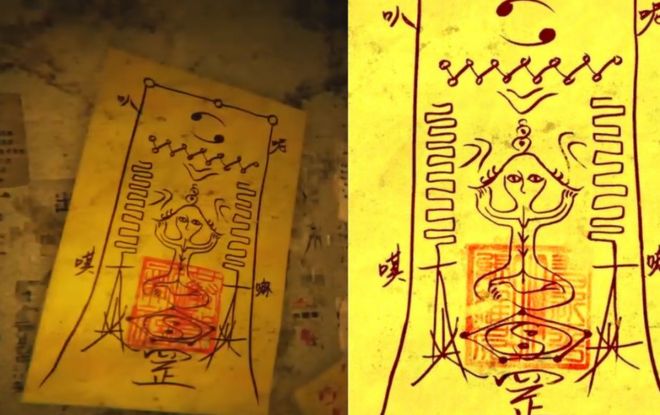
Image copyrightRED CANDLE GAMES/DEVOTIONImage captionWhen players interact with the poster (L), the poster (R) appears – with the words “Winnie the Pooh” and “Xi Jinping”
A Taiwanese games company has had its latest release pulled from mainland China, after players noticed subtle references mocking Chinese President Xi Jinping, including comparing him to Winnie the Pooh.
Red Candle Games released Devotion, a first-person horror game set in 1980s Taiwan, on games platform Steam on 19 February.
The game quickly went viral after players spotted so-called “easter eggs” and publicised them. However online discussion has since been censored.
An “easter egg” is a hidden message or joke in a computer game, normally only picked up by some players paying close attention.
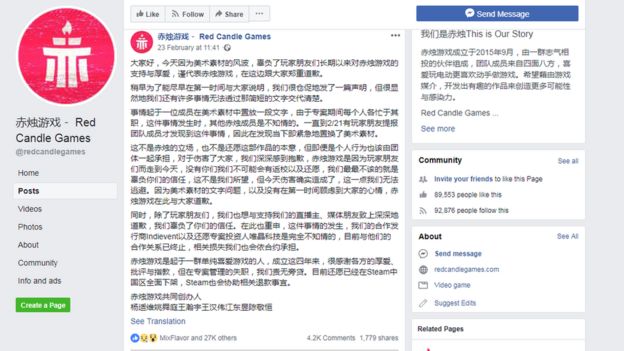
Red Candle Games has apologised, saying it will refund offended users.
Taiwan is an island that is for all practical purposes independent, but China sees it as a rebel region and insists that other countries should not have diplomatic relations with it.
Taiwan’s current president has sparred with Beijing over the island’s political future. In January, Xi Jinping said Taiwan “must and will be” reunited with China.
Hidden messages
One of the easter eggs in Devotion is a poster containing the words “Xi Jinping” next to “Winnie the Pooh”, in an ancient style of writing. Winnie the Pooh has been censored on Chinese search engines and social media since 2017, after bloggers began comparing Mr Xi to the children’s story book and film character.
Gamers have also spotted an old newspaper in Devotion that refers to an individual who has received a prison sentence, nicknamed “baozi” or “steamed bun”.
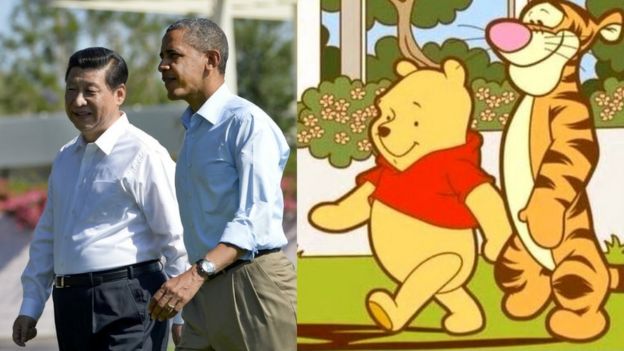
Image copyrightAFP/WEIBOImage captionThis meme showing Xi Jinping and former US President Barack Obama began circulating in 2013
“Steamed bun” is another sensitive term in China, as social media users have used it to refer to the president and evade government censors.
It said that it was aware some players may have been offended by the images, and said that it was in touch with Steam to ensure that such players could obtain a full refund.
“We sincerely hope that this ends with Red Candle, and please do not take it out on all of our innocent partners.”
Taiwanese Vice Premier Chen Chi-mai has praised the game, saying: “Only in countries with democracy and freedom can creation be free from restrictions.”
Image copyrightFACEBOOKImage captionRed Candle Games apologised and confirmed the game had been removed from Steam China
Chinese online censors, meanwhile, are trying to scrub references to the game and its hidden messages.
Searches for both “Red Candle Games” and “Devotion” in Chinese on Weibo are showing no results.
But on Monday, a search of the hashtag #Devotion showed only four posts, none of which refer to the game.
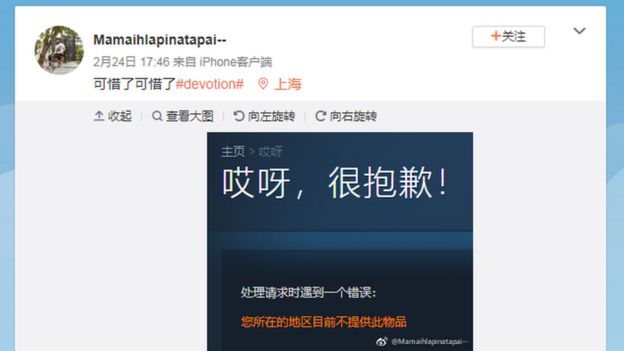
Posts that mention the game’s title in English, which the censors are often lax in censoring, show that China-based users are receiving messages on Steam saying that the game is “no longer available” to play in their country.
Meanwhile Red Candle’s account on China’s Twitter-like Sina Weibo service has been suspended, preventing the company from publicising its game in the mainland.
Image copyrightSINA WEIBOImage captionWeibo users shared posts saying they were no longer able to play the game
In Taiwan, where social media is not government-controlled, thousands of social media users are joking about the easter eggs.
Some on Facebook are posting pictures and gifs of Winnie the Pooh, and others are showing printouts of the offending poster.
Gaming in China
The episode has raised questions as to whether Steam will be the latest overseas online platform to be blocked in mainland China.
Technically, Steam has not gained official approval to operate in the country, but it remains accessible. Some 30m people are estimated to use it in China.
The platform allows China-based users to download and play games that have not received official authorisation.
Over the last decade, the government has banned games if their content is considered to be violent, or anti-Beijing. However many recent releases have never made it to China anyway because of a years-long backlog of games that regulators are yet to examine.
The top media regulator has also just announced that it will not be granting any new licences to gaming companies until the backlog is cleared.
The result is that wildly popular games such as PlayerUnknown’s Battlegrounds and Fortnite, both of which were released in 2017, remain neither banned, nor authorised in the country.
Students at one middle school were told they could join an ‘experimental class’ if they paid US$590 for a designated device
That class was later scrapped because of a lack of interest, while the principal of the other school clarified that its plan was not compulsory
Chinese schools under fire after demanding parents pay for tablets
21 Feb 2019
Parents took to social media asking why they had to buy a new tablet when they already had one, and questioning why a specific model was needed. Photo: Alamy
Two schools in northern China have come under fire from parents after they were asked to spend thousands of yuan on tablets for their children’s studies, with one forced to cancel its plan for an “experimental class” due to a lack of interest.
At that school, paying for the device would have given a student a place in a top class where they had access to the best resources.
Earlier this week, Yuying School in Yongnian county, Hebei province demanded 3,000 yuan (US$450) from parents of Year Seven students so that tablets could be bought to assist their studies, Red Star News reported on Wednesday.
They were told via a message on social network WeChat from one of the teachers. It said students should bring the money on Thursday – the first day of the new term – because the private school wanted to “teach using tablets to improve classroom efficiency”. Screenshots of the message have been circulating on social media.
Chinese high school students create daring sex education game, earning positive reviews on Steam
But some parents were against the idea, asking on the WeChat group why they had to buy a new tablet when they already had one, and questioning why a specific model was needed.
“We have several tablets at home – can’t my child use one of them at school?” one parent asked.
Another wrote: “I’m just wondering if this tablet is really worth 3,000 yuan.”
The reaction prompted school principal Li Jinxi to clarify on Wednesday that the tablet purchase was not mandatory, and staff had “misunderstood the policy”, according to the report.
“There could be some minor impact for those students who don’t buy the tablet but it won’t be a big deal because we will also continue to use traditional teaching methods,” he was quoted as saying.
Meanwhile, at Gongyi No 1 Senior High school in Henan province, students were told they could join an “experimental class” if they paid 3,980 yuan for a designated tablet, according to a report on news app Kuaibao on Tuesday.
The school had contacted some of its top students to take part in its “smart class cloud teaching experiment”, the report said.
But the Gongyi education bureau later posted a statement on Weibo, saying only about 70 of the school’s 520 students had signed up for the plan so the school had decided to scrap the idea and would refund the money to parents.
Huawei video in Chinese school exam sparks product placement row
The school was not the first in China to give students a chance to enter a top class if they bought tablets. In 2015, a school in Longkou, Shandong province told students that those who did not pay for a tablet would end up in “ordinary classes”. After the move caused uproar, the school ended up offering a free three-month trial of the devices, with students then able to choose whether to buy one or not – a decision that would not affect which class they got put in.
BEIJING, Feb. 18 (Xinhua) — The widely used new media has become an efficient tool for China’s anti-graft body to promote information transparency.
Commentary in a newspaper administrated by the Communist Party of China Central Commission for Discipline Inspection and the National Supervisory Commission said Monday netizens can find the latest information released by the top anti-graft watchdog on its website and post suggestions there.
People can report corrupt practices and other violations of disciplines and laws online, such as posting on the micro-blogging site Weibo, sending a message to anti-graft authorities’ accounts on the instant messaging tool WeChat or reporting through an app run by the top anti-graft authority.
Varied reporting channels have helped expose more officials violating disciplines and laws that were hard to be found out by anti-graft authorities in the past, the commentary said.
Improved information transparency has also helped ensure more objective and fair investigations, it added.
Anti-graft authorities can post online information of corrupt officials, including those fleeing overseas, meaning there will be more chances to capture them, said the commentary.
It also said as anti-graft authorities’ articles and video clips are reaching more people online through Weibo, Wechat and their apps, people are now able to learn about the ongoing crackdown on corruption, which also benefits the anti-graft work.












 CHINDIA ALERT: You'll be living in their world, very soon