Chindia Alert: You’ll be Living in their World Very Soon
aims to alert you to the threats and opportunities that China and India present. China and India require serious attention; case of ‘hidden dragon and crouching tiger’.
Without this attention, governments, businesses and, indeed, individuals may find themselves at a great disadvantage sooner rather than later.
The POSTs (front webpages) are mainly 'cuttings' from reliable sources, updated continuously.
The PAGEs (see Tabs, above) attempt to make the information more meaningful by putting some structure to the information we have researched and assembled since 2006.
BEIJING, May 31 (Xinhua) — The U.S. government has been slammed at home and abroad after announcing on Friday “terminating” its relationship with the World Health Organization (WHO).
U.S. health experts and lawmakers have expressed concern over the decision announced by President Donald Trump amid the COVID-19 outbreak.
Patrice Harris, president of the American Medical Association, described Trump’s move as a “senseless” action with “significant, harmful repercussions.”
“COVID-19 affects us all and does not respect borders; defeating it requires the entire world working together,” Harris was quoted by CNN as saying, urging Trump to reverse the course.
Lawrence Gostin, a professor of global health law and director of the O’Neill Institute for National and Global Health Law at Georgetown University, described the move as “foolish and arrogant” in his Twitter account.
“Trump’s action is an enormous disruption and distraction during an unprecedented health crisis,” said Gostin, also the director of the WHO collaborating center on national and global health law. “The President has made us less safe.”
Democratic Senator Joe Manchin of West Virginia said that “the United States cannot eliminate this virus on its own and to withdraw from the World Health Organization — the world’s leading public health body — is nothing short of reckless,” according to a CNN report.
Even within the Republican party, some Republicans also expressed their disagreement. Senate Health Committee Chairman Lamar Alexander reportedly said he disagreed with Trump’s decision, because, without U.S. funding, clinical trials to develop a COVID-19 vaccine might be hampered.
In addition, the European Union (EU) has urged the United States to reconsider its termination of ties with the WHO, warning that Trump’s move would erode global efforts to curb the spread of the virus.
“The WHO needs to continue being able to lead the international response to pandemics, current and future. For this, the participation and support of all is required and very much needed. In the face of this global threat, now is the time for enhanced cooperation and common solutions. Actions that weaken international results must be avoided,” Ursula von der Leyen, president of the European Commission, and Josep Borrell, the EU High Representative for Foreign Affairs and Security Policy, said in the statement on Saturday.
“In this context, we urge the U.S. to reconsider its announced decision,” the statement said.
German Health Minister Jens Spahn tweeted that Trump’s move was “a disappointing backlash for International Health.”
“The EU must take a leading role and engage more financially,” Spahn said, noting that this would be one of Germany’s priorities when it becomes the bloc’s rotating presidency on July 1.
British Prime Minister Boris Johnson’s spokesperson said earlier that Britain “has no plans to stop funding the WHO, which has an important role to play in leading the global health response.”
“Coronavirus is a global challenge and it is essential that countries work together to tackle this shared threat,” the spokesperson was quoted by The Guardian as saying.
Irish Minister for Health Simon Harris on Friday described Trump’s move as an “awful decision.”
“A global pandemic requires the world working together … We should unite in our fight against it (COVID-19) & not fight each other,” Harris tweeted.
Russian Foreign Ministry spokesperson Maria Zakharova told TASS news agency that Washington “dealt a blow” to the international framework for cooperation in healthcare at the moment when the world needed to join forces.
China’s leadership has made it clear to its people that the world will become more dangerous and they must be prepared for hard times
Beijing’s relatively small stimulus response to Covid-19 suggests it wants to save its economic policy ammunition for a bigger battle
China opted not to set a GDP target for 2020. Photo: Xinhua
Beijing’s decision not to set an annual GDP target for 2020 – for the first time since 2002 – is a sign it is putting stability ahead of growth as part of its preparations for an escalating conflict with the United States.
Economic development has always been the central theme for Beijing since it established diplomatic relations with the US in 1979. But this year it has given priority to job creation and tackling poverty. The coronavirus outbreak might appear to have been the reason for the shift, but the underlying factor is the tension with the US.
Covid-19 offered a preview of what a decoupling of China and US might look like: aircraft grounded, cargo flows disrupted, value chains broken, goodwill and cooperation lost, blame games started.
Both countries have suffered heavy human and economic losses from the coronavirus, yet that did not inspire them to work together. Instead, hostility and rivalry has thrived, and neither wants to blink first.
The Chinese leadership has made it clear to its people that the world will become more dangerous and they must be prepared for hard times. As such, the government is saving its economic policy ammunition.
While the stimulus plans introduced in the US, Germany, Japan and France exceed 10 per cent of their national GDP and interest rates have been cut to the bone, Beijing stopped at just 1 trillion yuan (US$140 billion) worth of special treasury bonds and 1.6 trillion yuan of additional local government bonds. In total, about 2.6 per cent of GDP.
Interest rates in China – 2.7 per cent on 10-year bonds – are some of the highest among major economies.
China’s 6.6 per cent defence spending boost lowest in three decades
23 May 2020
China’s budget fiscal deficit has increased to 3.6 per cent of GDP for 2020, but the larger deficit is mainly from tax and fee cuts instead of increased fiscal expenses, except for an increased military spending.
Beijing is calling on provincial and local authorities to tighten their belts, which is unusual for a government that has huge assets and can increase spending at any time through quantitative easing.
So why is the government, which is known for intervening in the economy, being so restrained?
It is bracing itself for a perceived period of turbulence and hardship as its relationship with the US turns sour. It is putting jobs and social stability on top of its agenda, instead of growth.
Beijing is refraining from excessive spending, eliminating sources of potential instability, making appeals to the most vulnerable social groups, and saving its power for a bigger test.
Against that backdrop, the National People’s Congress passed the national security legislation on Hong Kong. Beijing knew the bill would anger the US, but did it anyway.
Hong Kong is known as China’s gateway to the international capital market and the largest offshore yuan market, but Beijing is ready to trade losses on the financial and economic front for potential gain on a fortified national security fence.
All this points to the suggestion that Beijing is preparing for the possibility of decoupling from the US, even if it doesn’t necessarily want to.
The threat of a new Cold War is clouding the world. The theme of life for one or two generations of people on both sides of the Pacific may shift from growth and prosperity to struggle and confrontation.
China and the US have yet to collide totally, but that moment is drawing near.
A graduating foreign student takes selfies at Zhejiang University in Hangzhou, east China’s Zhejiang Province, June 28, 2018. (Xinhua/Long Wei)
BEIJING, May 18 (Xinhua) — Chinese President Xi Jinping extended welcome to excellent youth from all countries in the world to study in China in his Sunday reply to a letter from all Pakistani students studying in the University of Science and Technology Beijing (USTB).
In his letter, Xi encouraged the students to communicate more with their Chinese peers and join hands with youth from all countries to contribute to promoting people-to-people connectivity and building a community with a shared future for humanity.
Learning that the students have enriched their knowledge and made quite a few Chinese friends while studying in China, Xi said he felt happy for the achievements they have made.
“As you have felt, since the COVID-19 epidemic broke out, the Chinese government and schools have always cared for the lives and health of foreign students studying in China, providing all-round help for them,” Xi noted.
The Chinese government and people put people’s lives first and treat foreigners in the country the same as Chinese nationals, making no exception in offering them care, Xi wrote.
Photo taken on Nov. 7, 2019 shows the autumn scenery of the University of Science and Technology Beijing in Beijing, capital of China. (Xinhua/Chen Yehua)
Xi said he learned that many foreign students have expressed their support to the Chinese people in various ways during China’s fight against COVID-19.
“A friend in need is a friend indeed,” he said, adding that China will continue providing various help to all foreign students studying in the country.
While welcoming excellent youth from other countries to study in China, Xi encouraged them to learn more about the country, communicate more with their Chinese peers and tell the world more about the China they see.
The USTB currently has 52 Pakistani students. They recently wrote about their experiences and feelings of studying in China in a letter to Xi and expressed their gratitude to the university for providing care and help for them after the COVID-19 outbreak.
They also expressed their aspirations to join in building the Belt and Road after graduation and contribute to enhancing China-Pakistan friendship.
People’s Liberation Army has officially recorded no infections but disease fears have delayed recruitment, training and operations
Analysts say Sars experience guided military’s prompt response, but combat effectiveness has been affected
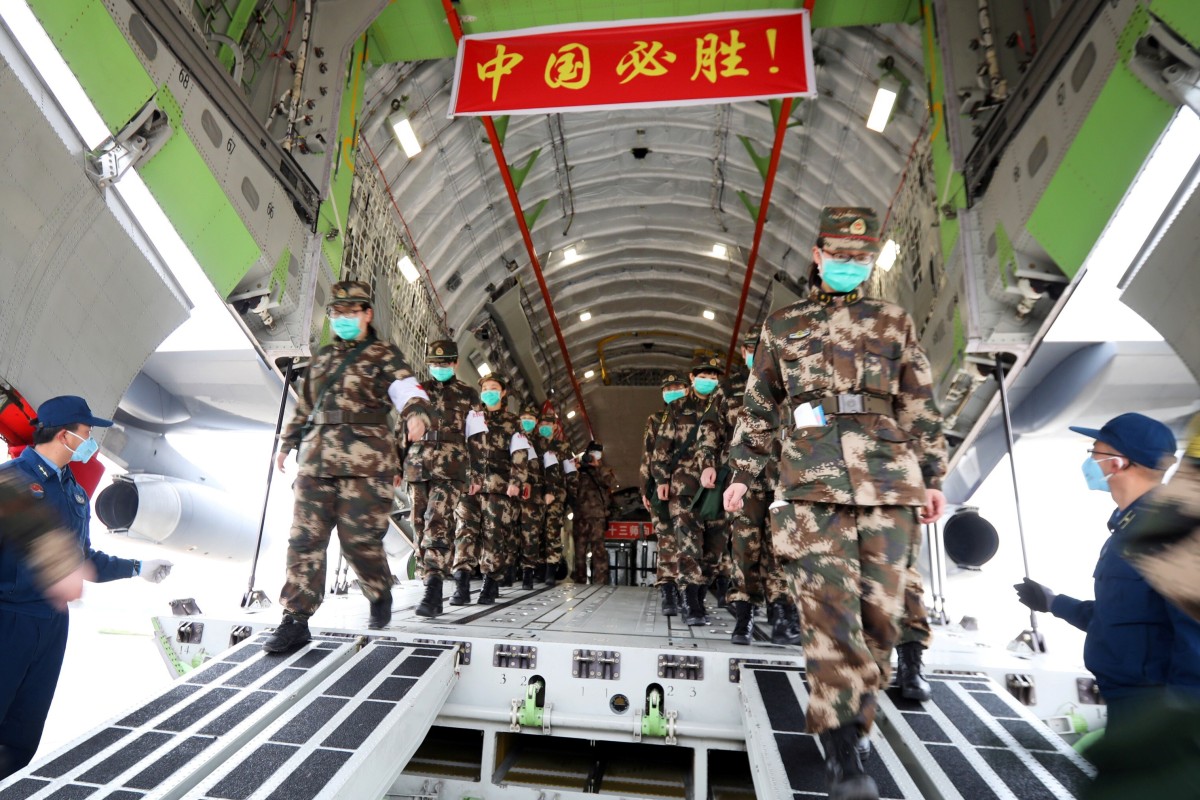
Chinese military medical personnel arriving in Wuhan in February to assist with the coronavirus outbreak response to the February. Photo: Reuters
China’s military may have been spared any coronavirus infections, but the global health crisis has slowed the progress of Chinese President Xi Jinping’s plan to transform the People’s Liberation Army into a modern fighting force capable of long-range power-projecting operations, experts say.
According to China’s defence ministry, the world’s largest armed force – with about 2.3 million personnel – has had zero confirmed cases of Covid-19. In contrast, the US and Russian militaries, ranked second- and third-largest in the world, have reported more than 4,000 and 1,000 respectively.
But the PLA has been affected in other ways by the disease, which was first reported in Wuhan in December before going on to infect 3.9 million people around the world to date.
Safety concerns delayed its annual spring recruitment programme – it has been rescheduled for August – while the PLA Navy was forced to change its training arrangements, switching to classroom study of military theory and tactics, according to Xinhua.
“The PLA is still a conscription army and, given its large turnover of soldiers every year and the late recruitment and training plan this year, the coronavirus pandemic has already affected combat effectiveness,” said Adam Ni, director of the China Policy Centre, an independent, non-profit research organisation based in Canberra, Australia.
China’s military budget will still rise despite coronavirus, experts predict
3 May 2020
The navy’s operations, in particular, would have been affected, according to Charlie Lyons Jones, a researcher from the Australian Strategic Policy Institute’s defence and strategy programme.
“The Chinese navy, short of highly effective disease control measures, is unlikely to avoid similar outbreaks of the novel coronavirus on board its warships,” he said.
“Therefore, even if the PLA Navy currently has zero personnel infected by the novel coronavirus, its position as a navy that can operate effectively in a period of higher-than-normal tension remains precarious at best,” Jones said. He also questioned Beijing’s claims that the military was virus-free.
“The PLA played an important role in China’s response to the coronavirus outbreak in Wuhan … The idea that none of these personnel working on the front lines in Wuhan became infected by the novel coronavirus would be inconsistent with the experiences of countries from around the world,” he said.
More than 4,000 military medical workers were sent to Wuhan as part of China’s effort to contain the outbreak at ground zero – which included the rapid-built emergency field facility, the Huoshenshan hospital – and their efforts were highlighted in a documentary screened recently by state broadcaster CCTV.
China opens coronavirus hospital built in 10 days
At the time, rumours were rampant that the Chinese military had been affected by the coronavirus, fuelled by a report on February 17 by the official PLA Daily that some soldiers had been placed in quarantine and Yu Qiusong, captain of the Changzhou type 054A frigate, was isolating in a guest house. The news report did not mention why the personnel were in quarantine.
But analysts said that whether the official numbers were accurate, the PLA’s closed management, fast response and past experience with severe acute respiratory syndrome (Sars) gave China’s military an advantage in keeping the coronavirus at bay.
Zhou Chenming, a Beijing-based military observer, said a key reason for the less serious hit to the PLA compared to other forces was its speed in recognising the severity of the situation.
“What’s more, the PLA has its own logistic support system that can help minimise its contact with the outside world, thus reducing the possibility of contracting the virus,” he said.
China’s long-range stealth bomber could make its debut this year
4 May 2020
According to Xinhua, the PLA’s Centre for Disease Control and Prevention drew up an emergency response plan and mobilisation arrangements on January 20, the same day Xi issued an instruction to the public that the virus must be “resolutely contained”.
Timothy Heath, a senior international defence research analyst with the Rand Corporation, a US think tank, said China’s military had benefited from its less international role, compared to US forces.
“The US is a globally distributed force while the Chinese military largely operates on the mainland. The US thus faces challenges in containing the disease that the Chinese military does not have to face … and the US military has a large range of missions and tasks it carries out to counter threats to its allies and partners, as well as to US security. This complicates efforts by the US military to carry out disease control measures,” he said.
As China prepares its 14th five-year plan, researchers at one state-affiliated think tank predicted a more hostile global situation
Beijing urged to strengthen home-grown innovation and use vast domestic market to power economy post-coronavirus
A think tank linked to China’s State Council has encouraged Beijing to focus on home-grown technology and its vast consumer market over the next five years. Photo: Xinhua
China’s will face an increasingly hostile world over the next five years, meaning its policy plan should be focused on its vast domestic market, home-grown technological innovation and improving its citizen’s welfare, according to recommendations in a new paper.
The report by the Chinese Academy of Social Sciences (CASS), a think tank affiliated with the State Council, foresees the next five years presenting “major changes unseen in a century” for China, as “the strategic game between superpowers has intensified, while international systems and orders are reshuffled”.
While the report does not mention the coronavirus specifically, its recommendations suggest that China should become more self-reliant in response to the pandemic. This view represents one side of a lively debate among policymakers and scholars in China, ahead of the next five-year plan, which will come into place next year.
Between 2021 and 2025, the globalised economy which helped China grow into an economic power will be radically different, the report said, meaning it must adapt if it is to continue to thrive.
“The disadvantages of economic globalisation have increasingly stood out. Populism has risen as the global economy weakens, while countries are divided as imbalances expand. The old multilateral [trading] system is under pressure,” read the paper, part of a wave of preliminary studies offering advice ahead of China’s 14th five-year plan, a blueprint for economic and social development.
China is the only major economy that publishes a five-year policy plan and has been doing so since 1953, in a tradition borrowed from the Soviet Union. China’s own plans are broad strategic guidelines, rather than Moscow’s previously detailed command economy production worksheets.
China is currently in the final year of its 13th five-year plan, the stage during which the Soviet Union collapsed. The 14th plan is expected to be published in early-2021, but brainstorming about challenges and policy options is well under way among academics and state planning officials.
That debate is expected to feature prominently in the coming meetings of the “Two Sessions,” the Chinese People’s Political Consultative Congress, which is due to meet in Beijing on May 21, and the National People’s Congress, which will begin to meet a day later.
A common point in the debate is that the lessons of the past few years have shown the need to be more self-reliant. Even before the coronavirus outbreak, the US-China trade war and the growing superpower rivalry have made many think that Beijing can no longer rely on the goodwill of trading partners to continue the expansion it has enjoyed since the late-1970s.
Coronavirus pandemic creates ‘new Cold War’ as US-China relations sink to lowest point in decades
In December 2017, US President Donald Trump declared China a “strategic competitor” in anticipation of the Chinese economy reaching two-thirds the size of America’s, which happened in 2018. Since then, the two have engaged in a tit-for-tat tariff battle, while the coronavirus has served to sharpen tensions and fuel arguments for further decoupling.
“Uncertainties and instabilities are clearly increasing,” read the analysis published in the academic journal Economic Perspectives this week.
Without citing coronavirus directly, the CASS researchers suggested that China should “stick to its developmental direction and concentrate on doing its own things well”.
China now has a middle income group of between 500 and 700 million people and that alone can be a source empowering China’s economic growth for the next five years, the report said.
However, China must also attempt to smooth out a major weakness, namely unbalanced growth, including the yawning wealth gap between urban and rural groups.
In terms of innovation, the researchers led by Huang Qunhui said China should rely less on foreign technologies. “China’s innovation capacity is still lagging behind developed countries. Breakthroughs in core technologies are in urgent need,” read the report.
The Made in China 2025 plan, published in 2015, stated Beijing’s ambitions to dominate future technologies such as robotics and artificial intelligence. However, after loud complaints from the US and European Union, China has been forced to play down such bold innovative goals.
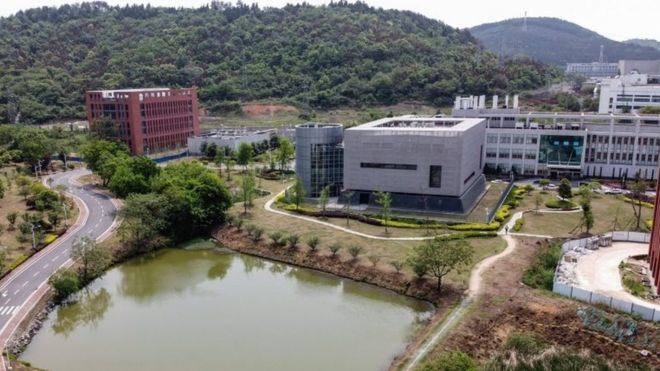
Image copyright AFP / GETTYImage caption The P4 laboratory (centre) in Wuhan is among a handful around the world cleared to handle viruses that pose a high risk of person-to-person transmission
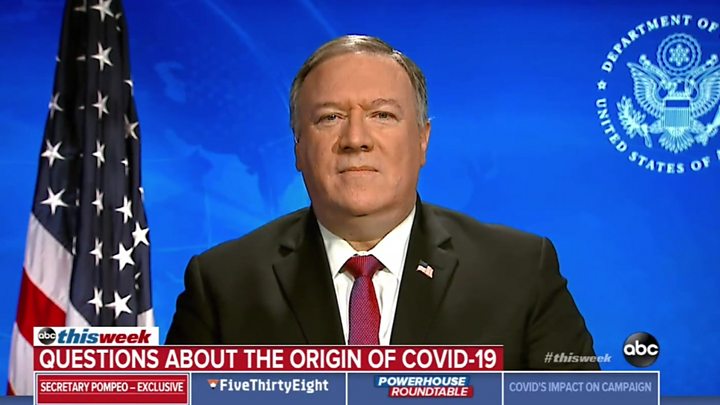
Chinese state media has accused US Secretary of State Mike Pompeo of lying, after he said there was “enormous evidence” the coronavirus emanated from a laboratory in Wuhan.
Mr Pompeo made the claim on Sunday, without going into specifics.
In an editorial on Tuesday, the hawkish Global Times newspaper said Mr Pompeo was “degenerate”.
The World Health Organization says the US claims are “speculative”, and that it has seen no “specific evidence”.
What did Chinese media say?
Editorials in Chinese state media often given an insight into the direction of government thinking, but there has been no official response to Mr Pompeo’s comments as yet.
“Pompeo aims to kill two birds with one stone by spewing falsehoods,” it said.
“First, he hopes to help Trump win re-election this November…second, Pompeo hates socialist China and, in particular, cannot accept China’s rise.”
Media caption “The Chinese Communist Party has refused to co-operate with world health experts” – Mike Pompeo
The editorial admitted there were “initial problems” in China’s response to the outbreak, but claimed “the overall performance is bright enough to outweigh the flaws”.
It also said it was “conceivable that the virus first contacted humans in other places [than Wuhan]”.
The Global Times is not the only Chinese outlet to take aim at Mr Pompeo and the US.
The People’s Daily said Mr Pompeo had “no evidence”, while a piece on the CCTV site accused US politicians of “nefarious plotting”.
What did Mike Pompeo say?
In an interview with ABC on Sunday, Mr Pompeo said there was “enormous evidence” that the virus had emerged from the Wuhan Institute of Virology.
“Remember, China has a history of infecting the world, and they have a history of running sub-standard laboratories,” he said.
Mr Pompeo – a former director of the Central Intelligence Agency (CIA) – said he did not think the virus was man-made or genetically modified.
The Wuhan laboratory is known to study coronaviruses in bats. In April, President Trump was asked whether “lax safety protocols” allowed such a virus to escape via an intern and her boyfriend.
Mr Trump did not confirm the theory, but said: “More and more we’re hearing the story.”
Media caption Donald Trump was recently asked if the virus emanated in a laboratory, rather than a market
Last week, he was asked if he had seen evidence that gave him a “high degree of confidence” that the virus emerged in the Wuhan laboratory.
“Yes I have,” he replied – but said he could not go into specifics.
On Monday, World Health Organization emergencies director Michael Ryan said it had received “no data or specific evidence” from the US about the virus origins.
“So from our perspective, this remains speculative,” he said.
Last week, the US intelligence community said it “concurred” that the virus “was not man-made or genetically modified”.
But it said it would “continue to examine” whether the outbreak began via “contract with infected animals, or if it was the result of an an accident at a laboratory in Wuhan”.
Australian Prime Minister Scott Morrison said on Tuesday that the most likely source of the virus was a wildlife market. However he said he would not rule out the theory that it originated in a lab.
“What’s really important is that we have a proper review, an independent review which looks into the sources of these things in a transparent way so we can learn the lessons,” he told reporters.
Meanwhile, Western “intelligence sources” have told several news outlets there is “no evidence” to suggest the virus leaked from a laboratory.
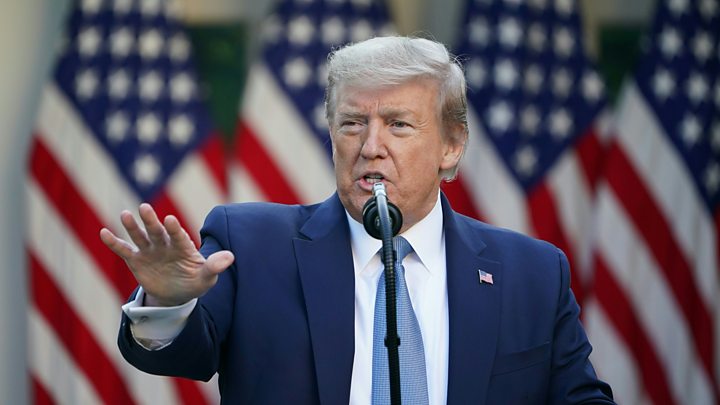
WASHINGTON (Reuters) – President Donald Trump said on Wednesday he believes China’s handling of the coronavirus is proof that Beijing “will do anything they can” to make him lose his re-election bid in November.
In an interview with Reuters in the Oval Office, Trump talked tough on China and said he was looking at different options in terms of consequences for Beijing over the virus. “I can do a lot,” he said.
Trump has been heaping blame on China for a global pandemic that has killed at least 60,000 people in the United States according to a Reuters tally, and thrown the U.S. economy into a deep recession, putting in jeopardy his hopes for another four-year term.
The Republican president, often accused of not acting early enough to prepare the United States for the spread of the virus, said he believed China should have been more active in letting the world know about the coronavirus much sooner.
Asked whether he was considering the use of tariffs or even debt write-offs for China, Trump would not offer specifics. “There are many things I can do,” he said. “We’re looking for what happened.”
RELATED COVERAGE
China says it has no interest in meddling in U.S. election
“China will do anything they can to have me lose this race,” said Trump. He said he believes Beijing wants his Democratic opponent, Joe Biden, to win the race to ease the pressure Trump has placed on China over trade and other issues.
“They’re constantly using public relations to try to make it like they’re innocent parties,” he said of Chinese officials.
He said the trade deal that he concluded with Chinese President Xi Jinping aimed at reducing chronic U.S. trade deficits with China had been “upset very badly” by the economic fallout from the virus.
A senior Trump administration official, speaking on condition of anonymity, said on Wednesday that an informal “truce” in the war of words that Trump and Xi essentially agreed to in a phone call in late March now appeared to be over.
The two leaders had promised that their governments would do everything possible to cooperate to contain the coronavirus. In recent days, Washington and Beijing have traded increasingly bitter recriminations over the origin of the virus and the response to it.
However, Trump and his top aides, while stepping up their anti-China rhetoric, have stopped short of directly criticizing Xi, who the U.S. president has repeatedly called his “friend.”
Trump also said South Korea has agreed to pay the United States more money for a defense cooperation agreement but would not be drawn out on how much.
“We can make a deal. They want to make a deal,” Trump said. “They’ve agreed to pay a lot of money. They’re paying a lot more money than they did when I got here” in January 2017.
The United States stations roughly 28,500 troops in South Korea, a legacy of the 1950-53 Korean War that ended in an armistice, rather than a peace treaty.
Trump is leading a triage effort to try to keep the U.S. economy afloat through stimulus payments to individuals and companies while nudging state governors to carefully reopen their states as new infections decline.
Trump sounded wistful about the strong economy that he had enjoyed compared with now, when millions of people have lost their jobs and GDP is faltering.
“We were rocking before this happened. We had the greatest economy in history,” he said.
He said he is happy with the way many governors are operating under the strain of the virus but said some need to improve. He would not name names.
Trump’s handling of the virus has come under scrutiny. Forty-three percent of Americans approved of Trump’s handling of the coronavirus, according to the Reuters/Ipsos poll from April 27-28.
But there was some good coronavirus news, as Gilead Sciences Inc said its experimental antiviral drug remdesivir was showing progress in treating virus victims.
Trump has also seeking an accelerated timetable on development of a vaccine.
“I think things are moving along very nicely,” he said.
At the end of the half-hour interview, Trump offered lighthearted remarks about a newly released Navy video purportedly showing an unidentified flying object.
“I just wonder if it’s real,” he said. “That’s a hell of a video.”
SHANGHAI (Reuters) – Apple Inc’s (AAPL.O) discounts on the iPhone 11 in China and the release of a new low-price SE model have put the company in a better position than rivals to weather a coronavirus-related plunge in global smartphone demand.
While China, which accounts for roughly 15% of Apple’s revenue, appears to be a rare bright spot, investors will be keen to get a picture of global demand when the Cupertino, California-headquartered company reports second-quarter results on Thursday.
The iPhone maker has shut retail stores in the United States and Europe following the COVID-19 outbreak, and China is the only major market where it has been able to reopen all shops.
Consumer spending is expected to be muted as the pandemic has crippled economies and Apple, the world’s second-most valuable tech company, is better armed with the launch of its new price-conscious iPhone model, analysts said.
“Apple is better positioned than most to experience a rapid recovery in a post COVID world,” Evercore analyst Amit Daryanani said in a research note. “We see demand as pushed out, not canceled.”
He added that the launch of the $399 iPhone SE suggested that Apple’s supply chain was getting back on its feet after weeks of shutdown earlier this year.
Analysts expect Apple to report a 6% drop in revenue and an 11% fall in net income in its fiscal second quarter, according to Refinitiv data.
On the other hand, Chinese brands such as Oppo and Vivo who have steadily moved to offer high-end models to challenge iPhones, stand to lose marketshare as bargain hunters choose Apple.
Earlier this month, several online retailers in China slashed prices of the iPhone 11 by as much as 18% – a tactic Apple has used in the past to boost demand. And while initial social media reaction to the new iPhone SE was muted, analysts said they were seeing a pick up in demand.
The cheaper iPhone SE could tempt iPhone owners to opt for a newer device, something they might have otherwise delayed in a weak economy, said Nicole Peng, who tracks the smartphone sector at research firm Canalys.
“People want to avoid uncertainty in a downturn,” she said. “Having a brand like Apple that can showcase quality and make people less worried about breakdowns or after-sales service can bring in buyers.”
CHEAP IS GOOD
Early data suggests that the Chinese smartphone market is recovering rapidly in the aftermath of the virus, and Apple has emerged relatively unscathed.
Sales of iPhones in China jumped 21% last month from a year earlier and more than three fold from February, government data showed, meaning March-quarter sales in the country were likely to have slipped just 1%.
To be sure, a recovery in Chinese demand won’t offset sales lost in the United States and Europe. And the company is yet to launch a smartphone enabled with 5G wireless technology like those offered by Asian rivals, a disadvantage for Apple so far.
But those same expensive 5G models may not sell well in the current climate of frugality, analysts said.
“If there are no massive subsidies (in China), I doubt there will be many smartphone users who will be eager to upgrade to 5G,” said Linda Sui, who tracks the smartphone sector at research firm Strategy Analytics.
Sui expects iPhone shipments in 2020 to be down 2 percentage points at the most, versus double digit declines at Chinese firms.
Apple also has revenue from its services business to fall back on. It has leveraged its large iPhone customer base to boost services revenue from music, apps, gaming and video.
“Apple’s Services segment should remain resilient in today’s work-from-home environment, thereby demonstrating the durability of Apple’s model,” Cowen analyst Krish Sankar said.
But trade with partner countries might not be as badly affected as with countries elsewhere in the world, observers say
China’s trade with belt and road countries rose by 3.2 per cent in the January-March period, but second-quarter results will depend on how well they manage to contain the pathogen, academic says
China’s investment in foreign infrastructure as part of its Belt and Road Initiative has been curtailed because of the coronavirus pandemic. Photo: Xinhua
The coronavirus pandemic is set to cause a slump in Chinese investment in its signature
and a dip in trade with partner countries that could take a year to overcome, analysts say.
But the impact of the health crisis on China’s economic relations with nations involved in the ambitious infrastructure development programme might not be as great as on those that are not.
China’s total foreign trade in the first quarter of 2020 fell by 6.4 per cent year on year, according to official figures from Beijing.
Trade with the United States, Europe and Japan all dropped in the period, by 18.3, 10.4 and 8.1 per cent, respectively, the commerce ministry said.
By comparison, China’s trade with belt and road countries increased by 3.2 per cent in the first quarter, although the growth figure was lower than the 10.8 per cent reported for the whole of 2019.
China’s trade with 56 belt and road countries – located across Africa, Asia, Europe and South America – accounts for about 30 per cent of its total annual volume, according to the commerce ministry.
Despite the first-quarter growth, Tong Jiadong, a professor of international trade at Nankai University in Tianjin, said he expected China’s trade with belt and road countries to fall by between 2 and 5 per cent this year.
His predictions are less gloomy than the 13 to 32 per cent contraction in global trade forecast for this year by the World Trade Organisation.
“A drop in [China’s total] first-quarter trade was inevitable but it slowly started to recover as it resumed production, especially with Southeast Asian, Eastern European and Arab countries,” Tong said.
“The second quarter will really depend on how the epidemic is contained in belt and road countries.”
Nick Marro, Hong Kong-based head of global trade at the Economist Intelligence Unit, said he expected China’s total overseas direct investment to fall by about 30 per cent this year, which would be bad news for the belt and road plan.
“This will derive from a combination of growing domestic stress in China, enhanced regulatory scrutiny over Chinese investment in major international markets, and weakened global economic prospects that will naturally depress investment demand,” he said.
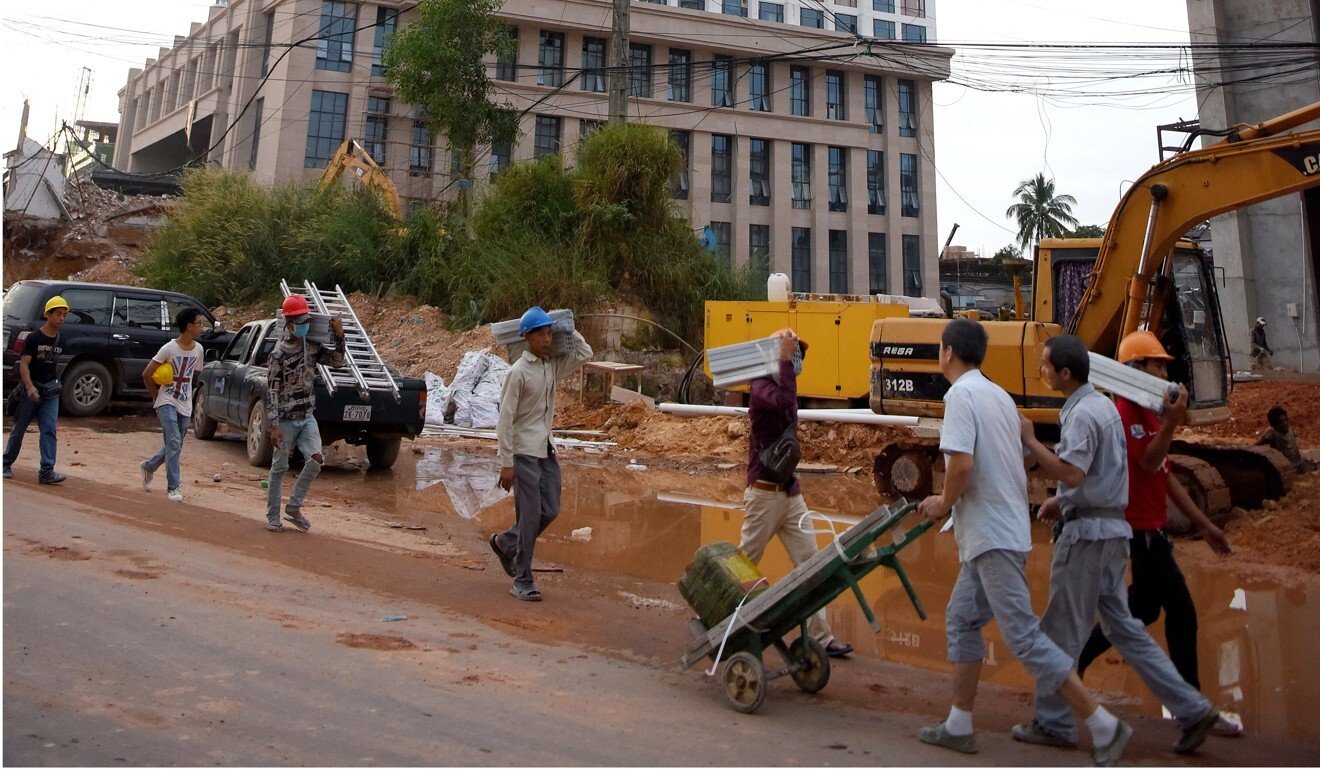
The development of the Chinese built and operated special economic zone in the Cambodian town of Sihanoukville is reported to have slowed, while infrastructure projects in Bangladesh, including the Payra coal-fired power plant, have been put on hold.
The development of the Chinese built and operated special economic zone in the Cambodian town of Sihanoukville is reported to have slowed. Photo: AFP
Marro said the reduction of capital and labour from China might complicate other projects for key belt and road partner, like Pakistan, which is home to infrastructure projects worth tens of billions of US dollars, and funded and built in large part by China.
“Pakistan looks concerning, particularly in terms of how we’ve assessed its sovereign and currency risk,” Marro said.
“Public debt is high compared to other emerging markets, while the coronavirus will push the budget deficit to expand to 10 per cent of GDP [gross domestic product] this year.”
Last week, Pakistan asked China for a 10-year extension to the repayment period on US$30 billion worth of loans used to fund the development of infrastructure projects, according to a report by local newspaper Dawn.
China’s overseas investment has been falling steadily from its peak in 2016, mostly as a result of Beijing’s curbs on capital outflows.
Last year, the direct investment by Chinese companies and organisations other than banks in belt and road countries fell 3.8 per cent from 2018 to US$15 billion, with most of the money going to South and Southeast Asian countries, including Singapore, Vietnam, Indonesia and Pakistan.
Tong said the pandemic had made Chinese investors nervous about putting their money in countries where disease control measures were becoming increasingly stringent, but added that the pause in activity would give all parties time to regroup.
“Investment in the second quarter will decline and allow time for the questions to be answered,” he said.
“Past experience along the belt and road has taught many lessons to both China and its partners, and forced them to think calmly about their own interests. The epidemic provides both parties with a good time for this.”
Dr Frans-Paul van der Putten, a senior research fellow at Clingendael Institute in the Netherlands, said China’s post-pandemic strategy for the belt and road in Europe
might include a shift away from investing in high-profile infrastructure projects like ports and airports.
Investors might instead cooperate with transport and logistics providers rather than invest directly, he said.
“Even though in the coming years the amount of money China loans and invests abroad may be lower than in the peak years around 2015-16, I expect it to maintain the belt and road plan as its overall strategic framework for its foreign economic relations,” he said.
TAIPEI (Reuters) – Taiwan waded into the hotly contested politics of the Pacific on Wednesday, donating face masks and thermal cameras to its four diplomatic allies there to combat the coronavirus in a region where China is challenging traditional power of the United States.
The small developing nations lie in the highly strategic waters of the Pacific, dominated since World War Two by the United States and its friends, who have been concerned over China’s moves to expand its footprint there.
Democratic Taiwan has faced intense pressure from China, which claims the island as its territory with no right to state-to-state ties, and is bent on wooing away its few allies.
Taiwan has only 15 formal allies left worldwide after losing two Pacific nations, the Solomon Islands and Kiribati, to China in September.
Beijing has ramped up its diplomatic push into the Pacific, pledging virus aid and medical advice.
In its own aid programme, Taiwan has donated 16 million masks to countries around the world.
“We are a very small country, so it’s easier for us to work with Taiwan than mainland China,” Neijon Edwards, the Marshall Islands ambassador to Taiwan, told Reuters at the donation ceremony in Taipei.
China has been too overbearing, she added.
“It’s pressing too much, and it’s been trying to come to the Marshall Islands, several times, but up to this time we haven’t even opened the door yet.”
While the masks presented at the ceremony are going to Taiwan’s Pacific allies, all its 15 global allies are sharing the thermal cameras.
“Today’s ceremony once again shows that Taiwan is taking concrete actions not only to safeguard the health of Taiwanese people but also to contribute to global efforts to contain COVID-19,” said Foreign Minister Joseph Wu.
Though Pacific Island states offer little economically to either China and Taiwan, their support is valued in global forums such as the United Nations and as China seeks to isolate Taiwan.
China has offered to help developing countries including those of the Pacific, and many see Chinese lending as the best bet to develop their economies.
But critics say Chinese loans can lead countries into a “debt trap”, charges China has angrily rejected.
The debt issue was a serious problem and would only lead to the spread of Chinese influence regionwide, said Jarden Kephas, the ambassador of Nauru.
“They will end up dominating or having a lot of say in those countries because of the amount of debt,” he told Reuters, wondering how the money could ever be repaid. “We are not rich countries.”







 CHINDIA ALERT: You'll be living in their world, very soon