Chindia Alert: You’ll be Living in their World Very Soon
aims to alert you to the threats and opportunities that China and India present. China and India require serious attention; case of ‘hidden dragon and crouching tiger’.
Without this attention, governments, businesses and, indeed, individuals may find themselves at a great disadvantage sooner rather than later.
The POSTs (front webpages) are mainly 'cuttings' from reliable sources, updated continuously.
The PAGEs (see Tabs, above) attempt to make the information more meaningful by putting some structure to the information we have researched and assembled since 2006.
More than one billion views of Mulan discussion in China hours after trailer screens during Women’s World Cup final
While some quibble over technical details, the vast majority are eagerly awaiting Disney’s first Chinese princess
Crystal Liu Yifei as Mulan in Disney’s live-action film which is eagerly anticipated in China.
Anticipation over Disney’s live-action movie Mulan is running high in China, with more than one billion views of the subject on Chinese social media in the hours after a teaser trailer was unveiled during Sunday’s final game of the Women’s World Cup.
While some online commenters had their doubts over technical details, most internet users appeared exhilarated at the prospect of Disney’s first Chinese princess, played by Chinese-American actress Crystal Liu Yifei.
The big reveals in Disney’s Mulan trailer, and fan reaction
By Monday afternoon, the hashtag Hua Mulan had been viewed more than one billion times on the Twitter-like Weibo service and nearly 770,000 comments had been made on the topic. Some 450 million views had been recorded for the topics “Mushu no longer in the movie Mulan” – a reference to the heroine’s fast-talking dragon companion in the 1998 animation – and “the look of Liu Yifei”.
“I got carried away by the fighting scenes. Mulan is courageous and strong. I look forward to seeing the eastern heroine Hua Mulan going global,” said one Weibo user.
“This is the first Chinese Disney princess. It’s so great and we feel so proud,” said another.
The movie, scheduled for release on March 27 next year, casts renowned action star Jet Li as the emperor who ordered the military draft to fight a northern invasion, and internationally-acclaimed actress Gong Li as a powerful witch. Donnie Yen Ji-dan, star of Rogue One: A Star Wars Story and the Ip Man movies, plays Mulan’s martial arts mentor Commander Tung.
Donnie Yen nails ‘Bottle Cap Challenge’ blindfolded
Mulan tells the story of a fabled Chinese heroine who posed as a man and became one of the greatest warriors of her time, arguably in the Northern Wei period, or about AD400 to 600. She is one China’s best known fictional characters, with numerous theatrical references and poems which many Chinese know by heart.
The familiarity of the tale has presented a challenge for the production, with many Chinese online commenters questioning the historical details which can be discerned from the sketchy details provided by the trailer.
Many took exception to the opening scene of Mulan riding a horse to her home, built in the architectural style of tulou, common in the southern province of Fujian, when the legend places the heroine in the north.
“The poem said Mulan bade farewell to her parents in the morning and slept near the Yellow River at night. How can she live in a tulou in Fujian? Did she take a fast-rail train?” one internet user teased.
Another used the example to call for Disney to pay more attention to technical details when telling Chinese stories. “Please don’t be arrogant about Chinese stories.”
Also questioned in China was the message from the trailer that Mulan had become a warrior to escape a forced marriage, rather than the well known detail that she was saving her father from being drafted into the military in an act of filial piety.
But the overwhelming response was that fans should put aside their own perceptions of Mulan and celebrate the new edition as one of the few fully-Asian cast international movies, as well as its depiction of a powerful woman and Chinese values as “the only Disney princess who was not saved by a prince but instead became a fighting warrior”.
“Can our domestically produced period dramas meet the standard if we are here to be picky about looks and architecture? Even domestic directors can’t be perfect in restoring ancient costumes, make-up or architecture. Why should we ask so much from a foreign one? We should celebrate the cultural exchange rather than splitting hairs to find faults,” said one Weibo user.
“Mulan in the battlefield has outperformed men and showcased the traditional values of courage and protecting the country when needed. Chinese values, presented to the world by Chinese actors, is worth looking forward to. Please throw away the technical faults such as architecture,” said another.
Father of three is killed as flames engulf car in crash at stop light in Henan
Woman from wealthy family is held as police investigate drink-driving
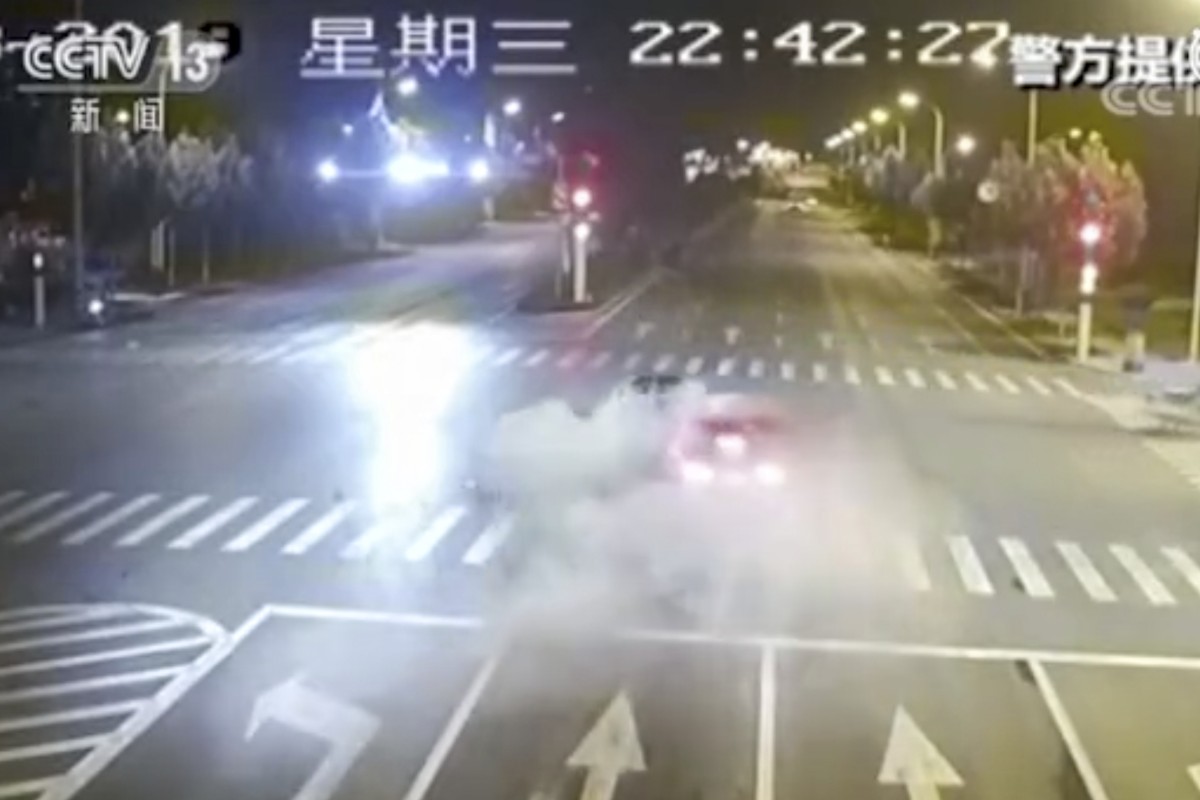
Footage from an intersection in Yongcheng, Henan shows the BMW being propelled across the road before bursting into flames. Photo: Weibo
A driver and her two passengers are in custody in central China after the Maserati SUV she was driving slammed into a BMW, killing two men.
Police said a 23-year-old woman surnamed Tan drove the Maserati through the streets of Yongcheng in Henan province on Wednesday night, scraping against cars on the way.
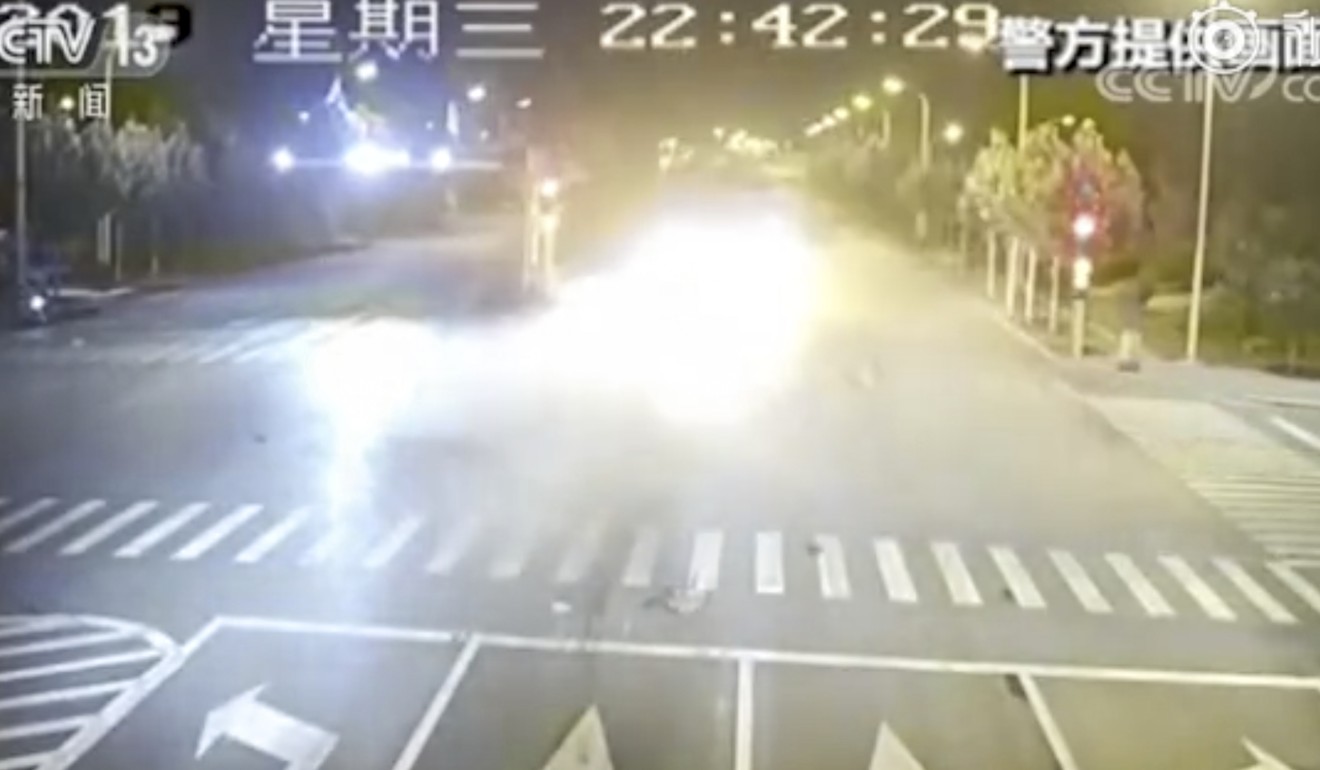
They said her vehicle struck the BMW at a red traffic light, causing it to burst into flames, killing two passengers and injuring the driver.
Tan and two others in the SUV, a woman and a man, were also injured. All three were detained by police but have not yet been charged. Police said Tan returned a blood-alcohol reading of 0.167 – well over the legal limit of 0.02.
State broadcaster CCTV reported that Tan and friends Zhang and Liu had met at a barbecue restaurant that night for dinner, according to police. After drinking, Tan took her friends for a drive. The Maserati scraped against multiple cars before the driver was slowed down by pedestrians signalling for her to stop, but she suddenly sped away from the scene. It crashed into the BMW soon afterwards, CCTV said.
The BMW bursts into flames after being shoved across the intersection. Photo: Weibo
Two men in the back of the BMW were killed in the fire that engulfed the vehicle, while the driver, also a man, suffered severe burns, according to the report. The occupants of the Maserati were treated in hospital for bone fractures and abdominal injuries, CCTV said.
Man arrested after car crashes into shop, injuring 12, in Tsim Sha Tsui, Hong Kong
The accident has prompted heated online discussion in China, with some calling for the death penalty for “such reckless behaviour and disregard for the law”.
Others have doxxed the detained driver – finding photos on a Weibo account that allegedly belonged to Tan showing she had an appetite for luxury goods and expensive cars.
In recent years, a “hate the rich” sentiment has emerged in Chinese society. As the wealth gap widens, many people have become vocal about injustices they feel are fuelled by the affluent and privileged.
Others voiced anger at the legal system, saying wealthy people could buy the law.
Coach driver in crash that left five dead and 32 injured had been working 12-hour shifts, Hong Kong police say
BEIJING (Reuters) – China and the rest of the world must co-exist, Vice President Wang Qishan said on Monday, in an indirect jab at the United States, with which Beijing is trying to resolve a bitter trade war.
Top representatives of the world’s two biggest economies are trying to resume talks this week to try and resolve their year-long trade dispute, which has seen the two countries place increasingly harsh tariffs on each other’s imports.
The Trump administration has accused China of engaging in unfair trade practices that discriminate against U.S. firms, forced technology transfers and intellectual property rights theft. Beijing has denied all the charges.
“China’s development can’t shut out the rest of the world. The world’s development can’t shut out China,” Wang told the World Peace Forum at Beijing’s elite Tsinghua University.
He also warned against “protectionism in the name of national security”, but without mentioning the United States, and urged major powers to make greater contributions to world peace.
China has also been angered by U.S. sanctions against tech giant Huawei Technologies Co Ltd over national security concerns, and U.S. visa curbs on its students and academics.
In his speech, Wang, who is extremely close to Chinese President Xi Jinping and rarely speaks in public, reiterated China’s commitment to opening up.
“Large countries must assume their responsibilities and set an example, make more contributions to global peace and stability, and broaden the path of joint development,” he added.
“Development is the key to resolving all issues,” Wang, who became vice president last year, after having led Xi’s fight to root out corruption, told an audience that included Western diplomats based in Beijing and former European Council President Herman Van Rompuy.
“NOT A RATIONAL ACTION”
The United States should not blame China for the problems it is facing, Vice Foreign Minister Le Yucheng told the forum later.
“Viewing China as the enemy is not a rational action,” the foreign ministry quoted him as saying, adding that China would not put up “high walls” or “decouple itself from any country”.
China has been nervous that the United States is seeking to sever, or at least severely curb, economic links, in what has been called a “decoupling”.
Tariff, trade, finance and science and technology wars are “turning back the clock on history,” Le said. “The consequences will be extremely dangerous.”
The two sides have communicated by telephone since last month’s summit of leaders of Group of 20 major nations in Japan, at which U.S. President Donald Trump and Xi agreed to relaunch stalled talks.
Talks broke down in May, after U.S. officials accused China of pulling back from commitments previously made in the text of an agreement negotiators said was nearly finished.
The countries have also been at loggerheads over issues ranging from human rights to the disputed South China Sea and U.S. support of self-ruled Taiwan, which China claims as its own.
No matter how the international situation or China developed, Vice President Wang said, the country would follow the path of peace, and not seek spheres of influence or expansion.
“If there is no peaceful, stable international environment, there will be no development to talk of.”
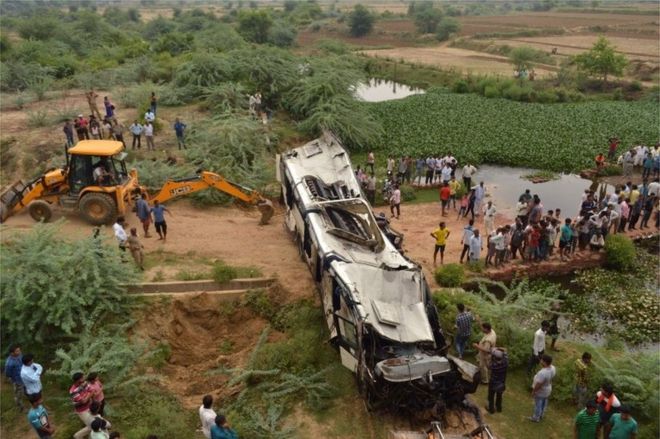
One Sleeper Coach passenger bus travelling from Lucknow to Delhi met with an accident on Yamuna Expressway. It fell into the side fall about 15 feet deep.
20 passengers rescued so far. Efforts are on for the rest.
About 900 people have been killed on the road since it opened in 2012, according to authorities.
Road accidents in India are usually blamed on badly maintained vehicles, poor driving and the state of the roads.
Correspondents say buses in rural India are often old and rickety. Many also do not follow or enforce basic safety measures – it’s not uncommon to see people crowding into buses or even travelling on the roof if they cannot find a seat inside.
WUHAN, July 6 (Xinhua) — The middle and lower reaches of the Yangtze River, China’s longest river, is likely to see flooding as a new round of sustained strong rainfall is forecast to lash the region from Sunday to next Wednesday, the Changjiang Water Resources Commission said Saturday.
Hydrometeorological forecasts show heavy rain with a precipitation ranging between 120 mm and 210 mm will hit the Yangtze’s middle and lower reaches in the following four days, causing the water levels of the mighty river’s many tributaries to reach alarming levels.
Some small and medium-sized rivers in Chongqing Municipality and the provinces of Hunan, Hubei, Jiangxi, Anhui, Jiangsu and Guizhou are also likely to see relatively serious flooding, according to the commission.
The commission activated an emergency response for flooding Saturday noon and advised local governments in affected areas to take precautions against possible disasters.
LHASA, July 6 (Xinhua) — Eighty buses using new energy have been put into use Saturday morning in Lhasa, the capital city of China’s southwest Tibet Autonomous Region, which will help reduce vehicle exhaust emissions and further improve the local air quality.
The new buses are all plug-in hybrid electric vehicles, equipped with Tibetan-Mandarin bilingual station announcements, driving monitoring and management systems, and auto-alarms, according to the city’s bus operation company.
The company purchased 110 new energy buses after the city’s 104 old buses reached their service lives. The other 30 buses are scheduled to be put into operation by the end of this month. By then, Lhasa will have 422 new energy buses, accounting for more than 80 percent of the city’s total buses.
“Our goal of vigorously promoting new energy vehicles is to implement the low-carbon and green way of traveling, to reduce greenhouse gas emissions, and to protect the clear water and blue sky of the snowy plateau,” said Gogyi, general manager of the company.
Lhasa plans to replace its old buses with new energy ones by batches, and all of the city’s buses are expected to be powered by new energy by 2021, said Gogyi.
Currently, Lhasa has 522 buses and 41 bus routes, covering the main urban areas, suburbs and surrounding counties, making it more and more convenient for locals to travel by public transportation.
TOKYO, July 6 (Xinhua) — “When I wrote the letter, I didn’t expect to receive a reply from President Xi Jinping. I was surprised and honored,” said Daichi Nakashima with excitement.
The 27-year-old Japanese man said he had received the reply from Xi before the Chinese leader attended the Group of 20 summit in Osaka. “When my friend told me on WeChat, I was shocked!” Nakashima said in an exclusive interview with Xinhua.
Nakashima had several times been a winner in the Panda Cup Japan Youth Essay Contest. Founded in 2014, the competition is co-sponsored by People’s China magazine, the Chinese embassy in Japan and the Japan Science Society, aiming to help Japanese youths have a more comprehensive, objective and rational understanding of China.
Nakashima began learning Chinese in college and has participated in several short-term exchange programs in China.
When talking about his original intention of writing a letter to Xi, Nakashima said, “I wanted to convey the warmth and friendship of the Chinese people I felt during my visit to China and the importance of mutual understanding and exchanges between Japanese and Chinese youths.”
Xi, in his reply, said he was glad to see that Nakashima has been studying the Chinese language and literature for a long time and, by participating in essay contests and exchange activities in China, has learned more about China and strengthened his bonds with Chinese friends.
“It’s the best affirmation and recognition of my persistence for so many years. I’m very touched,” Nakashima said.
Born in 1992, Nakashima first learned about China through classics like “Romance of the Three Kingdoms” and “Outlaws of the Marsh,” but it was a two-week trip to Tianjin in 2011 that gave him a glimpse of a vibrant China.
After that, he visited Beijing, Sichuan, Guangdong and other places. Last year, he went to Fudan University in Shanghai and studied for half a year.
Nakashima found that Chinese youth are very familiar with Japanese anime, music and so on, while Japanese youngsters do not know much about China. Their impression of China is restricted to Chinese tourists, “not knowing about Chinese movies and popular music,” he said.
Nakashima said he believes that the friendship between the two peoples needs more bilateral youth exchanges, as President Xi said in the letter.
Noting that China and Japan are close neighbors separated by only a narrow strip of water, Xi said the friendship between the two countries is rooted in the people, and that the future of the friendship between the two peoples is in the hands of the young people.
Xi said he hopes that the youth of China and Japan will strengthen exchanges and mutual learning, enhance mutual understanding, develop long-lasting friendships, and contribute to creating an even brighter future for bilateral relations.
Xi also encouraged Nakashima to continue to promote the China-Japan friendship. Nakashima said this is an encouragement, a mission and also motivation for him to move forward.
Nakashima graduated with a master’s degree in April and has begun to work in a publishing house. He has been determined to introduce excellent works such as Chinese picture books and science fiction to Japan, so that Japanese teenagers can feel the affinity between the two countries.
“I have met many friendly Chinese people and made many friends that are very important to me. In the future, I will continue to make efforts to help Japanese and Chinese youth deepen mutual understanding,” he said.
Authorities report roads closed and 10,000 buildings damaged after magnitude 6.0 quake on Monday night
More than 100,000 people affected
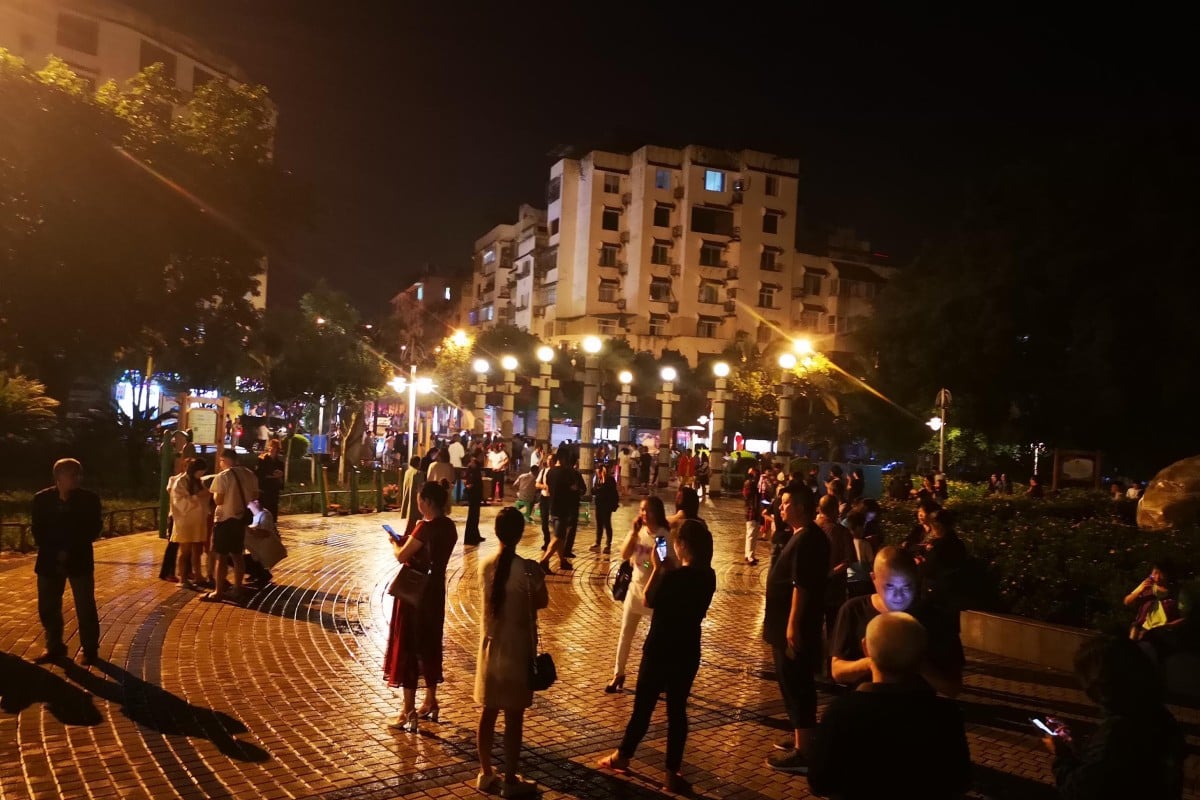
Residents gather in the open in Changning county on Monday night after a magnitude 6.0 hit the area. Photo: Xinhua
The death toll from a strong earthquake which hit the southern Chinese province of Sichuan late on Monday night has risen to 12, with 134 people injured.
More than 100,000 people were affected – mostly in the epicentre at Changning county in Yibin, while more than 10,000 buildings were damaged, according to a statement by the local government on Tuesday.
Land subsidence and a landslide caused by the magnitude 6.0 quake, blocked a highway, several major roads and numerous village roads, the statement said, while a major bridge in the area was also at risk.
The Yixu highway in Changning had been closed and authorities were assessing the Dongdi Bridge. The Yibin government statement also said workers had been sent to clear the affected village roads.
According to the US Geological Survey, the earthquake was centred at a fairly shallow depth of 10km (6 miles). Shallow earthquakes tend to cause more damage to buildings and infrastructure.
An aftershock measuring magnitude 5.2 later hit the same area, the USGS said.
More than 300 firefighters were sent to the scene overnight, as well as rescue personnel with 5,000 tents, 10,000 folding cots and other emergency supplies, according to state news agency Xinhua.
In 2008, China’s worst earthquake in recent years struck the mountainous western portion of Sichuan province, leaving 87,000 dead, 370,000 injured and 5 million people homeless. That earthquake was about 400km (249 miles) from Monday’s earthquake.
A 1976 earthquake centred in the northeastern city of Tangshan killed at least 250,000 people.
Five thousand-year-old ruins in Zhejiang province are the earliest known example of Chinese civilisation
Country passes Italy to become home to the largest number of World Heritage Sites
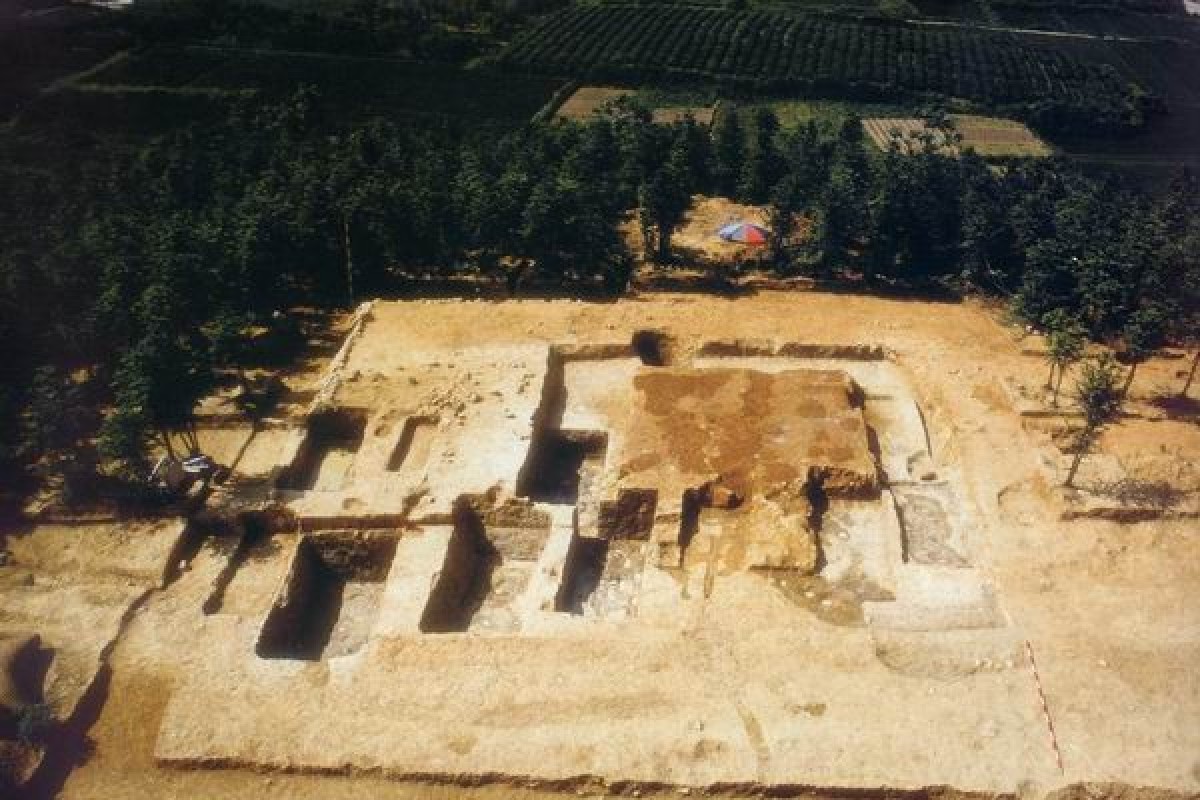
The Liangzhu site in Zhejiang dates back to 3,500BC. Photo: Thepaper.cn
A 5,300-year old Chinese city that provides the earliest example of civilisation in the country has been named as the country’s latest Unesco World Heritage Site.
The Liangzhu Archaeological Site in Zhejiang province was designated a “cultural site” at the latest Unesco meeting in Azerbaijan, bringing the total number of Chinese heritage sites to 55 – passing Italy as the country with the largest number in the world.
The ruins, located on the outskirts of the modern city of Hangzhou, sits on the plain of river networks in the basin of the Yangtze River and date back to 3,300BC.
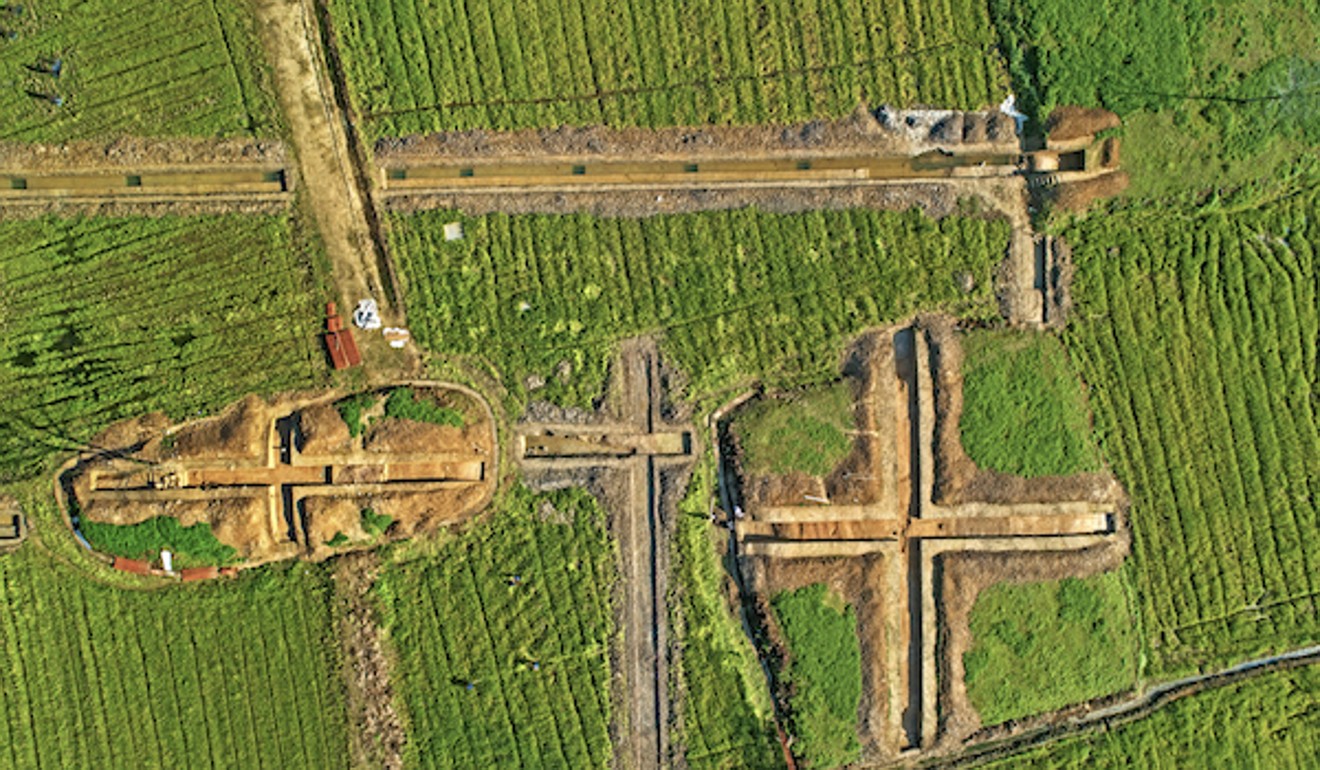
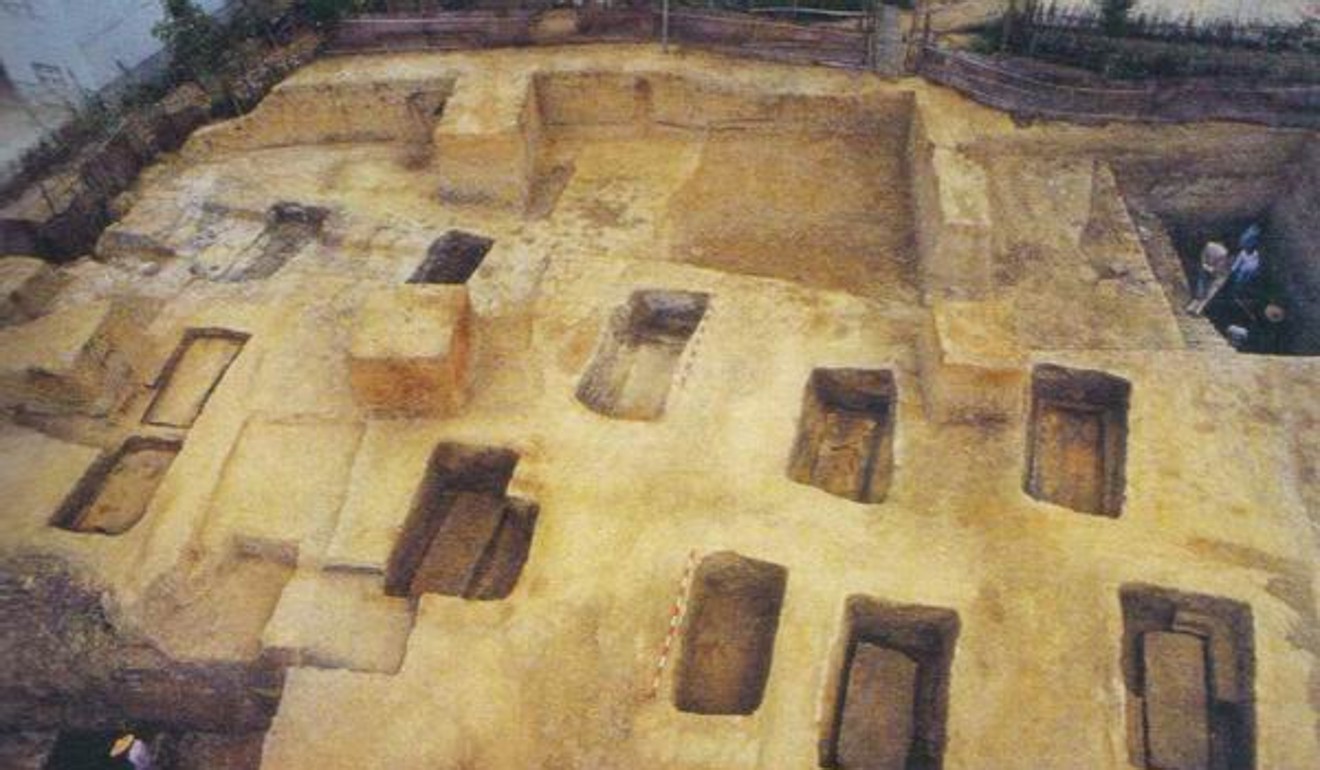
The site covers an area of 14.3 square kilometres, and mainly consists relics of 11 dams, cemetery sites, water conservancy system and walls that gives evidence to an early Chinese urban civilisation, with rice cultivation as the economic foundation.
An aerial view of the site. Photo: Thepaper.cn
The discovery of the site was of “primary importance” as it provides evidence of compelling evidence that Chinese civilisation started 5,000 years ago, 1,000 years earlier than previously thought, Colin Renfrew, a retired professor of archaeology at University of Cambridge, told state news agency Xinhua.
“So when we are talking of the origins of state society in China, we can think of the Liangzhu … instead of the Shang civilisation around 1,500BC.
The site was first discovered in 1936 when a team of archaeologists unearthed some pottery and began searching for further evidence
Liangzhu is China’s 55th Unesco World Heritage Site. Photo: Thepaper.cn
A breakthrough came in 1986 when a burial site with around 1,200 artefacts made from jade, pottery and ivory was uncovered.
The walls of the city were discovered in 2007 and the surrounding water conservancy system was unearthed in 2015.
Archaeologists estimate that it would have taken 4,000 people working for a decade to build the system, according to Xinhua.
The decision to add the site to the Unesco list is the culmination of more than two decades’ work, with preliminary work starting in 1994.
The site is now open to tourists, but a maximum number allowed to visit the site is limited to 3,000 a day and bookings must be made online.
BEIJING (Reuters) – China has received a briefing from the United States on the latest meeting between U.S. President Donald Trump and North Korean leader Kim Jong Un, China’s Foreign Ministry said on Saturday, in a call between two senior diplomats.
Trump became the first sitting U.S. president to set foot in North Korea on Sunday when he met Kim in the Demilitarized Zone (DMZ) at Panmunjom between the two Koreas and agreed to resume stalled nuclear talks.
Chinese Vice Foreign Minister Luo Zhaohui and U.S. Special Representative for North Korea Stephen Biegun discussed that meeting in a telephone call on Friday, China’s Foreign Ministry said in a short statement.
“Biegun introduced the meeting between the U.S. and North Korean leaders at Panmunjom, and said the U.S. side is willing to strengthen communication and coordination with the Chinese side on the peninsula issue,” the ministry added.
Luo told Biegun the recent “positive interactions” on the North Korean issue by all parties had important meaning for the peace talks process, the ministry said.
“China supports U.S.-North Korea exchanges and dialogue and hopes that the two sides will meet each other halfway and follow the consensus of the leaders of the two countries to resume consultations at the working level as soon as possible,” it added.
Trump’s meeting with Kim came around a week after Chinese President Xi Jinping met Kim himself during a state visit to Pyongyang.
While China has not officially announced it, Luo is likely China’s new special envoy for the North Korea issue, after predecessor Kong Xuanyou became China’s new ambassador in Tokyo in late May.
Luo was also involved in a briefing to Chinese reporters on Xi’s visit to North Korea before Xi went, according to state media.
Luo is an urbane career diplomat who speaks good English, according to diplomats who have met him.
He previously served as China’s ambassador in Canada, Pakistan and India, and also worked in the Chinese embassy in Washington from 1996-2000.