03/10/2019
- Managers of the Leshan Giant Buddha and Jiuzhaigou National Park restrict ticket sales as millions head off for the holiday break
Park authorities in charge of the Leshan Giant Buddha in Sichuan have restricted visitor numbers in golden week. Photo: Xinhua
Several major
tourist attractions in China have capped visitor numbers during this year’s National Day “golden week” holiday as millions take the chance to travel.
October 1 marked the start of a week-long break on the mainland, with an estimated 800 million people expected to go on trips in China or overseas, about 10 per cent more than last year, according to the China Tourism Academy.
The academy estimated that 726 million people would take domestic trips in this peak holiday period – a 9.4 per cent increase from last year, but that is the lowest level of growth since 2007 as pressure from China’s slowing economy and the trade war with the United States take their toll.
Managers at the scenic area surrounding the Leshan Giant Buddha – a 71-metre (233 feet) tall ancient statue carved into a cliff in southwestern Sichuan province – said last week that daily tickets would be capped at 22,400 during the holiday, which runs until Monday.
West Lake in Hangzhou, Zhejiang province, drew 300,400 visitors as golden week started. Photo: Xinhua
The park said it would update visitors on daily ticket sales through social media.
“Today’s tickets for the Giant Buddha have reached the limit and sales have stopped,” the park management committee said on its Weibo account on Tuesday. “To all tourists, please rearrange your itinerary. You can visit the areas surrounding the Giant Buddha scenic spot,” it said, adding that tickets could be booked online for any day for the rest of golden week.
“I expected it to be chock-full of people, but actually today it’s still relatively calm. I had lots of fun,” a visitor to the Giant Buddha told Pear Video on Tuesday.
Hong Kong protests leave ‘golden week’ tourist boom in tatters
Jiuzhaigou National Park in Sichuan said last week that it would be limiting visitors to 5,000 per day during golden week and said on Monday that tickets had sold out.
The network of valleys known for its natural scenery was devastated by an earthquake in August 2017, and reopened with limited access in March 2018.
However, there were no restrictions at other attractions. In eastern Zhejiang province, 340,400 visitors went through the gates at Hangzhou’s West Lake on Tuesday, the Global Times’ Chinese edition reported.
“There’s too many people. I have never seen so many of them in my life,” one tourist was quoted as saying.
A guide also said that instances of “uncivilised behaviour”, such as trampling on the gardens, were down compared to last year.
“During the major holidays, many tourist attractions are so crowded that tourists can barely move an inch,” Hangzhou Daily said in an editorial on Monday.
“Not only is the tourist experience bad, but there are also safety hazards such as being trampled on, and this puts a lot of pressure on nearby public transport and food establishments.”
Travel booking platform Ctrip said that tourists heading overseas were increasingly seeking out new destinations, with bookings to places such as the Czech Republic, Austria, Croatia, Malta and Cambodia up by 45 per cent this year.
However, bookings for Hong Kong had fallen substantially after nearly four months of anti-government protests, Ctrip said.
Source: SCMP
Posted in ancient statue, Austria, Cambodia, China alert, China Tourism Academy, Croatia, crowds, Ctrip, cut, Czech Republic, domestic trips, food establishments, Giant Buddha, Global Times, golden week, Hangzhou, Hangzhou Daily, holiday break, Hong Kong, Jiuzhaigou National Park, Leshan Giant Buddha, Leshan Giant Buddha and Jiuzhaigou National Park, limit, Malta, Managers, Numbers, October 1, overseas, Pear Video, pressure, public transport, restrict, scenic sites, sichuan province, slowing economy, ticket sales, toll, tourists, trade war, trampled on, Travel booking platform, trips, Uncategorized, uncivilised behaviour, United States, visitor, Weibo, West Lake, zhejiang province |
Leave a Comment »
30/09/2019
- Train trips, Xinjiang and chartered flights among the growing holiday trends, travel agents say
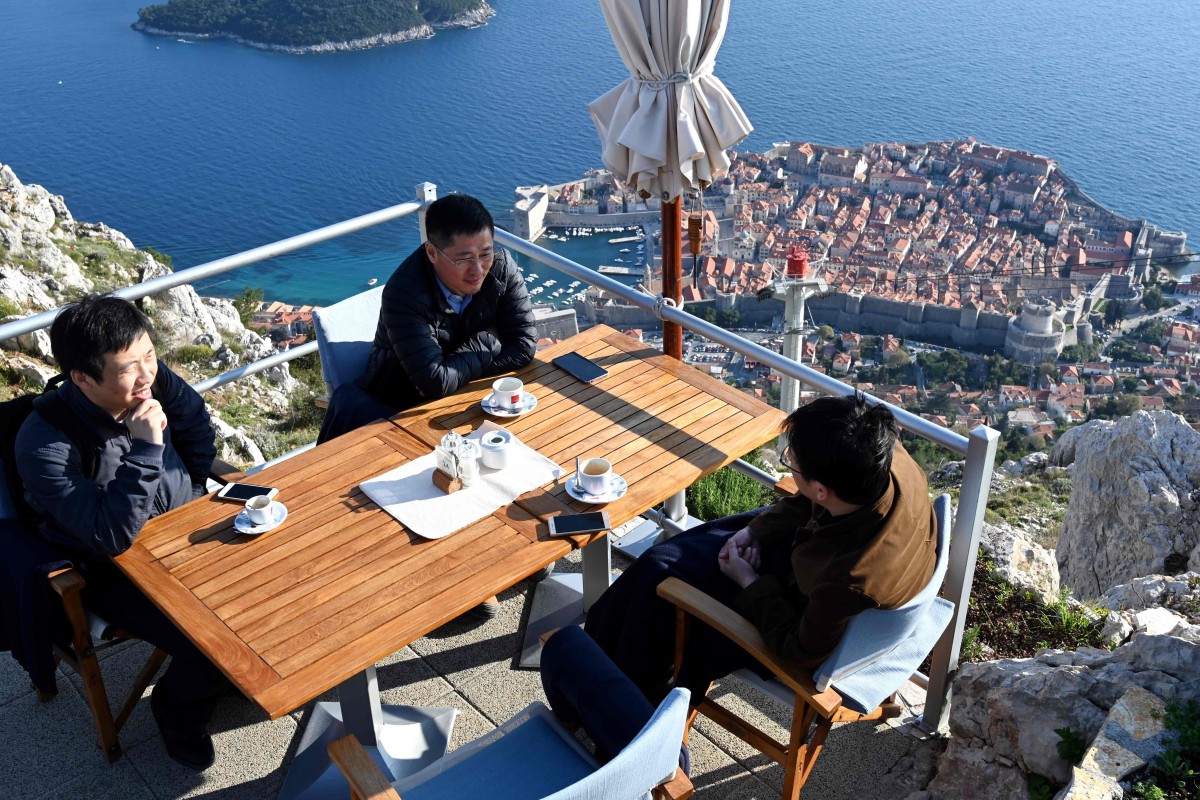
Destinations such as Dubrovnik, Croatia, are becoming more popular among mainland Chinese tourists, according to one of China’ s biggest travel services. Photo: AFP
Chartered flights and niche destinations such as Croatia and Malta are growing in popularity as Hong Kong falls out of favour for mainland Chinese holidaymakers over the National Day “golden week” break.
Japan has overtaken Thailand as the most searched overseas destination on the website of travel agency Ctrip, followed by Malaysia, the United States, Singapore, Australia, Macau, France, Italy and Russia.
Within the mainland places such as Beijing and Shanghai continued to be among the most popular searches but Urumqi, capital of Xinjiang Uygur autonomous region, is a fast-growing term, especially among people in Shanghai and Guangzhou.
“It could be that tourists want to see autumn leaves,” a Ctrip spokesman told the South China Morning Post.
October 1 marks the start of a week-long break on the mainland when millions of Chinese take the chance to travel. This year, an estimated 800 million people are expected to go on trips in China or overseas, about 10 per cent more than last year.
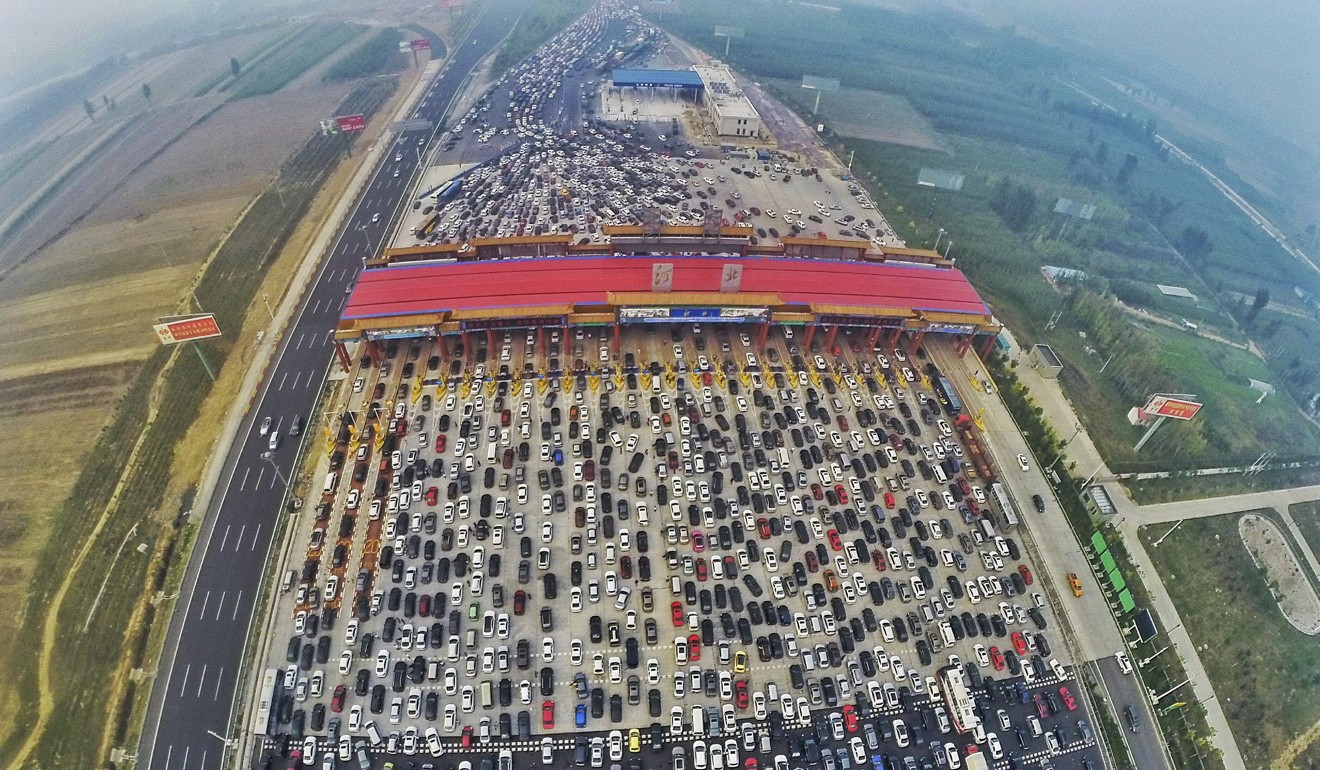
The country’s motorways are expected to be jammed from about 2pm on Monday, reaching a peak at around midnight, and again from 10am Tuesday, according to web mapping service Tencent Map.
China’s highways can expect heavy traffic as travellers head out for the holiday. Photo: Reuters
Ctrip said people heading overseas were increasingly seeking out new destinations, with bookings to places such as the Czech Republic, Austria, Croatia, Malta and Cambodia growing by 45 per cent this year.
“As Chinese people travel outside the country more and their experience of travel grows, many are more willing to go to smaller eastern European countries, such as the Czech Republic,” the spokesman said.
“Popular movies also have a strong influence. Many young people are willing to travel to see where films are shot, such as Croatia, one of the locations for Game of Thrones.”
Other noticeable trends this year include more people travelling with pets, by train and on chartered flights. The site said it sold 60 per cent more European train tickets and 10 times the number of train tickets for Japan for this golden week compared to last year.
The most popular routes in Asia were Tokyo to Kyoto in Japan, and Seoul to Busan in South Korea.
Hong Kong protests leave ‘golden week’ tourist boom in tatters as visitor arrivals during Chinese holiday period are set to be slashed by a third
Thousands of users also chose chartered flights, a service Ctrip introduced in September.
Ji Yu, head of chartered flights for Ctrip said most people thought chartered flights or helicopters were something only millionaires could afford, but in the internet age, they had become cheaper and more accessible.
“In the internet era, consumer needs vary from person to person, especially in terms of travel. There are products on the market to satisfy each customer’s personal needs.”
Among the more popular chartered routes were from Beijing or Shanghai to Tokyo, Bangkok, the Maldives and London.
More people are also going away for longer. Digital travel services giant Qunar said that 80 per cent of the travellers booking flights or hotels through its services were heading off for more than five days. And of those 41 per cent were travelling for more than a week.
Meanwhile, trips to Hong Kong have fallen substantially, with just 15 group tours expected to enter the city each day, down from 110 last year, according to the Travel Industry Council of Hong Kong.
Efforts to promote Hong Kong attractions have also increased in Shenzhen in recent weeks, with advertising videos scenic spots, popular restaurants and malls in Hong Kong playing on cross-border buses. Passengers can also get discounts to some stores and services with their tickets.
Source: SCMP
Posted in Australia, Austria, autumn leaves, Ürümqi, Bangkok, Beijing, booking flights, break, Busan, Cambodia, capital, chartered flights, Chinese travellers, consumer needs, cross-border buses, Ctrip, Czech Republic, destinations, European train tickets, France, Game of Thrones, golden week, growing, Guangzhou, helicopters, holiday trends, Hong Kong, internet age, internet era, Italy, jammed, Japan, Kyoto, London, Macau, Malaysia, Maldives, malls, Malta, millionaires, motorways, National Day, niche, October 1, person to person, Qunar, restaurants, Russia, scenic spots, Seoul, Shanghai, Shenzhen, Singapore, skip, south china morning post, South Korea, Tencent Map, Thailand, Tokyo, tourists, Train, Train trips, travel, Travel agency Ctrip, travel agents, travelling with pets, Uncategorized, United States, vary, Xinjiang, Xinjiang Uygur Autonomous Region |
Leave a Comment »
28/09/2019
- Military experts say PLA modernisation brought about during Xi Jinping’s presidency will be the main focus of October 1 celebration in Beijing
- It’s necessary for China to ‘show some of its muscle’ amid the trade dispute with the US, observer says
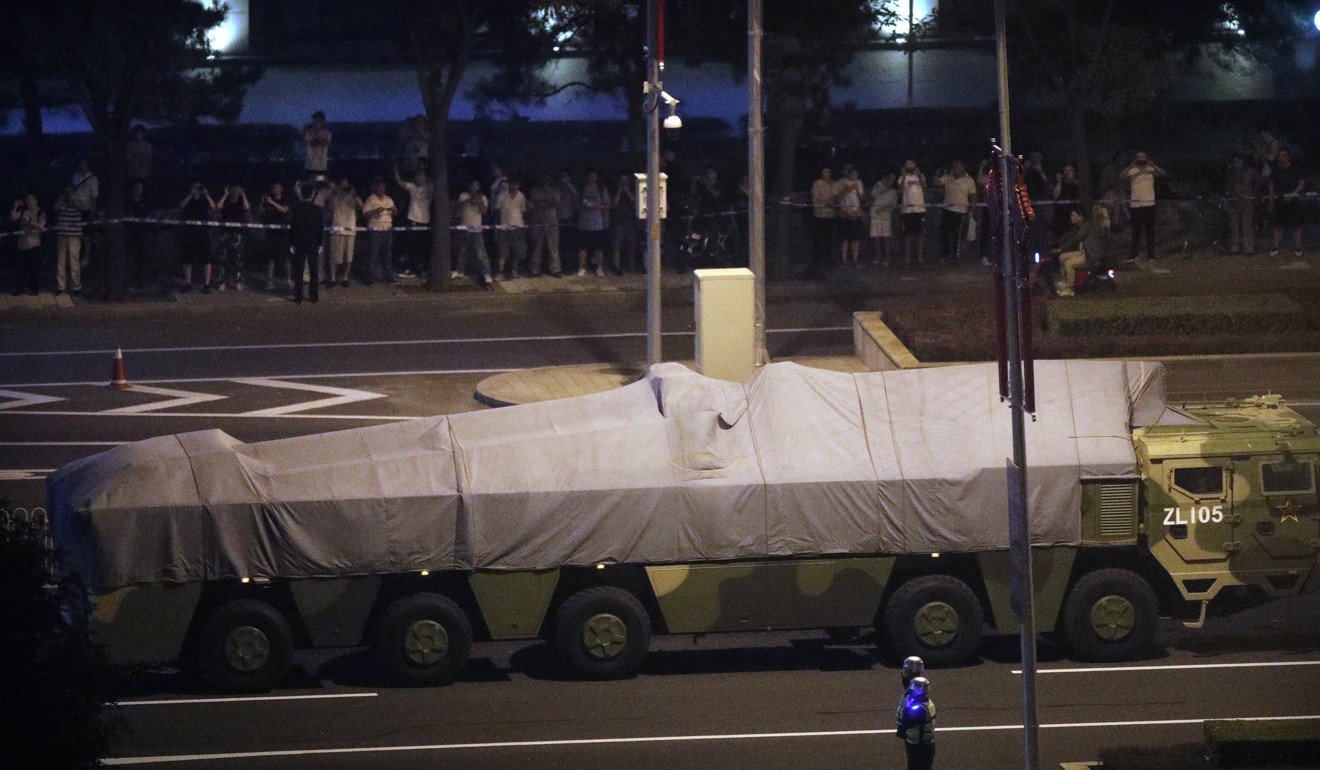
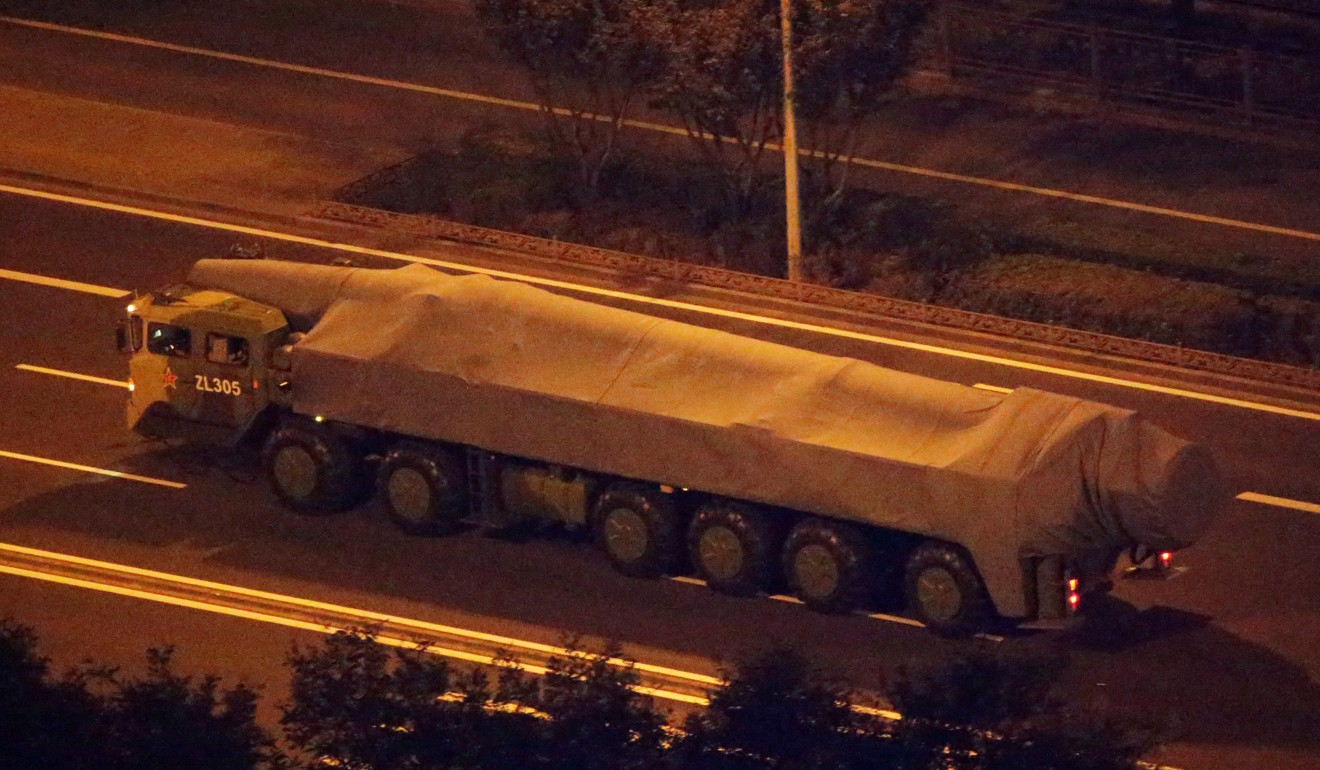
China’s land-based DF-41 intercontinental ballistic missile will be among the military hardware on show on October 1. Photo: Reuters
China plans to show off its most advanced active weapon systems at the upcoming National Day parade, which will be the biggest of the 14 such events it has held over the past seven decades.
The parade, to be held on October 1 to mark the 70th anniversary of the founding of the People’s Republic, will highlight the military modernisation – particularly in nuclear deterrence – that has taken place since President Xi Jinping came to power in late 2012, according to military experts.
The People’s Liberation Army (PLA) offered a glimpse of those weapons during rehearsals for the parade in downtown Beijing from September 14.
As part of the celebrations, Xi, who also chairs the Central Military Commission, will inspect 48 squads on the ground and more than a dozen airborne squadrons, according to a military insider involved in support services for the parade.
More than a dozen airborne squadrons will take part in the National Day parade. Photo: Kyodo
The squadrons will include the air force’s first stealth fighter, the J-20; the main active warplanes such as the J-10 and J-11B; and armed helicopters like the Z-20. However, the J-8 fighter jet would not appear this year, the source said, confirming that the first interceptor built in China has been formally retired.
“The ground march will be led by several hero forces from the five theatre commands, which is different from previous squads selected from the ground forces, air force and navy,” said the insider, who requested anonymity because of the sensitivity of the matter.
“The main goal of this year’s parade is to promote the military modernisation of the PLA under President Xi’s leadership over the past seven years, with the military overhaul being one of the key achievements.”
Thirty-three of the 48 squads would be “weapon squads”, while the 13 others would be made up of infantry troops from the five theatre commands, the source said.
National Day fireworks in Hong Kong cancelled over safety fears
As part of the PLA’s sweeping military reforms, the army’s previous seven military commands were reshaped into five theatre commands, while the four former general headquarters were dissolved and replaced by 15 small functional departments.
In September 2015, Xi announced the PLA would shed 300,000 troops, cutting its size to 2 million, a move aimed at turning the PLA into a more nimble and combat-ready fighting force on a par with international standards.
Xi also split the former Second Artillery Corps into the Rocket Force and the Strategic Support Force, with the latter backing up the military’s electronic warfare units in cyberspace and outer space.
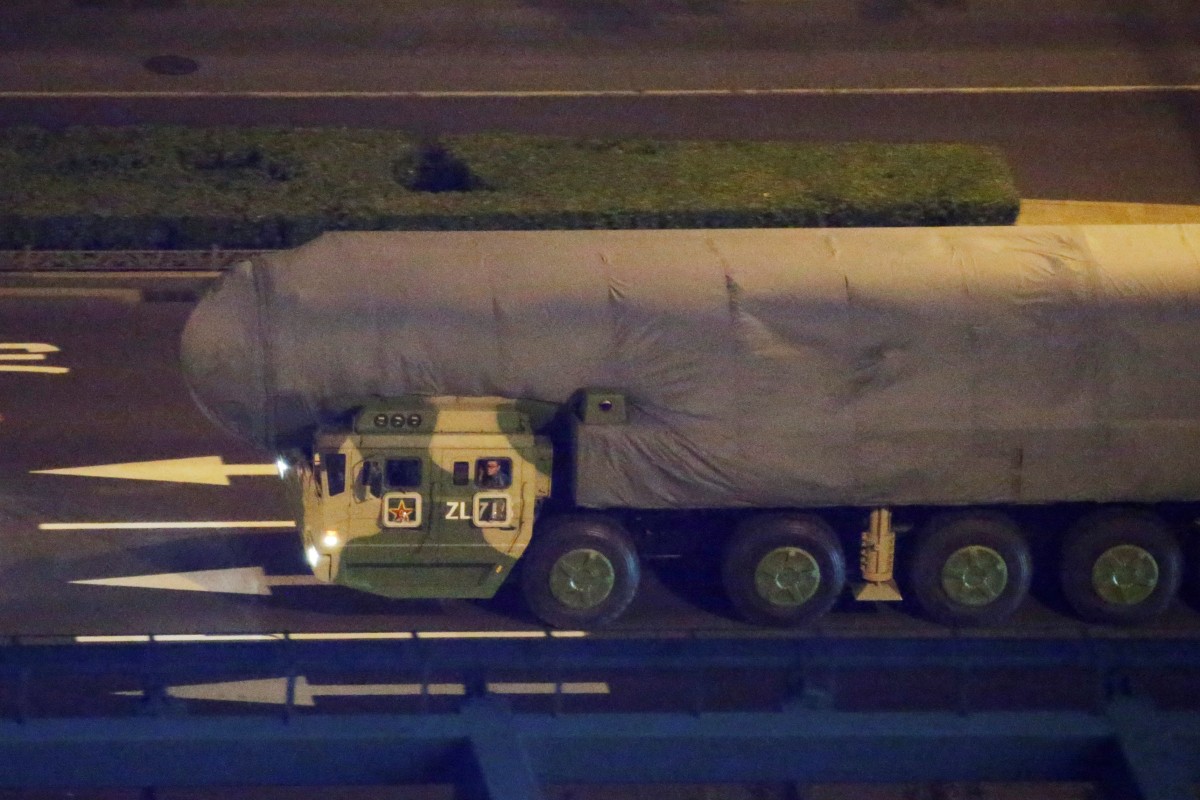
Among the 33 weapon squads, the highlights are expected to be the PLA’s strategic nuclear missiles such as the Rocket Force’s land-based DF-41 intercontinental ballistic missile (ICBM), the DF-21D anti-ship ballistic missile, the DF-17 hypersonic missile and the sea-launched JL-2, or Big Wave-2.
Adam Ni, a researcher at Macquarie University in Australia, said that showing off different types of missiles on land and sea indicated that the PLA was improving its nuclear deterrence capabilities by perfecting a three-pronged military force structure, or the so-called nuclear triad.
The DF-17 hypersonic ballistic missile will be one of the highlights of the parade. Photo: AP
The DF-41 is capable of carrying multiple warheads and many decoys, making it harder to detect than silo-based systems and better able to survive a first strike.
Ni said the DF-41 was China’s next-generation cutting-edge weapon.
“It’s actually an advanced ICBM and has a range to hit practically anywhere in the world, including the continental United States,” Ni said.
“The DF-41 is the ultimate symbol of the destructive potential of Chinese armed forces, just as nuclear weapons are similar symbols of the US and Russia.”
The JL-2 – which has a shorter range of 7,000km (4,350 miles) and can be launched by the PLA Navy’s Type 094 submarines – is unable to hit anywhere on the American continent when launched from submarines in the South China Sea and coastal areas of China.
China tests new warships in live-fire drills near Vietnam
However, China is developing the JL-3, which has a range of about 9,000km; the upgraded version of the JL-2, with a flight test conducted in June, though it is still less than the 12,000km range of the American Trident II.
“China is stepping up its military modernisation, which includes a number of aspects; the land-based aspect is introducing more mobile and survivable missile systems,” Ni said.
“The game change will happen when China is able to hit the whole US continent with its missile submarines in Chinese coastal waters.”
In military terms, survivable refers to the ability to remain mission capable after a single engagement.
The DF-17 is a land-to-land short-range strategic missile capable of delivering both nuclear and conventional payloads. The US intelligence community has estimated that it will reach initial operational capability by 2020. But if the missile is displayed in the parade, that means it is active already.
China conducted two tests of the DF-17 in November 2017, with the first launched from the Jiuquan Space Launch Centre in Inner Mongolia.
An insider said the main goal of this year’s parade is to promote the military modernisation of the PLA. Photo: Reuters
Hong Kong-based military commentator Song Zhongping said the nuclear weapons that would go on show in the parade would all be strategic missiles designed to improve China’s deterrent capabilities.
The show comes after the PLA delivered a national defence white paper in July stressing its goal to “maintain national strategic security by deterring other countries from using or threatening to use nuclear weapons against China”.
Unlike in the past, this year’s report stated that the US and China were now competing superpowers, and that the PLA’s growing forces were developing to the point that they could challenge the US.
Zhou Chenming, a Beijing-based military observer, said it was also necessary for the PLA to “show some of its muscle” amid the ongoing trade dispute between Beijing and Washington.
“To prevent misunderstanding, most of the weapons are just strategic equipment, not tactical arms, because Beijing still doesn’t want to irritate Washington,” he said.
About 280,000 people were involved in the rehearsals for the parade and related support services, according to Xinhua.
Source: SCMP
Posted in 70th anniversary, accuse teacher, advances, air force, airborne squadrons, American Trident II, armed helicopters, Australia, Beijing, celebration, Central Military Commission, Central Military Commission (CMC), China’s National Day, continental United States, cyberspace, decoys, DF-41 intercontinental ballistic missile, DF-41 intercontinental ballistic missile (ICBM), first strike, founding of the People’s Republic, ground forces, Inner Mongolia, J-20 stealth fighter, J-8 fighter jet, Jiuquan Space Launch Centre, Macquarie University, Military experts, military hardware, multiple warheads, navy, nuclear deterrence, nuclear triad, October 1, outer space, parade, People’s Liberation Army (PLA), pla navy, Rocket Force, Russia, Second Artillery Corps, showcase, silo-based systems, South China Sea, stealth fighter, strategic nuclear missiles, Strategic Support Force, survive, Type 094 submarines, Uncategorized, US, Vietnam, weapon squads, Xi JinPing |
Leave a Comment »
26/09/2019
- Cheng Qiang was just 12 when a magnitude 8 tremor destroyed his village, but he never forgot the heroism of the soldiers sent to help and swore one day to join their ranks
- Now a squad leader, on October 1 he will also be part of the National Day celebrations in Tiananmen Square
Cheng Qiang was just 12 when his home in Sichuan was hit by a massive earthquake and airborne troops were sent to help. Photo: People.cn
A young man who survived the devastating
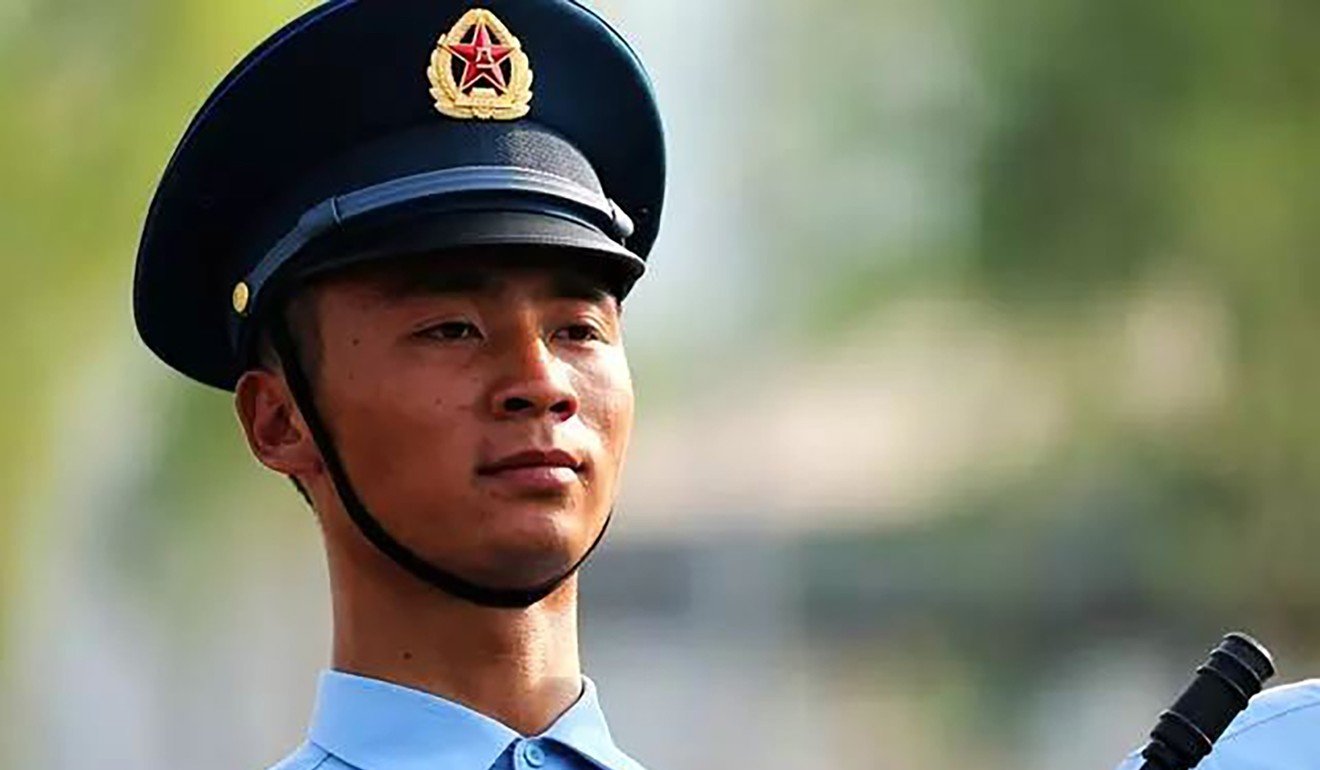
Sichuan earthquake and vowed to one day join the ranks of the soldiers who spent months rescuing people from the rubble will on Tuesday lead his very own squad of airborne troops in
Tiananmen Square as part of the celebrations for the country’s 70th anniversary.
Now 23, Cheng Qiang was just 12 when on May 12, 2008 he and a group of friends played truant from school to go swimming in a local river, Xinhua reported on Thursday.
When the boys had finished their fun they returned to their village in the township of Luoshui to find their school and many other buildings had been razed to the ground. The death toll from the magnitude 8 quake would eventually rise to 87,000, with 370,000 people injured.
Cheng says he is ready to “continue the glory of the airborne troops” at Tuesday’s parade. Photo: Thepaper.cn
In the days and weeks that followed the devastation, tens of thousands of people from around China and the world descended on towns and villages across Sichuan to help with the rescue effort.
But the ones who impressed Cheng the most were the soldiers from the People’s Liberation Army (PLA) with the word “Airborne” printed on the helmets.
“Sometimes they had to remove the debris with their bare hands which were already covered in blood,” he said.
“But they just carried on and eventually pulled dozens of people out of the rubble. I knew then that I wanted to be one of them.”
Cheng said that after the quake having the troops in his village made him feel safe. Photo: People.cn
Having the troops in his village made Cheng feel safe, he said, and he spent his days following them around and doing what he could to help.
Three months later, when the soldiers had completed their work and were preparing to pull out, Cheng said he was determined to show his new heroes just how grateful he was to them.
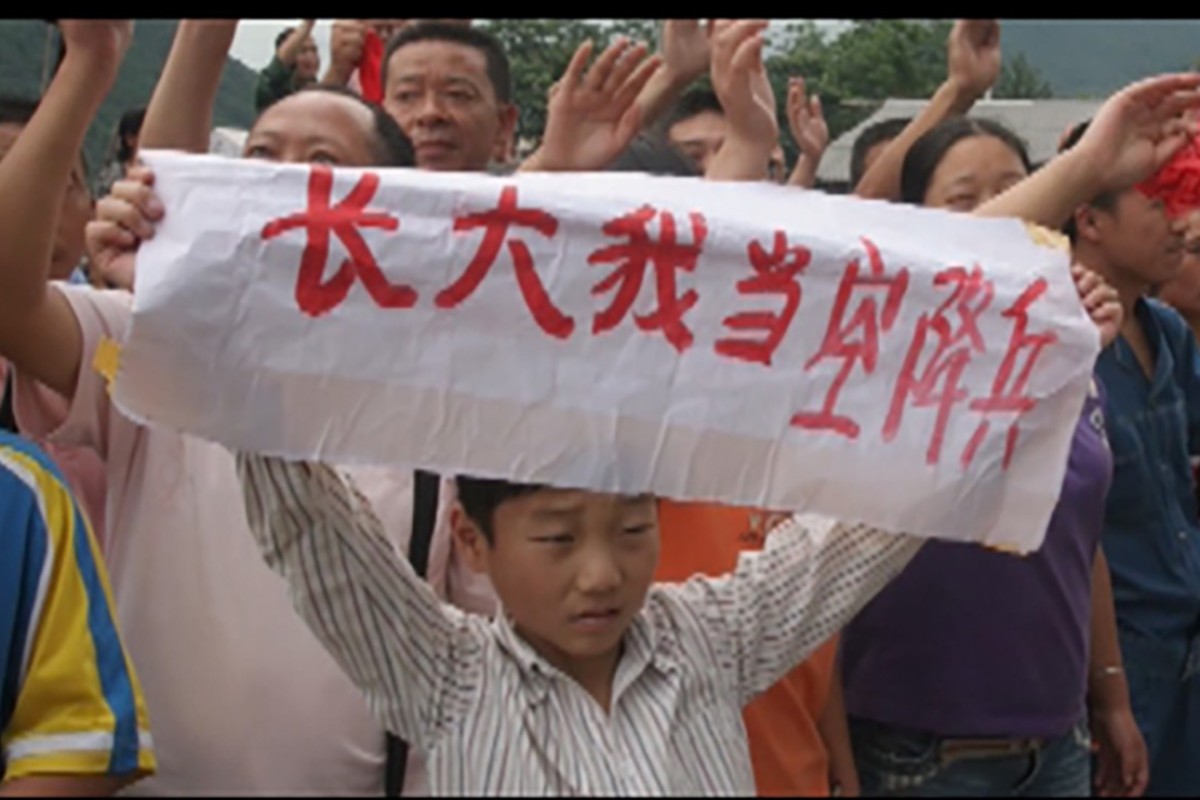
As the villagers gathered at the roadside to bid farewell to the men who had become their saviours, the young boy held up a handwritten sign. It said simply: “I want to be an airborne soldier when I grow up.”
The moment was captured on camera by a press photographer, and the image soon became a symbol of the gratitude felt by the people who had seen their lives and communities shattered but knew they had not been forsaken.
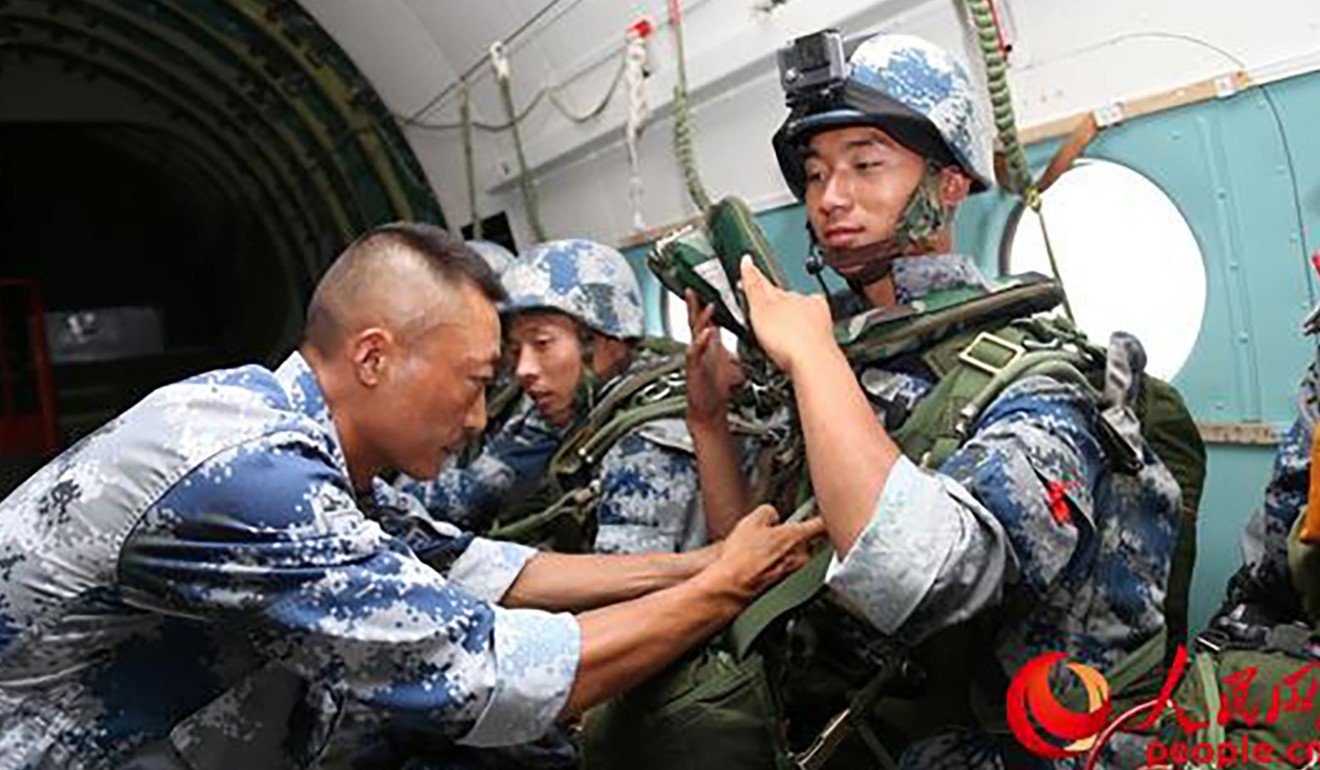
Cheng said he felt dizzy when he first jumped out of a plane. Photo: People.cn
Five years after the troops rolled out, Cheng was preparing to go to college when he heard the PLA was recruiting and that there were places available with the airborne division.
The teenager did not need a second invitation, and after securing a place on a training course and successfully completing it he joined the ranks of his heroes in 2013.
Not that everything was plain sailing, however.
“When I first jumped out of a plane I felt very dizzy and didn’t really know what was going on,” he said.
Thankfully Cheng managed to overcome his vertigo and went on to become a squad leader.
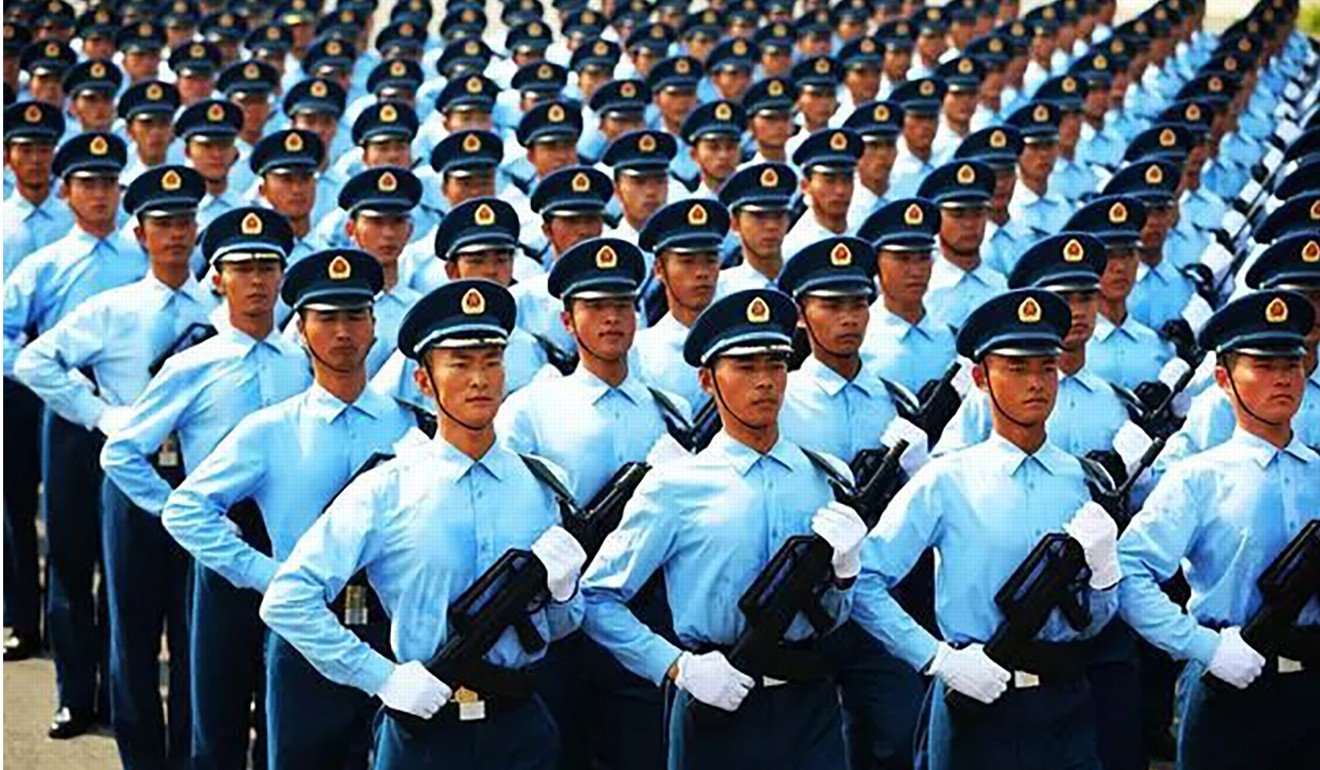
Tens of thousands of troops will take part in China’s National Day parade on October 1. Photo: Thepaper.cn
When the preparations were being made for next week’s anniversary celebrations in Beijing, Cheng said he and his squad were chosen to take part.
He said that during the rehearsals for the grand parade, he was repeatedly reprimanded by his trainer for not keeping his knees close enough together, for lifting his feet too high and for letting his gun slip off shoulder.
But he was determined to get it right, and after weeks of hard work and 11 years on from the tragedy that devastated his world, he said he was now ready to put his best foot forward.
“The nightmare of earthquake has long gone,” he said. “I am here to continue the glory of the airborne troops. I am ready for inspection.”
Source: SCMP
Posted in 70th anniversary parade, airborne, airborne troops, bare hands, captured, celebrations, Cheng Qiang, China alert, college, completing, covered in blood, debris, destroyed, dizzy, earthquake, farewell, first jumped, forgot, grand parade, gratitude, helmets, heroes, heroism, image, invitation, joined, local river, Luoshui, magnitude 8, National Day, October 1, on camera, People’s Liberation Army (PLA), place, plain sailing, plane, press photographer, ranks, ready to join, recruiting, rehearsals, reprimanded, roadside, rubble, saviours, school, securing, sichuan province, soldiers, squad leader, successfully, survivor, swimming, symbol, teenager, Tiananmen Square, trainer, training course, truant, Uncategorized, vertigo, Village |
Leave a Comment »
22/09/2019
- October 1 event is intended to be a showcase for military’s progress under Xi Jinping, with J-20 stealth fighters set to take pride of place
- Domestically developed weapons are main focus of event despite long-standing problems in building aircraft engines
Chinese J-10 jets perform at the Dubai air show in 2017. Photo: AFP
China has stepped up intensive rehearsals for the upcoming National Day parade, which military insiders say is designed to showcase the achievements of Chinese President Xi Jinping’s modernisation drive.
The parade on October 1 will mark the 70th anniversary of the founding of the People’s Republic and will focus on weapons developed since Xi came to power in late 2012, despite long-standing problems in aircraft engine development.
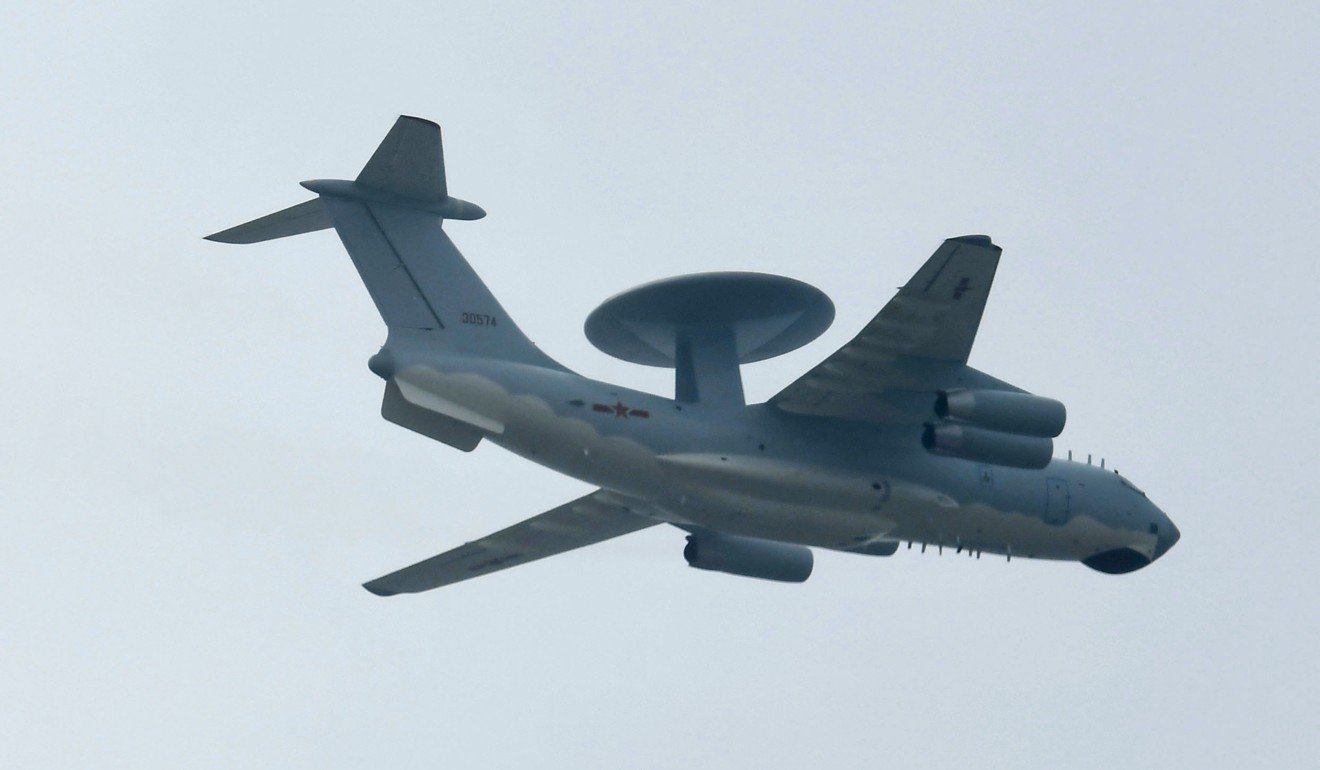
Video clips circulating on mainland social media in recent days have shown at least seven types of aircraft – including the KJ-2000 airborne early warning and control aircraft and J-10 and J-11B fighter jets – taking part in rehearsals over the countryside around Beijing.
A military insider said the country’s first stealth fighter jet, the J-20, had been rehearsing over the western suburbs of the capital since April.
“There will be up to seven J-20 displayed in the military parade, which is the largest formation since its formal deployment to the Chinese air force in 2017,” the military insider said.
“The J-20 has entered mass production. So far at least 70 J-20s have been made, even though all of them are still equipped with Russian AL-31 engines.”
Earlier this month, the People’s Liberation Army Air Force released a video of a flight of seven J-20s, the largest formation seen so far, suggesting that the fifth-generation warplane has gone into mass production as an arms race with the United States mounts in the region.
The second-largest J-20 formation was shown in an air force video for PLA Day on August 1, when five of the jets were shown.
China has been forced to deploy the J-20 ahead of its schedule since the US has increased the deployment of its fifth-generation stealth fighter jets like the F-22 and F-35s in the Asia-Pacific region.
The US and its allies, including Japan and South Korea, will have more than 200 F-35s by 2025, which means China also needs a similar number of stealth fighters.
To meet demand, China has been working on the development of a purpose-built thrust engine for its stealth fighter since the early 2000s, but has yet to achieve international quality control standards due to problems that include single-crystal turbine blade technology.
China’s air force spreads its wings in 70th anniversary video
Hong Kong-based military commentator Song Zhongping said aircraft engine development had been a long-standing shortcoming but it would not affect the practical fighting capacity of the J-20, which currently uses Russian engines.
“The J-20 hasn’t used the domestic engines so far because it wants a better one, and it still has time,” Song said.
“Other [Chinese-developed] warplanes like the J-10, J-11 and multipurpose attack helicopters are all modified and advanced types, indicating comprehensive achievements amid China’s military modernisation over the past years.”
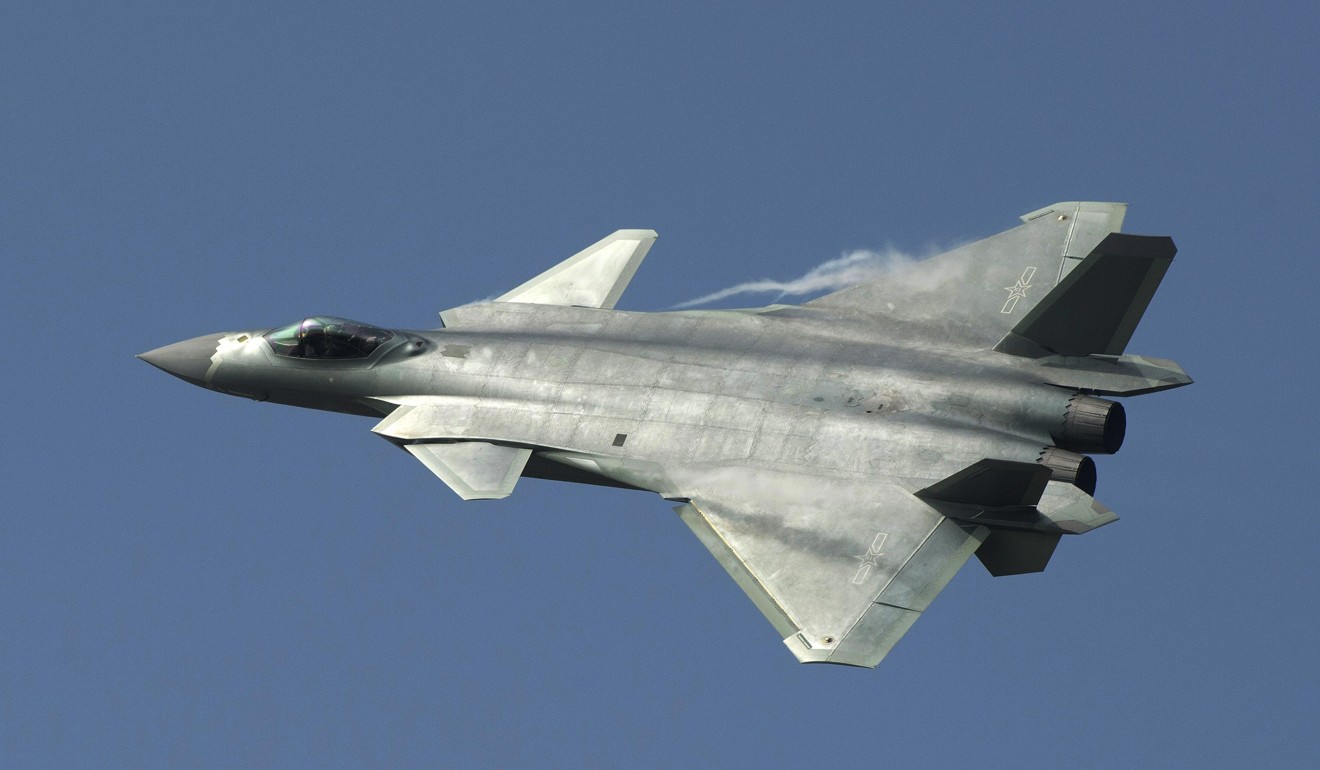
A Chinese J-20 stealth fighter has entered mass production. Photo: EPA-EFE
Besides the domestically developed aircraft, Beijing is going to display its strategic nuclear missiles, such as the DF-41 intercontinental ballistic missile and the JL-2 submarine-launched ballistic missile, as centrepieces of its National Day military parade, according to a Beijing-based military source.
Xi, who also chairs the powerful Central Military Commission, inspected the country’s biggest military parade at the Zhurihe Combined Tactics Training Base in Inner Mongolia in 2017 to celebrate the 90th anniversary of the PLA, but the source said the weapons displayed in Zhurihe had been developed under the leadership of Xi’s predecessor, Hu Jintao.
“Xi needs to highlight his personal achievements in his era, that’s why this year’s parade has political aims more than military significance,” the source said.
The source also highlighted the significance of the People’s Republic marking its 70th anniversary because the Soviet Union did not survive for that length of time.
“Xi is attempting to tell the outside world that Chinese communist regime has been consolidated under his leadership.”
Source: SCMP
Posted in 70th anniversary, 90th anniversary, Air show, aircraft engines, AL-31 engines, allies, Asia-Pacific region, Beijing, Central Military Commission, Central Military Commission (CMC), China’s air force, Chinese communist regime, Chinese fighter jet, countryside, domestically developed aircraft, Dubai, event, F-22, F-35, founding of the People’s Republic, Hong Kong, Hu Jintao, Inner Mongolia, J-11B fighter jets, J-20 stealth fighter, J-20 stealth fighters, Japan, KJ-2000 airborne early warning and control aircraft, Korea, military parade, multipurpose attack helicopters, National Day, National Day parade, October 1, People’s Liberation Army Air Force, PLA, preparations, pride of place, Russian, seen, single-crystal turbine blade technology, skies, Soviet Union, step up, strategic nuclear missiles, submarine-launched ballistic missile, Uncategorized, US, Xi JinPing, Zhurihe, Zhurihe Combined Tactics Training Base |
Leave a Comment »
22/09/2019
- Military experts say PLA modernisation brought about during Xi Jinping’s presidency will be the main focus of October 1 celebration in Beijing
- It’s necessary for China to ‘show some of its muscle’ amid the trade dispute with the US, observer says
China’s land-based DF-41 intercontinental ballistic missile will be among the military hardware on show on October 1. Photo: Reuters
China plans to show off its most advanced active weapon systems at the upcoming National Day parade, which will be the biggest of the 14 such events it has held over the past seven decades.
The parade, to be held on October 1 to mark the 70th anniversary of the founding of the People’s Republic, will highlight the military modernisation – particularly in nuclear deterrence – that has taken place since President Xi Jinping came to power in late 2012, according to military experts.
The People’s Liberation Army (PLA) offered a glimpse of those weapons during rehearsals for the parade in downtown Beijing from September 14.
As part of the celebrations, Xi, who also chairs the Central Military Commission, will inspect 48 squads on the ground and more than a dozen airborne squadrons, according to a military insider involved in support services for the parade.
More than a dozen airborne squadrons will take part in the National Day parade. Photo: Kyodo
The squadrons will include the air force’s first stealth fighter, the J-20; the main active warplanes such as the J-10 and J-11B; and armed helicopters like the Z-20. However, the J-8 fighter jet would not appear this year, the source said, confirming that the first interceptor built in China has been formally retired.
“The ground march will be led by several hero forces from the five theatre commands, which is different from previous squads selected from the ground forces, air force and navy,” said the insider, who requested anonymity because of the sensitivity of the matter.
“The main goal of this year’s parade is to promote the military modernisation of the PLA under President Xi’s leadership over the past seven years, with the military overhaul being one of the key achievements.”
Thirty-three of the 48 squads would be “weapon squads”, while the 13 others would be made up of infantry troops from the five theatre commands, the source said.
National Day fireworks in Hong Kong cancelled over safety fears
As part of the PLA’s sweeping military reforms, the army’s previous seven military commands were reshaped into five theatre commands, while the four former general headquarters were dissolved and replaced by 15 small functional departments.
In September 2015, Xi announced the PLA would shed 300,000 troops, cutting its size to 2 million, a move aimed at turning the PLA into a more nimble and combat-ready fighting force on a par with international standards.
Xi also split the former Second Artillery Corps into the Rocket Force and the Strategic Support Force, with the latter backing up the military’s electronic warfare units in cyberspace and outer space.
Among the 33 weapon squads, the highlights are expected to be the PLA’s strategic nuclear missiles such as the Rocket Force’s land-based DF-41 intercontinental ballistic missile (ICBM), the DF-21D anti-ship ballistic missile, the DF-17 hypersonic missile and the sea-launched JL-2, or Big Wave-2.
Adam Ni, a researcher at Macquarie University in Australia, said that showing off different types of missiles on land and sea indicated that the PLA was improving its nuclear deterrence capabilities by perfecting a three-pronged military force structure, or the so-called nuclear triad.
The DF-17 hypersonic ballistic missile will be one of the highlights of the parade. Photo: AP
The DF-41 is capable of carrying multiple warheads and many decoys, making it harder to detect than silo-based systems and better able to survive a first strike.
Ni said the DF-41 was China’s next-generation cutting-edge weapon.
“It’s actually an advanced ICBM and has a range to hit practically anywhere in the world, including the continental United States,” Ni said.
“The DF-41 is the ultimate symbol of the destructive potential of Chinese armed forces, just as nuclear weapons are similar symbols of the US and Russia.”
The JL-2 – which has a shorter range of 7,000km (4,350 miles) and can be launched by the PLA Navy’s Type 094 submarines – is unable to hit anywhere on the American continent when launched from submarines in the South China Sea and coastal areas of China.
China tests new warships in live-fire drills near Vietnam
However, China is developing the JL-3, which has a range of about 9,000km; the upgraded version of the JL-2, with a flight test conducted in June, though it is still less than the 12,000km range of the American Trident II.
“China is stepping up its military modernisation, which includes a number of aspects; the land-based aspect is introducing more mobile and survivable missile systems,” Ni said.
“The game change will happen when China is able to hit the whole US continent with its missile submarines in Chinese coastal waters.”
In military terms, survivable refers to the ability to remain mission capable after a single engagement.
The DF-17 is a land-to-land short-range strategic missile capable of delivering both nuclear and conventional payloads. The US intelligence community has estimated that it will reach initial operational capability by 2020. But if the missile is displayed in the parade, that means it is active already.
China conducted two tests of the DF-17 in November 2017, with the first launched from the Jiuquan Space Launch Centre in Inner Mongolia.
An insider said the main goal of this year’s parade is to promote the military modernisation of the PLA. Photo: Reuters
Hong Kong-based military commentator Song Zhongping said the nuclear weapons that would go on show in the parade would all be strategic missiles designed to improve China’s deterrent capabilities.
The show comes after the PLA delivered a national defence white paper in July stressing its goal to “maintain national strategic security by deterring other countries from using or threatening to use nuclear weapons against China”.
Unlike in the past, this year’s report stated that the US and China were now competing superpowers, and that the PLA’s growing forces were developing to the point that they could challenge the US.
Zhou Chenming, a Beijing-based military observer, said it was also necessary for the PLA to “show some of its muscle” amid the ongoing trade dispute between Beijing and Washington.
“To prevent misunderstanding, most of the weapons are just strategic equipment, not tactical arms, because Beijing still doesn’t want to irritate Washington,” he said.
About 280,000 people were involved in the rehearsals for the parade and related support services, according to Xinhua.
Source: SCMP
Posted in 70th anniversary, advances, airborne squadrons, Australia, Beijing, Big Wave-2, celebration, Central Military Commission, Central Military Commission (CMC), China’s National Day, continental United States, cyberspace, decoys, DF-17 hypersonic missile, DF-21D anti-ship ballistic missile, DF-41 intercontinental ballistic missile, DF-41 intercontinental ballistic missile (ICBM), electronic warfare units, first strike, founding of the People’s Republic, ICBM, Inner Mongolia, J-20 stealth fighter, Jiuquan Space Launch Centre, live-fire drills, Macquarie University, Military experts, military hardware, military modernisation, missile submarines, multiple warheads, National Day, nuclear deterrence, nuclear triad, nuclear weapons, October 1, outer space, parade, People’s Liberation Army (PLA), PLA modernisation, pla navy, President Xi Jinping, Rocket Force, Russia, sea-launched JL-2, showcase, silo-based systems, South China Sea, stealth fighter, Strategic Support Force, submarines, superpowers, survive, Trident II, Uncategorized, US, Vietnam, warships, Washington, Xinhua |
Leave a Comment »
13/09/2019
- Top law enforcement body starts campaign to rally mainland support for officers amid anti-government protests
- Maxim’s described as ‘company that loves the country and loves Hong Kong’ after condemnation of unrest by daughter of founder
Officer Lau (third from left) and police colleagues receive a delivery of mooncakes. Photo: Weibo
China’s top law enforcement agency has shown its support for Hong Kong’s embattled police by delivering 650 boxes of mooncakes to the force’s dormitories and stations ahead of Friday’s
Mid-Autumn Festival.
The festive gifts were sent after an online campaign titled “I want to send hometown delicacies to Hong Kong Police”, launched last Friday by Chang An Jian, an official social media account of the Central Political and Legal Affairs Commission, Beijing’s top political body responsible for law and order.
The commission – a Communist Party organ, rather than a government body that police report to – said in a blog post that seven people had donated about 150,000 yuan (US$21,000) between them.
The campaign represents the latest display of mainland support for the force, with no end in sight to mass protests in Hong Kong triggered in June by opposition to an
that would have allowed the transfer of criminal suspects to mainland China. Hong Kong police have faced numerous accusations of excessive use of force during the unrest.
But the mooncake delivery was complicated by customs regulations, with most major Chinese courier services unwilling to take deliveries containing processed meat and egg yolk across the border with Hong Kong.
“[We] were panicking because a lot of enthusiastic netizens had their salted duck and mooncake deliveries to Hong Kong rejected by couriers!” a Chang An Jian blog post said on Wednesday night.
In the end, 650 boxes of mooncakes that were bought from Hong Kong were sent to police dormitories and stations on Wednesday evening.
Mid-Autumn Festival is the second most important traditional Chinese holiday after Lunar New Year.
“[The mooncakes] were from Maxim’s, a company that loves the country and loves Hong Kong!” the blog post also said.
Annie Wu Suk-ching, whose father co-founded the Maxim’s chain, last week
the anti-government protests in Hong Kong.
She was lauded by Communist Party mouthpiece People’s Daily for “clearly adhering to the one country principle” – referring to “one country, two systems”, the principle under which Hong Kong was guaranteed a high degree of autonomy after it was handed over from British to Chinese rule in 1997.
One of Maxim’s biggest rival mooncake manufacturers in Hong Kong, Taipan Bread and Cake, had its products
removed from shops across the Chinese mainland and from its biggest e-commerce sites, Tmall.com and JD.com, after the son of its founder was vilified by
People’s Daily for a Facebook post that the newspaper said showed he backed the protests.
Recipients of the mooncakes included a police officer who in July was hailed as a hero by Chinese state media and nicknamed “bald sergeant Lau Sir” after pointing a shotgun at protesters who had besieged a police station. Lau has since been invited by Beijing to attend a grand celebration on October 1 for the 70th anniversary of the founding of the People’s Republic of China.
Mooncake importer says stock will be destroyed after mainland backlash
Beijing has focused attention on the violent elements of the Hong Kong protests in its social media posts and media coverage, while businesses have been carefully monitored and expected to toe Beijing’s line on condemning violence and supporting one country, two systems.
“Hong Kong Police have been having a very difficult time,” said one mainlander, surnamed Lu, in a video posted by Chang An Jian. “We want to cheer them up.”
Posted in "one country, two systems", 70th anniversary, Beijing, boxes, campaign, Central Political and Legal Affairs Commission, criminal suspects, Facebook, founding, Hong Kong police, lunar new year, mainland, Mainland China, Maxim’s mooncakes, mooncakes, October 1, officers, People’s Daily, People’s Republic of China, Police officer, Police station, protests, rally, sends, show, support, Top law enforcement body, Uncategorized |
Leave a Comment »






 CHINDIA ALERT: You'll be living in their world, very soon