Chindia Alert: You’ll be Living in their World Very Soon
aims to alert you to the threats and opportunities that China and India present. China and India require serious attention; case of ‘hidden dragon and crouching tiger’.
Without this attention, governments, businesses and, indeed, individuals may find themselves at a great disadvantage sooner rather than later.
The POSTs (front webpages) are mainly 'cuttings' from reliable sources, updated continuously.
The PAGEs (see Tabs, above) attempt to make the information more meaningful by putting some structure to the information we have researched and assembled since 2006.
Image copyright PRESS INFORMATION BUREAUImage caption The area has become a hotspot in part because of a road India has built
The armies of the world’s two most populous nations are locked in a tense face-off high in the Himalayas, which has the potential to escalate as they seek to further their strategic goals.
Officials quoted by the Indian media say thousands of Chinese troops have forced their way into the Galwan valley in Ladakh, in the disputed Kashmir region.
Indian leaders and military strategists have clearly been left stunned.
The reports say that in early May, Chinese forces put up tents, dug trenches and moved heavy equipment several kilometres inside what had been regarded by India as its territory. The move came after India built a road several hundred kilometres long connecting to a high-altitude forward air base which it reactivated in 2008.
The message from China appears clear to observers in Delhi – this is not a routine incursion.
“The situation is serious. The Chinese have come into territory which they themselves accepted as part of India. It has completely changed the status quo,” says Ajai Shukla, an Indian military expert who served as a colonel in the army.
China takes a different view, saying it’s India which has changed facts on the ground.
Reports in the Indian media said soldiers from the two sides clashed on at least two occasions in Ladakh. Stand-offs are reported in at least three locations: the Galwan valley; Hot Springs; and Pangong lake to the south.
India and China share a border more than 3,440km (2,100 miles) long and have overlapping territorial claims. Their border patrols often bump into each other, resulting in occasional scuffles but both sides insist no bullet has been fired in four decades.
Their armies – two of the world’s largest – come face to face at many points. The poorly demarcated Line of Actual Control (LAC) separates the two sides. Rivers, lakes and snowcaps mean the line separating soldiers can shift and they often come close to confrontation.
The current military tension is not limited to Ladakh. Soldiers from the two sides are also eyeball-to-eyeball in Naku La, on the border between China and the north-eastern Indian state of Sikkim. Earlier this month they reportedly came to blows.
And there’s a row over a new map put out by Nepal, too, which accuses India of encroaching on its territory by building a road connecting with China.
Why are tensions rising now?
There are several reasons – but competing strategic goals lie at the root, and both sides blame each other.
“The traditionally peaceful Galwan River has now become a hotspot because it is where the LAC is closest to the new road India has built along the Shyok River to Daulet Beg Oldi (DBO) – the most remote and vulnerable area along the LAC in Ladakh,” Mr Shukla says.
India’s decision to ramp up infrastructure seems to have infuriated Beijing.
Image copyright AFPImage caption There have been protests in Nepal against Indi’s new road link
“According to the Chinese military, India is the one which has forced its way into the Galwan valley. So, India is changing the status quo along the LAC – that has angered the Chinese,” says Dr Long Xingchun, president of the Chengdu Institute of World Affairs (CIWA), a think tank.
Michael Kugelman, deputy director of the Asia programme at the Wilson Center, another think tank, says this face-off is not routine. He adds China’s “massive deployment of soldiers is a show of strength”.
The road could boost Delhi’s capability to move men and material rapidly in case of a conflict.
Differences have been growing in the past year over other areas of policy too.
The new federally-administered Ladakh included Aksai Chin, an area India claims but China controls.
Senior leaders of India’s Hindu-nationalist BJP government have also been talking about recapturing Pakistan-administered Kashmir. A strategic road, the Karakoram highway, passes through this area that connects China with its long-term ally Pakistan. Beijing has invested about $60bn (£48bn) in Pakistan’s infrastructure – the so-called China Pakistan Economic corridor (CPEC) – as part of its Belt and Road Initiative and the highway is key to transporting goods to and from the southern Pakistani port of Gwadar. The port gives China a foothold in the Arabian Sea.
In addition, China was unhappy when India initially banned all exports of medical and protective equipment to shore up its stocks soon after the coronavirus pandemic started earlier this year.
How dangerous could this get?
“We routinely see both armies crossing the LAC – it’s fairly common and such incidents are resolved at the local military level. But this time, the build-up is the largest we have ever seen,” says former Indian diplomat P Stobdan, an expert in Ladakh and India-China affairs.
“The stand-off is happening at some strategic areas that are important for India. If Pangong lake is taken, Ladakh can’t be defended. If the Chinese military is allowed to settle in the strategic valley of Shyok, then the Nubra valley and even Siachen can be reached.”
In what seems to be an intelligence failure, India seems to have been caught off guard again. According to Indian media accounts, the country’s soldiers were outnumbered and surrounded when China swiftly diverted men and machines from a military exercise to the border region.
This triggered alarm in Delhi – and India has limited room for manoeuvre. It can either seek to persuade Beijing to withdraw its troops through dialogue or try to remove them by force. Neither is an easy option.
“China is the world’s second-largest military power. Technologically it’s superior to India. Infrastructure on the other side is very advanced. Financially, China can divert its resources to achieve its military goals, whereas the Indian economy has been struggling in recent years, and the coronavirus crisis has worsened the situation,” says Ajai Shukla.
What next?
History holds difficult lessons for India. It suffered a humiliating defeat during the 1962 border conflict with China. India says China occupies 38,000km of its territory. Several rounds of talks in the last three decades have failed to resolve the boundary issues.
China already controls the Aksai Chin area further east of Ladakh and this region, claimed by India, is strategically important for Beijing as it connect its Xinjiang province with western Tibet.
Image copyright GETTY IMAGESImage caption India and China have a long history of border disputes
In 2017 India and China were engaged in a similar stand-off lasting more than two months in Doklam plateau, a tri-junction between India, China and Bhutan.
This time, too, talks are seen as the only way forward – both countries have so much to lose in a military conflict.
“China has no intention to escalate tensions and I think India also doesn’t want a conflict. But the situation depends on both sides. The Indian government should not be guided by the nationalistic media comments,” says Dr Long Xingchun of the CIWA in Chengdu. “Both countries have the ability to solve the dispute through high-level talks.”
Chinese media have given hardly any coverage to the border issue, which is being interpreted as a possible signal that a route to talks will be sought.
Pratyush Rao, associate director for South Asia at Control Risks consultancy, says both sides have “a clear interest in prioritising their economic recovery” and avoiding military escalation.
“It is important to recognise that both sides have a creditable record of maintaining relative peace and stability along their disputed border.”
NEW DELHI/SRINAGAR (Reuters) – A Himalayan border standoff between old foes India and China was triggered by India’s construction of roads and air strips in the region as it competes with China’s spreading Belt and Road initiative, Indian observers said on Tuesday.
Soldiers from both sides have been camped out in the Galwan Valley in the high-altitude Ladakh region, accusing each other of trespassing over the disputed border, the trigger of a brief but bloody war in 1962.
About 80 to 100 tents have sprung up on the Chinese side and about 60 on the Indian side where soldiers are billeted, Indian officials briefed on the matter in New Delhi and in Ladakh’s capital, Leh, said.
Both were digging defences and Chinese trucks have been moving equipment into the area, the officials said, raising concerns of a long faceoff.
“China is committed to safeguarding the security of its national territorial sovereignty, as well as safeguarding peace and stability in the China-India border areas,” the Chinese Foreign Ministry spokesperson’s office said in a statement.
“At present, the overall situation in the border areas is stable and controllable. There are sound mechanisms and channels of communication for border-related affairs, and the two sides are capable of properly resolving relevant issues through dialogue and consultation.”
There was no immediate Indian foreign ministry comment. It said last week Chinese troops had hindered regular Indian patrols along the Line of Actual Control (LAC).
But interviews with former Indian military officials and diplomats suggest the trigger for the flare-up is India’s construction of roads and air strips.
“Today, with our infrastructure reach slowly extending into areas along the LAC, the Chinese threat perception is raised,” said former Indian foreign secretary Nirupama Rao.
“Xi Jinping’s China is the proponent of a hard line on all matters of territory, sovereignty. India is no less when it comes to these matters either,” she said.
After years of neglect Prime Minister Narendra Modi’s government has pushed for improving connectivity and by 2022, 66 key roads along the Chinese border will have been built.
One of these roads is near the Galwan valley that connects to Daulat Beg Oldi air base, which was inaugurated last October.
“The road is very important because it runs parallel to the LAC and is linked at various points with the major supply bases inland,” said Shyam Saran, another former Indian foreign secretary.
“It remains within our side of the LAC. It is construction along this new alignment which appears to have been challenged by the Chinese.”
China’s Belt and Road is a string of ports, railways, roads and bridges connecting China to Europe via central and southern Asia and involving Pakistan, China’s close ally and India’s long-time foe.
Indian security forces have killed a prominent militant leader in disputed Kashmir, officials say.
Riyaz Naikoo had taken over command of the banned Hizbul Mujahideen group, succeeding Burhan Wani who was killed by security forces in 2016.
Wani’s death triggered massive protests in the region, which is claimed in its entirety by both India and Pakistan.
The region has seen an armed insurgency against Indian rule since 1989, which has flared following Wani’s killing.
Naikoo was shot dead in his home village of Beigh Pora in Pulwama district after militants killed eight security personnel in two separate attacks, part of a recent surge of violence in Indian-administered Kashmir.
Locals said the militant leader had been trapped in a joint siege laid by army, paramilitary and police forces. He had been on the run for eight years.
“At least 76 militants including Naikoo have been killed since January this year. But we also lost 20 soldiers including senior army and police officers,” a security official told BBC Urdu on condition of anonymity.
Under a new policy, militants who are killed are not identified and their bodies are not handed over to their families.
Officials had accused Riyaz Naikoo of plotting attacks against the security establishment in the valley.
Disputed Kashmir has been a flashpoint for more than 60 years, sparking two wars between India and Pakistan.
In August 2019, the Indian government stripped the region of its semi-autonomous status and split it into two federally-run territories.
Thousands of people were detained and the region remains under severe security restrictions.
Taiwan Strait and South China Sea are settings for China and the US to assert influence and defiance
Analysts warn costly missteps and miscalculations are possible amid rift
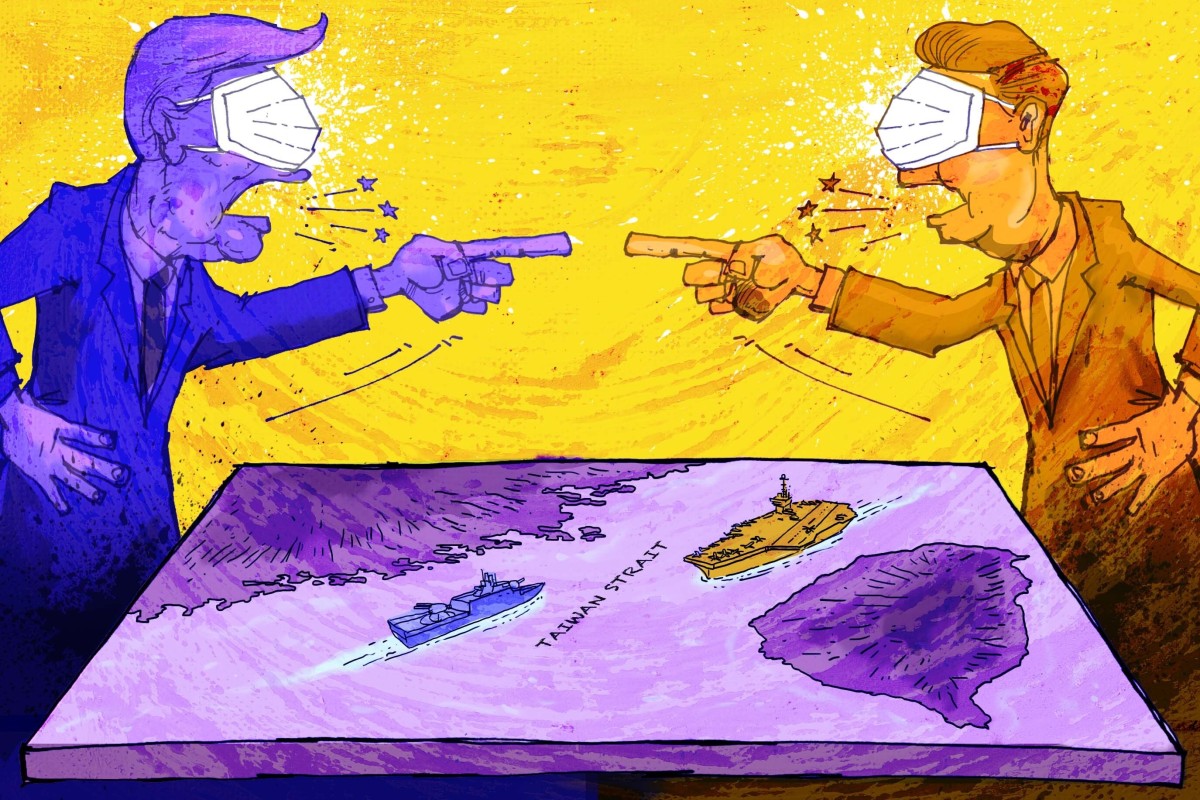
Illustration: Henry Wong
This is the fourth in a series exploring the global backlash that China may face as a result of its actions and rhetoric during the coronavirus pandemic. This story examines the outlook from a military viewpoint, including relations in the South China Sea, with China’s neighbours and with the United States.
As the USS Barry, one of the US’ most advanced destroyers, sailed through the Taiwan Strait last Thursday, an officer on board posted a message on Facebook: “They don’t call us the Finest Forward Deployed Destroyer for nothing! Your Bulldogs always have the watch – together, we ensure a free and open Indo-Pacific!”
Based in Yokosuka, Japan, the guided-missile destroyer was no stranger to the sensitive channel separating Taiwan and mainland China. In fact, this was its second passage through the 180km [112-mile]-wide waterway – defined as part of the South China Sea under international protocol – this month.
As the Covid-19 global health crisis continues to rage around the world, infecting more than 3 million people and causing more than 210,000 deaths, military manoeuvres are being analysed to see if the pandemic has changed the balance of force in the region.
American warships were just some of the frequent naval visitors to the Taiwan Strait. The Chinese military has also made its presence felt. The Liaoning, China’s first aircraft carrier paraded through the waterway with its strike group just one day before the USS Barry arrived.
And then on Tuesday, China’s Southern Theatre Command, which oversees the South China Sea, issued a stern warning against the “intrusion” of the USS Barry into the surrounding waters of the Paracel Islands. China calls them the Xisha Islands and Vietnam calls them the Hoang Sa Islands.
“These provocative acts by the US side … seriously violated China’s sovereignty and security interests, deliberately increased regional security risks and they could easily trigger unexpected incidents,” a spokesman of the command said.
The frequency of such tours has raised concerns among military observers and analysts that these exercises could lead to miscalculation as different countries use their militaries to jostle for greater influence or rattle the sabre amid the pandemic.
“Adversaries who think now is the time to challenge the #USA: you’re dangerously wrong,” United States Secretary of Defence Mark Esper tweeted in mid-April.
And on Wednesday last week he tweeted: “Do not test our resolve. Our service members continue to demonstrate why the American people call on the US military during the most trying times.”
The Covid-19 pandemic has plunged already strained
into a deepening rift as officials from both sides engage in a blame game about delays that have allowed the contagious disease to spread.
Experts are now looking at how the pandemic will affect other aspects of China’s international relations.
Zhu Feng, a professor of international relations at Nanjing University in eastern China, expressed worry that Beijing and Washington had grown even further apart because of the pandemic.
“China and the US are supposed to work together to battle this world-sweeping deadly contagion, but what worries me most is that the geopolitical strategic competition and differences between the two countries have widened because of the pandemic,” he said.
Zhu said Washington’s growing cosiness with Taipei had also alarmed Beijing.
While Taiwan was a key security issue in the region, analysts warned that manoeuvring by nations had increased the risk of turning the Indo-Pacific area into a tinderbox.
This month, the US Navy’s amphibious assault ship and a Japanese navy Murasame-class destroyer conducted three-day bilateral communications exercises and division tactics in the Philippine Sea and the East China Sea. The East China Sea is the site of territory disputes between Beijing and Tokyo over the
The joint drills came 10 days after a collision between a Japanese destroyer and a Chinese fishing vessel in the East China Sea, causing a hole in the destroyer. No one was hurt, according to the Japanese defence ministry.
On Tuesday last week, another US amphibious assault ship and a guided-missile cruiser joined with an Australian frigate.
They entered the contested waters off Malaysia, where a Chinese government survey vessel, the Haiyang Dizhi 8, has been operating close to a drill ship under contract to the Malaysian state oil company, Petronas, according to a report from Reuters citing regional security sources.
“The show of force of the US and Australian warships in the South China Sea was aimed at warning China: ‘The pandemic will not give you any opportunity to change the current balance of power [in the region]’,” Zhu said.
“And [it also means to] tell Malaysia and other Southeast Asian countries that no matter how the pandemic develops, the US is still Big Brother in the region,” he added.
The South China Sea remains one of the biggest stress points in Asia. Beijing claims almost all of the area but has conflicting claims with Vietnam, the Philippines, Taiwan, Malaysia and Brunei. The conflict has remained unresolved for decades and has now become another flash point with the US.
Alexander Huang Chieh-cheng, a former deputy minister on Taiwan’s Mainland Affairs Council, which handles the island’s ties with the mainland, said China and the US were tangled in a bitter competition.
“In comparative terms, the US presence has been a response to increased People’s Republic of China’s ‘far sea navigation training’ with its newly acquired air and naval assets,” Huang said, referring to Beijing’s expanded military clout.
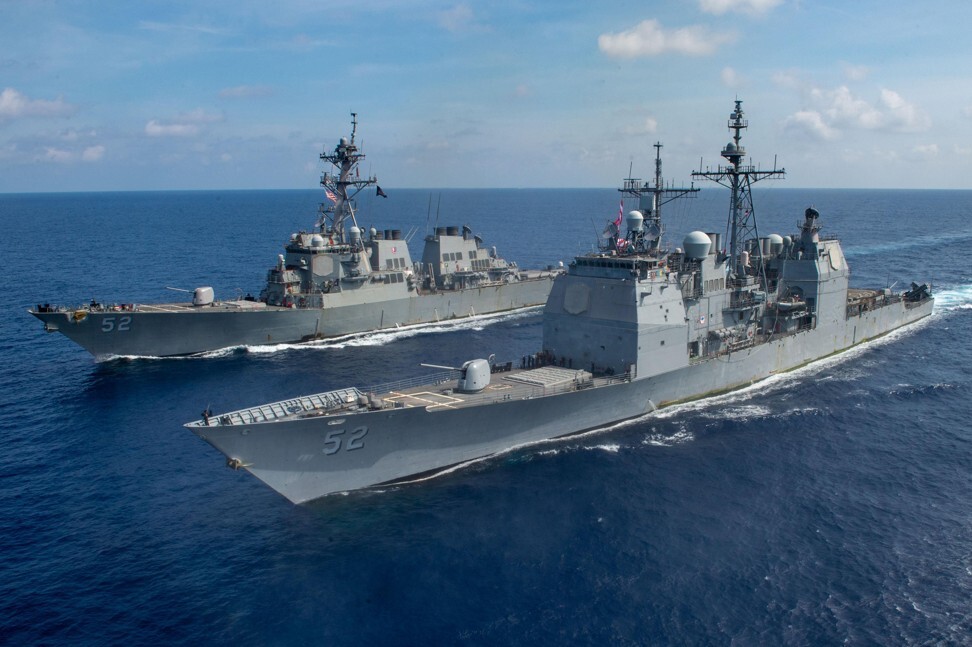
The US Navy Ticonderoga-class guided missile cruiser USS Bunker Hill, front, and Arleigh-Burke class guided-missile destroyer USS Barry in the South China Sea on April 18. Photo: US Navy
“The US wants to reassure [its allies of] its commitment to the security and stability in the Taiwan Strait, as well as in the larger Indo-Pacific region.
“[Chinese President] Xi Jinping has said that the vast Pacific Ocean is big enough to accommodate both the PRC [People’s Republic of China] and the US. However the PRC’s build-up in the South China Sea and training exercises have, in the eyes of Americans, threatened the freedom of navigation and challenged the US predominance in maritime Asia.”
Drew Thompson, a former US defence official and now a senior research fellow at National University of Singapore’s Lee Kuan Yew School of Public Policy, wrote in a recent paper that China under Xi’s leadership has taken a more aggressive stance in dealing with its neighbours.
“Xi Jinping’s rise to power has heralded a new foreign policy that is more assertive and uncompromising toward China’s neighbours, the US and the rest of the world,” he wrote.
He warned that Xi’s assertiveness would put China’s diplomatic and defence policies at higher risk, especially given Beijing’s determination to resolve the Taiwan problem.
“The pandemic does not fundamentally change the military or strategic balance across the Taiwan Strait but it potentially increases the possibility of miscalculation if Beijing thinks its handling of the pandemic gives it a military advantage,” Thompson told the South China Morning Post.
Last week, the PLA’s Eastern Theatre Command, which covers China’s eastern seaboard, published four belligerent articles emphasising the urgency for the Chinese military to strengthen its combat readiness as the country faced challenges at home and abroad during the pandemic and that the PLA (People’s Liberation Army) must play a “pivotal role in safeguarding China’s national interests”.
Separately, an analysis published in mid-April said that following the Covid-19 pandemic, the voice of “unifying Taiwan by force” had become “louder and louder” on the mainland. It was published on a media website affiliated with the mainland’s Taiwan Affairs Office, which oversees Beijing’s policies on the island.
Citing opinions by retired PLA generals, the analysis said the US would not go to war with China over Taiwan, other than providing the island with intelligence and weapons.
But Collin Koh, a research fellow of the S Rajaratnam School of International Studies at Singapore’s Nanyang Technological University, cautioned that such an assumption was risky.
“It’s unwise to underestimate the resolve of the Trump administration, given that in recent times it’s been putting more focus on enhancing strategic ties with Taiwan, having seen the island as a crucial element to its Indo-Pacific strategy,” Koh said.
“US credibility is at stake if it’s shown to be unwilling to defend its allies.”
Michael Jones, former chief of staff of US Central Command, was quoted by the Military Times, a US-based military news website, saying it had become imperative for US diplomats to reach out abroad and explain Washington’s intention to avoid mistakes and misunderstandings.
“Covid-19 merely is a factor that can lead to miscalculation,” Jones was quoted as saying. “If they [US adversaries] were to assume this is one more distraction that would keep the US from responding to an attack or challenge, it could add to the possibility of miscalculation.”
KATHMANDU, April 19 (Xinhua) — A German scholar has recently found that the right to education for Uygurs and people of other ethnic groups is well protected in China’s Xinjiang region, as young people there enjoy increasingly better opportunities.
Michael Heinrich, who has been teaching German in Minzu University of China for more than five years, said in an article published on Online Khabar news website in March that he has “paid close attention to the development of Chinese education in recent years, especially the education situation in ethnic minority areas.”
Heinrich said he has taught a Xinjiang Uygur student, who often talks with him about the education situation in her hometown and appreciates government policies on education.
The Uygur student has told Heinrich that she lives in a place where she receives Islamic religious education and China’s nine-year compulsory education, and the Uygur students in Xinjiang can enjoy preferential policies, such as extra points in college entrance examination, special policies for college admissions, and employment policy support.
In recent years, the Chinese government has intensified policy support on education in Xinjiang Uygur Autonomous Region, and increased investment in educational resources, especially those on vocational education, the article read.
“Through vocational education, more Uyghur Muslim students can enhance their survival skills and work harder by themselves and improve their living standards with these hands,” it said.
For some time, Xinjiang has been plagued by terrorism, religious extremism and separatism, according to the passage, and carrying out vocational education and training in Xinjiang is an effective measure to promote the rule of law and a practical action to protect the vital interests of people of all ethnic groups there.
It is also a just move in fighting extremism and terrorism to contribute to the stability in Xinjiang, it added.
Some Western media outlets as well as some U.S. politicians often slander the Chinese government under the guise of “human rights,” which does not only disregard the facts but also interferes with China’s sovereignty, Heinrich pointed out.
The situation in Xinjiang that they saw was completely different from the stories told by some Western politicians and media, Heinrich quoted some people who have visited Xinjiang and witnessed its development as saying.
The rights to life and development of people of all ethnic groups in Xinjiang are protected to the largest extent, Heinrich added.
BEIJING, April 17 (Xinhua) — China supports the action plan issued by the Group of 20 (G20) to deal with the impact of COVID-19 and will contribute to the G20 efforts to fight the pandemic through its own policy actions, the Ministry of Finance (MOF) said Friday.
G20 finance ministers and central bank governors agreed Wednesday to suspend debt service payments for the world’s poorest countries from May 1 until the end of the year.
China will implement more proactive fiscal policies with higher quality and efficiency, appropriately increase the fiscal deficit ratio, issue special government bonds, increase the scale of special bonds for local governments, and further cut taxes and fees, the MOF said.
In the process, China will strengthen macroeconomic policy coordination with G20 members and jointly support the implementation of the G20 action plan, the MOF said.
China will carry out specific work through bilateral consultations at the request of relevant poor borrowers in accordance with the G20 consensus, the MOF said.
To achieve better results of the action plan, China calls on multilateral creditors and commercial creditors to take appropriate actions as soon as possible to jointly help the poorest countries tide over their difficulties, the MOF said.
China has been providing support to the international community through other bilateral and multilateral channels, including donating 20 million U.S. dollars to the World Health Organization and earmarking 10 million U.S. dollars in its Poverty Reduction and Regional Cooperation Fund under the Asian Development Bank to support outbreak control programs in the region.
Young people starting out in the jobs market face a hit to their prospects that could endure years after the Covid-19-induced downturn has run its course
A generation of angry youth raises the spectre of political instability
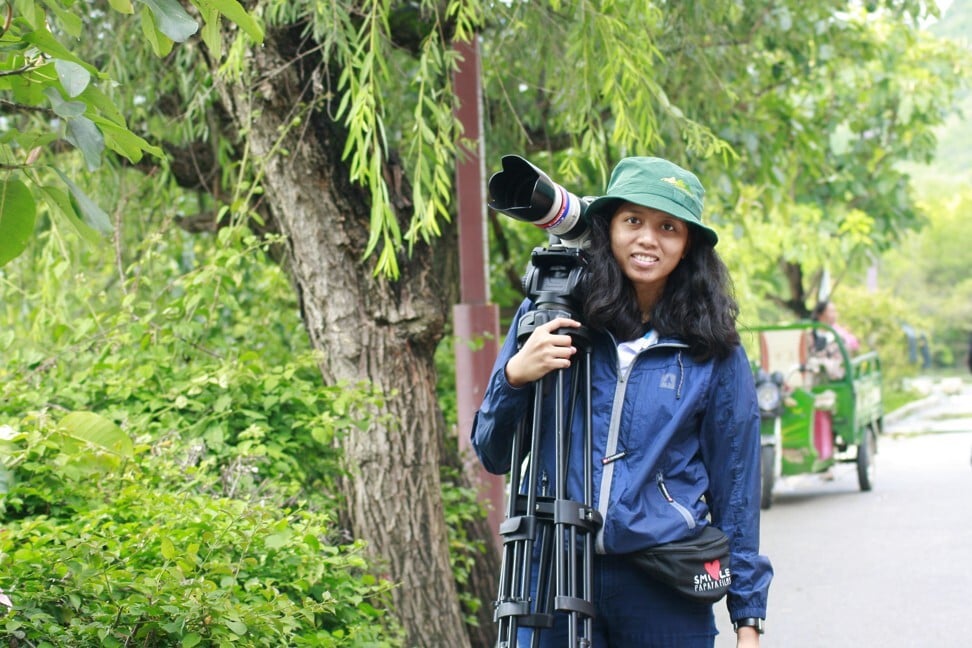
Freelance filmmaker Anita Reza Zein had grown used to jam-packed production schedules requiring her to put in long hours and run on little sleep. Until Covid-19 struck.
Today, the talented Indonesian is suddenly free. With five projects on hold and many more potentially cancelled, she now spends her time working on a personal project, doing research for her work and occasionally going for a ride on a bicycle.
“I feel calm and patient although I’m jobless. Maybe because it’s still the third week [of social distancing] and I still have enough savings from my previous work,” said the 26-year-old, who is from Yogyakarta. “But I imagine life will become tougher in the next few months if the situation gets worse.”
Like her, millions of youths are now part of a job market in Southeast Asia that has been ravaged by the coronavirus pandemic. They are the unlucky cohort of 2020 whose fortunes have changed so drastically, so quickly.
Freelance filmmaker Anita Reza Zein now spends most of her time at home as her projects have all been frozen due to the spread of Covid-19. Photo: Anita Reza Zein
Just three months ago, many eager graduates were about to partake in a strong economy and possibly land decent pay cheques.
Today, job offers are being withdrawn and hiring halted, leading to a spike in regional youth unemployment in the short term. In the long term, the effects on the Covid-19 cohort could lead to wider social and political problems.
JOB MARKETS SHUT
The virus’ impact on economies and the job market in the region has been swift and devastating. Borders have been slammed shut, workers ordered to stay at home, and thousands of companies closed every week.
The biggest problem is the lack of certainty about how long this will last – the longer the governments keep their countries on lockdown, the worse the economic impact.
In Indonesia, for example, the virus has caused almost 2.8 million people to lose their jobs, according to the Manpower Ministry and the Workers Social Security Agency. Likewise, in Malaysia, an estimated 2.4 million people are expected to lose their jobs, going by data from the Malaysian Institute of Economic Research (MIER).
is bracing itself for a 5.3 per cent contraction in GDP for the full year, the worst since the Asian financial crisis in 1997.
“We think about seven million jobs have been lost already, and the figure will hit 10 million if the outbreak drags on for two to three more months,” said Kalin Sarasin, council member and head of the Thai Chamber of Commerce.
Lockdown for 34 million people in capital Jakarta as Indonesia fights surge in coronavirus deaths
For young jobseekers, the outbreak of the Covid-19 pandemic could hurt even more, with companies unwilling to open up new jobs for them.
“My clients who were open to fresh graduates previously have realigned searches [for candidates] who have at least one year of experience, as it’s a lot faster for someone with experience to scale up quickly and contribute,” said Joanne Pek, a recruiter at Cornerstone Global Partners’ Singapore office.
For many small and medium-sized enterprises (SMEs) such as Singapore-based restaurant chain The Soup Spoon, saving jobs – rather than recruiting – is the priority.
“We don’t want to let anyone go during this period, so we’re focused on protecting jobs,” said co-founder and director Benedict Leow, who employs some 250 workers.
THE COVID-19 COHORT
The looming economic downturn could have distinct consequences for the Class of 2020 that will outlast the economic downturn itself.
For one thing, the paucity of jobs could result in the Covid-19 cohort becoming a “lost generation” of sorts, said Achim Schmillen, a senior economist at the World Bank Social Protection and Jobs Global Practice.
“Research from around the globe shows that graduating in a recession can have significant and long-lasting impacts that can affect the entire career. In particular, it can lead to large initial earnings losses which only slowly recede over time,” he said.
Coronavirus: why there’s no quick fix for a Covid-19 vaccine
12 Apr 2020
Economics professor Jeff Borland of the University of Melbourne said that international studies showed that what happened to people when they first entered the labour market would affect them for the rest of their working lives.
“Many international studies have shown that trying to move into employment during a major economic downturn cuts the probability of employment and future earnings for a decade or more.
“Why this occurs is less well-established. Reasons suggested include being forced to take lower-quality jobs, losing skills and losing psychological well-being,” he said in a piece published on The Conversation website.
Malaysia sets up Covid-19 test zones in the capital to hunt for ‘hidden’ coronavirus cases
This could create “lasting scarring” on the graduates this year, said labour economist Walter Theseira.
“If their careers start badly, it would affect their earnings for a number of years because they would lack the same experience as peers who started in a more secure position,” the associate professor of economics at Singapore University of Social Sciences said.
Shrinking salaries and the downsizing of companies mean that graduates might have to seek out professions outside their areas of study to survive, said Grace Lee Hooi Yean, head of the Economics Department at Monash University, Malaysia.
She said youth unemployment in the country, which stands at 11.67 per cent, could rise sharply.
“This looming crisis could trap a generation of educated and capable youth in a limbo of unmet expectations and lasting vulnerability if the graduates are not ready to face reality and adapt to the new challenges,” she said.
How long will a coronavirus vaccine take? A Q&A with Jerome Kim
12 Apr 2020
This is fast becoming the reality for final-year medical student Rebecca K. Somasundaram, who has been left without a job due to the pandemic.
After being offered a residency programme at a top specialist hospital in Kuala Lumpur, she was notified a month ago that her placement had been made void until further notice. This has thrown the 24-year-old’s plans into disarray as she was hoping to enter the workforce soon to pay off her student debts. Her plans to get married next year have also been put on hold temporarily.
“I am in constant talks with the hospital to see if there is any way I can join them soon but seeing how things are unfolding so quickly, I am slowly losing hope,” she said.
Over in Indonesia, the pandemic will trigger job losses on a national scale. To combat this, the government would need to introduce strong fiscal measures and beef up its social protection policies, said the country’s former minister of finance Muhamad Chatib Basri.
Many people on lower incomes tend to work in the extraction industry, such as mining and palm oil, and these are the first industries hit due to the global slowdown.
“The rich will be able to brave the storm, but the poor have no means to do so,” he said.
Singapore migrant workers under quarantine as coronavirus hits dormitories
SPECTRE OF 1997
With partial lockdowns imposed in the capital of Jakarta, more needs to be done to ensure that vulnerable citizens have access to food and financial support.
Without government intervention, economic woes could soon translate into political instability, a scenario last seen in the Asian financial crisis.
In 1997, waves of discontent sparked racial riots in Indonesia that toppled the country’s long-time strongman Suharto, while in Thailand a political crisis created the conditions for populist leader Thaksin Shinawatra to rise.
Rising discontent could have serious implications at the ballot boxes, warned Basri, who said young voters were a key voting bloc for President Joko “Jokowi” Widodo.
Coronavirus: food security, Asia’s next battle in a post-Covid world
6 Apr 2020
In last year’s general elections, Jokowi proved a hit among the lower-educated youth who had benefited from the creation of largely unskilled jobs during his tenure.
“With more young people expected to become unemployed in the coming months, things will only get worse from here,” said Basri, who added that the country’s youth unemployment stood at almost 20 per cent in 2018.
Indonesia, which has 268 million people and is Southeast Asia’s largest economy, had 133 million workers as of last August, according to official data.
Close to 10 per cent or about 12.27 million are university graduates but among this group, about 5.67 per cent or some 730,000 were unemployed. This was higher than the country’s overall unemployment rate at that time, which was 5.28 per cent.
‘Ghosts’ deployed to scare Indonesians into staying home to slow spread of the coronavirus
GETTING IT RIGHT
Economists say, however, that all is not lost. Much will depend on policy and how governments focus on battling the virus on the public health and economic fronts. They point to Singapore, which has launched a robust response to the crisis.
On April 6, the Singapore government announced its third budget in two months to help companies and households tide over the crisis. In all, Singapore’s total stimulus package, which aims to save jobs and keep funds flowing to companies, will cost the government a massive S$59.9 billion (US$42 billion).
The Singapore government was also preparing for a labour market that would be reluctant to hire fresh graduates on a full-time basis, said Theseira.
“There are plans to implement large-scale subsidised traineeships, which may be more palatable to companies which are worried about taking on permanent headcount this year,” he noted. “As the economic situation improves, they can be converted to permanent positions.”
The next coronavirus: how a biotech boom is boosting Asian defences
4 Mar 2020
While jobs were being created for fresh graduates, many would still have to temper their expectations, such as taking jobs with lower starting pay, said DBS Bank economist Irvin Seah.
“There are still some jobs to go around. There are still some companies that may need workers. But they will need to be realistic,” he said.
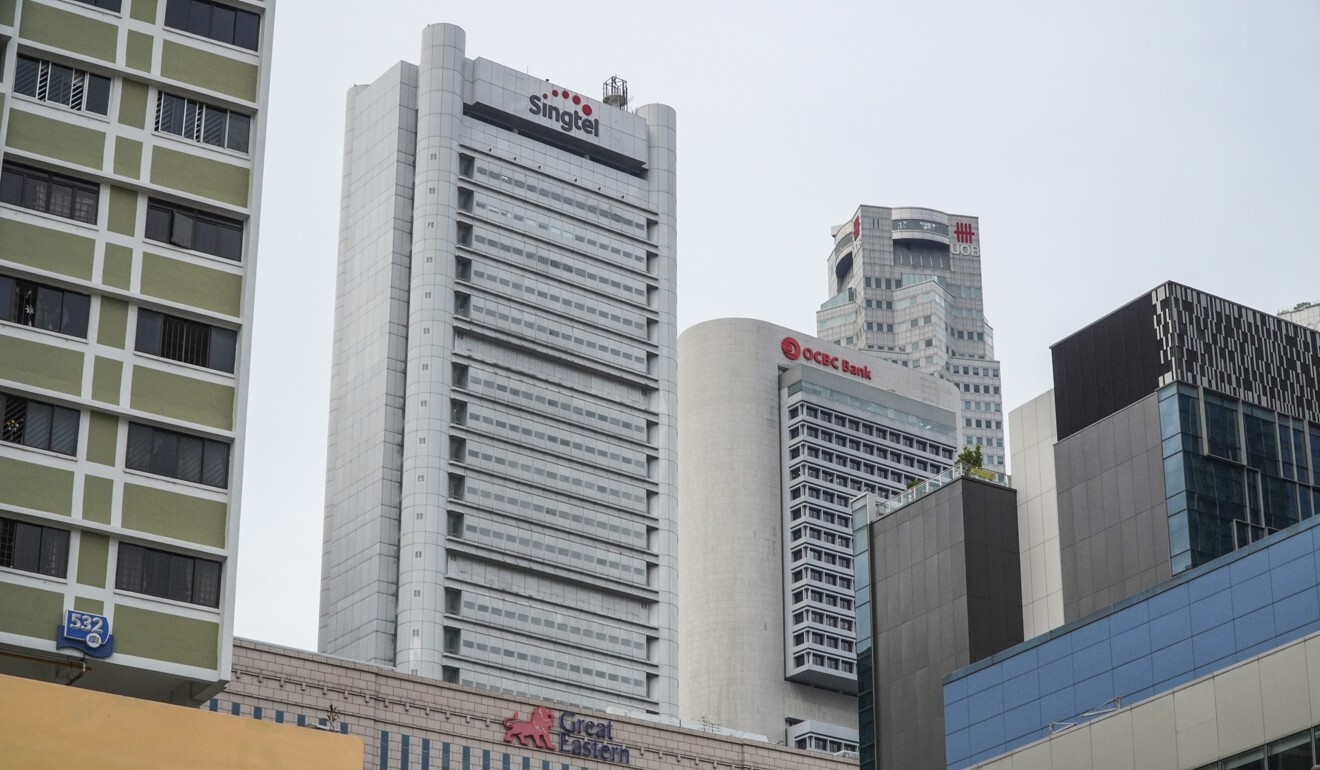
For instance, despite the downturn, Singapore telco Singtel expects to recruit over 300 fresh graduates for various permanent positions this year, according to Aileen Tan, the company’s Group Chief Human Resources Officer. Many of the new hires will be in new growth areas such as the Internet of Things, analytics and cloud.
The Singtel Comcentre building in Singapore. Photo: Roy Issa
Other companies that continue to hire include those in tech across the region, including e-commerce giant Shopee, food-delivery service Foodpanda and Amazon.
In Australia, Borland suggested helping young people to remain plugged into the labour market through government-funded paid internships, or even offering them loans to go for further studies and prevent a spell of unemployment.
For now, while some young jobseekers are taking a wait-and-see approach, the reality is hitting hard for others.
Final-year National University of Singapore student H.P. Tan had all but secured a job at a public relations firm last month, after three rounds of interviews.
The Faculty of Arts and Social Sciences undergraduate was rejected via an email from the agency, which said that they could no longer hire after Covid-19 started to drastically cut business.
“When I got that rejection, it was a turning point. I didn’t think I would be directly impacted,” said the 23-year-old.
“I also applied to a few other agencies but the response has been slow, so I am now freaking out at the possibility of not being able to find a job after graduation.”
China’s economy shrank for the first time in decades in the first quarter of the year, as the virus forced factories and businesses to close.
The world’s second biggest economy contracted 6.8% according to official data released on Friday.
The financial toll the coronavirus is having on the Chinese economy will be a huge concern to other countries.
China is an economic powerhouse as a major consumer and producer of goods and services.
This is the first time China has seen its economy shrink in the first three months of the year since it started recording quarterly figures in 1992.
“The GDP contraction in January-March will translate into permanent income losses, reflected in bankruptcies across small companies and job losses,” said Yue Su at the Economist Intelligence Unit.
Last year, China saw healthy economic growth of 6.4% in the first quarter, a period when it was locked in a trade war with the US.
In the last two decades, China has seen average economic growth of around 9% a year, although experts have regularly questioned the accuracy of its economic data.
Its economy had ground to a halt during the first three months of the year as it introduced large-scale shutdowns and quarantines to prevent the virus spread in late January.
As a result, economists had expected bleak figures, but the official data comes in slightly worse than expected.
Among other key figures released in Friday’s report:
Factory output was down 1.1% for March as China slowly starts manufacturing again.
Retail sales plummeted 15.8% last month as many of shoppers stayed at home.
Unemployment hit 5.9% in March, slightly better than February’s all-time high of 6.2%.
Analysis: A 6% expansion wiped out
Robin Brant, BBC News, Shanghai
The huge decline shows the profound impact that the virus outbreak, and the government’s draconian reaction to it, had on the world’s second largest economy. It wipes out the 6% expansion in China’s economy recorded in the last set of figures at the end of last year.
Beijing has signalled a significant economic stimulus is on the way as it tries to stabilise its economy and recover. Earlier this week the official mouthpiece of the ruling Communist Party, the People’s Daily, reported it would “expand domestic demand”.
But the slowdown in the rest of the global economy presents a significant problem as exports still play a major role in China’s economy. If it comes this will not be a quick recovery.
On Thursday the International Monetary Fund forecast China’s economy would avoid a recession but grow by just 1.2% this year. Job figures released recently showed the official government unemployment figure had risen sharply, with the number working in companies linked to export trade falling the most.
China has unveiled a range of financial support measures to cushion the impact of the slowdown, but not on the same scale as other major economies.
“We don’t expect large stimulus, given that that remains unpopular in Beijing. Instead, we think policymakers will accept low growth this year, given the prospects for a better 2021,” said Louis Kuijs, an analyst with Oxford Economics.
Since March, China has slowly started letting factories resume production and letting businesses reopen, but this is a gradual process to return to pre-lockdown levels.
Media caption Why does China’s economy matter to you?
China relies heavily on its factories and manufacturing plants for economic growth, and has been dubbed “the world’s factory”.
Stock markets in the region showed mixed reaction to the Chinese economic data, with China’s benchmark Shanghai Composite index up 0.9%.
TAIPEI (Reuters) – Taiwan waded into the hotly contested politics of the Pacific on Wednesday, donating face masks and thermal cameras to its four diplomatic allies there to combat the coronavirus in a region where China is challenging traditional power of the United States.
The small developing nations lie in the highly strategic waters of the Pacific, dominated since World War Two by the United States and its friends, who have been concerned over China’s moves to expand its footprint there.
Democratic Taiwan has faced intense pressure from China, which claims the island as its territory with no right to state-to-state ties, and is bent on wooing away its few allies.
Taiwan has only 15 formal allies left worldwide after losing two Pacific nations, the Solomon Islands and Kiribati, to China in September.
Beijing has ramped up its diplomatic push into the Pacific, pledging virus aid and medical advice.
In its own aid programme, Taiwan has donated 16 million masks to countries around the world.
“We are a very small country, so it’s easier for us to work with Taiwan than mainland China,” Neijon Edwards, the Marshall Islands ambassador to Taiwan, told Reuters at the donation ceremony in Taipei.
China has been too overbearing, she added.
“It’s pressing too much, and it’s been trying to come to the Marshall Islands, several times, but up to this time we haven’t even opened the door yet.”
While the masks presented at the ceremony are going to Taiwan’s Pacific allies, all its 15 global allies are sharing the thermal cameras.
“Today’s ceremony once again shows that Taiwan is taking concrete actions not only to safeguard the health of Taiwanese people but also to contribute to global efforts to contain COVID-19,” said Foreign Minister Joseph Wu.
Though Pacific Island states offer little economically to either China and Taiwan, their support is valued in global forums such as the United Nations and as China seeks to isolate Taiwan.
China has offered to help developing countries including those of the Pacific, and many see Chinese lending as the best bet to develop their economies.
But critics say Chinese loans can lead countries into a “debt trap”, charges China has angrily rejected.
The debt issue was a serious problem and would only lead to the spread of Chinese influence regionwide, said Jarden Kephas, the ambassador of Nauru.
“They will end up dominating or having a lot of say in those countries because of the amount of debt,” he told Reuters, wondering how the money could ever be repaid. “We are not rich countries.”
SRINAGAR, India (Reuters) – Shelling across the border between India and Pakistan killed three Indian civilians and wounded two Pakistani civilians, military officials from the two sides said on Sunday.
Indian and Pakistani troops exchanged mortar and artillery shelling along the de facto border known as the Line of Control (LoC) that divides the disputed Kashmir region. The sporadic exchanges began on Saturday and continued into Sunday.
Both countries claim the region in full, but rule only parts, and often accuse each other of breaching a 2003 ceasefire pact by shelling and firing across the LoC.
Pakistani troops targeted civilians living near the LoC, killing three people, including a child and a woman, and wounding five, Vijay Kumar, police chief of Kashmir, told Reuters.
Pakistan blames Indian troops for ceasefire violations and targeting civilians in Kashmir.
Two Pakistani civilians were injured due to shelling from India, Major-General Babar Iftikhar of the public relations wing of the Pakistan Army, said in a Tweet.
Tension between the two countries was renewed when New Delhi withdrew the autonomy of the Kashmir region in 2019 and split it into territories federally administered by India. Until then, it had had autonomy over all matters except defence, communications and foreign affairs.
India accuses its neighbour of training and then sending militants across the border to launch attacks and support a separatist movement against Indian rule.
Pakistan denies giving material support to militants in Kashmir but says it provides moral and diplomatic backing for the self-determination of Kashmiri people.


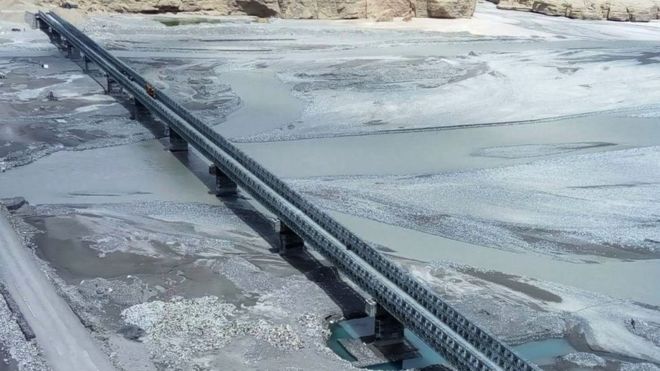 Image copyright PRESS INFORMATION BUREAU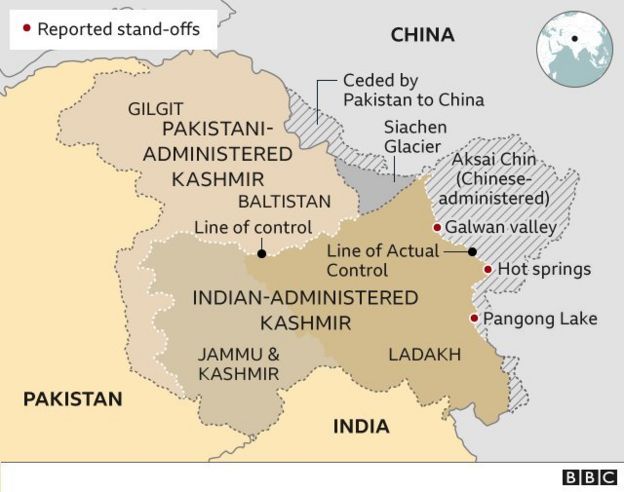
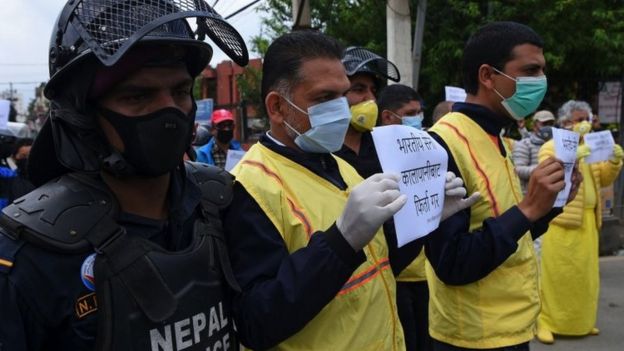 Image copyright AFP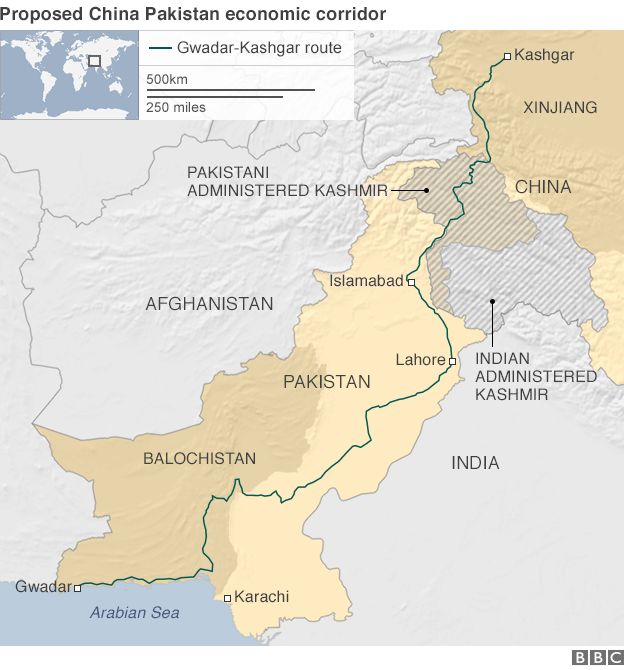
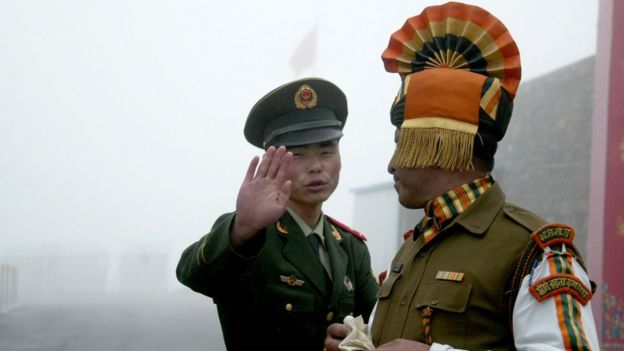 Image copyright GETTY IMAGES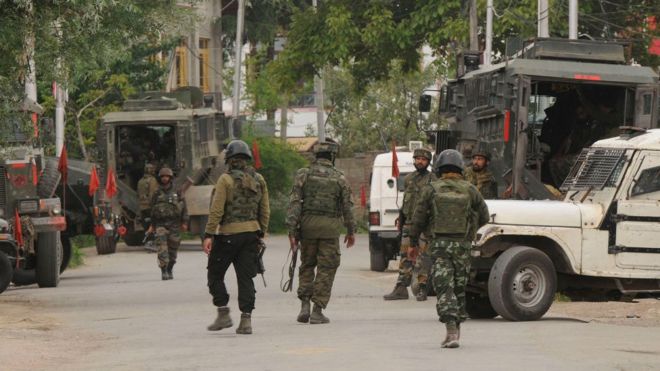




 CHINDIA ALERT: You'll be living in their world, very soon