Chindia Alert: You’ll be Living in their World Very Soon
aims to alert you to the threats and opportunities that China and India present. China and India require serious attention; case of ‘hidden dragon and crouching tiger’.
Without this attention, governments, businesses and, indeed, individuals may find themselves at a great disadvantage sooner rather than later.
The POSTs (front webpages) are mainly 'cuttings' from reliable sources, updated continuously.
The PAGEs (see Tabs, above) attempt to make the information more meaningful by putting some structure to the information we have researched and assembled since 2006.
People’s Liberation Army has officially recorded no infections but disease fears have delayed recruitment, training and operations
Analysts say Sars experience guided military’s prompt response, but combat effectiveness has been affected
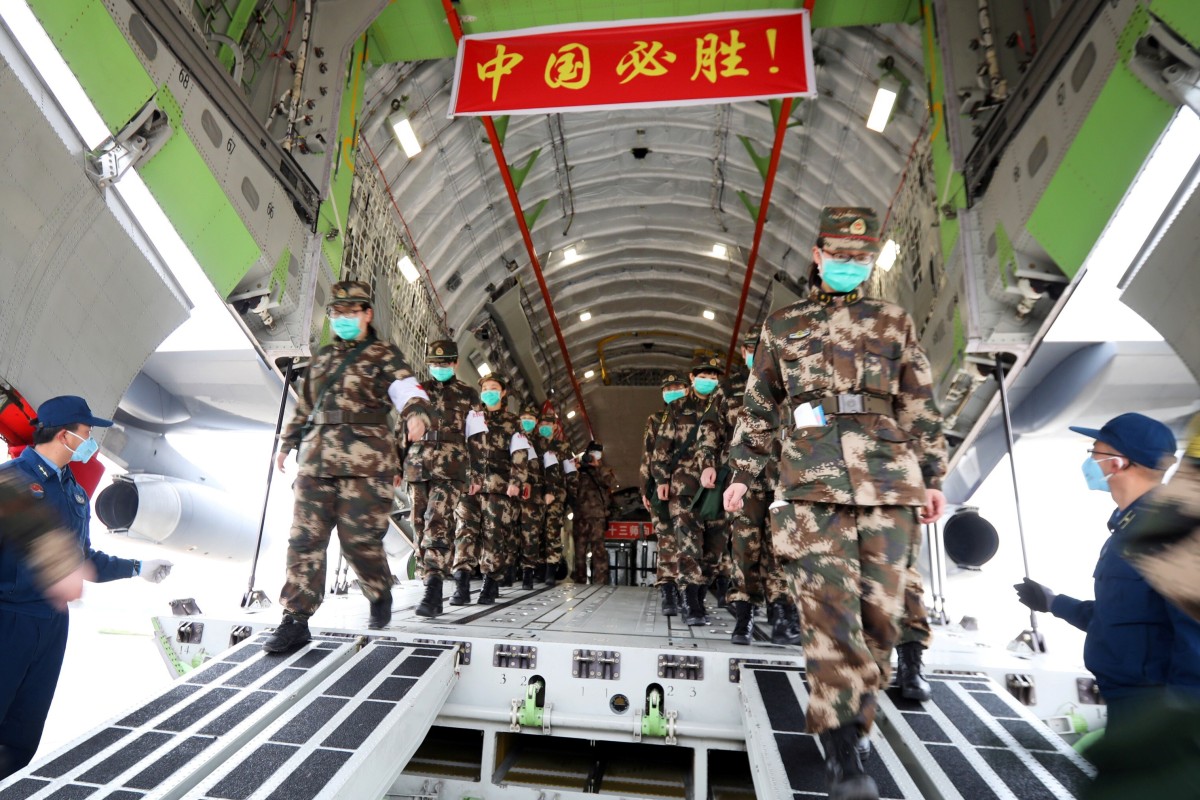
Chinese military medical personnel arriving in Wuhan in February to assist with the coronavirus outbreak response to the February. Photo: Reuters
China’s military may have been spared any coronavirus infections, but the global health crisis has slowed the progress of Chinese President Xi Jinping’s plan to transform the People’s Liberation Army into a modern fighting force capable of long-range power-projecting operations, experts say.
According to China’s defence ministry, the world’s largest armed force – with about 2.3 million personnel – has had zero confirmed cases of Covid-19. In contrast, the US and Russian militaries, ranked second- and third-largest in the world, have reported more than 4,000 and 1,000 respectively.
But the PLA has been affected in other ways by the disease, which was first reported in Wuhan in December before going on to infect 3.9 million people around the world to date.
Safety concerns delayed its annual spring recruitment programme – it has been rescheduled for August – while the PLA Navy was forced to change its training arrangements, switching to classroom study of military theory and tactics, according to Xinhua.
“The PLA is still a conscription army and, given its large turnover of soldiers every year and the late recruitment and training plan this year, the coronavirus pandemic has already affected combat effectiveness,” said Adam Ni, director of the China Policy Centre, an independent, non-profit research organisation based in Canberra, Australia.
China’s military budget will still rise despite coronavirus, experts predict
3 May 2020
The navy’s operations, in particular, would have been affected, according to Charlie Lyons Jones, a researcher from the Australian Strategic Policy Institute’s defence and strategy programme.
“The Chinese navy, short of highly effective disease control measures, is unlikely to avoid similar outbreaks of the novel coronavirus on board its warships,” he said.
“Therefore, even if the PLA Navy currently has zero personnel infected by the novel coronavirus, its position as a navy that can operate effectively in a period of higher-than-normal tension remains precarious at best,” Jones said. He also questioned Beijing’s claims that the military was virus-free.
“The PLA played an important role in China’s response to the coronavirus outbreak in Wuhan … The idea that none of these personnel working on the front lines in Wuhan became infected by the novel coronavirus would be inconsistent with the experiences of countries from around the world,” he said.
More than 4,000 military medical workers were sent to Wuhan as part of China’s effort to contain the outbreak at ground zero – which included the rapid-built emergency field facility, the Huoshenshan hospital – and their efforts were highlighted in a documentary screened recently by state broadcaster CCTV.
China opens coronavirus hospital built in 10 days
At the time, rumours were rampant that the Chinese military had been affected by the coronavirus, fuelled by a report on February 17 by the official PLA Daily that some soldiers had been placed in quarantine and Yu Qiusong, captain of the Changzhou type 054A frigate, was isolating in a guest house. The news report did not mention why the personnel were in quarantine.
But analysts said that whether the official numbers were accurate, the PLA’s closed management, fast response and past experience with severe acute respiratory syndrome (Sars) gave China’s military an advantage in keeping the coronavirus at bay.
Zhou Chenming, a Beijing-based military observer, said a key reason for the less serious hit to the PLA compared to other forces was its speed in recognising the severity of the situation.
“What’s more, the PLA has its own logistic support system that can help minimise its contact with the outside world, thus reducing the possibility of contracting the virus,” he said.
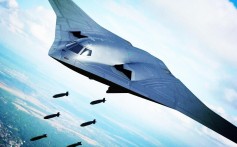
China’s long-range stealth bomber could make its debut this year
4 May 2020
According to Xinhua, the PLA’s Centre for Disease Control and Prevention drew up an emergency response plan and mobilisation arrangements on January 20, the same day Xi issued an instruction to the public that the virus must be “resolutely contained”.
Timothy Heath, a senior international defence research analyst with the Rand Corporation, a US think tank, said China’s military had benefited from its less international role, compared to US forces.
“The US is a globally distributed force while the Chinese military largely operates on the mainland. The US thus faces challenges in containing the disease that the Chinese military does not have to face … and the US military has a large range of missions and tasks it carries out to counter threats to its allies and partners, as well as to US security. This complicates efforts by the US military to carry out disease control measures,” he said.
People work at a construction site of a utility tunnel in Wuhan, central China’s Hubei Province, April 30, 2020. (Xinhua/Xiao Yijiu)
BEIJING, May 1 (Xinhua) — China is getting the world’s largest workforce back to work as the nationwide battle against COVID-19 has secured major strategic achievements.
The unprecedented fight has nurtured new trends in the workplace. For example, more attention is being paid to public health and e-commerce to boost consumption and emerging sectors brought by new applications based on the country’s rapid new infrastructure development of 5G networks and data centers.
In this aerial photo taken on April 29, 2020, representatives of frontline health workers fighting COVID-19 attend a bell-ringing ceremony at the Yellow Crane Tower, or Huanghelou, a landmark in Wuhan, central China’s Hubei Province. (Xinhua/Xiao Yijiu)
ANGELS OF PUBLIC HEALTH
Ye Man, head nurse of gastrointestinal department of Hubei General Hospital East District, one of the five remaining COVID-19 designated hospitals in Wuhan, is taking her first weeklong vacation since January.
The 34-year-old mother of two started to take a week off on Monday, one day after her hospital cleared all remaining confirmed COVID-19 patients. The nine ICU wards in her hospital had been kept occupied over the past several months.
Friday marked International Workers’ Day, and the start of China’s five-day public holiday. Ye said she planned to visit urban parks with her family during the holiday.
At her busiest point, she and her colleagues took care of a ward filled with 40 COVID-19 patients.
“It was a really tough time,” she recalled. She had to wear a protective gown and a mask for nine hours a day and be separated from her family to avoid possible cross-infections.
Wuhan, capital of central China’s Hubei Province and once hard hit by COVID-19, cleared all confirmed cases in hospitals on April 26. Over 42,000 medical workers mobilized nationwide to aid Hubei have contributed to achieving a decisive outcome in the fight to defend Hubei and Wuhan.
In an inspection tour to Wuhan on March 10, President Xi Jinping, also general secretary of the Communist Party of China Central Committee and chairman of the Central Military Commission, lauded medical workers as “the most beautiful angels” and “messengers of light and hope.”
To reward brave and dedicated medics, major tourist sites in Hubei are offering free entry to medical staff over the following two years.
Chinese President Xi Jinping, also general secretary of the Communist Party of China Central Committee and chairman of the Central Military Commission, learns about development of the black fungus industry in Jinmi Village of Xiaoling Township in Zhashui County, Shangluo City, northwest China’s Shaanxi Province, April 20, 2020. (Xinhua/Xie Huanchi)
LIVESTREAMING ANCHORS
“We have a new batch of supplies today. Those who did not get the goods should hurry to buy now,” said Li Xuying, a livestreaming anchorwoman selling agaric mushrooms in Zhashui, a small county deep in the Qinling Mountains in northwest China’s Shaanxi Province.
Li has been prepared for a boom of online shopping in the holiday, because online buyers rushed to her livestreaming website to place orders, after Xi inspected the county and chatted with her in the village of Jinmi during a recent tour to Shaanxi.
“I used to sell goods worth about 50,000 yuan (7,070 U.S. dollars) on average after a six-hour livestreaming session. Now the sales are 10 times that,” she said.
Li was one of the 10 sales staff sent by the local agricultural e-commerce firm to Chinese e-commerce platform Taobao’s headquarters for livestreaming training. She said livestreaming is effective in bridging buyers and farmers, through which viewers can watch planting and harvesting online.
With the number of netizens in China reaching 904 million in March, e-commerce has been one of the popular means of promoting the sale of farm produce and helping farmers shake off poverty. Despite the impact of COVID-19, the country is determined to eradicate absolute poverty by the end of this year.
Workers work at the construction site of a 5G base station at Chongqing Hi-tech Zone in Chongqing, southwest China, April 15, 2020. (Xinhua/Wang Quanchao)
HI-TECH WORKERS IN “NEW INFRASTRUCTURE” BUILDING
As an elasticity calculation engineer of Alibaba Cloud, Zhao Kun and his colleagues always stay on alert for high data flow, for example, brought by the anticipated online shopping spike during the holiday.
“The profession, which may sound obscure, is actually closely connected to everyone’s life, as cloud computing is the infrastructure supporting high-tech applications of artificial intelligence and blockchain,” said Zhao.
The Chinese leadership has underscored expediting “new infrastructure” development to boost industrial and consumption upgrading and catalyze new growth drivers.
Seizing the opportunities of industrial digitization and digital industrialization, China needs to expedite the construction of “new infrastructure” projects such as 5G networks and data centers, and deploy strategic emerging sectors and industries of the future including the digital economy, life health services and new materials, President Xi has said.
During the epidemic, Zhao and his colleagues expanded more than 100,000 cloud servers to ensure the stable operation of “cloud classrooms” and “cloud offices” for millions of people working and studying from home.
In the “new infrastructure” building, people like Zhao contribute to constructing the virtual infrastructure of an ecosystem, which enables e-commerce, e-payment, online teaching and the digital transformation of manufacturing and supply chain management.
In early April, China released a plan on promoting the transformation of enterprises toward digitalization and intelligence by further expanding the application of cloud and data technologies, to nurture new business models of the digital economy.
BEIJING, April 28 (Xinhua) — China has achieved much progress in environmental protection and taken the lead in green development in recent years.
The efforts have exemplified Chinese President Xi Jinping’s proposal of “working together for a green and better future for all” made a year ago in his speech at the opening ceremony of the International Horticultural Exhibition 2019 Beijing.
In the keynote speech, Xi proposed a five-point initiative on promoting green development, namely pursuing harmony between man and nature, pursuing the prosperity based on green development, fostering a passion for nature-caring lifestyle, pursuing a scientific spirit in ecological governance, and joining hands to tackle environmental challenges.
China’s hard work on environment protection has paid off.
The ecological environment has improved significantly. People are enjoying more days of blue sky, cleaner water, and fertile land.
China has achieved the goal of zero growth of desertified land by 2030 set by the United Nations ahead of time. Besides, forest stock volume increased by 4.56 billion cubic meters compared with that of 2005.
Carbon dioxide emissions per unit of GDP in 2018 fell by 45.8 percent compared with that of 2005, exceeding the target set for the year.
After more than 30 years of hard work, the seventh largest desert in China, the Kubuqi Desert in Inner Mongolia Autonomous Region, once known as the “sea of death” difficult for birds to fly across, has turned into a green valley.
In January 2020, in a letter in reply to the student representatives of the Global Alliance of Universities on Climate, the Chinese president mentioned his thoughts about ecological civilization in his youth.
“Over four decades ago, I lived and worked for many years in a small village on the Loess Plateau in western China. Back then, the ecology and environment there was seriously damaged due to over-development and the local people were trapped in poverty as a result,” Xi wrote.
“This experience taught me that man and nature are a community of life and that the damage done to nature will ultimately hurt mankind,” said Xi.
China’s progress and achievements are recognized worldwide.
The ecological civilization and green development advocated by China are actually an endeavor to find a way to balance economic development and environmental protection, said John Cobb, Jr., the founding president of the Institute for Postmodern Development of China and member of the American Academy of Arts and Sciences.
Noting that the endeavor is a remarkable exploration, he expressed his hope that it will succeed.
China is on the right path in dealing with global climate change and achieving sustainable development, said Borge Brende, president of the World Economic Forum.
In addition to making efforts at home, China has also rolled out a series of measures to support the global combat against climate change.
In September 2015, ahead of the Paris climate change conference, Xi pledged a 20-billion-yuan (3-billion-U.S. dollars) China South-South Climate Cooperation Fund, which was dedicated to help other developing countries combat climate change.
China has also been fulfilling the obligations of the United Nations Framework Convention on Climate Change and the Paris Agreement, and achieved the goal of its intended nationally determined contributions submitted to the secretariat of the Climate Change Convention as scheduled.
UN Secretary-General Antonio Guterres expressed his appreciation for China’s important contributions to addressing the climate change and building a green “Belt and Road,” and said he expects China to continue to play a leading role in addressing the climate change and other issues.
“Lucid waters and lush mountains are invaluable assets,” a concept put forward by Xi in 2005 when he visited Yucun Village in southeast China’s Zhejiang Province as the party chief of the province, has become the motto of the Lao Ministry of Natural Resources and Environment.
In March 2020, when Xi returned to Yucun, he said that economic development should not be achieved at the expense of the ecological environment. To protect the ecological environment is to develop the productive forces, he said.
The history of civilizations shows that the rise or fall of a civilization is closely tied to its relationship with nature, Xi said at the International Horticultural Exhibition last year.
Only by joining hands can the humankind advance a global ecological civilization and march towards the bright future of building a community with a shared future for mankind.
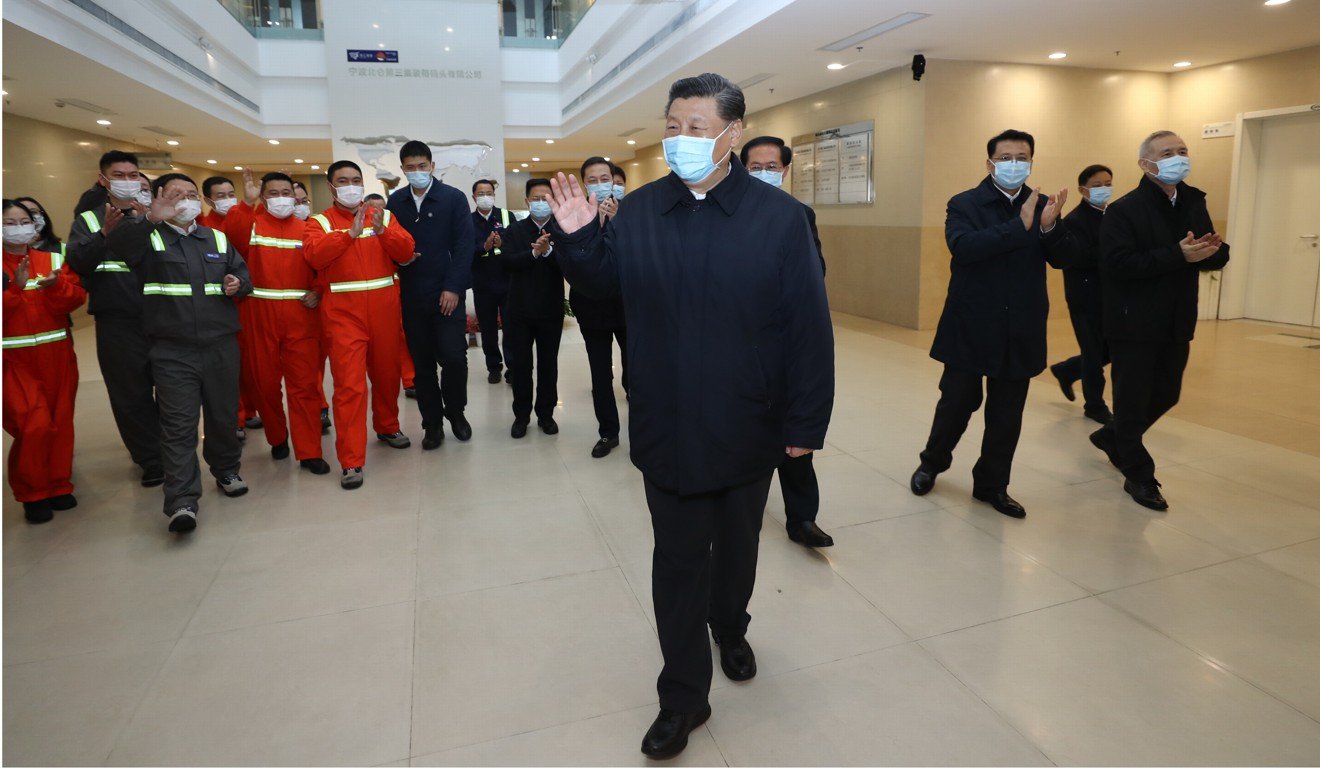
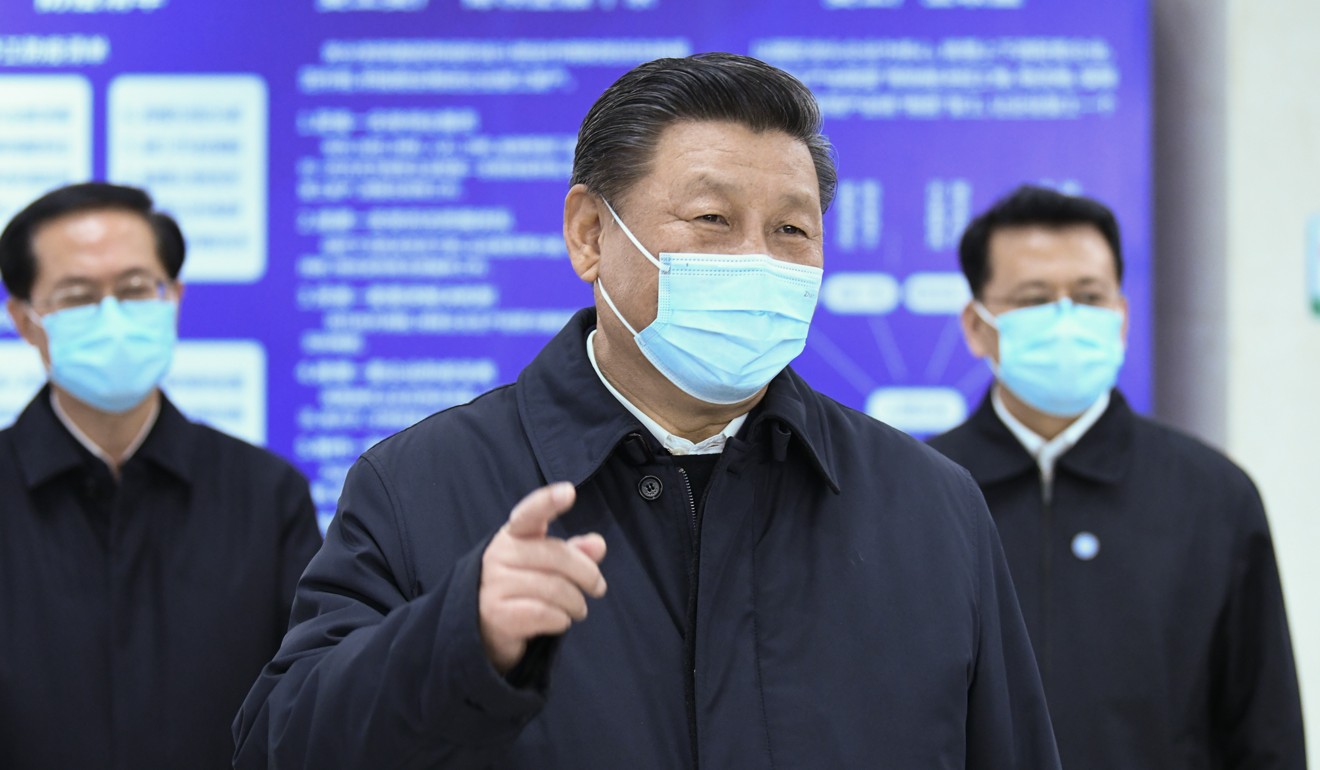
visited the industrial powerhouse of Zhejiang province on Sunday in a move state media described as a clear message the country was ready to get the economy back on track amid the “new normal” of dealing with the coronavirus.
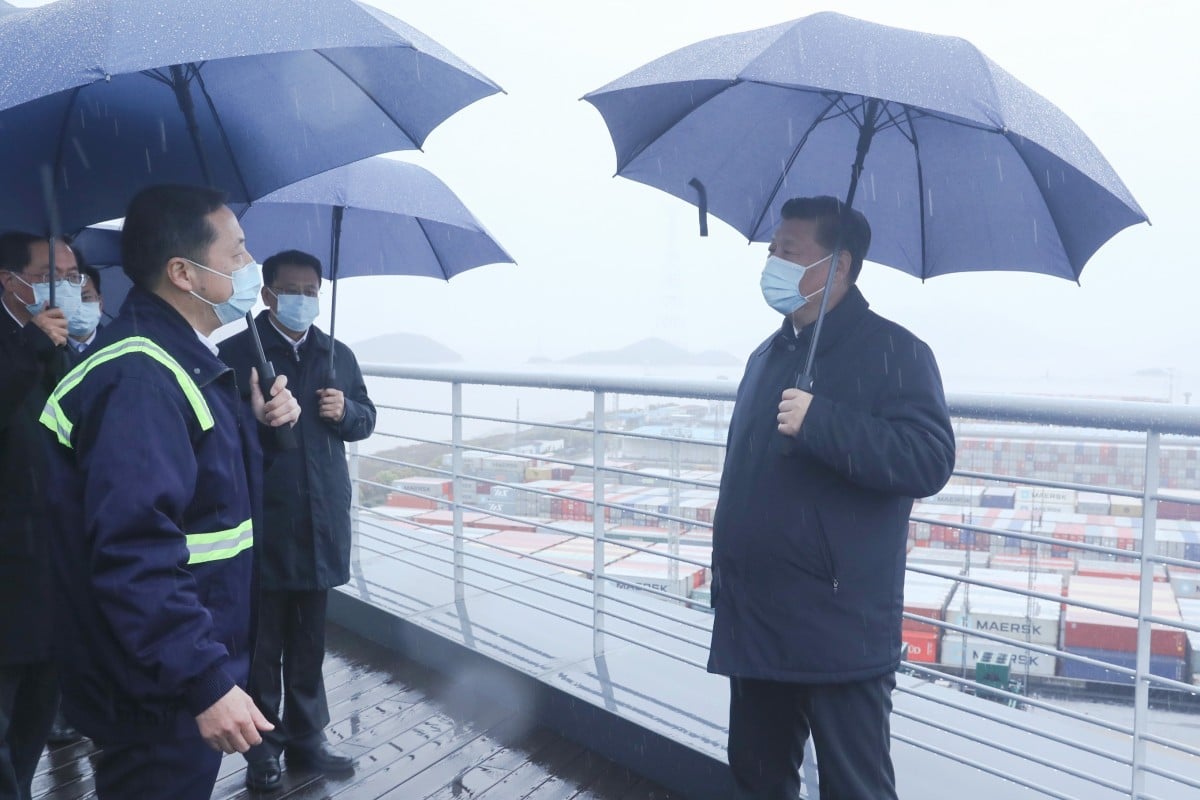
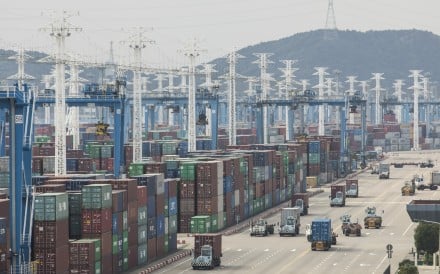
The trip, to Ningbo – one of the world’s busiest ports and a trade hub for eastern China – was Xi’s first outside Beijing since he visited Wuhan, the initial epicentre of the Covid-19 outbreak, earlier in the month.
As well as a visiting the port, he spoke to workers at an industrial zone for car part manufacturers, where he learned about the latest efforts to restart production, Xinhua said in a brief report.
The visit came after two months of almost total lockdown in many parts of the country that disrupted businesses, transport and people’s daily lives, and ground the economy to a near standstill.
While local transmissions of the coronavirus in China appear to be under control, Beijing has implemented strict measures to prevent imported cases, including slashing international flights and banning most foreigners from entering the country.
In a separate report, Xinhua said Xi’s visit sent “a clear message” that China was resuming its industrial production and social activities, and described the fight against the coronavirus as the “new normal”.
Reviving the economy and battling a deadly disease were Xi’s “two tough battles”, it said.
Xi’s choice of destination was a clear message that restarting the economy is a top priority. Photo: Xinhua
Zhejiang is something of a power base for Xi, who spent nearly five years there during his climb through the ranks of the Communist Party.
One of the country’s biggest trading hubs, the province generated 3 trillion yuan (US$423.2 billion) in foreign trade last year, or more than 13 per cent of the national total, according to official figures.
“It’s a highly export-oriented economy … which has made it crucial not only to China’s development plan but also to safeguarding the stability of the global supply chain,” Xinhua said.
Observers said Xi’s visit was evidence of Beijing’s determination to get the economy back up and running as soon as possible.
Zhao Xijun, an economics professor at Renmin University, said Ningbo was a key part of the export economy and a base for many local and foreign entrepreneurs.
“It is a clear signal that China, after getting domestic infections under control, is now prioritising economic growth,” he said.
“It also shows the country will keep developing its economy and opening up its markets.”
But hopes of a quick recovery for the Chinese economy have been dashed by the spread of the coronavirus across Europe and the United States, causing a sharp decline in demand for Chinese goods.
Xi spent five years in Zhejiang while climbing the ranks of the Communist Party. Photo: Xinhua
In a meeting on Friday, the Communist Party’s Politburo said it would step up macroeconomic policy adjustments and pursue a more proactive fiscal policy while optimising measures to control the coronavirus to speed up the restoration of production, doing whatever it could to “minimise the losses caused by the epidemic”.
“China has successfully reopened much of its economy from the extremes of the coronavirus lockdown, but now faces a new problem: an impending collapse in demand for its exports as its customers go into lockdowns of their own,” Gavekal Dragnomics said in a research report.
“That shock to industry and manufacturing employment means that China will not enjoy the hoped-for V-shaped recovery in growth.”
NEW YORK (Reuters) – The number of U.S. coronavirus infections climbed above 82,000 on Thursday, surpassing the national tallies of China and Italy, as New York, New Orleans and other hot spots faced a surge in hospitalizations and looming shortages of supplies, staff and sick beds.
With medical facilities running low on ventilators and protective masks and hampered by limited diagnostic testing capacity, the U.S. death toll from COVID-19, the respiratory disease caused by the virus, rose beyond 1,200.
“Any scenario that is realistic will overwhelm the capacity of the healthcare system,” New York Governor Andrew Cuomo told a news conference. He described the state’s projected shortfall in ventilators – machines that support the respiration of people have cannot breathe on their own – as “astronomical.”
“It’s not like they have them sitting in the warehouse,” Cuomo added. “There is no stockpile available.”
RELATED COVERAGE
Trump to receive new coronavirus recommendations this weekend, plans Xi call
How many Americans have coronavirus? New Reuters poll might offer a hint
At least one New York City hospital, New York-Presbyterian/Columbia University Medical Center in Manhattan, has begun a trial of sharing single ventilators between two patients.
While New York was the coronavirus epicenter in the United States this week, the next big wave of infections appeared headed for Louisiana, where demand for ventilators has already doubled. In New Orleans, the state’s biggest city, Mardi Gras celebrations late last month are believed to have fueled the outbreak.
Louisiana Governor John Bel Edwards said New Orleans would be out of ventilators by April 2 and potentially out of bed space by April 7 “if we don’t flatten the infection curve soon.”
“It’s not conjecture, it’s not some flimsy theory,” Edwards told a press conference. “This is what is going to happen.”
About 80% of Louisiana’s intensive care patients are now on breathing machines, up from the normal rate of 30-40%, said Warner Thomas, chief executive of Ochsner Health System, the state’s hospital group.
Scarcities of protective masks, gloves, gowns and eyewear for doctors and nurses – reports abound of healthcare workers recycling old face masks, making their own or even using trash bags to shield themselves – have emerged as a national problem.
“Our nurses across the country do not have the personal protective equipment that is necessary to care for COVID patients, or any of their patients,” Bonnie Castillo, head of the largest U.S. nurses union, National Nurses United, told MSNBC.
In an ominous milestone for the United States as a whole, at least 82,153 people nationwide were infected as of Thursday, according to a Reuters tally from state and local public health agencies. China, where the global pandemic emerged late last year, had the second highest number of cases, 81,285, followed by Italy with 80,539.
At least 1,204 Americans have died from COVID-19, which has proven especially dangerous to the elderly and people with underlying chronic health conditions, Reuters’ tally showed.
MORE BEDS NEEDED
For New York state, Cuomo said a key goal was rapidly to expand the number of available hospital beds from 53,000 to 140,000.
New York hospitals were racing to comply with Cuomo’s directive to increase capacity by at least 50%. At Mount Sinai Hospital’s Upper East Side location, rooms were being constructed within an atrium to open up more space for beds.
At Elmhurst Hospital in New York’s borough of Queens, about a hundred people, many wearing masks with their hoods pulled up, lined up behind barriers outside the emergency room entrance, waiting to enter a tent to be screened for the coronavirus.
The city coroner’s office has posted refrigerated trucks outside Elmhurst and Bellevue Hospital to temporarily store bodies of the deceased.
Deborah White, vice chair of emergency medicine at Jack D. Weiler Hospital in the city’s Bronx borough, said 80% of its emergency room visits were patients with coronavirus-like symptoms.
A ventilator shortfall and surge in hospitalizations has already raised the prospect of rationing healthcare.
Asked about guidelines being drafted on how to allocate ventilators to patients in case of a shortage, New Jersey Governor Phil Murphy told reporters such bioethical discussions “haunted him” but were unavoidable.
Outside New York and New Orleans, other hot spots appeared to be emerging around the country, including Detroit.
Brandon Allen, 48, was buying groceries in Detroit for his 72-year-old mother, who has tested positive and was self-quarantining at home.
“It’s surreal,” Allen said. “People around me I know are dying. I know of a couple people who have died. I know a couple of people who are fighting for their lives. Everyday you hear of another person who has it.”
RECORD UNEMPLOYMENT CLAIMS
Desperate to slow virus transmissions by limiting physical contact among people, state and local governments have issued stay-at-home orders covering about half the U.S. population. A major side effect has been the strangulation of the economy, and a wave of layoffs.
The U.S. Labor Department reported Thursday the number of Americans filing claims for unemployment benefits last week soared to a record of nearly 3.28 million – almost five times the previous weekly peak of 695,000 during the 1982 recession.
Dr. Anthony Fauci, director of the U.S. National Institute of Allergy and Infectious Diseases, said warmer weather may help tamp down the U.S. outbreak as summer approaches, though the virus could re-emerge in the winter.
“We hope we get a respite as we get into April, May and June,” Fauci said on WNYC public radio.
Washington state Governor Jay Inslee said he may extend a stay-at-home order tentatively set to expire April 6, encouraged by what he called a “very modest improvement” in the Seattle area.
Washington experienced the first major U.S. outbreak of COVID-19 and has been among the hardest-hit states. As of Thursday the state reported about 3,200 cases and 147 deaths.
In California’s Coachella Valley, a region rife with retirees who are especially vulnerable, 25 members of the state’s National Guard helped a non-profit distribute food to people stuck in their homes, as most of the regular volunteers are senior citizens.
More than 10,000 troops have been deployed in 50 states to provide humanitarian aid during the pandemic.
China is now making more than 100 million masks a day, up from 20 million before the coronavirus outbreak, and may start to export more to other countries
Mask shortages elsewhere once more raise the debate about an over-reliance on China, with critics pointing to a lack of US industrial policy
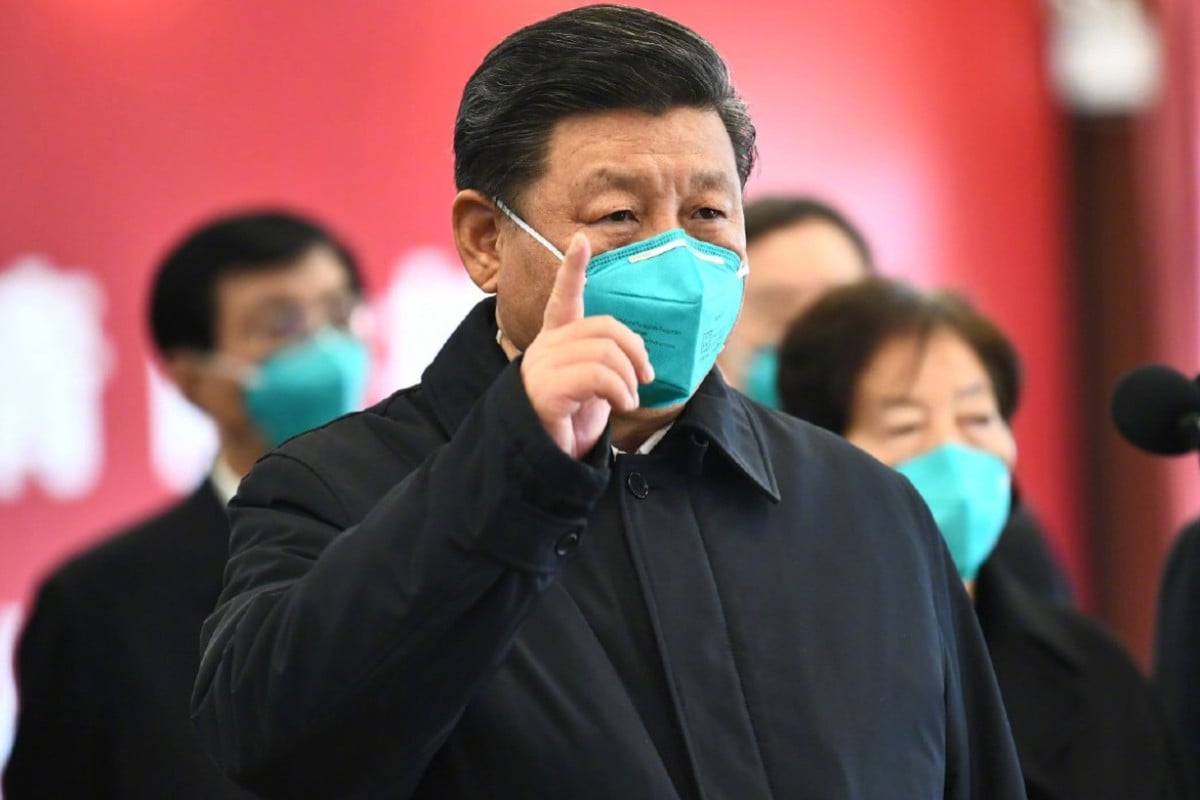
China was producing 116 million masks per day of February 29, including a mix of disposable and high-end masks like the American-designed N95 model worn by President Xi Jinping on his trip on Tuesday to Wuhan. Photo: Xinhua
The Liu family factory has been making diapers and baby products in the Chinese city of Quanzhou for over 10 years, but in February, for the first time, it started making face masks, as demand soared spectacularly due to the coronavirus outbreak.
The business – which employs 100 people in the Southeastern Fujian province – has added two production lines to make up to 200,000 masks a day.
And while the decision was primarily commercial, “encouragement” from the Chinese government – in the form of subsidies, lower taxes, interest-free loans, fast-track approvals for expansion and help alleviating labour shortages – made the decision an obvious one, said Mr Liu who preferred only to give his family name.
“The government is advocating an expansion in production,” Liu said. “With faster approvals, producers need to prioritise the government’s needs over exports.”
WHO declares coronavirus crisis a pandemic
The factory is one of thousands of refitted pop-ups around China making masks and other protective equipment for the first time, part of a massive industrial drive to respond to the spread of the coronavirus.
Before the outbreak, China already made about half the world’s supply of masks, at a rate of 20 million units a day. That rose to 116 million as of February 29, according to China’s state planning agency, a mix of disposable and high-end masks like the American-designed N95 model worn by President Xi Jinping on his trip on Tuesday to Wuhan, the epicentre of the outbreak.
This exponential jump is the result of a wartime-like shift in industrial policy, with Beijing directing its powerful state-owned enterprises to lead the nationwide mask-making effort, and the country’s sprawling manufacturing engine following their lead.
For me, this is the big advantage of China, the speed Thomas Schmitz
“For me, this is the big advantage of China, the speed,” said Thomas Schmitz, president of the China branch of Austrian engineering giant Andritz, which has seen a big uptick in demand for its wet wipe-making machines in recent weeks, also due to the virus. “When you need to run, people know how to run, and this is something which has been lost in other countries since their industrial heydays.”
Chinese oil and gas major Sinopec upped production of mask raw materials such as polypropylene and polyvinyl chloride in January. This week, it set up two production lines in Beijing to produce melt-blown non-woven fabric, intended to make four tonnes of the fabric each day, which can then be used to produce 1.2 million N95 respirators or six million surgical masks a day.
The maker of China’s new J-20 stealth fighter jet, Chengdu Aircraft Industry Group, repurposed part of its factory to design a mask production line, according to local media reports. The SichuanDaily said 258 of the company’s engineers spent three days fast-tracking development of an assembly line with more than 1,200 components.
Coronavirus: From mysterious origins to a global threat
More than 2,500 companies in China have reportedly started making masks, among them 700 technology companies including iPhone assembler Foxconn and smartphone makers Xiaomi and Oppo, in an extraordinary mobilisation of resources.
The result resembles “the war effort” in the middle of the last century in the United States and western Europe, but arguably no other nation could undergo such a transformation so quickly today.
It is a reminder of what can happen in a centrally-planned economy with a strong manufacturing base, but also brings into sharp focus some of the geopolitical issues which have characterised China’s at-times difficult relationship with the rest of the world, particularly the European Union and US, over the past couple of years.
China’s dominance in manufacturing has become all the more evident as the rest of the world scrambles to shore up their own dwindling medical supplies, leading many to wonder why the world is so dependent on it for vital supplies.
The lesson for Washington is not that we need to emulate the Chinese economic model, but rather that we need to better steward the industrial base in key sectors Rush Doshi
The Italian government, which is dealing with the highest number of coronavirus cases and deaths after China, is to take shipment of 1,000 ventilators, 2 million masks, 100,000 respirators, 200,000 protective suits and 50,000 testing kits from China.
Italian foreign minister Luigi Di Maio said after a phone call with Chinese counterpart Wang Yi, they had agreed the export deal in the same week that European neighbours France and Germany banned masks from being exported because of low domestic supplies.
The Italy export deal showed that “China is emerging as a global public goods provider as the US proves unable and unwilling to lead,” said Rush Doshi, the director of the China Strategy Initiative at the Washington-based Brookings Institute think tank.
“China’s ability to produce what is needed to fight coronavirus is not simply a product of its economic model – it’s also a product of its industrial capacity,” Doshi said. “The US once had this capacity too, but it has lost important parts of it. The lesson for Washington is not that we need to emulate the Chinese economic model, but rather that we need to better steward the industrial base in key sectors.”
The frustration is felt acutely by Michael Einhorn, president of medical equipment distributor Dealmed-Park Surgical in New York, who has been trying to source stock from China for weeks, “but cannot get straight answers” from vendors.
Einhorn said he placed an order with a private seller in China’s virus-stricken city last week, but that the goods had not been shipped.
“Everyone is running out here, people are panicking in hospitals and we want to be able to help our most important customers,” Einhorn said. “We are dealing with hospitals that do not have products, how in the United States of America in 2020 did this happen?”
With the number of confirmed coronavirus cases in China falling daily, it is not inconceivable that the sort of export deal struck with Italian leaders becomes commonplace, although for now, it deal can be chalked up as a significant public relations coup for Beijing.
The World Medical Association is unable to specify how many masks are required to supply frontline medical staff in virus-hit areas, but said that “this crisis should be a wake up call for politicians and societies to make the necessary investment in emergency preparedness and to look into the vulnerability of our supply chains”.
Australian-listed manufacturer Eagle Health announced on Friday that it had installed production lines at its Xiamen factory in southern China to make 300 million masks a year and said it had already received orders from China and would be securing further larger orders internationally.
The group, which normally makes products including amino acids, protein supplements and lozenges in China, said it would prioritise meeting the large domestic demand, but was aware of an impending global shortage.
Eagle Health has already commenced production of its first order of 3.2 million medical masks for the Yiling Hospital Management Group in China, a process which will take 10 days. It has other smaller orders from Chinese government agencies and expects to receive more orders outside China.
The decision to make more masks came from increased demand. These are opportunities. The global demand for high quality masks will be significant Xu Gang
“The decision to make more masks came from increased demand. These are opportunities,” said chief executive Xu Gang. “The global demand for high quality masks will be significant. Imagine when the schools open. The situation will take some time to peak.”
Last week, the Australian Dental Association said supplies of masks at many practices were expected to run out within four weeks. The Australian government has since arranged a supply of 54 million masks for both the dental and medical industries.
At the same time, the US only has 1 per cent of the 3.5 billion masks it would need to counter a serious outbreak, Bloomberg reported.
While China has no quota on the volume of masks that had to be hived off for local consumption, the government has said domestic demand needs to be prioritised.
Businesses are free to export but overseas demand has yet to explode like it has in China, said Fujian factory owner Liu.
Wendy Min, sales director of Pluscare, a manufacturer based near the virus’ epicentre in Hubei province, said her company is making 200,000 masks per day, much of which are sold to the government, with exports still restricted by partial lockdown of workers and cargo transport.
“We previously exported to Europe, South America and other parts of Asia,” Min said. “But at the moment we can’t export. We are trying to discuss this with the government, but we cannot wait any more – we have to export soon.”
Min said that while she was receiving countless cold calls up until last week from people in China looking for masks, these have stopped, perhaps unsurprising given the abundance in supplies becoming available.
An influx of Chinese-made masks, though, is likely to be welcomed in other virus-stricken parts of the world.
Self-quarantine of all international travellers to Beijing as China fights import of coronavirus
Miguel Luiz Gricheno, CEO of Brazilian mask manufacturer Destra, said that his company is making 30,000 masks a day, but cannot meet local demand due to a lack of supplies, including the non-woven fabric from which masks are made.
“In disposable masks, most Brazilian companies are paralysed due to the lack of raw materials,” Gricheno said. “With the arrival of the coronavirus in Brazil, the demand has increased a lot but the main raw material comes from abroad.”
However, a short-term supply fix will not answer underlying questions about how so many countries found themselves in such dire straits,meaning the geopolitical fallout of the coronavirus will be extensive.
Decades of weak industrial policy helped elect US President Donald Trump, who said he would bring manufacturing jobs back to America at China’s expense. While he has waged a bruising two-year trade war with China in response, the current situation shows just how difficult it will be to change the global manufacturing processes, which are so heavily controlled by China.
One of the great flaws of globalisation is that everyone wanted things cheaper, but did you compromise your health care infrastructure in the process? Stephen Roach
“In the guise of trying to improve efficiency and create value for price-sensitive consumers, we’ve created a global production network that is very difficult to unwind,” said Stephen Roach, a professor of economics at Yale University and a veteran China watcher. “One of the great flaws of globalisation is that everyone wanted things cheaper, but did you compromise your health care infrastructure in the process.
Reuters reported that Trump is considering invoking the emergency provisions of the Defence Production Act, which would allow the government to instruct companies to alter production to help address the domestic shortage of medical supplies like masks. If a company is producing 20 per cent N95 masks and 80 per cent standard masks, the White House could order them to rejig the ratio, an unnamed official said.
The New York Times reported on Wednesday that the White House is preparing an executive order that would allow the government to buy medical supplies from overseas in the hope that it will incentivise companies to make them within the US.
But these changes still do not give Trump the sort of sweeping powers enjoyed by Chinese counterpart Xi.
“When you have a pluralistic, democratic situation that Trump is overseeing, it becomes more unwieldy” to take the steps necessary to address a crisis situation, said Harry Broadman, chair of the emerging markets practise at the Berkeley Research Group and a senior US government official in the 1980s and 1990s.
“That is why I think Trump looks at Xi with envy, because he doesn’t have to deal with a disparity of views or democratic interests,” Broadman said. “I think Trump is at heart a bilateral guy, as you saw with the phase one [US-China] trade deal and the state-to-state purchases. That is why he likes dealing with [Russian President Vladimir] Putin and Xi, because each of them can move mountains. I think Trump is very envious of that ability.”
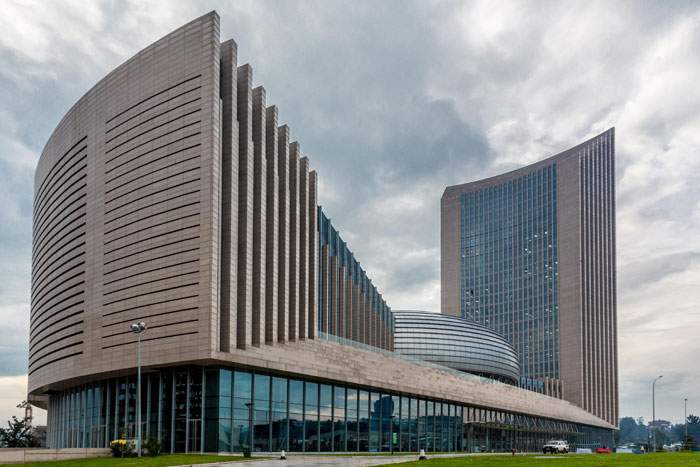
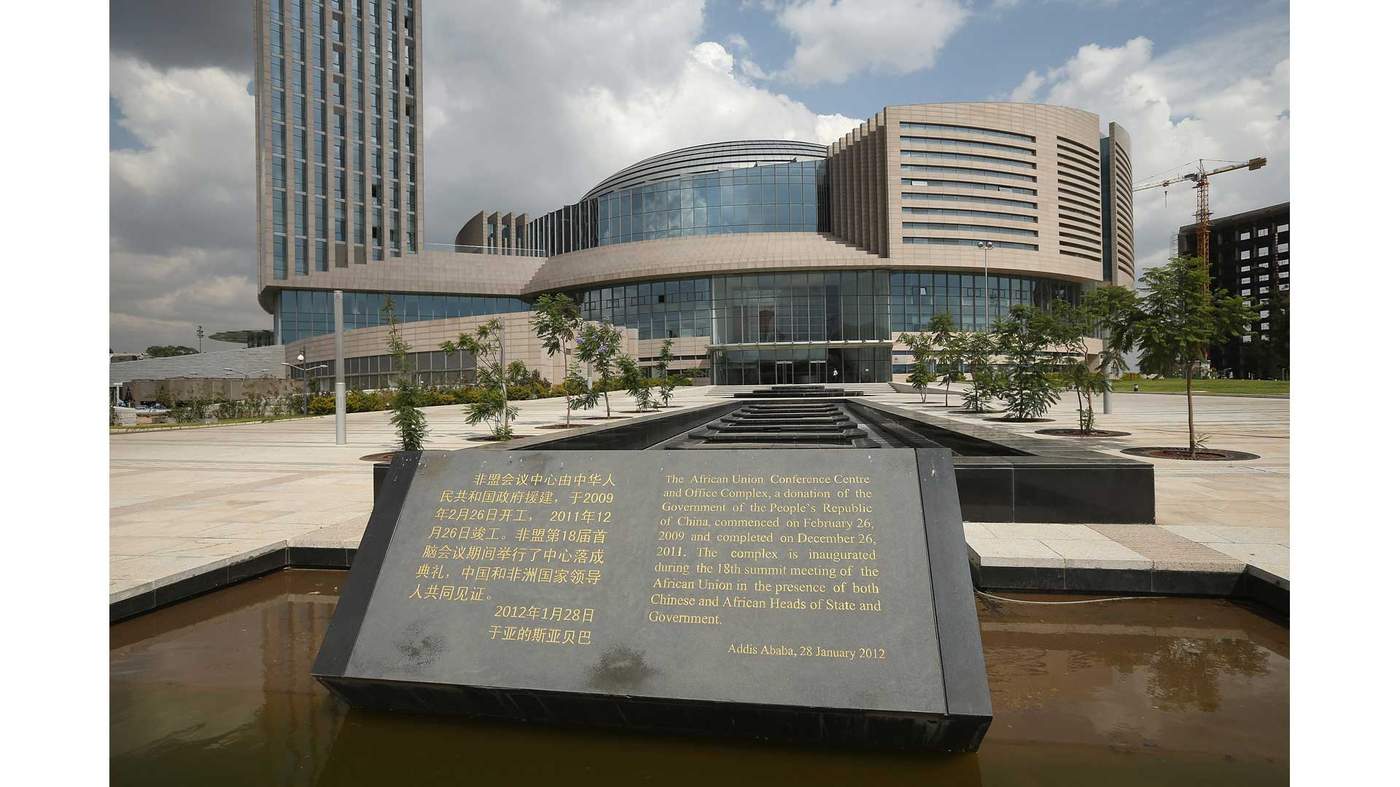
The African Union headquarters in Addis Ababa is a shiny spaceship-like structure that glistens in the afternoon sun.
With its accompanying skyscraper, it stands out in the Ethiopian capital.
Greetings in Mandarin welcome visitors as they enter the lifts, and the plastic palm trees bear the logos of the China Development Bank.
African Union HQ, Addis Ababa
Everywhere, there are small indications that the building was made possible through Chinese financial aid.
In 2006, Beijing pledged $200m to build the headquarters. Completed in 2012, everything was custom-built by the Chinese – including a state-of-the-art computer system.
For several years, the building stood as a proud testament to ever-closer ties between China and Africa. Trade has rocketed over the past two decades, growing by about 20% a year, according to international consultancy McKinsey. China is Africa’s largest economic partner.
But in January 2018, French newspaper Le Monde Afrique dropped a bombshell.
It reported that the AU’s computer system had been compromised.
The newspaper, citing multiple sources, said that for five years, between the hours of midnight and 0200, data from the AU’s servers was transferred more than 8,000km away – to servers in Shanghai.
This had allegedly continued for 1,825 days in a row.
Le Monde Afrique reported that it had come to light in 2017, when a conscientious scientist working for the AU recorded an unusually high amount of computer activity on its servers during hours when the offices would have been deserted.
It was also reported that microphones and listening devices had been discovered in the walls and desks of the building, following a sweep for bugs.
The reaction was swift.
Both AU and Chinese officials publicly condemned the report as false and sensationalist – an attempt by the Western media to damage relations between a more assertive China and an increasingly independent Africa.
But Le Monde Afrique said that AU officials had privately expressed concerns about just how dependent they were on Chinese aid – and what the consequences of that could be.
In the midst of all of this, one fact remained largely unreported.
The main supplier of information and communication technology systems to the AU headquarters was China’s best-known telecoms equipment company – Huawei.
The company says it had “nothing” to do with any alleged breach.
Huawei “served as the key ICT provider inside the AU’s headquarters”, said Danielle Cave of the Australian Strategic Policy Institute, in a review of the alleged incident.
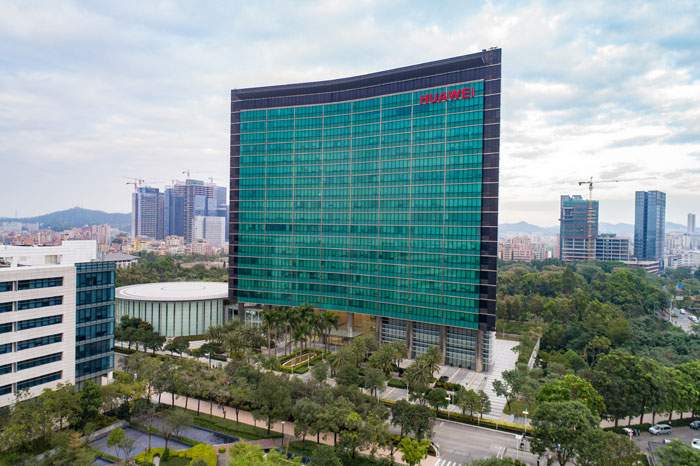
Huawei headquarters in Shenzhen, China
“This doesn’t mean the company was complicit in any theft of data. But… it’s hard to see how – given Huawei’s role in providing equipment and key ICT services to the AU building and specifically to the AU’s data centre – the company could have remained completely unaware of the apparent theft of large amounts of data, every day, for five years.”
There is no evidence to indicate that Huawei’s telecoms network equipment was ever used by the Chinese government – or anyone else – to gain access to the data of their customers.
Indeed, no-one has ever gone on record to confirm that the AU system was compromised in the first place.
But these reports played into years of suspicions about Huawei – that a large Chinese company might find itself unduly influenced by the Chinese government.
Ren and the rise of Huawei
“When I first started out 30 years ago… we didn’t really have any telephones. The only phones we had were those hand-cranked phones that you see in old World War II films. We were pretty undeveloped then.”
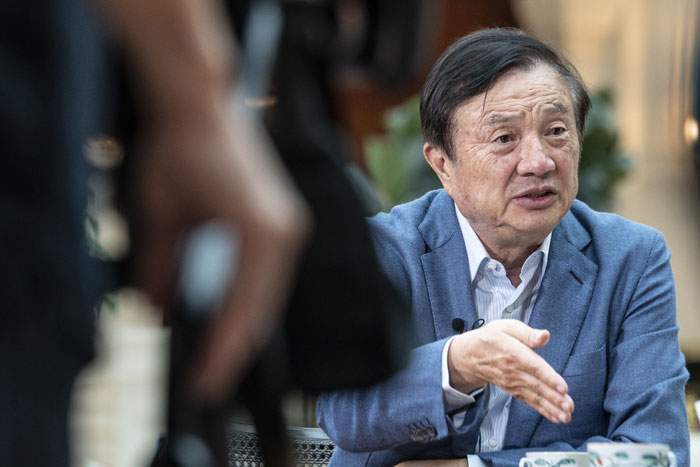
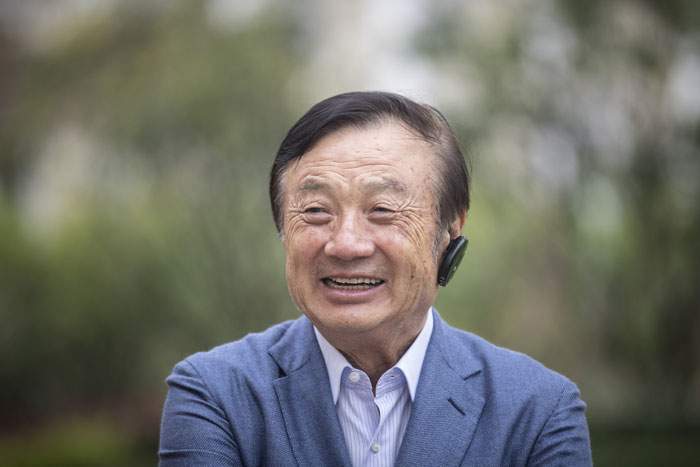
Huawei’s founder and chairman Ren Zhengfei is reminiscing to the BBC about the origins of the world’s second-biggest smartphone firm, while sitting in the Huawei headquarters in Shenzhen – a symbol of the success that he’s worked his whole lifetime for.
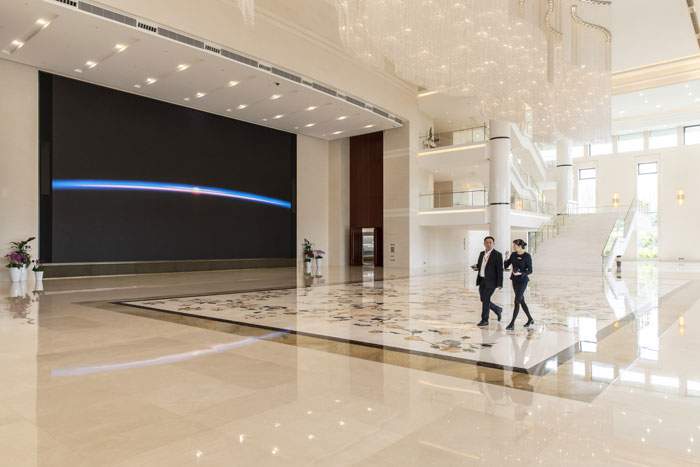
A long marbled staircase, covered in plush red carpet, greets you as you first walk in.
At the top of the stairs, a giant painting depicts a traditional Chinese New Year scene.
Inside Huawei’s Shenzhen HQ
A few kilometres away in Dongguan, Huawei’s latest campus is even more eye-catching.
The site – designed to accommodate the company’s 25,000 R&D staff – comprises 12 “villages”, each of which recreates the architecture of a different European city, among them Paris, Bologna and Granada.
It’s as if Silicon Valley had been re-imagined by Walt Disney. Long corridors of Roman pillars and picturesque French cafes adorn the campus, with a train connecting the different areas, running through manicured gardens and past an artificial lake.
It’s a world away from the environment that Mr Ren found himself in when he first started the company in 1987. “I founded Huawei when China began to implement its reform and opening up policy,” he says. “At that time, China was shifting from a planned economy to a market economy. Not only people like myself, but even the most senior government officials, did not have the vaguest idea of what a market economy was. It seemed it was hard to survive.”
Ren was born in 1944 in Southern China – a tumultuous, chaotic place, one of the poorest regions in an already destitute country.
For a long time, hardship was all he ever knew.
He was from a family of seven children. “They were very poor,” says David De Cremer, who has co-written a book on Ren and Huawei.
“I think hardship is something that you can see throughout his life, and which he keeps emphasising himself.”
To escape that life of poverty and drudgery, Ren did what many young Chinese men of that era did. He joined the army.
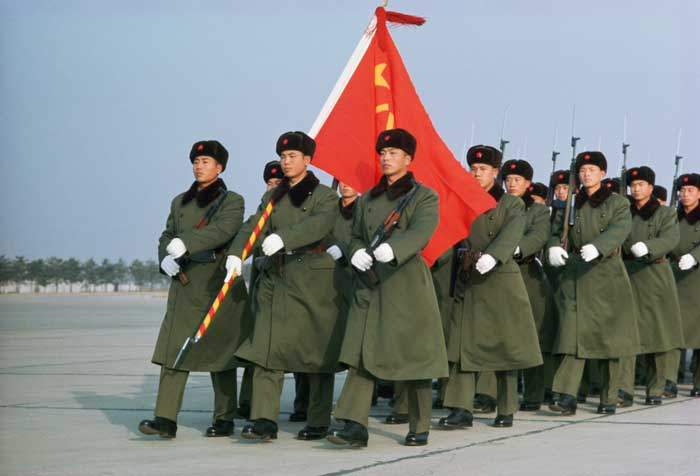
Soldiers from the People’s Liberation Army, 1972
“I was a very low-ranking officer in the People’s Liberation Army,” he says. “I served in an ordinary construction project, not a field unit. At the time, I was a technician of a company in the military, and then I became an engineer.”
He left the military in 1983 when China began to downsize its forces, and went into the electronics business.
By his own admission, he wasn’t a great businessman at first.
“I was someone who had been in the military all my life at the time, used to doing what I was told,” he says. “Suddenly, I began to work in a market economy. I was at a total loss. So I too suffered losses, I too was deceived, and I was cheated.”
But he was quick to learn, and was a keen student of Western business practices and European history.
“I did research on what exactly a market economy was all about,” he says. “I read books on laws, including those about European and US laws. At that time, there were very few books on Chinese laws, and I had to read those on European and US laws.”
Five years later, he founded Huawei – the name can be translated as “splendid achievement” or “China is able” – to sell simple telecoms equipment to the rural Chinese market. Within a few years, Huawei was developing and producing the equipment itself.
Sometime in the early 90s, Huawei won a government contract to provide telecoms equipment for the People’s Liberation Army.
By 1995, the company was generating sales of around US$220,000, mainly from selling to the rural market.
The following year Huawei was given the status of a Chinese “national champion”. In practice, this meant the government closed the market to foreign competition.
At a time when China’s economy was growing by an average of 10% per year, this was no small advantage. But it was only when Huawei started to expand overseas in 2000, that it really saw its sales soar.
In 2002, Huawei made US$552m from its international market sales. By 2005 its international market contracts exceeded its domestic business for the first time.
Ren’s early days in business instilled in him a desire to protect his company from the whims and fancies of the stock market. Huawei is privately held and employee-owned. This gave Ren the power to plough more money back into research and development. Each year, Huawei spends US$20bn on R&D – one of the biggest such budgets in the world.
“Publicly listed companies have to pay a lot of attention to their balance sheets,” he says. “They can’t invest too much, otherwise profits will drop and so will their share prices. At Huawei, we fight for our ideals. We know that if we fertilise our ‘soil’ it will become more bountiful. That’s how we’ve managed to pull ahead and succeed.”
One story from the early days of the company tells how Ren was cooking for his staff (he loves to cook, or so the story goes). Suddenly he rushed out of the kitchen and announced to the room: “Huawei will be a top three player in the global communications market 20 years from now!”
And that’s exactly what happened. In fact, those ambitions were surpassed.
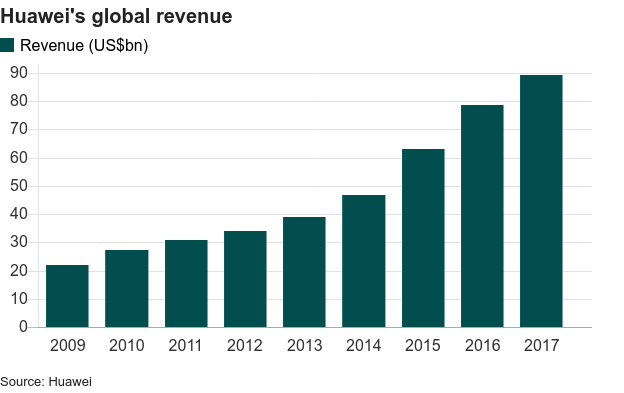
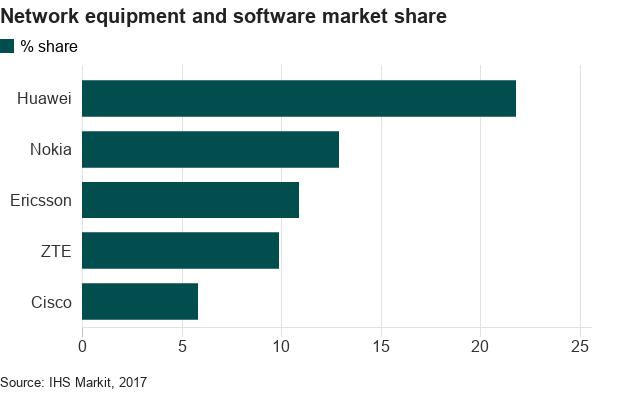
Today, Huawei is the world’s biggest seller of network telecommunications equipment.
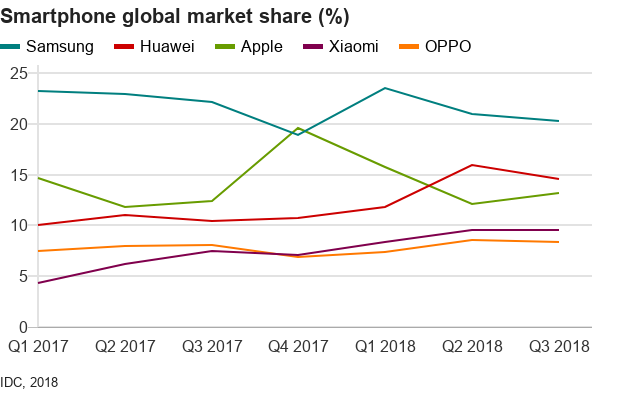
From aspiring to be a company like Apple, it now sells more smartphones than Apple.
But shadows have continued to loom over Huawei’s international success.
Ren and Huawei’s links to the Chinese Communist Party have raised suspicions that the company owes its meteoric rise to its powerful political connections in China. The US has accused Huawei of being a tool of the Chinese government.
It’s an accusation which Ren denies. “Please don’t think that Huawei has become what it is today because we have special connections,” he says. “Even 100% state-owned companies have failed. Do good connections mean you will succeed then? Huawei’s success is still very much due to our hard work.”
The case against
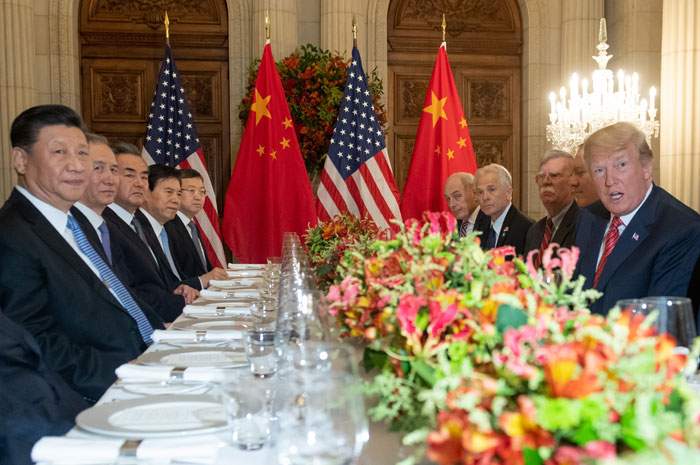
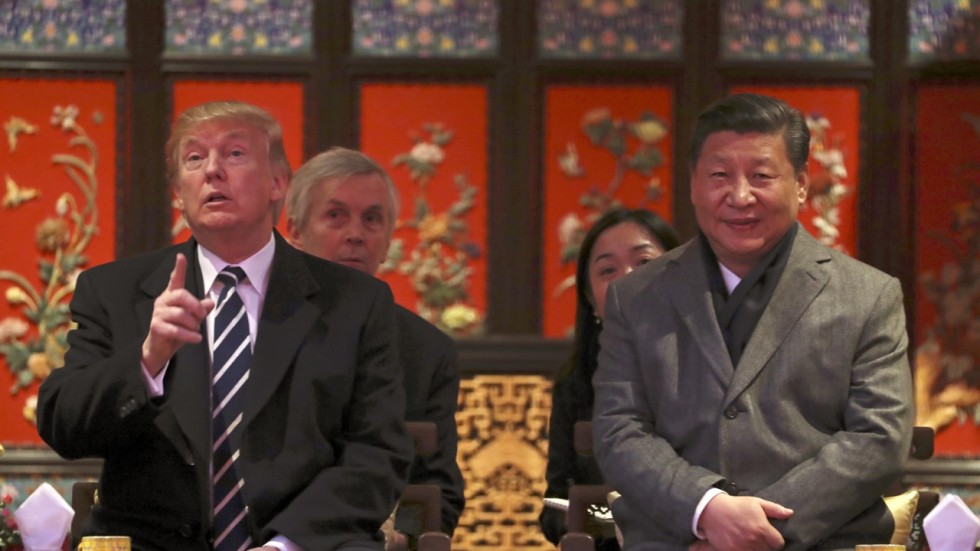
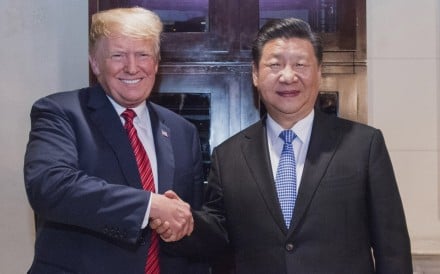
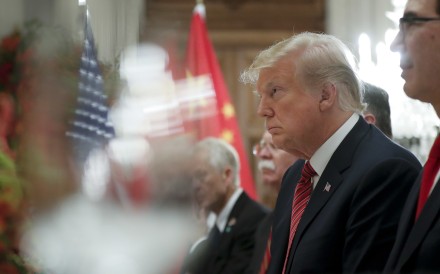
It was 1 December 2018. US President Donald Trump and China’s President Xi Jinping were dining on grilled sirloin followed by caramel rolled pancakes at the G20 summit in Buenos Aires.
They had a lot to discuss. The US and China were in the middle of a trade war – imposing tariffs on each other’s goods – and growth forecasts for both countries had recently been cut as a result. This was adding to the fear of a slowing global economy.
In the event, the two leaders agreed a truce in the trade war, with Donald Trump tweeting that “Relations with China have taken a BIG leap forward!”
Xi Jinping and Donald Trump at dinner, December 2018
But thousands of kilometres north in Canada, an arrest was taking place that would throw doubt on this rapprochement.
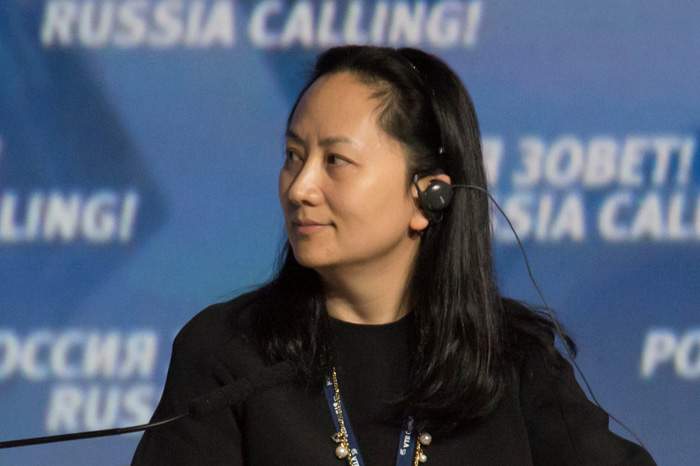
Meng Wanzhou, Huawei’s chief financial officer and Ren Zhengfei’s eldest daughter, had been detained by Canadian officials while transferring between flights at Vancouver airport.
The arrest had come at the request of the US, who accused her of breaking sanctions against Iran.
“When she was detained, as her father, my heart broke,” says Ren, visibly emotional. “How could I watch my child suffer like this? But what happened, has happened. We can only depend on the law to solve this problem.”
Meng Wanzhou being driven to court in Canada
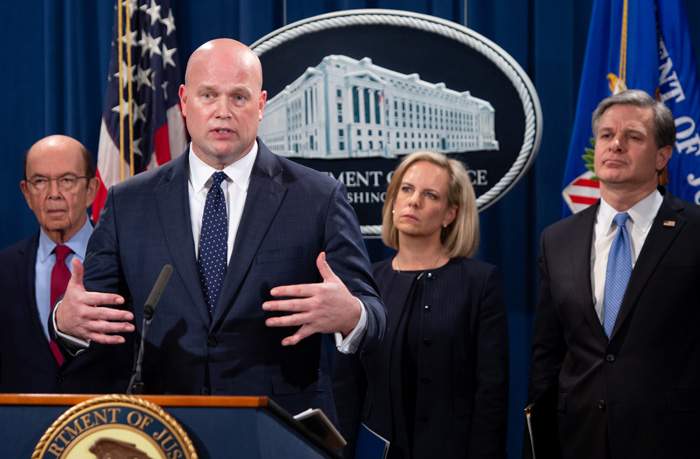
Huawei’s problems were just beginning. Nearly two months later, the US Department of Justice filed two indictments against Huawei and Ms Meng.
Under the first indictment, Huawei and Ms Meng were charged with misleading banks and the US government about their business in Iran.
The second indictment – against Huawei – involved criminal charges including obstruction of justice and the attempted theft of trade secrets.
Both Huawei and Ms Meng deny the charges.
January 2019: Acting US attorney general Matthew Whittaker announces charges against Huawei and Meng Wanzhou
The charge of stealing trade secrets centres on a robotic tool – developed by T-Mobile – known as Tappy.
According to legal documents, Huawei had tried to buy Tappy, a device which mimicked human fingers by tapping mobile phone screens rapidly to test responsiveness.
T-Mobile was in partnership with Huawei at the time, but it rebuffed the Chinese firm’s offers, fearing it would use the technology to make phones for T-Mobile’s competitors.
It’s alleged that one of Huawei’s US employees then smuggled Tappy’s robotic arm into his satchel so that he could send its details to colleagues in China.
After the alleged theft was discovered, the Huawei employee claimed that the arm had mistakenly fallen into his bag.
Huawei claimed that the employee had been acting alone, and the case was settled out of court in 2014. But the latest case is built on email trails between managers in China and the company’s US employees, linking Huawei management to the alleged theft.
The indictment also details evidence of a bonus scheme from 2013, offering Huawei employees financial rewards for stealing confidential information from competitors.
Huawei has denied any such scheme exists.
Meng Wanzhou, photographed in 2014
This is not the first time that Huawei has been accused of stealing trade secrets. Over the years companies like Cisco, Nortel and Motorola have all pointed the finger at the Chinese firm.
But US fears about Huawei are about much more than industrial espionage. For more than a decade, the US government has seen the company as little more than an arm of the Chinese Communist Party.
These concerns have been brought to the fore with the advent of “fifth generation” or 5G mobile internet, which promises download speeds 10 or 20 times faster than at present, and much greater connectivity between devices.
As the world’s biggest telecoms infrastructure provider, Huawei is one of the companies best placed to build new 5G networks. But the US has warned its intelligence partners that awarding contracts to Huawei would be tantamount to allowing the Chinese spy on them.
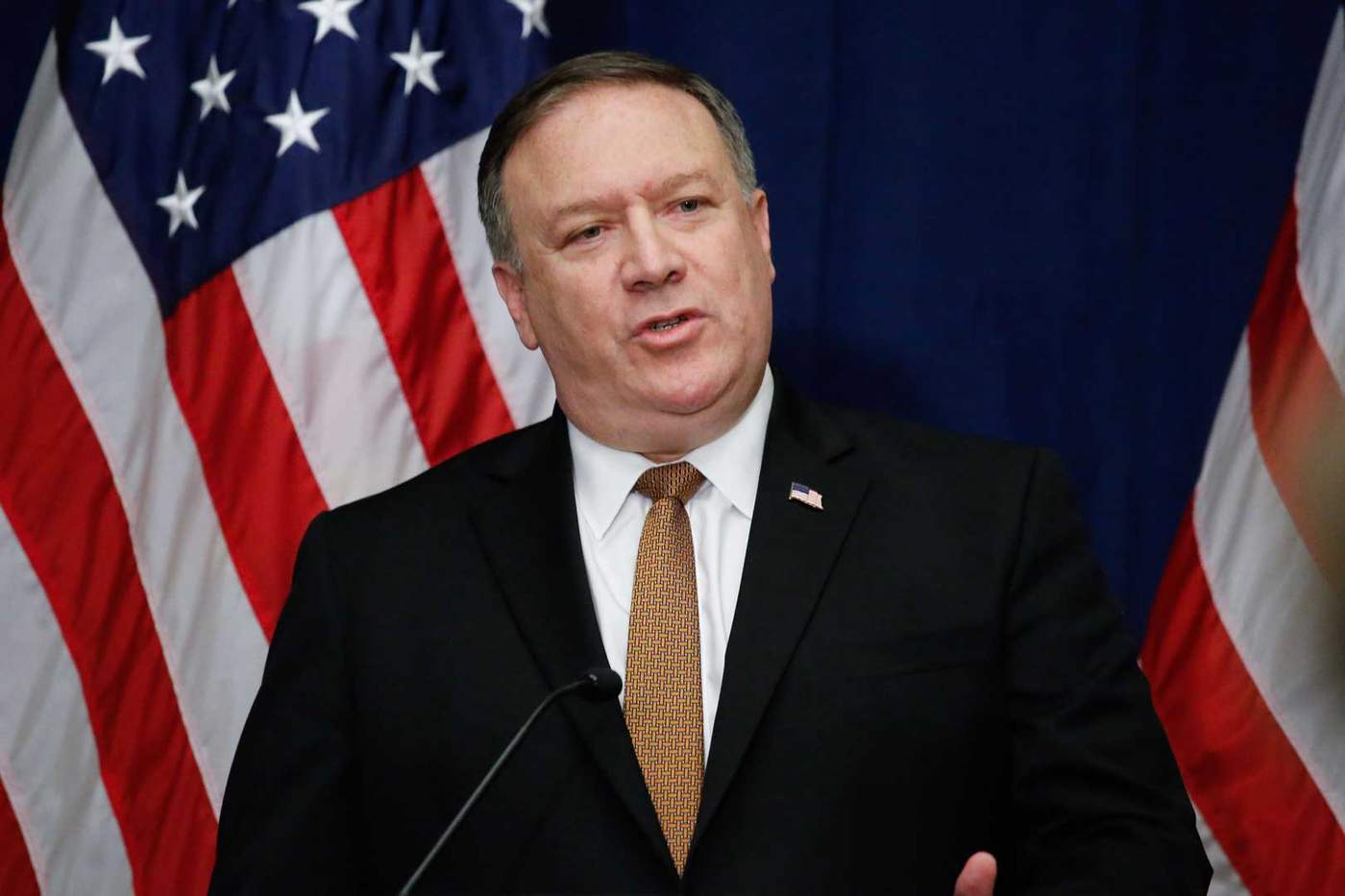
US Secretary of State Mike Pompeo recently cautioned against Huawei, saying, “If a country adopts this and puts it in some of their critical information systems, we won’t be able to share information with them.”
US Secretary of State Mike Pompeo
The UK, Germany and Canada are reviewing whether Huawei’s products pose a security threat.
Australia went a step further last year, and banned equipment suppliers “likely to be subject to extrajudicial directions from a foreign government”.
Huawei was not mentioned by name, but Danielle Cave of the Australian Strategic Policy Institute says the company posed a national security risk because of its government links.
She cites an article in Chinese law that makes it impossible for any company to refuse to help the Chinese Communist Party in intelligence gathering.
“Admittedly, what is missing from this debate is the smoking gun,” she says.
“For the average person who has a Huawei smartphone it’s not a big deal. But if you’re a Western government that has key national security to protect – why would you allow this access to a company that is in the political system that China is in?”
For his part, Ren says that Huawei’s resources have never and would never be used to spy for the Chinese government.
“The Chinese government has clearly said that it won’t ask companies to install backdoors,” he says. A “backdoor” is a term used to describe a secret entry point in software or a computer system that gives access to the person or entity who installed it to the inner workings of the system.
“Huawei will not do it either,” he continues. “Our sales revenues are now hundreds of billions of dollars. We are not going to risk the disgust of our country and our customers all over the world because of something like that. We will lose all our business. I’m not going to take that risk.”
Xi’s China
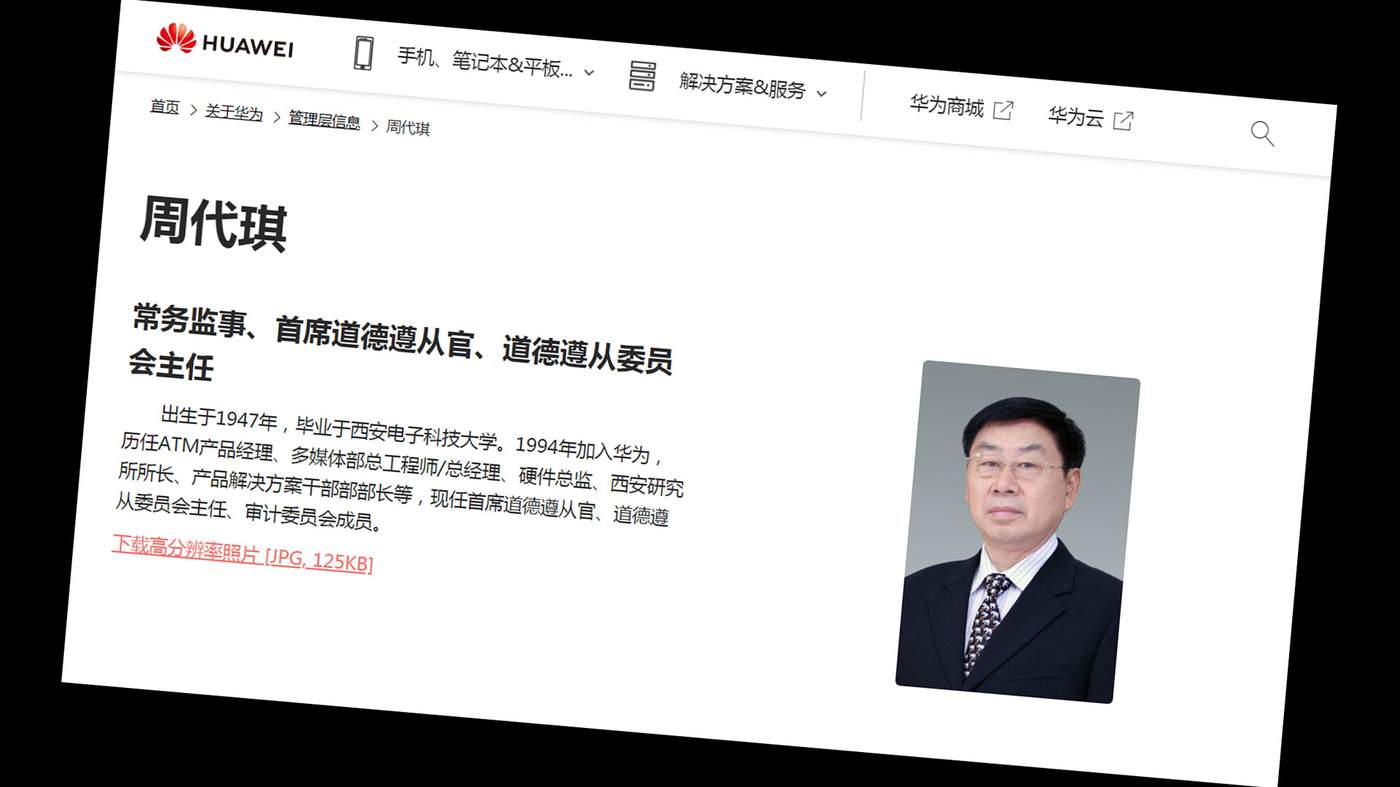
Zhou Daiqi is Huawei’s chief ethics and compliance officer.
He’s been with the company for nearly 25 years, in a number of different positions – chief engineer, director of the hardware department, head of the research centre in Xi’an, according to his biography on the company’s website. He is also understood to combine his high-ranking executive duties with another role – party secretary of Huawei’s Communist Party committee.
All companies in China are required by law to have a Communist Party committee.
Zhou Daiqi’s profile on Huawei’s website
The official line is that they exist to ensure that employees uphold the country’s moral and social values. Representatives of the committee are also often tasked with helping workers with financial problems.
But critics of China’s one-party system argue that they allow the state to exert control on corporate China. And they say the level of this control has increased in recent years.
“[President] Xi Jinping is exerting greater control over the business community in China,” says Elliott Zaagman, who regularly advises Chinese companies on their PR strategy. “As these companies gain power and influence overseas, the party doesn’t want to lose control over them.”
Ren, however, argues that the role of Huawei’s Communist Party committee is far less important than many in the West believe.
“[It] serves only to educate its employees,” he says. “It is not involved in any business decisions.”
In China, most chief executives are Communist Party members.
Every year, they dutifully turn up to the National People’s Congress along with local and national party chiefs, officials and chief executives.
It’s where the big economic decisions are voted on – although no proposal is put forward which hasn’t already been agreed upon.
Still, big CEOs come to show their commitment to the party, and to contribute to working papers that are meant to help the government understand the concerns of the business community.
Being a member of the party is very much a networking opportunity – in the way one would join a business association.
Elliott Zaagman argues that this is a system that demands loyalty.
“There is no separation from the party and the state,” he says.
“The system in China encourages the lack of transparency in companies like Huawei.”
The worry is that these close links mean that if the Communist Party asked a company to do something, they would have no choice but to comply.
And if that company is one that is involved in sensitive global telecoms infrastructure projects, it’s easy to see why Western observers would be worried.
There is no evidence to indicate that Huawei is in any way under the orders of the Chinese government, or that Beijing has any plans to dictate business plans and strategy at Huawei – particularly when it comes to spying.
But the way in which the Chinese Communist Party has robustly defended Huawei has raised questions about how independent the company is of its influence.
For example, Beijing stated that Ms Meng’s detention was a rights abuse .
And while her extradition case to the US was moving forward, China detained two Canadian citizens and accused them of stealing state secrets. Critics say the detentions are linked to Ms Meng’s arrest.
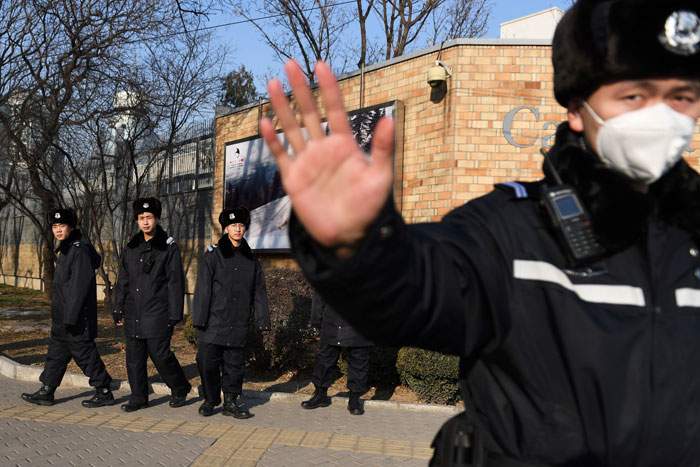
December 2018: Chinese police patrol outside Canada’s embassy in Beijing
While not commenting on the arrest of the Canadians, Ren says China’s defence of Huawei is understandable.
“It is the Chinese government’s duty to protect its people,” he says. “If the US attempts to gain competitive edge by undermining China’s most outstanding hi-tech talent, then it is understandable if the Chinese government, in turn, protects its hi-tech companies.”
Over the past few years, there have been signs of a bigger push by the government to get private companies, and in particular tech firms, to cooperate with party rules – even when they are firmly resistant.
A Didi Chuxing logo adorns a building in Hangzhou, China
China’s ride-hailing giant Didi Chuxing’s troubles are an example of the struggles Chinese firms face when they try to uphold their independence in the face of government pressure.
Chinese attitudes to data collection and data privacy are different to those in the West – many people don’t care if businesses have access to their data, arguing that it adds to the convenience of life and work.
Government access to data in China is not the free-for-all that many outside of China assume it to be
Samm Sacks, CSIS
So it wasn’t unusual when, after the murders of two of its passengers by Didi drivers, regulators used the scandal to force Didi to share more corporate data with the government. But Didi resisted – citing customer privacy. Under Chinese law, it had no choice but to comply.
When it did, it handed over “three boxes of data printed on paper, including 95 hard copies for authorities to review”.
According to Samm Sacks of the Center for Strategic and International Studies (CSIS), the case demonstrates that “government access to data in China is not the free-for-all that many outside China assume it to be”.
She says this indicates that there appears to be “a kind of tug of war between the government and companies over data”.
How this plays out will determine how Chinese companies are viewed by foreign governments when they do business overseas.
Companies like Huawei have grown up in a system where to survive and thrive they needed strong links to the Chinese government – there was and is no other choice. But these links could harm their reputation abroad.
“It’s two different systems,” says Zaagman. “Think of it like an electrical outlet. China’s plug doesn’t fit in to the outlets we have in the West.”
What’s at stake
“Basically you want to connect to everything that can be connected.”
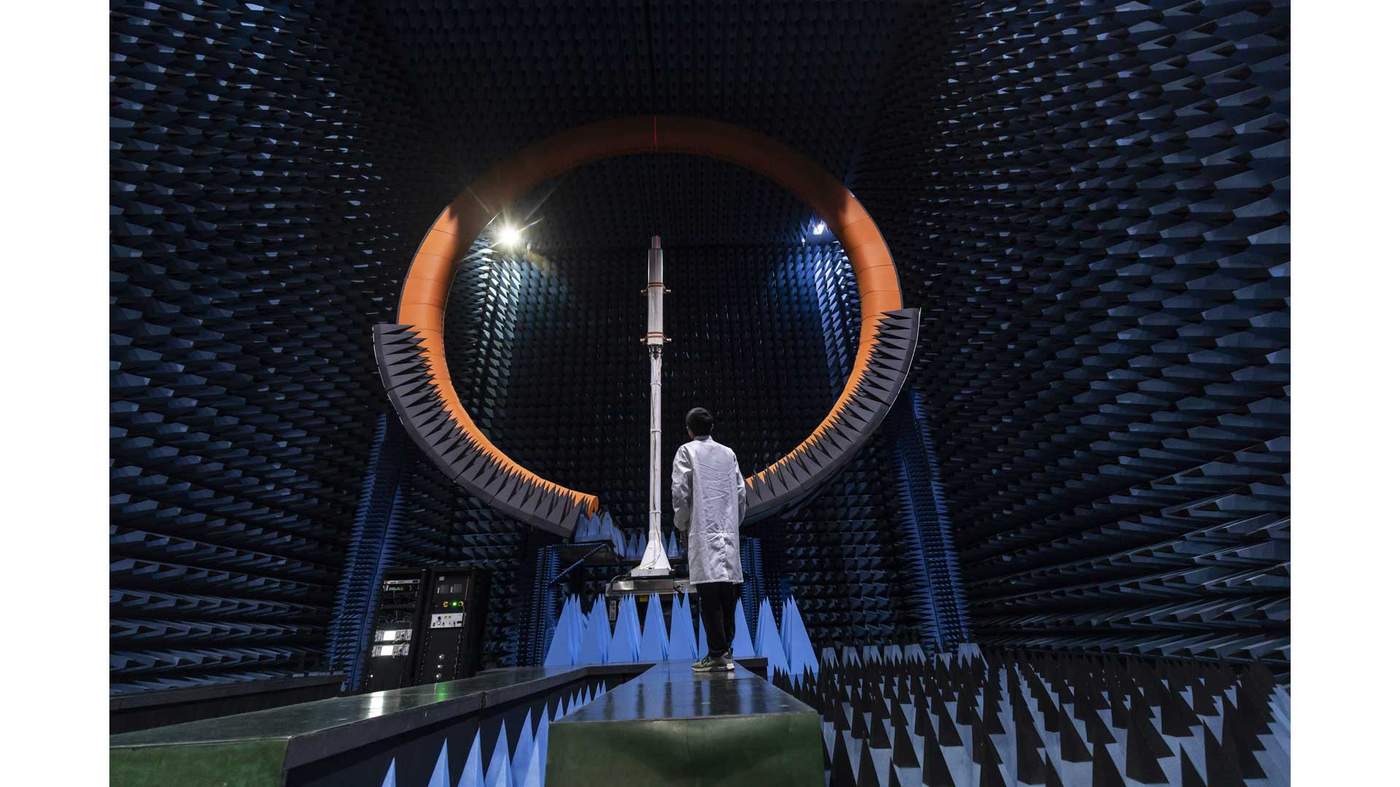
Zhu Peiying, head of Huawei’s 5G wireless labs, is showing off devices that can connect to the new technology. From a smart toothbrush that collects data about how well you brush your teeth, to a smart cup that reminds you when you should drink some water, this is a world where everything you can think of is being measured and analysed.
At its most sophisticated, everything in entire cities would be connected – driverless cars, the temperature of buildings, the speed of public transport – the list is endless.
Huawei is thought to be a year ahead of its competitors in terms of its technological expertise and what it can offer customers, according to industry sources.
It’s also thought that the company can offer prices that are about 10% cheaper than its competitors, although critics claim this is because of state support.
Ren dismisses this, saying that Huawei doesn’t receive government subsidies.
He says the real reason behind the US resistance to Huawei is its superior technology.
“There’s no way the US can crush us,” he says. “The world needs Huawei because we are more advanced. Even if they persuade more countries not to use us temporarily we could just scale things down a bit.”
Many analysts say that Huawei’s exclusion from US networks could actually cause the US to fall behind in its 5G capabilities.
“It would mean we wouldn’t be able to participate in any blended network [using Huawei] in Europe or Asia,” says Samm Sacks of CSIS. “That would put us at a significant disadvantage.”
What this would mean in reality is a world of two internets – or what analysts are calling a “digital iron curtain” – dividing the world into parts that do business with Chinese companies like Huawei, and those that don’t.
Because of US pressure on its allies, Huawei has been on an aggressive public relations campaign to win over customers and government stakeholders.
In recent days, Vodafone’s boss Nick Read called on the US to share any evidence it has about Huawei, while Andrus Ansip, the European Commission’s vice president for the digital single market, said in a tweet that he had met with Huawei’s rotating CEO to discuss the importance of being open and transparent, as they explored ways of working together.
But suspicions about Huawei remain.
One security firm reports a sharp rise in inquiries by Asian government clients about Huawei.
“Some have asked us how much they should worry about whether Huawei is really a liability,” says an analyst who consults to Asian governments, on condition of anonymity.
Ren is sanguine about such concerns.
“For countries who believe in them [suspicions about Huawei] we will hold off,” he says. “For countries who feel Huawei is trustworthy, we may move a little faster. The world is so big. We can’t walk across every corner of it.”
But this is about more than just one company or one CEO and his family.
Increasingly, this is perceived as a battle between two world orders, and which one is the future.
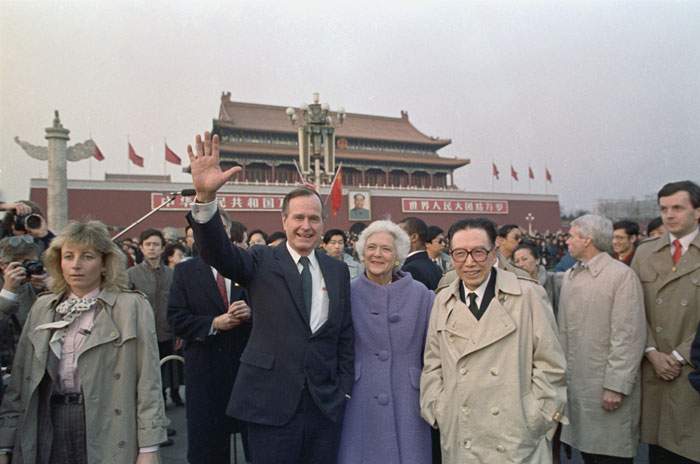
In the early days of China opening up, US presidents like George HW Bush espoused the merits of engagement.
“No nation on Earth has discovered a way to import the world’s goods and services while stopping foreign ideas at the border,” he said in a 1991 speech. “Just as the democratic idea has transformed nations on every continent, so, too, change will inevitably come to China.”
1989: George HW Bush in Beijing – he encouraged economic engagement with China
Previous US administrations believed that economic engagement in China would lead to China following a freer, more “liberal” path.
There’s no denying China has made remarkable strides in the past 40 years. The economy grew by an annual average of 10% for three decades, helping to lift 800 million people out of poverty. It is now the second-largest economy in the world, only surpassed by the US.
Some estimates put China’s economy ahead of America’s by 2030.
It achieved this while maintaining one-party rule and the supremacy of the Communist Party.
But its success has raised concerns that it is only possible with a huge amount of government control over the country’s companies. The fear is that control could be used to achieve the Communist Party’s goals – which are at this point unclear.
“It’s a double-edged sword for China,” says Danielle Cave. “[Because of its laws] the Chinese Communist Party has made it virtually impossible for Chinese companies to expand without attracting understandable and legitimate suspicion.”
Added to this, China has become more authoritarian under Xi Jinping’s rule.
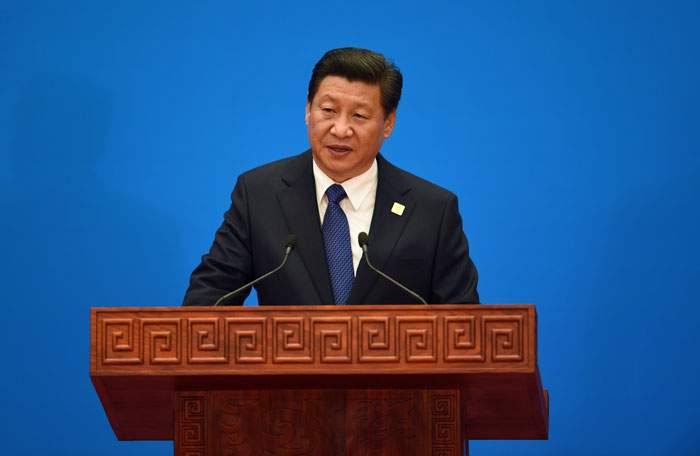
President Xi Jinping
“Xi is systematically undermining virtually every feature that made China so distinct and helped it work so well in the past,” writes Jonathan Tepperman, editor in chief of Foreign Policy.
“His efforts may boost his own power and prestige in the short term and reduce some forms of corruption. On balance, however, Xi’s campaign will have disastrous long-term consequences for his country and the world.”
But Ren dismisses this, insisting that China is more open than ever before.
“If this meeting took place 30 years ago,” he says of our interview, “it would have been very dangerous for me. Today, I can be straightforward when answering difficult questions. This shows that China has a more open political environment.”
Still, Ren is hopeful of the direction China will take in the future.
“China has more or less tried to close itself off from the outside world for 5,000 years,” he says. “Yet we had found ourselves poor, lagging behind other nations. It was only in the past 30 years since Deng Xiaoping opened China’s doors to the world that China has become more prosperous. Therefore, China must continue to move forward on the path of reform and opening-up.”
In one of Huawei’s vast campus sites across Shenzen, lies a man-made lake. Swimming in these serene waters are two black swans.
There is a story that Ren put the birds here to remind employees of “black swan” events – unpredictable and catastrophic financial eventualities that are impossible to prepare for. He dismisses this as an urban myth, but it’s hard not to read something into it.
For Huawei, and Ren, these are highly uncertain times with no way of telling what lies ahead.
China and the United States agreed to a 90-day ceasefire on new tariffs in their trade war at the G20 summit in Buenos Aires, allowing a reprieve after months of threats and stalled talks.
The decision for the US to hold off on planned tariff increases on US$200 billion in Chinese goods from 10 to 25 per cent on January 1 came over a grilled steak dinner in Argentina, the first face-to-face meeting between US President Donald Trump and his Chinese counterpart Xi Jinping since the start of the conflict.
Here is a look back at how it all began.
The first shots
The truce comes almost a year after the two countries began sparring over trade. Trump first slapped 30 per cent tariffs on solar panels and washing machines in February, prompting a complaint to the World Trade Organisation from Beijing. Then in March, the Trump administration imposed steel and aluminium tariffs across the board, including on China, which the Chinese government responded to with tariffs on 128 US products such as wine, fruit, and pork.
But the trade war began in earnest in July with the US levying its first round of punitive tariffs, triggered by an investigation under Section 301 of the Trade Act into Chinese trade and intellectual property practices.
Washington’s duties on US$34 billion in Chinese products was quickly matched by Beijing. The US imposed tariffs on another US$16 billion in August – again matched by China – and then US$200 billion in September. Beijing responded to the third round by targeting US$60 billion in US goods.
Beijing’s US$110 billion total targeted industries that analysts said were aimed at Trump’s political base, including a particularly stinging 25 per cent duty on American soybeans.
While business leaders in both countries called for a resolution, a series of trade talks – including low-level discussions in Washington in late August – failed to yield a breakthrough.
After the Chinese side reportedly cancelled scheduled talks in September, US officials signalled that they would not return to the negotiating table without a concrete proposal from Beijing.
Then just before the G20 summit, Chinese Vice-Premier Liu He, Xi’s top economic aide, called off a planned meeting in Washington at the last minute and pinned everything on talks in Buenos Aires.
Just how bad has it been?
The trade war cast a long shadow over the Asia-Pacific Economic Cooperation forum in Papua New Guinea in November, resulting in the leaders failing for the first time to issue a joint communique. And as the China-US conflict has rolled on, it has spilled over into a broader strategic concern, one some analysts have described as the start of a new cold war.
In October, US Vice-President Mike Pence slammed Beijing not only for unfair trade practices, but for militarisation of the energy-rich South China Sea, domestic repression including massive state imprisonment of ethnic Uygurs in Xinjiang, and expanded global influence through “debt diplomacy”. Without offering evidence, Trump also accused China of meddling in US elections ahead of the November midterms.
As tensions escalated, Washington tightened export restrictions on strategic industries, sanctioned a key department of the Chinese military for purchases from Russia, and increased visa scrutiny for Chinese academics in the US.
Meanwhile, American companies in China have reported increased scrutiny from regulators and delayed approvals for licences.
What’s next?
Xi and Trump initially appeared to hit things off with reciprocal lavish state visits in Mar-a-Lago in Florida and Beijing, but their apparent honeymoon was short-lived. A 100-day plan that outlined ways for China to open its economy failed to address the Trump administration’s fundamental concerns.
Those concerns include US complaints about Chinese intellectual property theft and industrial subsidies, centred on Beijing’s state-backed “Made in China 2025” initiative, a programme to turn China into a leader in a range of advanced technologies.
Despite the ceasefire, analysts are sceptical that a deal can be reached on the wide range of prickly trade issues. Only days before the G20 summit, Trump told TheWall Street Journal that it was “highly unlikely” he would delay the January 1 tariff increases, insisting that the brunt of the existing tariffs were being borne by China.
He also said the US was ready to levy tariffs on the remaining US$267 billion in Chinese imports, including consumer goods such as Apple products.
The White House is insisting on structural reforms to China’s economy, beyond window-dressing measures to close the trade imbalance, but Xi is unlikely to make major concessions given the inevitable domestic political backlash, analysts say.
“Both sides got the time out they wanted, to recalibrate their strategies and figur
e out what to do next,” Patrick Chovanec, managing director and chief strategist at Silvercrest Asset Management, said on Twitter.
“But the underlying issues – some due to China’s protectionist ideology, some due to Trump’s – remain unresolved.”










 CHINDIA ALERT: You'll be living in their world, very soon

COMMENTS: 1