Chindia Alert: You’ll be Living in their World Very Soon
aims to alert you to the threats and opportunities that China and India present. China and India require serious attention; case of ‘hidden dragon and crouching tiger’.
Without this attention, governments, businesses and, indeed, individuals may find themselves at a great disadvantage sooner rather than later.
The POSTs (front webpages) are mainly 'cuttings' from reliable sources, updated continuously.
The PAGEs (see Tabs, above) attempt to make the information more meaningful by putting some structure to the information we have researched and assembled since 2006.
Xie Haifeng’s story is one of luck and resilience and he has made it his mission to help others through adversity
Professional dancer owes part of his success to the city of Hong Kong and one of its doctors who helped survivors through recovery
Xie Haifeng was 15 when he lost his leg in one of modern China’s most devastating disasters. Photo: Handout
When the rumbling began, Xie Haifeng thought someone was shaking his bed. Perhaps one of the other 800 children in the school dormitory was being naughty. Or maybe it was a small quake. Then came the unmistakable sound of screams.
Xie, then a 15-year-old pupil at Muyi Town Middle School in the southwestern Chinese province of Sichuan, started running. He fell as the dorm building collapsed around him. When he tried to stand up, he realised something was missing. His left leg was gone.
What Xie thought was a small quake turned out to be one of the most devastating disasters in modern Chinese history.
The Sichuan earthquake of May 2008 left at least 87,000 people dead and shook the country to its core. It was less than three month before Beijing would host its first Olympic Games, an opportunity to show the world its strength and ambition.
Instead, 7,444 schools had crumbled like tofu in an area known to be seismically active. Their rubble was a stark demonstration of the weak foundation of China’s progress and its tragic consequences. At Xie’s school, the shoddily built walls and ceilings crushed 600 children. Only 300 survived.
It still frightens me to recall the earthquake.Xie Haifeng, dancer
Xie considers himself lucky. “If I had run just one second more slowly, I would have been dead. If I had run one second faster, I would have been completely fine. But anyway, I am lucky to be alive,” he said. A dozen years later, his story is also one of resilience. Defying all the odds, Xie is now a professional dancer for a troupe in Sichuan and has made it his mission to help others through adversity.
The journey from his hospital bed to the stage was long and difficult and even though many years have passed, “it still frightens me to recall the earthquake”. But, he said: “I have forgiven fate and accepted the reality that I have only one leg.”
Xie’s trauma was a particularly difficult blow to his family. His older sister was already handicapped, after injuring her arm in an accident. When his mother, a migrant worker in the northwestern province of Gansu, arrived at the hospital a few days after the earthquake, she had no idea of the extent of Xie’s condition.
“When I woke up in the evening, I saw my mother weeping beside my bed. I told myself I should be strong,” Xie said, adding that his mother initially thought he had suffered only bruises. He was sent for treatment to a hospital in the prosperous southern city of Shenzhen, along with other survivors who had been left with disabilities by the earthquake.
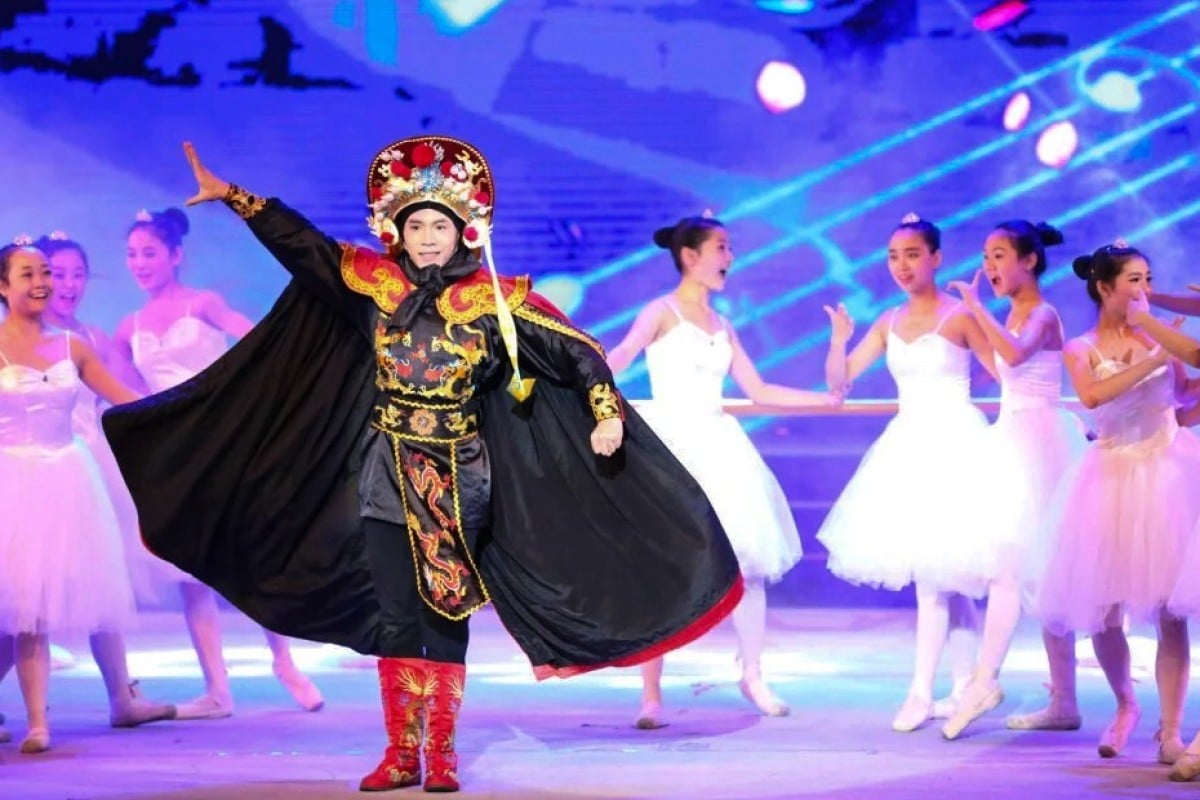
Defying all the odds, Xie Haifeng is now a professional dancer. Photo: Handout
It was there that Xie was inspired to make the most of his life. A team of athletes visited the hospital and he was shocked to see one of them, a volleyball player, walking on a prosthetic leg.
Xie began to wear a prosthesis and after rehabilitation training returned to his hometown in 2009 where he was admitted to Qingchuan High School. At first, he was self-conscious and felt inferior to his peers. He did not dare to wear shorts in summer and said he seldom talked to the other students.
The following year he was introduced to members of the Chengdu Disabled People’s Art Troupe, where he found a new and welcoming home. Xie quit school and joined the troupe, despite his parents’ opposition. They were convinced study was the only way for rural students like their son to get out of poverty.
Xie learned Sichuan opera and was soon performing its art of bian lian, or
– a skill that requires rapid mask changes in a dazzling sleight of hand – on stage until the troupe was disbanded in 2011, leaving him unemployed for six months.
China marks 10-year anniversary of Sichuan earthquake
But the misfortune led to an improbable opportunity when he was hired by the Sichuan Provincial Disabled People’s Art Troupe and trained to dance. At 19, and with no experience, Xie found the training far more difficult than those who had started at the more usual age of five or six.
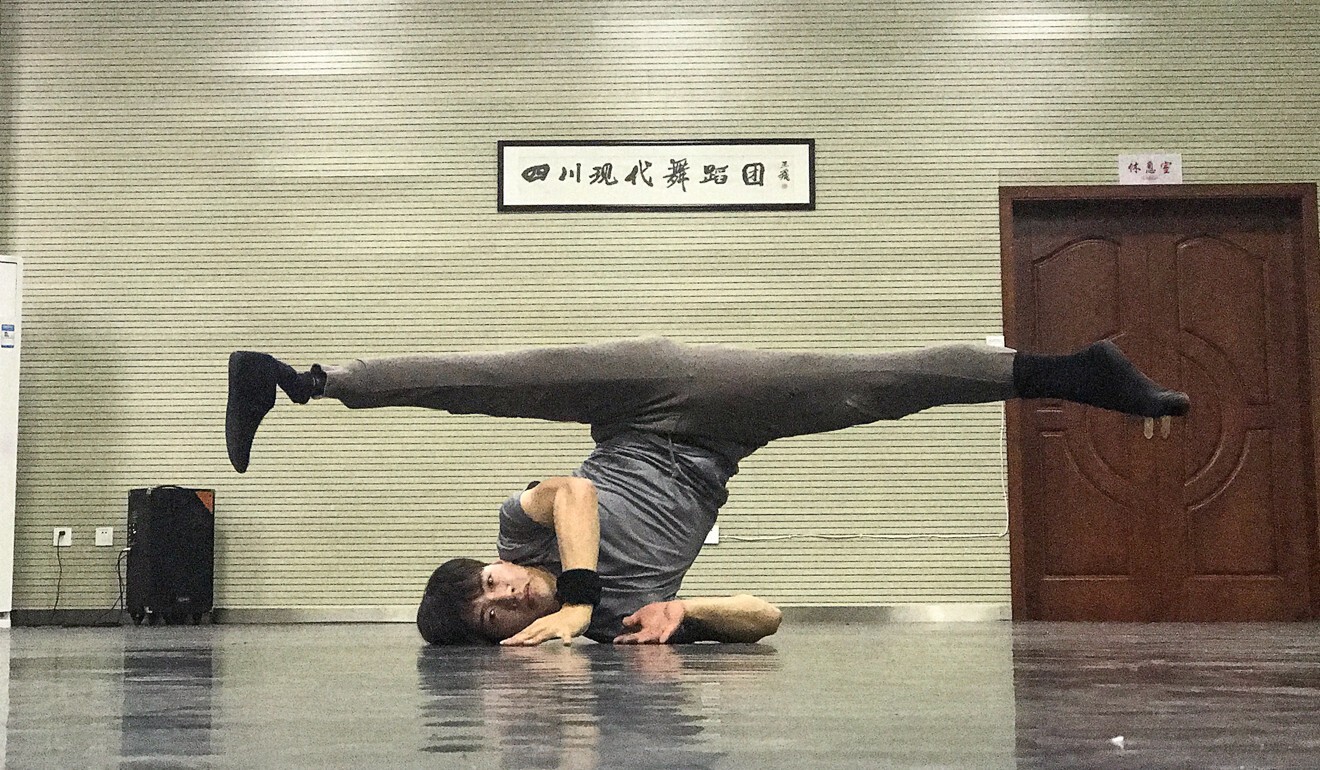
His body was too stiff, he said, and in the first months he spent 10 hours each day just stretching and building flexibility. It was just the beginning of a long and often arduous process.
“That agony is too much to be described,” Xie said about the pain of dancing on a prosthetic leg. “During the first six months’ training, I broke three artificial legs.”
More than once, he wondered whether he had chosen the right path. But, ultimately, his gruelling effort paid off and Xie has performed in Singapore, Hong Kong and Macau. In 2013, he won a gold medal at a national dancing competition for people with disabilities.
“My dances won me applause and recognition from the audience. I feel relieved and I think my heart belongs to the stage,” he said.
Xie broke three artificial legs during his first six months of dance training. Photo: Handout
Xie said he owed part of his success to Hong Kong which in 2008 donated HK$20 billion (US$2.5 billion) in aid to Sichuan and sent doctors to treat the injured. Among the volunteers was Poon Tak-lun, a Hong Kong orthopaedist who flew to Sichuan every two weeks from 2008 to 2013 to treat patients.
At a gala show in 2013 to express gratitude from the people of Sichuan to Hong Kong, Xie met Poon and the two became good friends, thanks to their common interest in the arts.
“Dr Poon promised to pay for all the costs of installing and repairing my artificial leg in the future. He told me to focus on dancing without worrying about the leg’s costs,” Xie said.
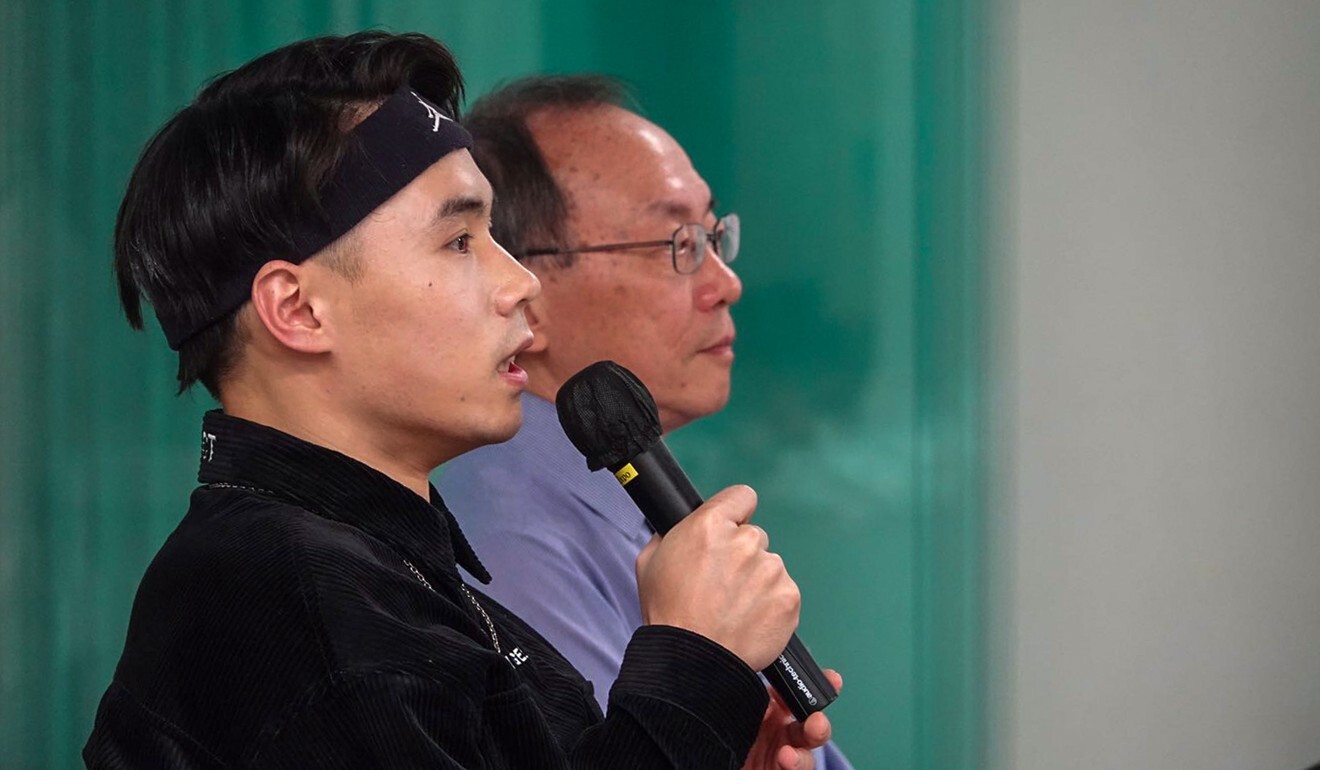
Xie Haifeng (pictured left with friend Poon Tak-lun) gives a speech to students in Hong Kong. Photo: Handout
Grateful for the help he received from Poon and Hong Kong, Xie has sought to return the favour by doing what he does best.
“I have no other skills except dancing and performing. So I thought of sharing my experience to encourage young students in Hong Kong,” he said.
Xie travels to Hong Kong about twice a year to perform and visit schools. In 2019, he visited the city four times, performing dances and Sichuan opera, and giving speeches at more than 10 primary and secondary schools.
“I encourage them to study hard. I said there are many people in this world who have more difficulties than them but still insist on pursuing their dreams, so they should not give up their dreams,” Xie said.
When he is not dancing and giving inspirational speeches, Xie said he lived a life like everyone else – climbing mountains, swimming and proudly walking on the leg he gained after almost losing everything in Sichuan’s deadly earthquake.
People’s Liberation Army has officially recorded no infections but disease fears have delayed recruitment, training and operations
Analysts say Sars experience guided military’s prompt response, but combat effectiveness has been affected
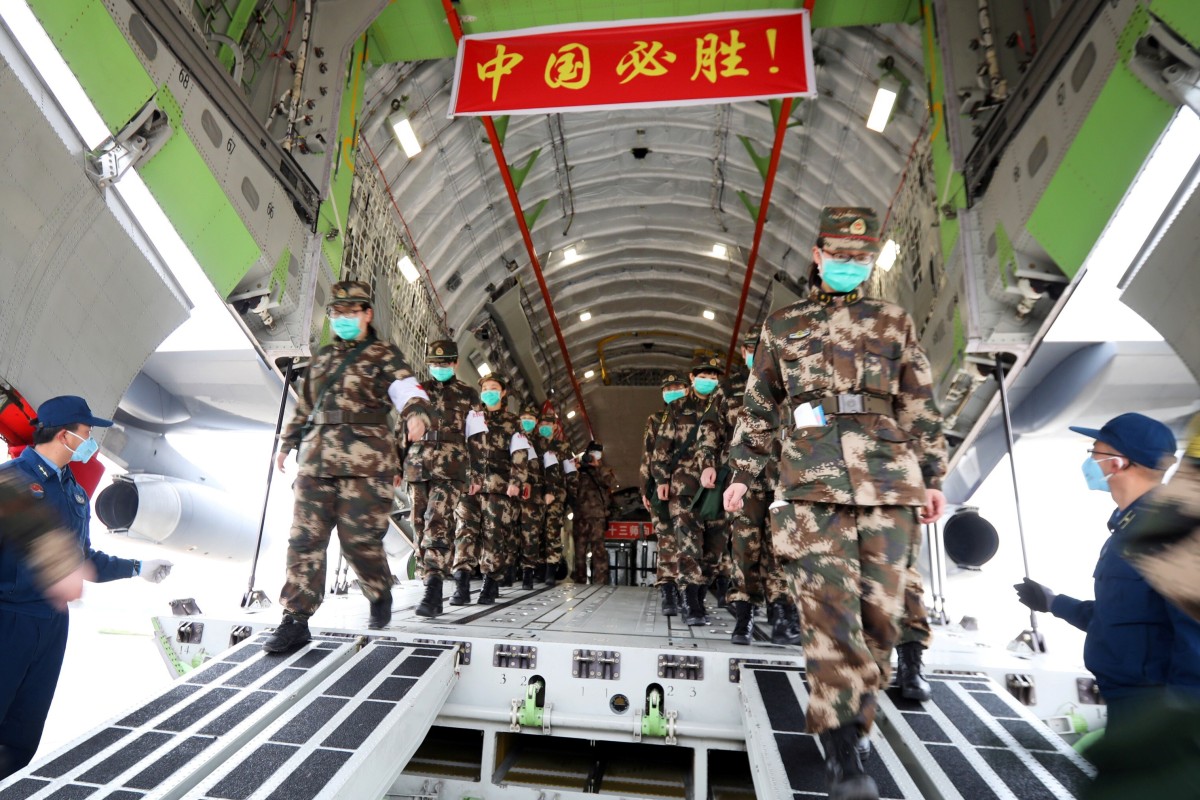
Chinese military medical personnel arriving in Wuhan in February to assist with the coronavirus outbreak response to the February. Photo: Reuters
China’s military may have been spared any coronavirus infections, but the global health crisis has slowed the progress of Chinese President Xi Jinping’s plan to transform the People’s Liberation Army into a modern fighting force capable of long-range power-projecting operations, experts say.
According to China’s defence ministry, the world’s largest armed force – with about 2.3 million personnel – has had zero confirmed cases of Covid-19. In contrast, the US and Russian militaries, ranked second- and third-largest in the world, have reported more than 4,000 and 1,000 respectively.
But the PLA has been affected in other ways by the disease, which was first reported in Wuhan in December before going on to infect 3.9 million people around the world to date.
Safety concerns delayed its annual spring recruitment programme – it has been rescheduled for August – while the PLA Navy was forced to change its training arrangements, switching to classroom study of military theory and tactics, according to Xinhua.
“The PLA is still a conscription army and, given its large turnover of soldiers every year and the late recruitment and training plan this year, the coronavirus pandemic has already affected combat effectiveness,” said Adam Ni, director of the China Policy Centre, an independent, non-profit research organisation based in Canberra, Australia.
China’s military budget will still rise despite coronavirus, experts predict
3 May 2020
The navy’s operations, in particular, would have been affected, according to Charlie Lyons Jones, a researcher from the Australian Strategic Policy Institute’s defence and strategy programme.
“The Chinese navy, short of highly effective disease control measures, is unlikely to avoid similar outbreaks of the novel coronavirus on board its warships,” he said.
“Therefore, even if the PLA Navy currently has zero personnel infected by the novel coronavirus, its position as a navy that can operate effectively in a period of higher-than-normal tension remains precarious at best,” Jones said. He also questioned Beijing’s claims that the military was virus-free.
“The PLA played an important role in China’s response to the coronavirus outbreak in Wuhan … The idea that none of these personnel working on the front lines in Wuhan became infected by the novel coronavirus would be inconsistent with the experiences of countries from around the world,” he said.
More than 4,000 military medical workers were sent to Wuhan as part of China’s effort to contain the outbreak at ground zero – which included the rapid-built emergency field facility, the Huoshenshan hospital – and their efforts were highlighted in a documentary screened recently by state broadcaster CCTV.
China opens coronavirus hospital built in 10 days
At the time, rumours were rampant that the Chinese military had been affected by the coronavirus, fuelled by a report on February 17 by the official PLA Daily that some soldiers had been placed in quarantine and Yu Qiusong, captain of the Changzhou type 054A frigate, was isolating in a guest house. The news report did not mention why the personnel were in quarantine.
But analysts said that whether the official numbers were accurate, the PLA’s closed management, fast response and past experience with severe acute respiratory syndrome (Sars) gave China’s military an advantage in keeping the coronavirus at bay.
Zhou Chenming, a Beijing-based military observer, said a key reason for the less serious hit to the PLA compared to other forces was its speed in recognising the severity of the situation.
“What’s more, the PLA has its own logistic support system that can help minimise its contact with the outside world, thus reducing the possibility of contracting the virus,” he said.
China’s long-range stealth bomber could make its debut this year
4 May 2020
According to Xinhua, the PLA’s Centre for Disease Control and Prevention drew up an emergency response plan and mobilisation arrangements on January 20, the same day Xi issued an instruction to the public that the virus must be “resolutely contained”.
Timothy Heath, a senior international defence research analyst with the Rand Corporation, a US think tank, said China’s military had benefited from its less international role, compared to US forces.
“The US is a globally distributed force while the Chinese military largely operates on the mainland. The US thus faces challenges in containing the disease that the Chinese military does not have to face … and the US military has a large range of missions and tasks it carries out to counter threats to its allies and partners, as well as to US security. This complicates efforts by the US military to carry out disease control measures,” he said.
WASHINGTON (Reuters) – President Donald Trump said on Wednesday he believes China’s handling of the coronavirus is proof that Beijing “will do anything they can” to make him lose his re-election bid in November.
In an interview with Reuters in the Oval Office, Trump talked tough on China and said he was looking at different options in terms of consequences for Beijing over the virus. “I can do a lot,” he said.
Trump has been heaping blame on China for a global pandemic that has killed at least 60,000 people in the United States according to a Reuters tally, and thrown the U.S. economy into a deep recession, putting in jeopardy his hopes for another four-year term.
The Republican president, often accused of not acting early enough to prepare the United States for the spread of the virus, said he believed China should have been more active in letting the world know about the coronavirus much sooner.
Asked whether he was considering the use of tariffs or even debt write-offs for China, Trump would not offer specifics. “There are many things I can do,” he said. “We’re looking for what happened.”
RELATED COVERAGE
China says it has no interest in meddling in U.S. election
“China will do anything they can to have me lose this race,” said Trump. He said he believes Beijing wants his Democratic opponent, Joe Biden, to win the race to ease the pressure Trump has placed on China over trade and other issues.
“They’re constantly using public relations to try to make it like they’re innocent parties,” he said of Chinese officials.
He said the trade deal that he concluded with Chinese President Xi Jinping aimed at reducing chronic U.S. trade deficits with China had been “upset very badly” by the economic fallout from the virus.
A senior Trump administration official, speaking on condition of anonymity, said on Wednesday that an informal “truce” in the war of words that Trump and Xi essentially agreed to in a phone call in late March now appeared to be over.
The two leaders had promised that their governments would do everything possible to cooperate to contain the coronavirus. In recent days, Washington and Beijing have traded increasingly bitter recriminations over the origin of the virus and the response to it.
However, Trump and his top aides, while stepping up their anti-China rhetoric, have stopped short of directly criticizing Xi, who the U.S. president has repeatedly called his “friend.”
Trump also said South Korea has agreed to pay the United States more money for a defense cooperation agreement but would not be drawn out on how much.
“We can make a deal. They want to make a deal,” Trump said. “They’ve agreed to pay a lot of money. They’re paying a lot more money than they did when I got here” in January 2017.
The United States stations roughly 28,500 troops in South Korea, a legacy of the 1950-53 Korean War that ended in an armistice, rather than a peace treaty.
Trump is leading a triage effort to try to keep the U.S. economy afloat through stimulus payments to individuals and companies while nudging state governors to carefully reopen their states as new infections decline.
Trump sounded wistful about the strong economy that he had enjoyed compared with now, when millions of people have lost their jobs and GDP is faltering.
“We were rocking before this happened. We had the greatest economy in history,” he said.
He said he is happy with the way many governors are operating under the strain of the virus but said some need to improve. He would not name names.
Trump’s handling of the virus has come under scrutiny. Forty-three percent of Americans approved of Trump’s handling of the coronavirus, according to the Reuters/Ipsos poll from April 27-28.
But there was some good coronavirus news, as Gilead Sciences Inc said its experimental antiviral drug remdesivir was showing progress in treating virus victims.
Trump has also seeking an accelerated timetable on development of a vaccine.
“I think things are moving along very nicely,” he said.
At the end of the half-hour interview, Trump offered lighthearted remarks about a newly released Navy video purportedly showing an unidentified flying object.
“I just wonder if it’s real,” he said. “That’s a hell of a video.”
BEIJING, April 28 (Xinhua) — China has achieved much progress in environmental protection and taken the lead in green development in recent years.
The efforts have exemplified Chinese President Xi Jinping’s proposal of “working together for a green and better future for all” made a year ago in his speech at the opening ceremony of the International Horticultural Exhibition 2019 Beijing.
In the keynote speech, Xi proposed a five-point initiative on promoting green development, namely pursuing harmony between man and nature, pursuing the prosperity based on green development, fostering a passion for nature-caring lifestyle, pursuing a scientific spirit in ecological governance, and joining hands to tackle environmental challenges.
China’s hard work on environment protection has paid off.
The ecological environment has improved significantly. People are enjoying more days of blue sky, cleaner water, and fertile land.
China has achieved the goal of zero growth of desertified land by 2030 set by the United Nations ahead of time. Besides, forest stock volume increased by 4.56 billion cubic meters compared with that of 2005.
Carbon dioxide emissions per unit of GDP in 2018 fell by 45.8 percent compared with that of 2005, exceeding the target set for the year.
After more than 30 years of hard work, the seventh largest desert in China, the Kubuqi Desert in Inner Mongolia Autonomous Region, once known as the “sea of death” difficult for birds to fly across, has turned into a green valley.
In January 2020, in a letter in reply to the student representatives of the Global Alliance of Universities on Climate, the Chinese president mentioned his thoughts about ecological civilization in his youth.
“Over four decades ago, I lived and worked for many years in a small village on the Loess Plateau in western China. Back then, the ecology and environment there was seriously damaged due to over-development and the local people were trapped in poverty as a result,” Xi wrote.
“This experience taught me that man and nature are a community of life and that the damage done to nature will ultimately hurt mankind,” said Xi.
China’s progress and achievements are recognized worldwide.
The ecological civilization and green development advocated by China are actually an endeavor to find a way to balance economic development and environmental protection, said John Cobb, Jr., the founding president of the Institute for Postmodern Development of China and member of the American Academy of Arts and Sciences.
Noting that the endeavor is a remarkable exploration, he expressed his hope that it will succeed.
China is on the right path in dealing with global climate change and achieving sustainable development, said Borge Brende, president of the World Economic Forum.
In addition to making efforts at home, China has also rolled out a series of measures to support the global combat against climate change.
In September 2015, ahead of the Paris climate change conference, Xi pledged a 20-billion-yuan (3-billion-U.S. dollars) China South-South Climate Cooperation Fund, which was dedicated to help other developing countries combat climate change.
China has also been fulfilling the obligations of the United Nations Framework Convention on Climate Change and the Paris Agreement, and achieved the goal of its intended nationally determined contributions submitted to the secretariat of the Climate Change Convention as scheduled.
UN Secretary-General Antonio Guterres expressed his appreciation for China’s important contributions to addressing the climate change and building a green “Belt and Road,” and said he expects China to continue to play a leading role in addressing the climate change and other issues.
“Lucid waters and lush mountains are invaluable assets,” a concept put forward by Xi in 2005 when he visited Yucun Village in southeast China’s Zhejiang Province as the party chief of the province, has become the motto of the Lao Ministry of Natural Resources and Environment.
In March 2020, when Xi returned to Yucun, he said that economic development should not be achieved at the expense of the ecological environment. To protect the ecological environment is to develop the productive forces, he said.
The history of civilizations shows that the rise or fall of a civilization is closely tied to its relationship with nature, Xi said at the International Horticultural Exhibition last year.
Only by joining hands can the humankind advance a global ecological civilization and march towards the bright future of building a community with a shared future for mankind.
Chinese President Xi Jinping poses for a group photo with foreign delegates attending the 2019 New Economy Forum before meeting with them at the Great Hall of the People in Beijing, capital of China, Nov. 22, 2019. (Xinhua/Huang Jingwen)
BEIJING, Nov. 22 (Xinhua) — Chinese President Xi Jinping said on Friday realizing the Chinese dream of national rejuvenation is by no means to seek hegemony.
Saying he has full confidence in China’s prospects for development, Xi noted China does not intend to replace any power, rather, its aim is to “regain the dignity and status it deserves.”
The president made the remarks when meeting with foreign delegates attending the 2019 New Economy Forum held in Beijing.
China, with a 5,000-year-old history of civilization, is home to the four great inventions that had contributed tremendously to the progress of human civilization. The country had become a semi-colonial and semi-feudal society since the Opium Wars, but the Chinese people had never yielded and spared no effort in seeking a path to national rejuvenation, Xi stressed.
Earth-shattering changes have taken place since the founding of the People’s Republic of China 70 years ago, and the humiliating history of China as a semi-colonial and semi-feudal country will never be repeated, he said.
“The fundamental reason is that we have found a correct path that suits China’s national conditions, conforms to the trends of the times and enjoys the support of the people. The path is socialism with Chinese characteristics,” Xi said.
With full confidence, the Chinese people will unswervingly follow this path, he added.
Xi noted that innovation is a major theme of the current times, as the world is undergoing changes rarely seen in a century, featuring a new round of technological revolution and rapid industrial transformation.
The common challenges facing humanity call for concerted efforts of all countries. No country can become an independent innovation center or enjoy fruits of innovation alone, Xi said. “Innovation should benefit the world rather than being encaved.”
He said China is willing to carry out cooperation in innovation with other countries including the United States, so as to better benefit the people of the two countries and the world.
Despite great achievements, China will continue to adhere to the traditional concept of “harmony in diversity,” stick to the path of peaceful development, and strive for mutually beneficial cooperation with other countries, Xi told the foreign delegates.
China will stick to the reform and opening-up through bold innovations and with a manner of “feeling the rocks on the riverbed when crossing the river,” he said.
“The more resistance we are confronted with, the more determined we will be to open up,” Xi said. “I have full confidence in China’s prospects of development.”
During the meeting, former U.S. Secretary of State Henry Kissinger, former U.S. Treasury Secretary Henry Paulson, Egyptian Tourism Minister Dalia al-Mashat, former Japanese Foreign Minister Yoriko Kawaguchi, and Credit Suisse Group AG CEO Tidjane Thiam exchanged views, and expressed their support for innovation cooperation.
The 2019 New Economy Forum, which focused on development trends and social impacts of innovation, gathered more than 500 delegates from more than 60 countries around the world.
A white paper titled “Equality, Development and Sharing: Progress of Women’s Cause in 70 Years Since New China’s Founding” is released by the State Council Information Office in Beijing, capital of China, Sept. 19, 2019. China on Thursday issued a white paper on the progress of women’s cause in the past 70 years since the founding of the People’s Republic of China. TO GO WITH “China publishes white paper on progress of women’s cause in 70 years” (Xinhua/Zhang Yuwei)
BEIJING, Sept. 19 (Xinhua) — China on Thursday issued a white paper on the progress of women’s cause in the past 70 years since the founding of the People’s Republic of China (PRC).
The white paper, titled “Equality, Development and Sharing: Progress of Women’s Cause in 70 Years Since New China’s Founding,” was released by the State Council Information Office.
The founding of the PRC in 1949 ushered in a new era for women in China, changing their social status from an oppressed and enslaved group in the past thousands of years to masters of their own fate, the white paper said.
As the Chinese nation is rising and growing richer and stronger, Chinese women’s social status has undergone enormous changes, it said.
“The great achievements China has made in the development of women’s cause is attributed to the leadership of the Communist Party of China (CPC),” said Huang Xiaowei, vice president of the All-China Women’s Federation, at a press conference.
The progress made by Chinese women led by the CPC is not only of considerable significance to China’s national rejuvenation but also a notable contribution to human civilization progress, Huang said.
As China’s development has entered a new era, promoting gender equality and women’s overall development at a higher level not only meets opportunities but also has a long way to go, the white paper said.
Under the guidance of Xi Jinping Thought on Socialism with Chinese Characteristics for a New Era, China will always adhere to safeguarding and improving women’s livelihoods, promote women’s all-round development, and lead hundreds of millions of women in working for national rejuvenation, it said.
MORE WORKING WOMEN
China has promulgated laws and regulations to fully protect women’s economic rights and interests, especially the right to equal employment, ensuring equal pay to men and women for equal work and eliminating gender discrimination in employment, the white paper said.
Women account for 40 percent of the labor force in China. In 2017, there were 340 million working women, doubling the figure in 1978.
Women’s job options have greatly expanded. In 2010, 46.8 percent of women worked in industry and service sectors, up 24.8 percentage points from 1982.
HIGHER POLITICAL STATUS
China has drawn up and implemented laws to guarantee that women share equal rights with men to vote, to be elected, and to participate in the administration of state affairs, the white paper said, adding that over the past four decades since the reform and opening-up, new opportunities and channels have been opened to women to participate in politics.
In 2017, women accounted for 52.4 percent of public servants newly-recruited by the central government organs and their affiliates, and the proportion was 44 percent among local governments.
The ratio of women deputies to the 13th National People’s Congress (NPC) was 24.9 percent, 12.9 percentage points higher than that of the first NPC in 1954.
MORE EDUCATED WOMEN
Chinese women’s education level has been dramatically lifted over the past seven decades, according to the white paper.
The illiteracy rate among females aged 15 and above dropped from 90 percent before the founding of the PRC to 7.3 percent in 2017, which was a historic change.
The gender gap in the nine-year compulsory education has been basically eliminated. In 2017, the net primary school enrollment rates of boys and girls were both 99.9 percent while the proportions of girls in primary schools and junior high schools were 46.5 percent and 46.4 percent respectively, 18.5 and 20.8 percentage points higher than those in 1951 respectively
In 2017, the gross high school enrollment rate was 88.3 percent, with girls accounting for 47.7 percent of all students in high schools.
Meanwhile, women accounted for 52.5 percent of students in regular institutions of higher education, 28.4 percentage points higher than in 1978, 32.7 percentage points higher than in 1949.
HEALTHIER WOMEN
Women’s health has further improved in China. Women’s average life expectancy grew to 79.4 years in 2015, an increase of 10.1 years over 1981 and 42.7 years over 1949, according to the white paper.
The maternal mortality rate has fallen 79.4 percent from 88.8 per 100,000 in 1990 to 18.3 per 100,000 in 2018, meaning that China has achieved the United Nations Millennium Development Goals ahead of time.
China suggests good progress made in Regional Comprehensive Economic Partnership talks after marathon 10-day negotiations in Zhengzhou
Indian Commerce Minister Piyush Goyal has opted to skip the upcoming high-level meetings, adding fuel to rumours that the country could be removed
The Association of Southeast Asian Nations (Asean) has overtaken the US to become China’s second-largest trading partner in the first half of 2019. Photo: AP
China has claimed “positive progress” towards finalising the world’s largest free-trade agreement by the end of 2019 after hosting 10 days of talks, but insiders have suggested there was “never a chance” of concluding the deal in Zhengzhou.
The 27th round of the Regional Comprehensive Economic Partnership (RCEP) negotiations closed on Wednesday in the central Chinese city.
working level conference brought over 700 negotiators from all 16 member countries to Henan province, with China keen to push through a deal which has proven extremely difficult to close.
If finalised, the agreement, which involves the 10 Asean nations, as well as China, Japan, South Korea, Australia, New Zealand, and India, would cover around one-third of the global gross domestic product, about 40 per cent of world trade and almost half the world’s population.
“This round of talks has made positive progress in various fields,” said assistant minister of commerce Li Chenggang, adding that all parties had reaffirmed the goal of concluding the deal this year. “China will work together with the RCEP countries to proactively push forward the negotiation, strive to resolve the remaining issues as soon as possible, and to end the negotiations as soon as possible.”
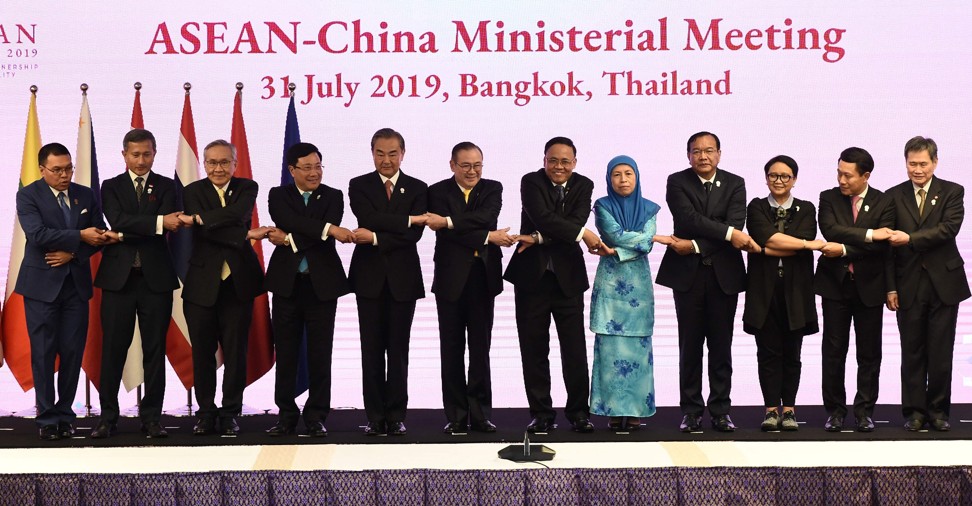
China’s Foreign Minister Wang Yi (fifth left) poses with foreign ministers from the Association of Southeast Asian Nations (Asean) countries during the ASEAN-China Ministerial Meeting in Bangkok. Photo: AFP
China is keen to complete a deal which would offer it a buffer against the United States in Asia, and which would allow it to champion its free trade position, while the US pursues protectionist trade policy.
The RCEP talks took place as Chinese and American trade negotiators resumed face-to-face discussions in Shanghai, which also ended on Wednesday, although there was little sign of similar progress.
As the rivalry between Beijing and Washington has intensified and bilateral trade waned, the Association of Southeast Asian Nations (Asean) overtook the US to become China’s second-largest trading partner in the first half of 2019. From January to June, the trade volume between China and the 10-member bloc reached US$291.85 billion, up by 4.2 per cent from a year ago, according to government data.
The Asean bloc is made up of Indonesia, Thailand, Malaysia, Singapore, Philippines, Vietnam, Myanmar, Cambodia, Brunei and Laos.
China will work together with the RCEP countries to proactively push forward the negotiation, strive to resolve the remaining issues as soon as possible, and to end the negotiations as soon as possible. Li Chenggang
RCEP talks will now move to a higher level ministerial meeting in Beijing on Friday and Saturday, but trade experts have warned that if material progress is not made, it is likely that the RCEP talks will continue into 2020, prolonging a saga which has already dragged on longer than many expected. It is the first time China has hosted the ministerial level talks.
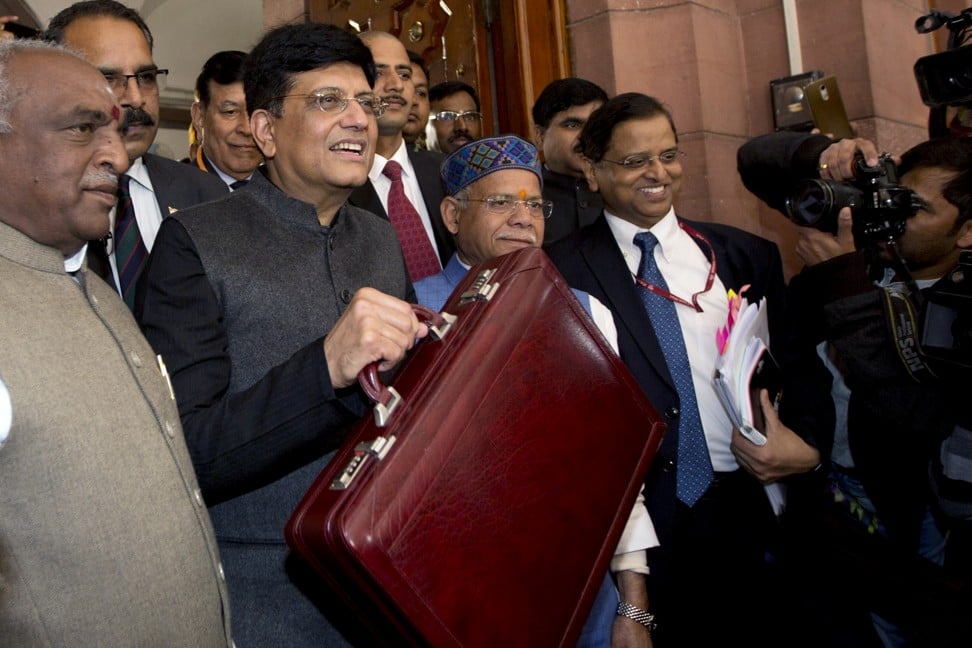
But complicating matters is the fact that India’s Commerce Minister, Piyush Goyal, will not attend the ministerial level talks, with an Indian government official saying that he has to participate in an extended parliamentary session.
India is widely viewed as the biggest roadblock to concluding RCEP, the first negotiations for which were held in May 2013 in Brunei. Delhi has allegedly opposed opening its domestic markets to tariff-free goods and services, particularly from China, and has also had issues with the rules of origin chapter of RCEP.
China is understood to be “egging on” other members to move forward without India, but this could be politically explosive, particularly for smaller Asean nations, a source familiar with talks said.
Deborah Elms, executive director of the Asian Trade Centre, a Singapore-based lobby group, said that after the last round of negotiations in Melbourne between June 22 to July 3 – which she attended – there was “frustration” at India’s reluctance to move forward.
She suggested that in India’s absence, ministers in China could decide to move forward through a “pathfinder” agreement, which would remove India, but also potentially Australia and New Zealand.
India’s Commerce Minister, Piyush Goyal, will not attend the ministerial level talks this week in Beijing. Photo: Bloomberg
This “Asean-plus three” deal would be designed to encourage India to come on board, Elms said, but would surely not go down well in Australia and New Zealand, which have been two of the agreement’s biggest supporters.
New Zealand has had objections to the investor protections sections of RCEP, and both countries have historically been pushing for a more comprehensive deal than many members are comfortable with, since both already have free trade agreements with many of the other member nations.
However, their exclusion would be due to “an unfortunate geographical problem, which is if you’re going to kick out India, there has always been an Asean-plus three concept to start with”. Therefore it is easier to exclude Australia and New Zealand, rather than India alone, which would politically difficult.
A source close to the negotiating teams described the prospect of being cut out of the deal at this late stage as a “frustrating rumour”, adding that “as far as I know [it] has no real basis other than a scare tactic against India”.
There was “never a chance of concluding [the deal during] this round, but good progress is being made is what I understand. The key issues remain India and China”, said the source, who wished to remain anonymous.
Replacing bilateral cooperation with regional collaborations is a means of resolving the disputesTong Jiadong
However, Tong Jiadong, a professor of international trade at the Nankai University of Tianjin, said Washington’s refusal to recognise India as a developing country at the World Trade Organisation could nudge the world’s second most populous nation closer to signing RCEP.
“That might push India to the RCEP, accelerating the pace of RCEP,” Tong said, adding that ongoing trade tensions between Japan and South Korea could also be soothed by RCEP’s passage.
“Replacing bilateral cooperation with regional collaborations is a means of resolving the disputes between the two countries,” Tong said.
Although the plan was first proposed by the Southeast Asian countries, China has been playing an increasingly active role, first as a response to the now defunct US-backed Trans-Pacific Partnership (TPP), and more recently as a means of containing the impact of the trade war.
China’s vice-commerce Minister, Wang Shouwen, told delegates last week that RCEP was “the most important free trade deal in East Asia”. He called on all participants to “take full advantage of the good momentum and accelerating progress at the moment” to conclude a deal by the end of the year.
BEIJING, May 5 (Xinhua) — The Chinese mainland’s Taiwan affairs chief on Sunday called on youths on both sides of the Taiwan Strait to jointly shoulder the historic mission of national rejuvenation and contribute to cross-Strait integrated development.
Liu Jieyi, head of the Taiwan Work Office of the Communist Party of China Central Committee and the Taiwan Affairs Office of the State Council, made the remarks at the opening ceremony of a summit on cross-Strait exchange and cooperation among the youths.
Young people on the two sides of the Strait should value this great time, be responsible and do their share in safeguarding and building the common home of compatriots on the two sides of the Strait, Liu said.
“Attempts by the ‘Taiwan independence’ forces to undermine cross-Strait peace and obstruct national development will never be allowed,” he said.
He also pledged to provide better conditions for youths from Taiwan to carry out exchanges, study, work and start businesses on the mainland.
As Saturday marks the centenary of the May Fourth Movement, Liu called on the youths on both sides of the Strait to pass on the May Fourth spirit, which refers to patriotism, progress, democracy and science, with patriotism at the core.
BEIJING, March 10 (Xinhua) — China has made substantial progress in renovating the dilapidated houses in rural areas, said the Ministry of Housing and Urban-Rural Development (MOHURD).
Over 6 million registered poor households have seen their dilapidated houses renovated since the country launched the “three tough battles” against major risks, poverty and pollution in November 2015, the MOHURD said.
In 2018 alone, 1.57 million registered rural poor households saw their dilapidated houses renovated, according to the National Bureau of Statistics.
China plans to renovate another 15 million units of shanty houses from 2018 to 2020 to speed up its urbanization drive and improve people’s livelihood.
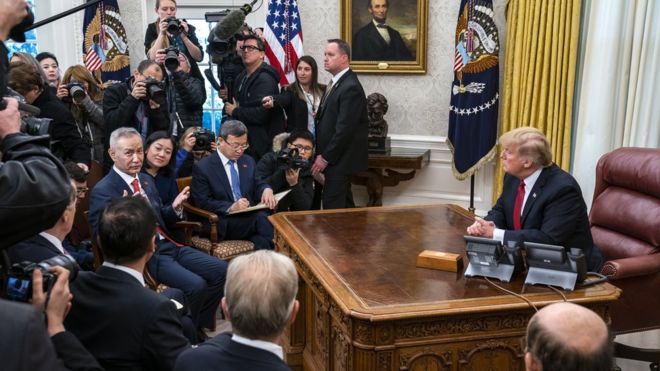
Image copyrightEPAImage captionVice Premier Liu He and President Donald Trump talk to the press about trade
China’s trade delegation says it made “important progress” in the latest round of talks with the US, China’s state media reports.
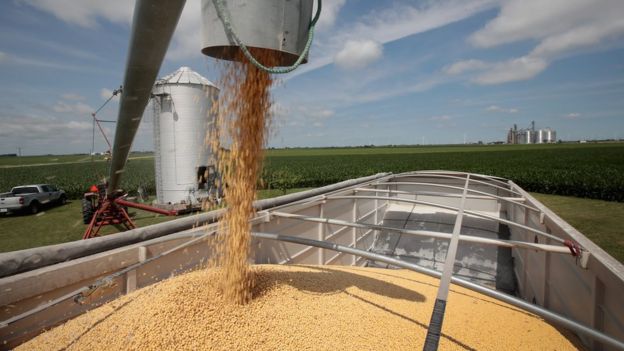
At the end of a two-day meeting in Washington, no deal was reached but China pledged to buy more US soybeans.
US President Donald Trump touted the promise as proof that the two sides were making progress.
They are pushing to reach a deal by 1 March to avert an escalation in tariffs.
At a press conference with Vice Premier Liu He on Thursday, President Trump said he hoped to meet Chinese President Xi Jinping to hash out a final agreement by the looming deadline.
“We have made tremendous progress,” President Trump said.
“That doesn’t mean you’re going to have a deal but there’s a tremendous relationship and a warm feeling.”
China also agreed to increase imports of “US agricultural products, energy products, industrial manufactured goods and service products” during the talks, Xinhua reported.
Is this progress?
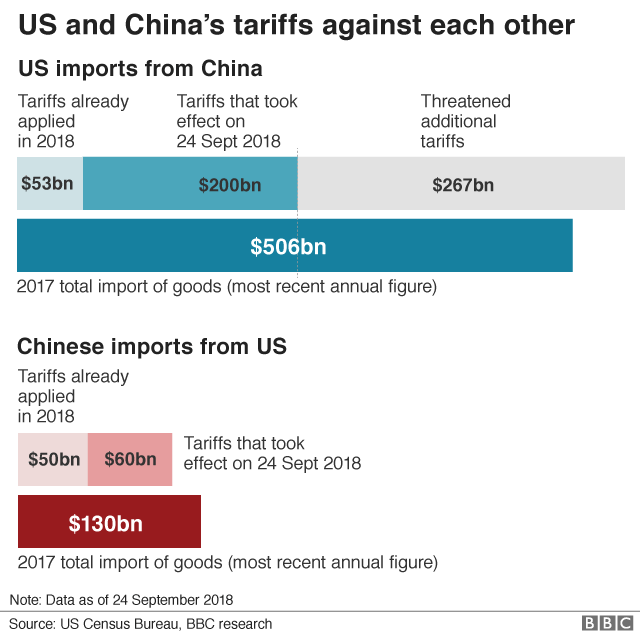
The two sides are racing to come up with a trade deal by 1 March, or the US has said it will increase tariff rates on $200bn (£152bn) worth of Chinese goods from 10% to 25%.
US trade negotiators agreed to visit China for more discussions in mid-February, Chinese state media reported.
In December, the two countries agreed to 90 days of negotiations, in an effort to defuse their escalating trade war, which had led to new tariffs on billions of dollars worth of goods.
The country imported more than 30 million tonnes of soybeans from the US in 2017 – a figure that dropped sharply last year amid the trade war.
Image copyrightGETTY IMAGES
Chinese businesses, meanwhile, have been trying to find new sources to replace crops from the US, which was the country’s second biggest supplier after Brazil in 2017.
Analysis: What China wants
Robin Brant, BBC News, Shanghai
China’s state media has painted these talks as “progress” based on the offer of measures or reforms that China wants to see, or needs.
These are not concessions, but steps that are in line with reform and opening up already planned by President Xi.
What politicians call the retail takeaway – in this case it literally is one – of buying more soybeans from American farmers went down well with President Trump.
That’s the idea. China would probably like a deal with the President Trump. Just the President.
A deal that the lead US negotiator, Trade Representative Robert Lighthizer, will sign off on is likely to involve verifiable, structural changes to the economy.
China is far less likely to concede that.
China would rather simply buy more soybeans and other goods or services to help President Trump fulfil his campaign pledge to deal with the trade imbalance between the two countries.
What happens next?
Mr Lighthizer said he was focused on securing a enforceable deal. He warned that many issues remained unresolved.
The US pressed for changes on intellectual property laws and rules that limit the operations of foreign companies in China, both of which have been key sticking points in negotiations.
The two sides “attached great importance to the issues of intellectual property protection and technology transfer and agreed to further strengthen cooperation”, according to Xinhua.
“We’ve made progress,” Mr Lighthizer said.
“At this point, it’s impossible for me to predict success but we are in a place that, if things work, it could happen.”







 CHINDIA ALERT: You'll be living in their world, very soon