Chindia Alert: You’ll be Living in their World Very Soon
aims to alert you to the threats and opportunities that China and India present. China and India require serious attention; case of ‘hidden dragon and crouching tiger’.
Without this attention, governments, businesses and, indeed, individuals may find themselves at a great disadvantage sooner rather than later.
The POSTs (front webpages) are mainly 'cuttings' from reliable sources, updated continuously.
The PAGEs (see Tabs, above) attempt to make the information more meaningful by putting some structure to the information we have researched and assembled since 2006.
Chinese President Xi Jinping, also general secretary of the Communist Party of China (CPC) Central Committee and chairman of the Central Military Commission, joins deliberation with deputies from Gansu Province at the second session of the 13th National People’s Congress in Beijing, capital of China, March 7, 2019. (Xinhua/Ju Peng)
BEIJING, March 7 (Xinhua) — Chinese President Xi Jinping on Thursday called for perseverance in the fight against poverty as there are only two years left for the country to meet its goal of eradicating extreme poverty by 2020.
“There should be no retreat until a complete victory is won,” said Xi, also general secretary of the Communist Party of China (CPC) Central Committee and chairman of the Central Military Commission.
He made the remarks when deliberating with deputies from Gansu Province at the second session of the 13th National People’s Congress (NPC), China’s national legislature.
Decisive progress has been achieved in the country’s tough fight against poverty over the past years, marking a new chapter in the poverty reduction history of mankind, said Xi, stressing that the goal to eradicate extreme poverty must be achieved on time.
He warned that the tasks ahead remain arduous and hard as those still in poverty are the worst stricken.
Explaining the criteria of lifting people out of poverty, Xi said they should no longer need to worry about food and clothing while enjoying access to compulsory education, basic medical care and safe housing.
The practices of formalities for formalities’ sake and bureaucratism hamper the effective advancement of poverty reduction, he said, stressing a firm hand in rectifying malpractices in poverty relief.
Xi asked Party committees and governments at all levels to shoulder their responsibilities in the critical battle against poverty.
He ordered efforts to redress undesirable conduct of officials in a timely manner, as well as special campaigns to target corruption and bad conduct in poverty reduction.
Li Keqiang, Li Zhanshu, Wang Yang, Wang Huning, Zhao Leji and Han Zheng — members of the Standing Committee of the Political Bureau of the CPC Central Committee — on Thursday also separately joined deliberation with NPC deputies.
Premier Li Keqiang spoke of the need to replace old growth drivers with new ones and improve people’s wellbeing to advance high-quality development.
NPC Standing Committee Chairman Li Zhanshu called for efforts to adhere to green, high-quality development and link poverty alleviation with rural vitalization strategy.
Wang Yang, chairman of the National Committee of the Chinese People’s Political Consultative Conference, urged high-quality poverty alleviation work to make sure that nobody is left behind in the course of building a moderately prosperous society in all respects.
Wang Huning, a member of the Secretariat of the CPC Central Committee, said he expects Shanghai to continue to lead the reform and opening-up and to elevate the coordinated development of the Yangtze River Delta to a higher level.
Zhao Leji, secretary of the CPC Central Commission for Discipline Inspection, spoke of the need for Tianjin to take advantage of the period of strategic opportunity, enhance the capacity of innovation, and focus on developing real economy.
Vice Premier Han Zheng stressed the full implementation of the national strategy of the coordinated development of the Yangtze River Delta.
The African Union headquarters in Addis Ababa is a shiny spaceship-like structure that glistens in the afternoon sun.
With its accompanying skyscraper, it stands out in the Ethiopian capital.
Greetings in Mandarin welcome visitors as they enter the lifts, and the plastic palm trees bear the logos of the China Development Bank.
African Union HQ, Addis Ababa
Everywhere, there are small indications that the building was made possible through Chinese financial aid.
In 2006, Beijing pledged $200m to build the headquarters. Completed in 2012, everything was custom-built by the Chinese – including a state-of-the-art computer system.
For several years, the building stood as a proud testament to ever-closer ties between China and Africa. Trade has rocketed over the past two decades, growing by about 20% a year, according to international consultancy McKinsey. China is Africa’s largest economic partner.
But in January 2018, French newspaper Le Monde Afrique dropped a bombshell.
It reported that the AU’s computer system had been compromised.
The newspaper, citing multiple sources, said that for five years, between the hours of midnight and 0200, data from the AU’s servers was transferred more than 8,000km away – to servers in Shanghai.
This had allegedly continued for 1,825 days in a row.
Le Monde Afrique reported that it had come to light in 2017, when a conscientious scientist working for the AU recorded an unusually high amount of computer activity on its servers during hours when the offices would have been deserted.
It was also reported that microphones and listening devices had been discovered in the walls and desks of the building, following a sweep for bugs.
The reaction was swift.
Both AU and Chinese officials publicly condemned the report as false and sensationalist – an attempt by the Western media to damage relations between a more assertive China and an increasingly independent Africa.
But Le Monde Afrique said that AU officials had privately expressed concerns about just how dependent they were on Chinese aid – and what the consequences of that could be.
In the midst of all of this, one fact remained largely unreported.
The main supplier of information and communication technology systems to the AU headquarters was China’s best-known telecoms equipment company – Huawei.
The company says it had “nothing” to do with any alleged breach.
Huawei “served as the key ICT provider inside the AU’s headquarters”, said Danielle Cave of the Australian Strategic Policy Institute, in a review of the alleged incident.
Huawei headquarters in Shenzhen, China
“This doesn’t mean the company was complicit in any theft of data. But… it’s hard to see how – given Huawei’s role in providing equipment and key ICT services to the AU building and specifically to the AU’s data centre – the company could have remained completely unaware of the apparent theft of large amounts of data, every day, for five years.”
There is no evidence to indicate that Huawei’s telecoms network equipment was ever used by the Chinese government – or anyone else – to gain access to the data of their customers.
Indeed, no-one has ever gone on record to confirm that the AU system was compromised in the first place.
But these reports played into years of suspicions about Huawei – that a large Chinese company might find itself unduly influenced by the Chinese government.
Ren and the rise of Huawei
“When I first started out 30 years ago… we didn’t really have any telephones. The only phones we had were those hand-cranked phones that you see in old World War II films. We were pretty undeveloped then.”
Huawei’s founder and chairman Ren Zhengfei is reminiscing to the BBC about the origins of the world’s second-biggest smartphone firm, while sitting in the Huawei headquarters in Shenzhen – a symbol of the success that he’s worked his whole lifetime for.
A long marbled staircase, covered in plush red carpet, greets you as you first walk in.
At the top of the stairs, a giant painting depicts a traditional Chinese New Year scene.
Inside Huawei’s Shenzhen HQ
A few kilometres away in Dongguan, Huawei’s latest campus is even more eye-catching.
The site – designed to accommodate the company’s 25,000 R&D staff – comprises 12 “villages”, each of which recreates the architecture of a different European city, among them Paris, Bologna and Granada.
It’s as if Silicon Valley had been re-imagined by Walt Disney. Long corridors of Roman pillars and picturesque French cafes adorn the campus, with a train connecting the different areas, running through manicured gardens and past an artificial lake.
It’s a world away from the environment that Mr Ren found himself in when he first started the company in 1987. “I founded Huawei when China began to implement its reform and opening up policy,” he says. “At that time, China was shifting from a planned economy to a market economy. Not only people like myself, but even the most senior government officials, did not have the vaguest idea of what a market economy was. It seemed it was hard to survive.”
Ren was born in 1944 in Southern China – a tumultuous, chaotic place, one of the poorest regions in an already destitute country.
For a long time, hardship was all he ever knew.
He was from a family of seven children. “They were very poor,” says David De Cremer, who has co-written a book on Ren and Huawei.
“I think hardship is something that you can see throughout his life, and which he keeps emphasising himself.”
To escape that life of poverty and drudgery, Ren did what many young Chinese men of that era did. He joined the army.
Soldiers from the People’s Liberation Army, 1972
“I was a very low-ranking officer in the People’s Liberation Army,” he says. “I served in an ordinary construction project, not a field unit. At the time, I was a technician of a company in the military, and then I became an engineer.”
He left the military in 1983 when China began to downsize its forces, and went into the electronics business.
By his own admission, he wasn’t a great businessman at first.
“I was someone who had been in the military all my life at the time, used to doing what I was told,” he says. “Suddenly, I began to work in a market economy. I was at a total loss. So I too suffered losses, I too was deceived, and I was cheated.”
But he was quick to learn, and was a keen student of Western business practices and European history.
“I did research on what exactly a market economy was all about,” he says. “I read books on laws, including those about European and US laws. At that time, there were very few books on Chinese laws, and I had to read those on European and US laws.”
Five years later, he founded Huawei – the name can be translated as “splendid achievement” or “China is able” – to sell simple telecoms equipment to the rural Chinese market. Within a few years, Huawei was developing and producing the equipment itself.
Sometime in the early 90s, Huawei won a government contract to provide telecoms equipment for the People’s Liberation Army.
By 1995, the company was generating sales of around US$220,000, mainly from selling to the rural market.
The following year Huawei was given the status of a Chinese “national champion”. In practice, this meant the government closed the market to foreign competition.
At a time when China’s economy was growing by an average of 10% per year, this was no small advantage. But it was only when Huawei started to expand overseas in 2000, that it really saw its sales soar.
In 2002, Huawei made US$552m from its international market sales. By 2005 its international market contracts exceeded its domestic business for the first time.
Ren’s early days in business instilled in him a desire to protect his company from the whims and fancies of the stock market. Huawei is privately held and employee-owned. This gave Ren the power to plough more money back into research and development. Each year, Huawei spends US$20bn on R&D – one of the biggest such budgets in the world.
“Publicly listed companies have to pay a lot of attention to their balance sheets,” he says. “They can’t invest too much, otherwise profits will drop and so will their share prices. At Huawei, we fight for our ideals. We know that if we fertilise our ‘soil’ it will become more bountiful. That’s how we’ve managed to pull ahead and succeed.”
One story from the early days of the company tells how Ren was cooking for his staff (he loves to cook, or so the story goes). Suddenly he rushed out of the kitchen and announced to the room: “Huawei will be a top three player in the global communications market 20 years from now!”
And that’s exactly what happened. In fact, those ambitions were surpassed.
Today, Huawei is the world’s biggest seller of network telecommunications equipment.
From aspiring to be a company like Apple, it now sells more smartphones than Apple.
But shadows have continued to loom over Huawei’s international success.
Ren and Huawei’s links to the Chinese Communist Party have raised suspicions that the company owes its meteoric rise to its powerful political connections in China. The US has accused Huawei of being a tool of the Chinese government.
It’s an accusation which Ren denies. “Please don’t think that Huawei has become what it is today because we have special connections,” he says. “Even 100% state-owned companies have failed. Do good connections mean you will succeed then? Huawei’s success is still very much due to our hard work.”
The case against
It was 1 December 2018. US President Donald Trump and China’s President Xi Jinping were dining on grilled sirloin followed by caramel rolled pancakes at the G20 summit in Buenos Aires.
They had a lot to discuss. The US and China were in the middle of a trade war – imposing tariffs on each other’s goods – and growth forecasts for both countries had recently been cut as a result. This was adding to the fear of a slowing global economy.
In the event, the two leaders agreed a truce in the trade war, with Donald Trump tweeting that “Relations with China have taken a BIG leap forward!”
Xi Jinping and Donald Trump at dinner, December 2018
But thousands of kilometres north in Canada, an arrest was taking place that would throw doubt on this rapprochement.
Meng Wanzhou, Huawei’s chief financial officer and Ren Zhengfei’s eldest daughter, had been detained by Canadian officials while transferring between flights at Vancouver airport.
The arrest had come at the request of the US, who accused her of breaking sanctions against Iran.
“When she was detained, as her father, my heart broke,” says Ren, visibly emotional. “How could I watch my child suffer like this? But what happened, has happened. We can only depend on the law to solve this problem.”
Meng Wanzhou being driven to court in Canada
Huawei’s problems were just beginning. Nearly two months later, the US Department of Justice filed two indictments against Huawei and Ms Meng.
Under the first indictment, Huawei and Ms Meng were charged with misleading banks and the US government about their business in Iran.
The second indictment – against Huawei – involved criminal charges including obstruction of justice and the attempted theft of trade secrets.
Both Huawei and Ms Meng deny the charges.
January 2019: Acting US attorney general Matthew Whittaker announces charges against Huawei and Meng Wanzhou
The charge of stealing trade secrets centres on a robotic tool – developed by T-Mobile – known as Tappy.
According to legal documents, Huawei had tried to buy Tappy, a device which mimicked human fingers by tapping mobile phone screens rapidly to test responsiveness.
T-Mobile was in partnership with Huawei at the time, but it rebuffed the Chinese firm’s offers, fearing it would use the technology to make phones for T-Mobile’s competitors.
It’s alleged that one of Huawei’s US employees then smuggled Tappy’s robotic arm into his satchel so that he could send its details to colleagues in China.
After the alleged theft was discovered, the Huawei employee claimed that the arm had mistakenly fallen into his bag.
Huawei claimed that the employee had been acting alone, and the case was settled out of court in 2014. But the latest case is built on email trails between managers in China and the company’s US employees, linking Huawei management to the alleged theft.
The indictment also details evidence of a bonus scheme from 2013, offering Huawei employees financial rewards for stealing confidential information from competitors.
Huawei has denied any such scheme exists.
Meng Wanzhou, photographed in 2014
This is not the first time that Huawei has been accused of stealing trade secrets. Over the years companies like Cisco, Nortel and Motorola have all pointed the finger at the Chinese firm.
But US fears about Huawei are about much more than industrial espionage. For more than a decade, the US government has seen the company as little more than an arm of the Chinese Communist Party.
These concerns have been brought to the fore with the advent of “fifth generation” or 5G mobile internet, which promises download speeds 10 or 20 times faster than at present, and much greater connectivity between devices.
As the world’s biggest telecoms infrastructure provider, Huawei is one of the companies best placed to build new 5G networks. But the US has warned its intelligence partners that awarding contracts to Huawei would be tantamount to allowing the Chinese spy on them.
US Secretary of State Mike Pompeo recently cautioned against Huawei, saying, “If a country adopts this and puts it in some of their critical information systems, we won’t be able to share information with them.”
US Secretary of State Mike Pompeo
The UK, Germany and Canada are reviewing whether Huawei’s products pose a security threat.
Australia went a step further last year, and banned equipment suppliers “likely to be subject to extrajudicial directions from a foreign government”.
Huawei was not mentioned by name, but Danielle Cave of the Australian Strategic Policy Institute says the company posed a national security risk because of its government links.
She cites an article in Chinese law that makes it impossible for any company to refuse to help the Chinese Communist Party in intelligence gathering.
“Admittedly, what is missing from this debate is the smoking gun,” she says.
“For the average person who has a Huawei smartphone it’s not a big deal. But if you’re a Western government that has key national security to protect – why would you allow this access to a company that is in the political system that China is in?”
For his part, Ren says that Huawei’s resources have never and would never be used to spy for the Chinese government.
“The Chinese government has clearly said that it won’t ask companies to install backdoors,” he says. A “backdoor” is a term used to describe a secret entry point in software or a computer system that gives access to the person or entity who installed it to the inner workings of the system.
“Huawei will not do it either,” he continues. “Our sales revenues are now hundreds of billions of dollars. We are not going to risk the disgust of our country and our customers all over the world because of something like that. We will lose all our business. I’m not going to take that risk.”
Xi’s China
Zhou Daiqi is Huawei’s chief ethics and compliance officer.
He’s been with the company for nearly 25 years, in a number of different positions – chief engineer, director of the hardware department, head of the research centre in Xi’an, according to his biography on the company’s website. He is also understood to combine his high-ranking executive duties with another role – party secretary of Huawei’s Communist Party committee.
All companies in China are required by law to have a Communist Party committee.
Zhou Daiqi’s profile on Huawei’s website
The official line is that they exist to ensure that employees uphold the country’s moral and social values. Representatives of the committee are also often tasked with helping workers with financial problems.
But critics of China’s one-party system argue that they allow the state to exert control on corporate China. And they say the level of this control has increased in recent years.
“[President] Xi Jinping is exerting greater control over the business community in China,” says Elliott Zaagman, who regularly advises Chinese companies on their PR strategy. “As these companies gain power and influence overseas, the party doesn’t want to lose control over them.”
Ren, however, argues that the role of Huawei’s Communist Party committee is far less important than many in the West believe.
“[It] serves only to educate its employees,” he says. “It is not involved in any business decisions.”
In China, most chief executives are Communist Party members.
Every year, they dutifully turn up to the National People’s Congress along with local and national party chiefs, officials and chief executives.
It’s where the big economic decisions are voted on – although no proposal is put forward which hasn’t already been agreed upon.
Still, big CEOs come to show their commitment to the party, and to contribute to working papers that are meant to help the government understand the concerns of the business community.
Being a member of the party is very much a networking opportunity – in the way one would join a business association.
Elliott Zaagman argues that this is a system that demands loyalty.
“There is no separation from the party and the state,” he says.
“The system in China encourages the lack of transparency in companies like Huawei.”
The worry is that these close links mean that if the Communist Party asked a company to do something, they would have no choice but to comply.
And if that company is one that is involved in sensitive global telecoms infrastructure projects, it’s easy to see why Western observers would be worried.
There is no evidence to indicate that Huawei is in any way under the orders of the Chinese government, or that Beijing has any plans to dictate business plans and strategy at Huawei – particularly when it comes to spying.
But the way in which the Chinese Communist Party has robustly defended Huawei has raised questions about how independent the company is of its influence.
For example, Beijing stated that Ms Meng’s detention was a rights abuse .
And while her extradition case to the US was moving forward, China detained two Canadian citizens and accused them of stealing state secrets. Critics say the detentions are linked to Ms Meng’s arrest.
December 2018: Chinese police patrol outside Canada’s embassy in Beijing
While not commenting on the arrest of the Canadians, Ren says China’s defence of Huawei is understandable.
“It is the Chinese government’s duty to protect its people,” he says. “If the US attempts to gain competitive edge by undermining China’s most outstanding hi-tech talent, then it is understandable if the Chinese government, in turn, protects its hi-tech companies.”
Over the past few years, there have been signs of a bigger push by the government to get private companies, and in particular tech firms, to cooperate with party rules – even when they are firmly resistant.
A Didi Chuxing logo adorns a building in Hangzhou, China
China’s ride-hailing giant Didi Chuxing’s troubles are an example of the struggles Chinese firms face when they try to uphold their independence in the face of government pressure.
Chinese attitudes to data collection and data privacy are different to those in the West – many people don’t care if businesses have access to their data, arguing that it adds to the convenience of life and work.
Government access to data in China is not the free-for-all that many outside of China assume it to be
Samm Sacks, CSIS
So it wasn’t unusual when, after the murders of two of its passengers by Didi drivers, regulators used the scandal to force Didi to share more corporate data with the government. But Didi resisted – citing customer privacy. Under Chinese law, it had no choice but to comply.
When it did, it handed over “three boxes of data printed on paper, including 95 hard copies for authorities to review”.
According to Samm Sacks of the Center for Strategic and International Studies (CSIS), the case demonstrates that “government access to data in China is not the free-for-all that many outside China assume it to be”.
She says this indicates that there appears to be “a kind of tug of war between the government and companies over data”.
How this plays out will determine how Chinese companies are viewed by foreign governments when they do business overseas.
Companies like Huawei have grown up in a system where to survive and thrive they needed strong links to the Chinese government – there was and is no other choice. But these links could harm their reputation abroad.
“It’s two different systems,” says Zaagman. “Think of it like an electrical outlet. China’s plug doesn’t fit in to the outlets we have in the West.”
What’s at stake
“Basically you want to connect to everything that can be connected.”
Zhu Peiying, head of Huawei’s 5G wireless labs, is showing off devices that can connect to the new technology. From a smart toothbrush that collects data about how well you brush your teeth, to a smart cup that reminds you when you should drink some water, this is a world where everything you can think of is being measured and analysed.
At its most sophisticated, everything in entire cities would be connected – driverless cars, the temperature of buildings, the speed of public transport – the list is endless.
Huawei is thought to be a year ahead of its competitors in terms of its technological expertise and what it can offer customers, according to industry sources.
It’s also thought that the company can offer prices that are about 10% cheaper than its competitors, although critics claim this is because of state support.
Ren dismisses this, saying that Huawei doesn’t receive government subsidies.
He says the real reason behind the US resistance to Huawei is its superior technology.
“There’s no way the US can crush us,” he says. “The world needs Huawei because we are more advanced. Even if they persuade more countries not to use us temporarily we could just scale things down a bit.”
Many analysts say that Huawei’s exclusion from US networks could actually cause the US to fall behind in its 5G capabilities.
“It would mean we wouldn’t be able to participate in any blended network [using Huawei] in Europe or Asia,” says Samm Sacks of CSIS. “That would put us at a significant disadvantage.”
What this would mean in reality is a world of two internets – or what analysts are calling a “digital iron curtain” – dividing the world into parts that do business with Chinese companies like Huawei, and those that don’t.
Because of US pressure on its allies, Huawei has been on an aggressive public relations campaign to win over customers and government stakeholders.
In recent days, Vodafone’s boss Nick Read called on the US to share any evidence it has about Huawei, while Andrus Ansip, the European Commission’s vice president for the digital single market, said in a tweet that he had met with Huawei’s rotating CEO to discuss the importance of being open and transparent, as they explored ways of working together.
But suspicions about Huawei remain.
One security firm reports a sharp rise in inquiries by Asian government clients about Huawei.
“Some have asked us how much they should worry about whether Huawei is really a liability,” says an analyst who consults to Asian governments, on condition of anonymity.
Ren is sanguine about such concerns.
“For countries who believe in them [suspicions about Huawei] we will hold off,” he says. “For countries who feel Huawei is trustworthy, we may move a little faster. The world is so big. We can’t walk across every corner of it.”
But this is about more than just one company or one CEO and his family.
Increasingly, this is perceived as a battle between two world orders, and which one is the future.
In the early days of China opening up, US presidents like George HW Bush espoused the merits of engagement.
“No nation on Earth has discovered a way to import the world’s goods and services while stopping foreign ideas at the border,” he said in a 1991 speech. “Just as the democratic idea has transformed nations on every continent, so, too, change will inevitably come to China.”
1989: George HW Bush in Beijing – he encouraged economic engagement with China
Previous US administrations believed that economic engagement in China would lead to China following a freer, more “liberal” path.
There’s no denying China has made remarkable strides in the past 40 years. The economy grew by an annual average of 10% for three decades, helping to lift 800 million people out of poverty. It is now the second-largest economy in the world, only surpassed by the US.
Some estimates put China’s economy ahead of America’s by 2030.
It achieved this while maintaining one-party rule and the supremacy of the Communist Party.
But its success has raised concerns that it is only possible with a huge amount of government control over the country’s companies. The fear is that control could be used to achieve the Communist Party’s goals – which are at this point unclear.
“It’s a double-edged sword for China,” says Danielle Cave. “[Because of its laws] the Chinese Communist Party has made it virtually impossible for Chinese companies to expand without attracting understandable and legitimate suspicion.”
Added to this, China has become more authoritarian under Xi Jinping’s rule.
President Xi Jinping
“Xi is systematically undermining virtually every feature that made China so distinct and helped it work so well in the past,” writes Jonathan Tepperman, editor in chief of Foreign Policy.
“His efforts may boost his own power and prestige in the short term and reduce some forms of corruption. On balance, however, Xi’s campaign will have disastrous long-term consequences for his country and the world.”
But Ren dismisses this, insisting that China is more open than ever before.
“If this meeting took place 30 years ago,” he says of our interview, “it would have been very dangerous for me. Today, I can be straightforward when answering difficult questions. This shows that China has a more open political environment.”
Still, Ren is hopeful of the direction China will take in the future.
“China has more or less tried to close itself off from the outside world for 5,000 years,” he says. “Yet we had found ourselves poor, lagging behind other nations. It was only in the past 30 years since Deng Xiaoping opened China’s doors to the world that China has become more prosperous. Therefore, China must continue to move forward on the path of reform and opening-up.”
In one of Huawei’s vast campus sites across Shenzen, lies a man-made lake. Swimming in these serene waters are two black swans.
There is a story that Ren put the birds here to remind employees of “black swan” events – unpredictable and catastrophic financial eventualities that are impossible to prepare for. He dismisses this as an urban myth, but it’s hard not to read something into it.
For Huawei, and Ren, these are highly uncertain times with no way of telling what lies ahead.
Image copyrightAFPImage captionMr Modi is accused of exploiting India-Pakistan hostilities for political gain
A gaffe is when a politician tells the truth, American political journalist Michael Kinsley said.
Last week, a prominent leader of India’s ruling Hindu nationalist Bharatiya Janata Party (BJP) appeared to have done exactly that. BS Yeddyurappa said the armed aerial hostilities between India and Pakistan would help his party win some two dozen seats in the upcoming general election.
The remark by Mr Yeddyurappa, former chief minister of Karnataka, was remarkable in its candour. Not surprisingly, it was immediately seized upon by opposition parties. They said it was a brazen admission of the fact that Prime Minister Narendra Modi’s party was mining the tensions between the nuclear-armed rivals ahead of general elections, which are barely a month away. Mr Modi’s party is looking at a second term in power.
Mr Yeddyurappa’s plain-spokenness appeared to have embarrassed even the BJP. Federal minister VK Singh issued a statement, saying the government’s decision to carry out air strikes in Pakistan last week was to “safeguard our nation and ensure safety of our citizens, not to win a few seats”. No political party can afford to concede that it was exploiting a near war for electoral gains.
Image copyrightAFPImage captionThe BJP has put up election posters of Mr Modi posing with guns
Even as tensions between India and Pakistan ratcheted up last week, Mr Modi went on with business as usual. Hours after the Indian attack in Pakistan’s Balakot region, he told a packed election meeting that the country was in safe hands and would “no longer be helpless in the face of terror”. Next morning, Pakistan retaliated and captured an Indian pilot who ejected from a downed fighter jet. Two days later, Pakistan returned the pilot to India.
Mr Modi then told a gathering of scientists that India’s aerial strikes were merely a “pilot project” and hinted there was more to come. Elsewhere, his party chief Amit Shah said India had killed more than 250 militants in the Balakot attack even as senior defence officials said they didn’t know how many had died. Gaudy BJP posters showing Mr Modi holding guns and flanked by soldiers, fighter jets and orange explosions have been put up in parts of the country. “Really uncomfortable with pictures of soldiers on election posters and podiums. This should be banned. Surely the uniform is sullied by vote gathering in its name,” tweeted Barkha Dutt, an Indian television journalist and author.
Mr Modi has appealed to the opposition to refrain from politicising the hostilities. The opposition parties are peeved because they believe Mr Modi has not kept his word. Last week, they issued a statement saying “national security must transcend narrow political considerations”.
‘Petty political gain’
But can the recent conflict fetch more votes for Mr Modi? In other words, can national security become a campaign plank?
Many believe Mr Modi is likely to make national security the pivot of his campaign. Before last month’s suicide attack – claimed by Pakistan-based militants – killed more than 40 Indian paramilitaries in Kashmir, Mr Modi was looking a little vulnerable. His party had lost three state elections on the trot to the Congress party. Looming farm and jobs crises were threatening to hurt the BJP’s prospects.
Now, many believe, Mr Modi’s chances look brighter as he positions himself as a “muscular” protector of the country’s borders. “This is one of the worst attempts to use war to win [an] election, and to use national security as petty political gain. But I don’t know whether it will succeed or not,” says Yogendra Yadav, a politician and psephologist.
Image copyrightEPAImage captionMany Indians have celebrated India’s strike in Pakistani territory
Evidence is mixed on whether national security helps ruling parties win elections in India. Ashutosh Varshney, a professor of political science at Brown University in the US, says previous national security disruptions in India were “distant from the national elections”.
The wars in 1962 (against China) and 1971 (against Pakistan) broke out after general elections. Elections were still two years away when India and Pakistan fought a war in 1965. The 2001 attack on the Indian parliament that brought the two countries to the brink of war happened two years after a general election. The Mumbai attacks in 2008 took place five months before the elections in 2009 – and the then ruling Congress party won without making national security a campaign plank.
For one, he says, it comes just weeks ahead of a general election in a highly polarised country. The vast expansion of the urban middle class means that national security has a larger constituency. And most importantly, according to Dr Varshney, “the nature of the regime in Delhi” is an important variable. “Hindu nationalists have always been tougher on national security than the Congress. And with rare exceptions, national security does not dominate the horizons of regional parties, governed as they are by caste and regional identities.”
Bhanu Joshi, a political scientist also at Brown University, believes Mr Modi’s adoption of a muscular and robust foreign policy and his frequent international trips to meet foreign leaders may have touched a chord with a section of voters. “During my work in northern India, people would continuously invoke the improvement in India’s stature in the international arena. These perceptions get reinforced with an event like [the] Balakot strikes and form impressions which I think voters, particularly on a bipolar contest of India and Pakistan, care about,” says Mr Joshi.
Others like Milan Vaishnav, senior fellow and director of the South Asia Program at the Carnegie Endowment for International Peace, echo a similar sentiment. He told me that although foreign policy has never been a “mass” issue in India’s domestic politics, “given the proximity of the conflict to the elections, the salience of Pakistan, and the ability of the Modi government to claim credit for striking back hard, I expect it will become an important part of the campaign”.
But Dr Vaishnav believes it will not displace the economy and farm distress as an issue, especially in village communities. “Where it will help the BJP most is among swing voters, especially in urban constituencies. If there were fence-sitters unsure of how to vote in 2019, this emotive issue might compel them to stick with the incumbent.”
How the opposition counters Mr Modi’s agenda-setting on national security will be interesting to watch. Even if the hostilities end up giving a slight bump to BJP prospects in the crucial bellwether states in the north, it could help take the party over the winning line. But then even a week is a long time in politics.
Image copyrightGETTY IMAGES (ALLISON JOYCE)Image captionCow vigilantes in Ramgarh in 2015
A Muslim dairy farmer was stopped late one night last July as he led two cows down a track in rural Rajasthan, south of the Indian capital, Delhi. Within hours he was dead, but who killed him, asks the BBC’s James Clayton – the “cow vigilantes” he met on the road, or the police?
It’s 4am and Dr Hassan Khan, the duty doctor at Ramgarh hospital, is notified of something unusual.
The police have brought in a dead man, a man they claim not to know.
“What were the police like when they brought him in? Were they calm?” I ask him.
“Not calm,” he says. “They were anxious.”
“Are they usually anxious?” I ask.
“Not usually,” he says, laughing nervously.
The dead man is later identified by his father as local farmer Rakbar Khan.
This was not a random murder. The story illustrates some of the social tensions bubbling away under the surface in India, and particularly in the north of the country.
And his case raises questions for the authorities – including the governing Hindu nationalist BJP party.
Cow-related violence – 2012-2019
Image copyrightINDIASPENDRakbar Khan was a family man. He had seven children.
He kept cows and he also happened to be a Muslim. That can be a dangerous mix in India.
“We have always reared cows, and we are dependent on their milk for our livelihood,” says Rakbar’s father, Suleiman.
“No-one used to say anything when you transported a cow.”
That has changed. Several men have been killed in recent years while transporting cows in the mainly Muslim region of Mewat, not far from Delhi, where Rakbar lived.
“People are afraid. If we go to get a cow they will kill us. They surround our vehicle. So everyone is too scared to get these animals,” says Suleiman.
Everyone I speak to in the village where the Khans live is afraid of gau rakshaks – cow protection gangs.
Image copyrightGETTY IMAGES (ALLISON JOYCE)Image captionNawal Kishore Sharma’s cow protection group in 2015The gangs often consist of young, hardline Hindus, who believe passionately in defending India’s holy animal.
They believe that laws to protect cows, such as a ban on slaughtering the animals, are not being fully enforced – and they hunt for “cow smugglers”, who they believe are taking cows to be killed for meat.
Often armed, they have been responsible for dozens of attacks on farmers in India over the last five years, according to data analysis organisation IndiaSpend, which monitors reports of hate crimes in the media.
On 21 July 2018, Rakbar Khan met the local gau rakshak.
There are some things we know for certain about what happened that night.
Rakbar was walking down a small road with two cows. It was late and it was raining heavily.
Then, out of the dark, came the lights of motorbikes. We know this, because Rakbar was with a friend, who survived.
Image copyrightGETTY IMAGES (ENRICO FABIAN)At this point the details become a little sketchier. There are three versions of the story.
The gang managed to catch Rakbar, but his friend, Aslam, slipped away. He lay on the ground, in the mud and prayed he wouldn’t be found.
“There was so much fear inside me, my heart was hurting,” he says.
“From there I heard the screams. They were beating him. There wasn’t a single part of his body that wasn’t broken. He was beaten very badly.”
The documentary India’s Cow Vigilantes can be seen on Our World on BBC World Newsand on the BBC News Channel (click for transmission times)
Aslam says that Rakbar was killed then and there.
But there is evidence that suggests otherwise.
Much of what happened next focuses around the leader of the local cow vigilante group, Nawal Kishore Sharma.
Aslam claims he heard the gang address him by name that night, but when I speak to Sharma, he denies he was there at all.
Image captionNawal Kishore Sharma
“It was about 00:30 in the morning and I was sleeping in my house… Some of my group phoned me to say they’d caught some cow smugglers,” he says.
According to Nawal Kishore Sharma, he then drove with the police to the spot. “He was alive and he was fine,” he says.
But that’s not what the police say.
In their “first incident report” they say that Rakbar was indeed alive when they found him.
“Nawal Kishore Sharma informed the police at about 00:41 that some men were smuggling two cows on foot,” the report says.
“Then the police met Nawal Kishore outside the police station and they all went to the location.
“There was a man who was injured and covered in mud.
“He told the police his name, his father’s name, his age (28) and the village he was from.
“And as he finished these sentences, he almost immediately passed out. Then he was put in the police vehicle and they left for Ramgarh.
“Then the police reached Ramgarh with Rakbar where the available doctor declared him dead.”
Image copyrightGETTY IMAGES (ALLISON JOYCE)Image captionRamgarh at nightBut this version of events is highly dubious.
I go to the hospital in Ramgarh, where Rakbar was taken. Hospital staff are busily going through bound books of hospital records – looking for Rakbar’s admission entry.
And then, there it is. “Unknown dead body” brought in at 04:00 on 21 July 2018.
It’s not a long entry, but it contradicts the police’s story, and raises some serious questions.
For a start, Rakbar was found about 12 minutes’ drive away from the hospital. Why did it take more than three hours for them to take him there?
And if the police say Rakbar gave them his name, why did they tell the hospital they didn’t know who he was?
Nawal Kishore Sharma claims to know why. He paints a very different picture of what happened to Rakbar.
He tells me that after picking up Rakbar, they changed his clothes.
He then claims to have taken two photos of Rakbar – who at this point was with the police.
Sharma says that he went to the police station with the police. He claims that’s when the beating really began.
“The police injured him badly. They even beat him with their shoes,” he says.
“They kicked him powerfully on the left side of his body four times. Then they beat him with sticks. They beat him here (pointing at his ribs) and even on his neck.”
At about 03:00 Nawal Kishore Sharma says he went with some police officers to take the two cows to a local cow shelter. When he returned, he says, the police told him that Rakbar had died.
Rakbar’s death certificate shows that his leg and hand had been broken. He’d been badly beaten and had broken his ribs, which had punctured his lungs.
According to his death certificate he died of “shock… as a result of injuries sustained over body”.
I ask the duty doctor at the hospital whether he remembers what Rakbar’s body was like when the police brought it in.
“It was cold,” he says.
I ask him how long it would take for a body to become cold after death.
“A couple of hours,” he replies.
“I don’t want to talk about Rakbar’s case,” says Rejendra Singh, chief of police of Alwar district, which includes Ramgarh.
Since Rakbar’s murder several police officers have been suspended. I want to know why.
He looks uneasily at me.
“There were lapses on the police side,” he says.
I ask him what those lapses were.
“They had not followed the regular police procedure, which they were supposed to do,” he says. “It was one big lapse.”
Three men from Nawal Kishore Sharma’s vigilante group have been charged with Rakbar’s murder. Sharma himself remains under investigation.
The vigilante group and the police blame each other for Rakbar’s death, but neither denies working together that night.
The way Sharma describes it, the police cannot be everywhere, so the vigilantes help them out. But it’s the police that “take all the action” he says.
Image copyrightGETTY IMAGES (ENRICO FABIAN)Image captionNawal Kishore Sharma inspects a lorry transporting cows (October 2015)Much police activity in Rajasthan is focused on stopping cow slaughter.
Across the state there are dozens of formal cow checkpoints, where police stop vehicles looking for smugglers who are taking cows to be killed.
I visited one of the checkpoints. Sure enough police were patiently stopping vehicles and looking for cows.
The night before officers had had a gun battle with a group of men after a truck failed to stop.
These checkpoints have become common in some parts of India. Sometimes they are run by the police, sometimes by the vigilantes, and sometimes by both.
This gets to the heart of Rakbar’s case.
Human rights groups argue that his murder – and others like his – show that in some areas the police have got too close to the gangs.
Image copyrightGETTY IMAGES (ALLISON JOYCE)Image captionThe vigilantes find what they are looking for (November 2015)“Unfortunately what we’re finding too often is that the police are complicit,” says Meenakshi Ganguly of Human Rights Watch, which published a 104-page report on cow-related violence in India this week.
In some areas, police have been reluctant to arrest the perpetrators of violence – and much faster to prosecute people accused of either consuming or trading in beef, he says.
Human Rights Watch has looked into 12 cases where it claims police have been complicit in the death of a suspected cow smuggler or have covered it up. Rakbar’s is one of them.
But this case doesn’t just illustrate police failings. Some would argue that it also illustrates how parts of the governing BJP party have inflamed the problem.
Gyandev Ahuja is a larger-than-life character. As the local member of parliament in Ramgarh at the time when Rakbar was killed he’s an important local figure.
He has also made a series of controversial statements about “cow smugglers”.
After a man was badly beaten in December 2017 Ahuja told local media: “To be straightforward, I will say that if anyone is indulging in cow smuggling, then this is how you will die.”
After Rakbar’s death he said that cow smuggling was worse than terrorism.
Image copyrightGETTY IMAGES (ENRICO FABIAN)Image captionNails used by the vigilantes to force lorries to stopGyandev Ahuja is just one of several BJP politicians who have made statements that are supportive of the accused in so-called “cow lynchings”.
One of Prime Minister Narendra Modi’s ministers was even photographed garlanding the accused murderers in a cow vigilante case. He has since apologised.
Meenakshi Ganguly of Human Rights Watch says it is “terrifying” that elected officials have defended attackers.
“It is really, at this point of time, something that is a great concern, because it is changing a belief into a political narrative, and a violent one,” he says.
The worry is that supportive messages from some of the governing party’s politicians have emboldened the vigilantes.
No official figures are kept on cow violence, but the data collected by IndiaSpend suggests that it started ramping up in 2015, the year after Narendra Modi was elected.
IndiaSpend says that since then there have been 250 injuries and 46 deaths related to cow violence. This is likely to be an underestimate because farmers who have been beaten may be afraid to go to the police – and when a body is found it may not be clear what spurred the attack. The vast majority of the victims are Muslims.
Image copyrightGETTY IMAGES (ENRICO FABIAN)Image captionA cow shelter in RamgarhA BJP spokesman, Nalin Kohli, emphatically rejects any connection between his party and cow violence.
“To say the BJP is responsible is perverse, inaccurate and absolutely false,” he tells me.
“Many people have an interest in building a statement that the BJP is behind it. We won’t tolerate it.”
I ask him about Gyandev Ahuja’s inflammatory statements.
“Firstly that is not the party’s point of view and we have very clearly and unequivocally always said an individual’s point of view is theirs, the point of view of the party is articulated by the party.
“Has the BJP promoted him or protected him? No.”
But a month after this interview, Ahuja was made vice-president of the party in Rajasthan.
Shortly afterwards, Prime Minister Narendra Modi visited Rajasthan – publicly slapping Ahuja on the back and waving together at crowds of BJP supporters.
In Mewat I speak to Rakbar’s wife, Asmina.
“Show me how you raise seven children without a husband. How will I be able to raise them?” she says, wiping away tears.
“My youngest daughter says that my father went to God. If you ask her, ‘How did he go to God?’ she says, ‘My father was bringing a cow and people killed him.’
“The life of an animal is so important but that of a human is not.”
The trial of the three men accused of his murder has yet to take place, but perhaps we will never know what really happened to Rakbar.
In November 2015, photographer Allison Joyce spent a night following Nawal Kishore Sharma’s vigilantes in the countryside near Ramgarh. One of her photographs shows a police officer embracing Sharma after a shootout between the vigilantes and a suspected cow smuggler.
Though the police now accuse the cow vigilantes of killing Rakbar Khan, and the vigilantes accuse the police, the photograph illustrates just how closely they worked together.
Image copyrightGETTY IMAGES (ALLISON JOYCE)In the Indian media there have been claims that the police took the two cows that Rakbar had been transporting to a cow shelter, as Rakbar lay dead or dying in a police vehicle.
There are also claims that the police stopped and drank tea instead of taking Rakbar to hospital.
Whatever they did, they did not take Rakbar to hospital immediately.
Image copyrightGETTY IMAGESImage captionCardinal Oswald Gracias told the BBC it pained him to hear accusations that he had neglected victims of alleged abuse
One of the Catholic Church’s most senior cardinals has admitted that he could have better handled sexual abuse allegations that were brought to him.
Oswald Gracias, the Archbishop of Mumbai is one of four men organising a major Vatican conference on child abuse this week.
We found two separate cases where the cardinal, who is tipped by some to possibly become the next Pope, is claimed to have failed to respond quickly or offer support to the victims.
Victims and those who supported them allege that Cardinal Gracias did not take allegations of abuse seriously when they were reported to him.
India’s Catholics say there is a culture of fear and silence in the Catholic Church about sexual abuse by priests. Those who have dared to speak out say it has been an ordeal.
A woman’s life changed when her son returned from Mass at the church and told her that the parish priest had raped him.
“I could not understand what should I do?” she said. She did not know this yet, but this event would put her on a collision course with the Catholic Church in India.
Media captionWhy is India’s Catholic church silent about sexual abuse?
The man she reached out to for help was and remains one of the most senior representatives of the Church.
It was nearly 72 hours after the alleged rape that the family briefly met Cardinal Gracias, then president of the Catholic Bishop’s Conference of India and Federation of Asian Bishops’ Conferences.
The issue of sexual abuse within the Church is being called the Vatican’s biggest crisis in modern times, and the integrity of the Catholic Church is said to ride on the outcome of this conference.
Image copyrightGETTY IMAGESImage captionPope Francis with Cardinal Oswald Gracias (fourth from left)
Over the past year, the Catholic Church has been reeling under multiple allegations of sexual abuse around the world.
But while abuse claims have made headlines in North and South America, Europe and Australia, very little is known about the problems in Asian countries. In countries such as India there is a social stigma about reporting abuse.
Among Christians, who are a minority of nearly 28 million people, a culture of fear and silence makes it impossible to gauge the true scale of the problem.
Cardinal Blase Cupich of Chicago – a colleague of Cardinal Gracias on the four-member organising committee – has promised that decisive action in Rome and in dioceses worldwide will follow after the meeting so as to safeguard children and bring justice to the victims.
Cardinal Gracias will open the second day of the summit with a conversation about accountability in the Church.
Media captionBrigitte, a survivor of child sex abuse by a chaplain, explains why she is ready to speak now
This vital role given to him during this crucial conference has made some in India unhappy.
They say his track record in protecting children and women from abusers is questionable. Those we have spoken to who have taken cases to him say they received little support from him.
The mother of the abused boy said: “I told the cardinal about what the priest had done to my child, that my child was in a lot of pain. So he prayed for us and told us he had to go to Rome…my heart was hurt in that moment.
“As a mother, I had gone to him with great expectations that he would think about my son, give me justice, but he said he had no time, he only cared about going to Rome.”
The family say they requested medical help but were offered none.
The cardinal told us it pained him to hear this, and that he was not aware that the boy needed medical help – and if he had been asked, he would have immediately offered it.
The cardinal admits he left for Rome that night without alerting the authorities.
By failing to call the police, Cardinal Gracias may have violated India’s Protection of Children from Sexual Offences Act, 2012 (POCSO).
The provisions of this law state that if the head of any company or institution fails to report the commission of an offence in respect of a subordinate under his control, they shall be punished with imprisonment for a term which may extend to one year, and with a fine.
The cardinal told us he had telephoned his bishop the next day, who told him the family had subsequently informed the police themselves.
Asked if he regretted not calling the police personally at the time, he said: “You know I’m being honest, I’m not 100% sure… but I must reflect on that. I admit whether immediately, the police should have got involved, sure.”
He says he was under a duty to evaluate the credibility of accusations by speaking to the accused man.
Emerging from that meeting, the family decided to go to a doctor.
“He took one look at my boy and said that something has happened to him. This is a police case. Either you report it or I will… so we went to the police that night,” the mother said.
A police medical examination found that the child had been sexually assaulted.
Image copyrightGETTY IMAGESImage captionIndia is home to about 19 million Catholics
A current priest who spoke to us on the condition of anonymity said this was not the first time allegations about this priest had been brought to the cardinal’s attention.
“I met him some years before this [alleged] incident,” the priest told us.
“There were strong rumours about [the accused priest] in the diocese, and like these are about abuse that is taking place. And yet he seems to be moving from one place to another, one parish to another. The cardinal told me directly that he is not aware directly of all these things.”
The cardinal says he cannot recall the conversation. He says he did not recollect any “cloud of suspicion” over the man.
‘A lonely battle’
As part of our investigation, we wanted to see if there were other allegations of the cardinal being slow to act.
We found an instance dating back almost a decade, brought to his attention just a couple of years after becoming archbishop of Mumbai.
Image captionCatholic activist Virginia Saldanha says three legal notices were sent to the cardinal, threatening court action unless took action about the claims of abuse
In March 2009, a woman approached him with accusations of sexual abuse by another priest who conducted retreats.
She says that he took no action against the priest so she reached out to a group of female Catholic activists, who say they forced the cardinal to act.
Under pressure, he finally set up an enquiry committee in December 2011. Six months after the enquiry, there was still no action and the accused priest continued working in his parish.
“We had to send the cardinal three legal notices to act, threaten to take the matter to the courts if he did not act,” said Virginia Saldanha, a devout Catholic who has worked on the women’s desk of multiple Church-affiliated positions for over two decades.
When the cardinal replied, he said: “The priest is not listening to me.”
Image captionThe family says they have been ostracised from the church and isolated within their communities since reporting the sexual assault
During the time, Saldanha said she had to leave the church because “I could not bear to see that man giving Mass in the church. I did not feel like going there.”
The priest was eventually removed from his parish, but the reasons for his departure were never made public.
The punishment, decided by the cardinal personally in October 2011, was a “guided retreat and therapeutic counselling”.
When we pressed him about the speed of process and punishment, the cardinal said it was a “complicated case”.
After a stay in the seminary, the accused priest was briefly given a parish again and still conducts retreats.
Meanwhile, the family of the allegedly raped minor feel abandoned by the institution that they had built their lives around.
“It has been a lonely battle,” the mother concedes. They say they have been ostracised from the church and isolated within their communities.
“After complaining to the police, when we would go into church, people would refuse to talk to us, to sit next to us during Mass. If I went to sit next to someone… they would get up and leave,” she said.
The hostility she encountered eventually “made us leave the church. But it got so difficult for us that we eventually had to change our home as well. We left it all behind”.
Church members say that it is this hostility that makes it harder for victims and their families to speak up.
Caught between an apparently unsupportive clergy and hostile social network, many find their voices faltering.
Image copyrightAFPImage captionVisitors can inspect a bullet-ridden wall at the site of the massacre
Hundreds of Indians attending a public meeting were shot dead by British troops in the northern Indian city of Amritsar in 1919. Historian Kim Wagner sifts fact from fiction as the UK House of Lords prepares to debate the massacre, including if Britain should apologise.
On 13 April 1919, Sergeant WJ Anderson witnessed first-hand the brutal massacre of hundreds of Indian civilians at Jallianwala Bagh, a public garden in Amritsar city.
“When fire was opened the whole crowd seemed to sink to the ground, a whole flutter of white garments, with however a spreading out towards the main gateway, and some individuals could be seen climbing the high wall,” Anderson later recalled.
“There was little movement, except for the climbers. The gateway would soon be jammed. I saw no sign of a rush towards the troops.”
He had served as the bodyguard of Brigadier General RH Dyer, who had rushed to Amritsar a few days earlier to quell what he believed to be a major uprising.
The crowd of more than 20,000 people, however, were not armed rebels. They were local residents and villagers from the surrounding countryside who had come to listen to political speeches or simply to spend a few hours in the gardens.
It was also the day of the Baisakhi festival, which marked the anniversary of the creation of the Khalsa, or Sikh community, and annually attracted thousands of visitors and pilgrims.
The crowd comprised Hindus, Muslims and Sikhs. Most were men and young boys, including some infants; only a few women were present.
Image copyrightGETTY IMAGESImage captionBrigadier General Dyer rushed to Amritsar to quell what he believed to be a major uprising
When Gen Dyer ordered his troops to cease firing, Jallianwala Bagh resembled a battlefield strewn with corpses. Between 500 and 600 people were killed, and probably three times as many wounded. The exact numbers will never be known for certain but the official death count, reached months later, was just 379.
In recent years, much of the public debate has focused on calls for a formal British apology – the demand has been led by, among others, Indian politician and author Shashi Tharoor.
Queen Elizabeth II visited the memorial at Jallianwala Bagh in 1997 and then Prime Minister David Cameron visited in 2013 – both showed their respect yet carefully avoided making an actual apology.
In December 2017, the Mayor of London, Sadiq Khan, nevertheless urged the British government to make just such a gesture during his own visit to Amritsar.
“I am clear that the government should now apologise, especially as we reach the centenary of the massacre. This is about properly acknowledging what happened here and giving the people of Amritsar and India the closure they need through a formal apology,” he said.
Image copyrightAFPImage captionOn his 2013 visit, Cameron avoided making an actual apology but said the massacre was “deeply shameful”
Exactly what happened at Jallianwala Bagh, however, remains unclear, and a century later, the actual circumstances of the massacre are still shrouded in myth and misconceptions.
There are, for instance, people, often with a nostalgic attachment to the Empire, who still insist that Gen Dyer only opened fire as a final resort when the crowd ignored his warning to disperse – even though the general himself was quite clear that he gave no such warning.
Similarly, the idea that the shooting was necessary and prevented much worse violence conveniently ignores the fact that Indian riots in April 1919 were in each and every case precipitated by British actions.
Factual inaccuracies are also to be found at the Jallianwala Bagh memorial today. Among other things, a sign claims that 120 bodies of the victims of the massacre were recovered from what has become known as the Martyrs’ Well. It’s believed that many people jumped into the well to escape the bullets.
But there is no evidence for this story, which appears to be based on a mix-up with the infamous well at Kanpur city, where the bodies of British women and children were disposed after a massacre in 1857.
Visual depictions of the Jallianwala Bagh massacre also show machine guns being used, when the historical record is quite clear that the shooting was carried out by 50 Gurkha and Baluchi troops armed with rifles.
Gen Dyer also did not orchestrate the massacre, and deliberately trap the crowd inside the gardens, as some popular accounts have it.
Image copyrightGETTY IMAGESImage captionThe crowd were not armed rebels but local residents and villagers
In fact, it was British panic and misreading of the political turmoil in India that was at the root of the violence.
While Indian nationalists were looking forward to political reforms and greater self-determination after the end of World War One, the British were still haunted by the spectre of the 1857 “mutiny”, an uprising that is often referred to as India’s first war of independence.
So, when riots broke out in Amritsar on 10 April – and five Europeans and dozens of Indians were killed – the authorities responded with immediate and indiscriminate force. Three days later, Gen Dyer entered what he mistakenly perceived to be a war zone.
Where popular depictions show a peaceful crowd of locals quietly listening to a political speech, Gen Dyer instead perceived a defiant and murderous mob, which had only days before run rampant through Amritsar. When he ordered his troops to open fire, it was an act of fear, spurred on by a disastrously flawed threat assessment.
None of this exonerates Gen Dyer or detracts from the sheer brutality of the massacre – nor does it justify the subsequent torture and humiliation of Indians under martial law. The indisputable violence of the Jallianwala Bagh massacre hardly requires any embellishment. Nevertheless, facts matter if we are to pay our respect to those who died rather than simply perpetuate politically convenient fiction. And to understand is not the same as to condone.
Image copyrightGETTY IMAGESImage captionThere are bullet marks on a wall in the garden
Apologies and centenaries, which are essentially about the present rather than the past, are rarely conducive to an honest and nuanced reckoning with history.
An apology from a British government in the throes of Brexit, at the moment, seems highly unlikely. It it indeed doubtful whether an official acknowledgement of the massacre would be construed as more than an act of political expediency.
The question thus remains whether an apology without a genuine understanding of the past can ever provide the “closure” that so many seek.
BEIJING, Feb. 18 (Xinhua) — The widely used new media has become an efficient tool for China’s anti-graft body to promote information transparency.
Commentary in a newspaper administrated by the Communist Party of China Central Commission for Discipline Inspection and the National Supervisory Commission said Monday netizens can find the latest information released by the top anti-graft watchdog on its website and post suggestions there.
People can report corrupt practices and other violations of disciplines and laws online, such as posting on the micro-blogging site Weibo, sending a message to anti-graft authorities’ accounts on the instant messaging tool WeChat or reporting through an app run by the top anti-graft authority.
Varied reporting channels have helped expose more officials violating disciplines and laws that were hard to be found out by anti-graft authorities in the past, the commentary said.
Improved information transparency has also helped ensure more objective and fair investigations, it added.
Anti-graft authorities can post online information of corrupt officials, including those fleeing overseas, meaning there will be more chances to capture them, said the commentary.
It also said as anti-graft authorities’ articles and video clips are reaching more people online through Weibo, Wechat and their apps, people are now able to learn about the ongoing crackdown on corruption, which also benefits the anti-graft work.
Four soldiers have been killed in Indian-administered Kashmir in a gun battle with militants, police say.
The clash occurred in Pulwama district, where more than 40 Indian paramilitary police were killed in a suicide attack on Thursday, raising tensions between nuclear-armed India and Pakistan.
A civilian and two alleged militants were also killed as Indian troops searched for suspects.
Meanwhile Pakistan recalled its ambassador for consultations.
India had already recalled its top diplomat from Pakistan in the wake of Thursday’s attack – in which it said the Pakistani state was complicit.
Pakistan denies any role in the bombing, which was claimed by a group based on its soil – Jaish-e-Mohammad (JeM)
What’s happening in Pulwama?
Police say two militants who were trapped in Pinglena village were killed in Monday’s operation. Both are JeM members and one is a Pakistani national, authorities said.
Heavy gunfire has been heard, and Indian security officials are appealing to villagers to stay indoors.
Police told BBC Urdu that when they fired “warning shots” at the house where the alleged militants were hiding, they fired back. One officer critically injured was taken to hospital.
The owner of the house was killed during the exchange of fire, police added.
Indian security forces have been hunting for militants with suspected links to JeM following Thursday’s bombing, which saw a vehicle packed with explosives ram a convoy of 78 buses carrying Indian security forces.
The suicide bomber was identified as a local Kashmiri aged between 19 and 21.
More than 20 people were detained on Sunday, according to police.
How high are tensions?
Kashmir has been a flashpoint between India and Pakistan since independence.
Both countries claim all of Muslim-majority Kashmir but control only parts of it. They have fought two wars and a limited conflict in the region.
Thursday’s attack was the deadliest attack against Indian forces since an Islamist-led insurgency began in 1989. It sparked anti-Pakistan protests in some Indian cities and angry mobs targeted Kashmiri students and businessmen.
Mobile internet services in Indian-administered Kashmir were cut over the weekend and the Indian government has pulled security normally provided to at least five Kashmiri separatist leaders.
Isolated incidents of students from Kashmir being beaten up or evicted from their accommodation in northern Indian states have also been reported.
India’s Central Reserve Police Force (CRPF) offered help to students in need, but also warned of false reports.
In broader terms, there has has been a spike in violence in Indian-administered Kashmir since Indian forces killed a popular militant in 2016. Significant numbers of young men have joined the insurgency in recent years and the funerals of well-known militants draw huge crowds who want to pay respects to “martyrs”.
India has been accused of using excessive force to control protests with thousands of people suffering eye injuries or being blinded by pellet guns.
How might India retaliate?
Indian Prime Minister Narendra Modi, who is facing an election later this year, has vowed a strong response and says he will give the military free rein.
This time analysts say heavy snow in the region could make that kind of limited ground response impossible. But there are fears that going further, for example with air strikes, could lead to Pakistani retaliation and a significant escalation.
So far India has focused on retaliation by economic and diplomatic means. It has revoked Pakistan’s Most Favoured Nation trading status, raised customs duties to 200% and vowed to isolate it in the international community.
Despite tensions Pakistan is calm
By Secunder Kermani, BBC Pakistan correspondent
The threat of Indian military action has not provoked widespread concern amongst the general public in Pakistan. Previous attacks by militants like JeM, believed to have close links to the intelligence services, have been seen as attempts by the Pakistani military to prevent the civilian government developing too friendly a relationship with India.
However, since Imran Khan was elected as prime minister here, many have begun to believe both the army and his administration were united in wanting to improve cross border ties.
Whether Pakistan was involved in the attack or not, it seems unlikely concerted action will now be taken against JeM. Its leader has been in “protective custody” since another attack in 2016, but still regularly releases audio messages to followers.
The group has in the past been a useful tool for Pakistan’s intelligence services wanting to foment unrest across the border, and authorities may now be reluctant to confront them, in case they turn against the Pakistani state as some of their members have done in the past.
LHASA, Feb. 14 (Xinhua) — Mount Qomolangma National Nature Reserve in China’s Tibet Autonomous Region has banned ordinary tourists from entering its core zone to better conserve the environment of the world’s highest mountain.
But for travelers who have a climbing permit, the mountaineering activities will not be affected, according to the reserve which was set up in 1988.
Covering an area of around 33,800 square km including a 10,312-square km core zone, the reserve is home to one of the world’s most vulnerable ecosystems.
Recently, a report went viral online claiming the Qomolangma base camp was “permanently closed due to heavy pollution.” But local authorities denied the claim.
Kelsang, deputy director with the reserve’s administration, said ordinary tourists are banned from areas above Rongpo Monastery, around 5,000 meters above sea level. A new tent camp will be set up nearly two km away from the original one.
Between each April and October, villagers from Dingri County usually set up black tents at the foot of Mount Qomolangma, providing tourists accommodation as a means of earning money.
Though ordinary visitors can’t go beyond the monastery, it won’t affect them from appreciating the mountain.
“The new tent camp for ordinary tourists can still allow them to clearly see the 8,800-meter-plus mountain,” Kelsang said.
Travelers who have a climbing permit can go to the base camp at an altitude of 5,200 meters. Kelsang said the mountaineering activities have been approved by the regional forestry department.
Decades after the epic climb to the world’s peak, Tibetans at the foot of Mount Qomolangma have conquered poverty by receiving professional and amateur mountaineers and tourists, who have also posed an environmental challenge to the mountain.
To conserve the environment surrounding Mount Qomolangma, China carried out three major clean-ups at an altitude of 5,200 meters and above last spring, collecting more than eight tonnes of household waste, human feces and mountaineering trash.
This year, the clean-up will continue, and the remains of mountaineering victims above 8,000 meters will be centrally dealt with for the first time.
Meanwhile, the number of people who stay at the base camp will be kept under 300.
Currently, there are 85 wildlife protectors in the reserve, and 1,000 herders have part-time jobs patrolling and cleaning up garbage.
“These measures aim to strike a balance between various demands such as environmental protection, local poverty relief, mountaineering and education,” said Wang Shen, county chief of Dingri at the mountain foot.
India has said it will ensure the “complete isolation” of Pakistan after a suicide bomber killed 46 soldiers in Indian-administered Kashmir.
Federal Minister Arun Jaitley said India would take “all possible diplomatic steps” to cut Pakistan off from the international community.
India accuses Pakistan of failing to act against the militant group which said it carried out the attack.
This is the deadliest attack to hit the disputed region in decades.
Both India and Pakistan claim all of Muslim-majority Kashmir but only control parts of it.
An insurgency has been ongoing in Indian-administered Kashmir since the late 1980s and there has been an uptick in violence in recent years.
How will India ‘punish’ Pakistan?
India says that Jaish-e-Mohammad, the group behind the attack, has long had sanctuary in Pakistan and accuses its neighbour of failing to crack down on it.
It has called for global sanctions against the group and has said it wants its leader, Masood Azhar, to be listed as a terrorist by the UN security council.
Although India has tried to do this several times in the past, its attempts were repeatedly blocked by China, an ally of Pakistan.
Mr Jaitley set out India’s determination to hold Pakistan to account when speaking to reporters after attending a security meeting early on Friday.
He also confirmed that India would revoke Most Favoured Nation status from Pakistan, a special trading privilege granted in 1996.
Pakistan said it was gravely concerned by the bombing but rejected allegations that it was in any way responsible.
But after Prime Minister Narendra Modi said in a speech that those behind the attack would pay a “heavy price”, many analysts expect more action from Delhi.
After a 2016 attack on an Indian army base that killed 19 soldiers, Delhi said it carried out a campaign of “surgical strikes” in Pakistan-administered Kashmir, across the de facto border. But a BBC investigation found little evidence militants had been hit.
However analysts say that even if the Indian government wants to go further this time, at the moment its options appear limited due to heavy snow across the region.
How did the attack unfold?
The bomber used a vehicle packed with explosives to ram into a convoy of 78 buses carrying Indian security forces on the heavily guarded Srinagar-Jammu highway about 20km (12 miles) from the capital, Srinagar.
“A car overtook the convoy and rammed into a bus,” a senior police official told BBC Urdu.
It stands as the deadliest militant attack on Indian forces in Kashmir since the insurgency began in 1989.
The bomber is reported to be Adil Dar, a high school dropout who left home in March 2018. He is believed to be between the ages of 19 and 21.
Soon after the attack Jaish-e-Mohammad released a video, which was then aired on the India Today TV channel. In it, a young man identified as Adil Dar spoke about what he described as atrocities against Kashmiri Muslims. He said he joined the banned group in 2018 and was eventually “assigned” the task of carrying out the attack in Pulwama.
He also said that by the time the video was released he would be in jannat (heaven).
Dar is one of many young Kashmiri men who have been radicalised in recent years. On Thursday, main opposition leader Rahul Gandhi said that the number of Kashmiri men joining militancy had risen from 88 in 2016 to 191 in 2018.
India has been accused of using brutal tactics to put down protests in Kashmir – with thousands of people sustaining eye injuries from pellet guns used by security forces.
What’s the reaction?
“We will give a befitting reply, our neighbour will not be allowed to de-stabilise us,” said Prime Minister Modi.
Mr Gandhi and two former Indian chief ministers of Jammu and Kashmir all condemned the attack and expressed their condolences.
The attack has also been widely condemned around the world, including by the US and the UN Secretary General.
The White House called on Pakistan to “end immediately the support and safe haven provided to all terrorist groups operating on its soil”.
Pakistan said it strongly rejected any attempts “to link the attack to Pakistan without investigations”.
What’s the background?
There have been at least 10 suicide attacks since 1989 but this is only the second suicide attack to use a car.
Prior to Thursday’s bombing, the deadliest attack on Indian security forces in Kashmir this century came in 2002, when militants killed at least 31 people at an army base in Kaluchak near Jammu, most of them civilians and relatives of soldiers.
The latest attack also follows a spike in violence in Kashmir that came about after Indian forces killed a popular militant, 22-year-old Burhan Wani, in 2016.
More than 500 people were killed in 2018 – including civilians, security forces and militants – the highest such toll in a decade.
India and Pakistan have fought three wars and a limited conflict since independence from Britain in 1947 – all but one were over Kashmir.
Who are Jaish-e-Mohammad?
Started by cleric Masood Azhar in 2000, the group has been blamed for attacks on Indian soil in the past, including one in 2001 on the parliament in Delhi which took India and Pakistan to the brink of war.
Most recently, the group was blamed for attacking an Indian air force base in 2016 near the border in Punjab state. Seven Indian security personnel and six militants were killed.
It has been designated a “terrorist” organisation by India, the UK, US and UN and has been banned in Pakistan since 2002.
However Masood Azhar remains at large and is reportedly based in the Bahawalpur area in Pakistan’s Punjab province.
India has demanded his extradition from Pakistan but Islamabad has refused, citing a lack of proof.


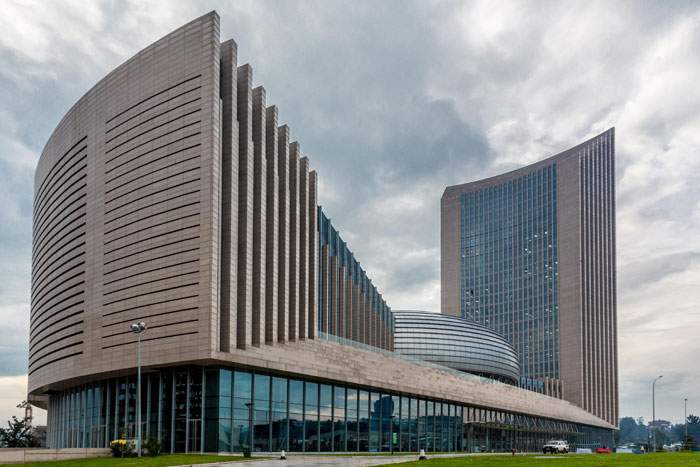
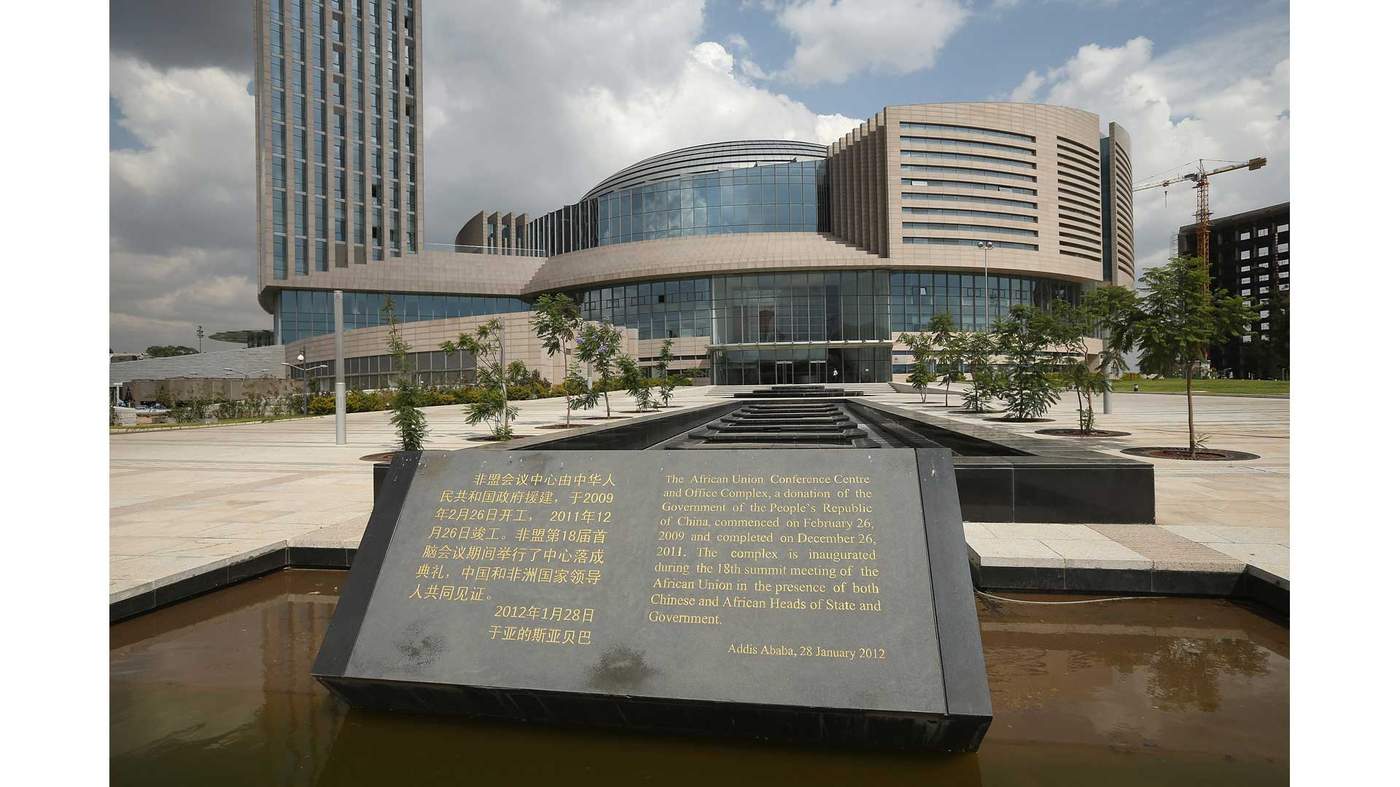
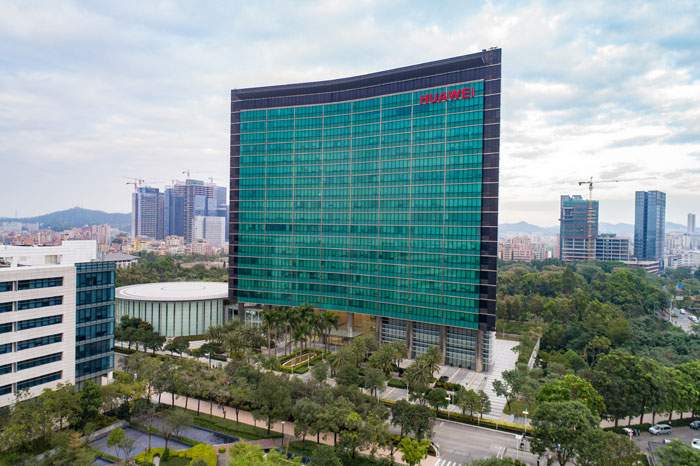


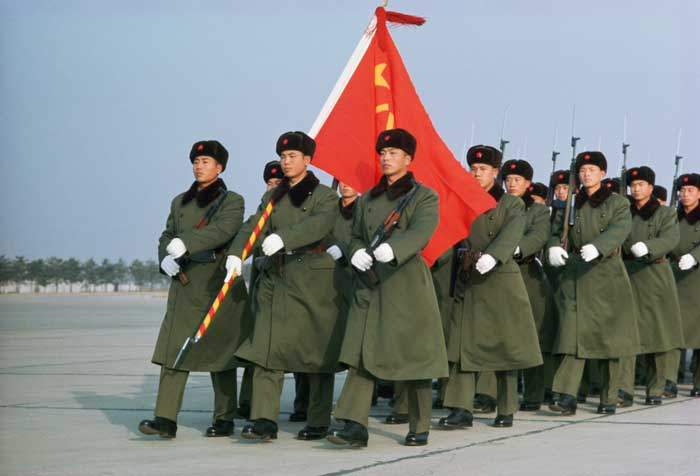

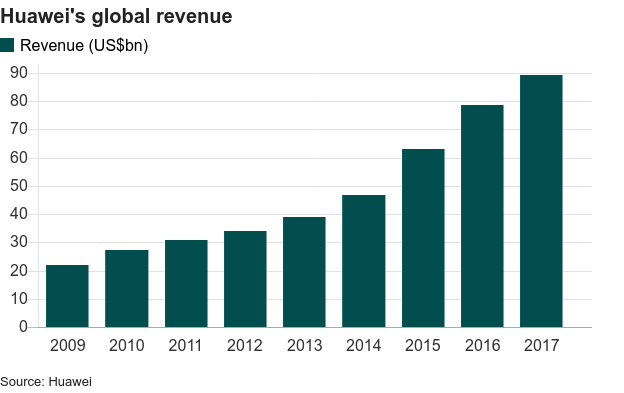

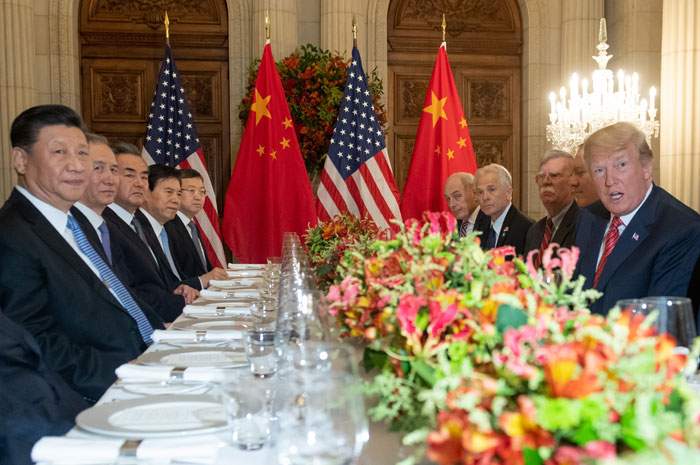

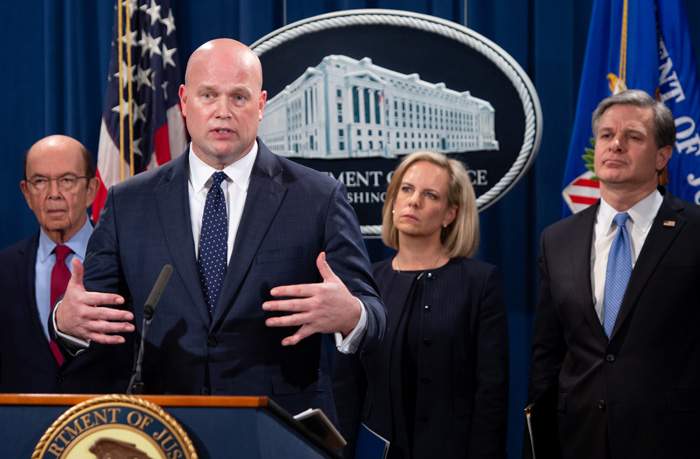
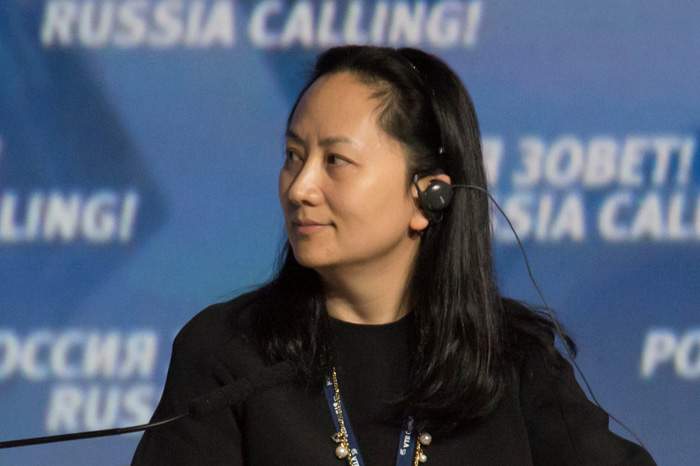
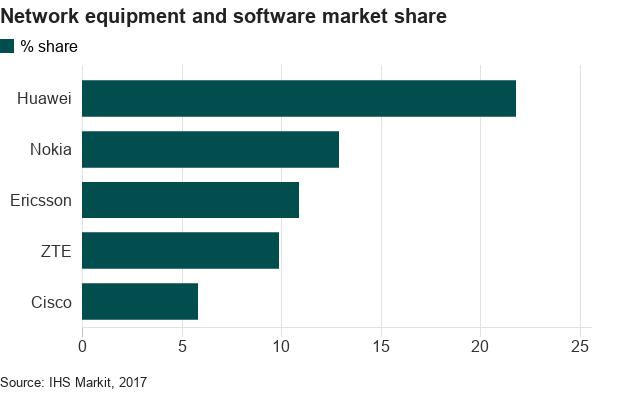
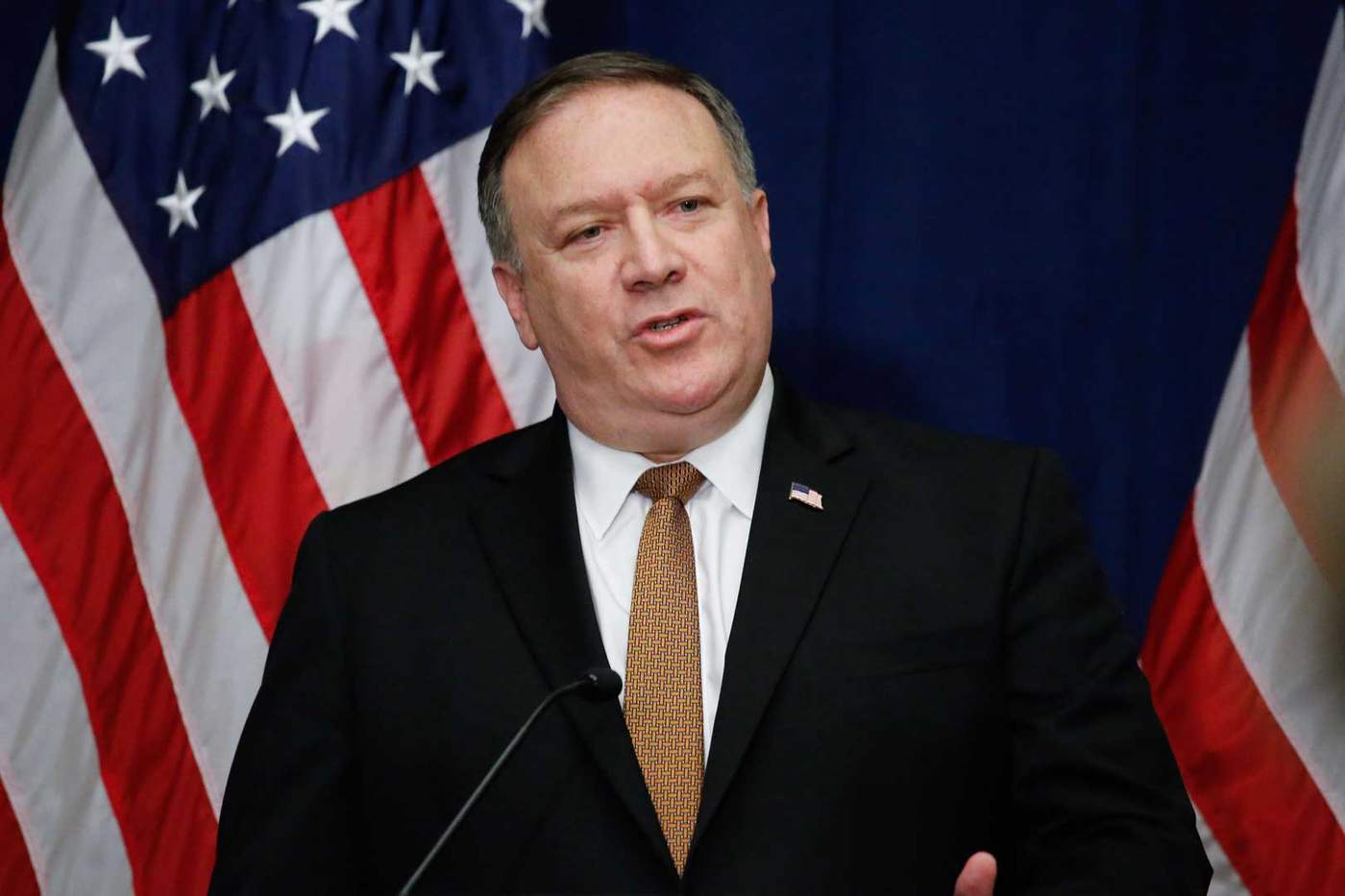
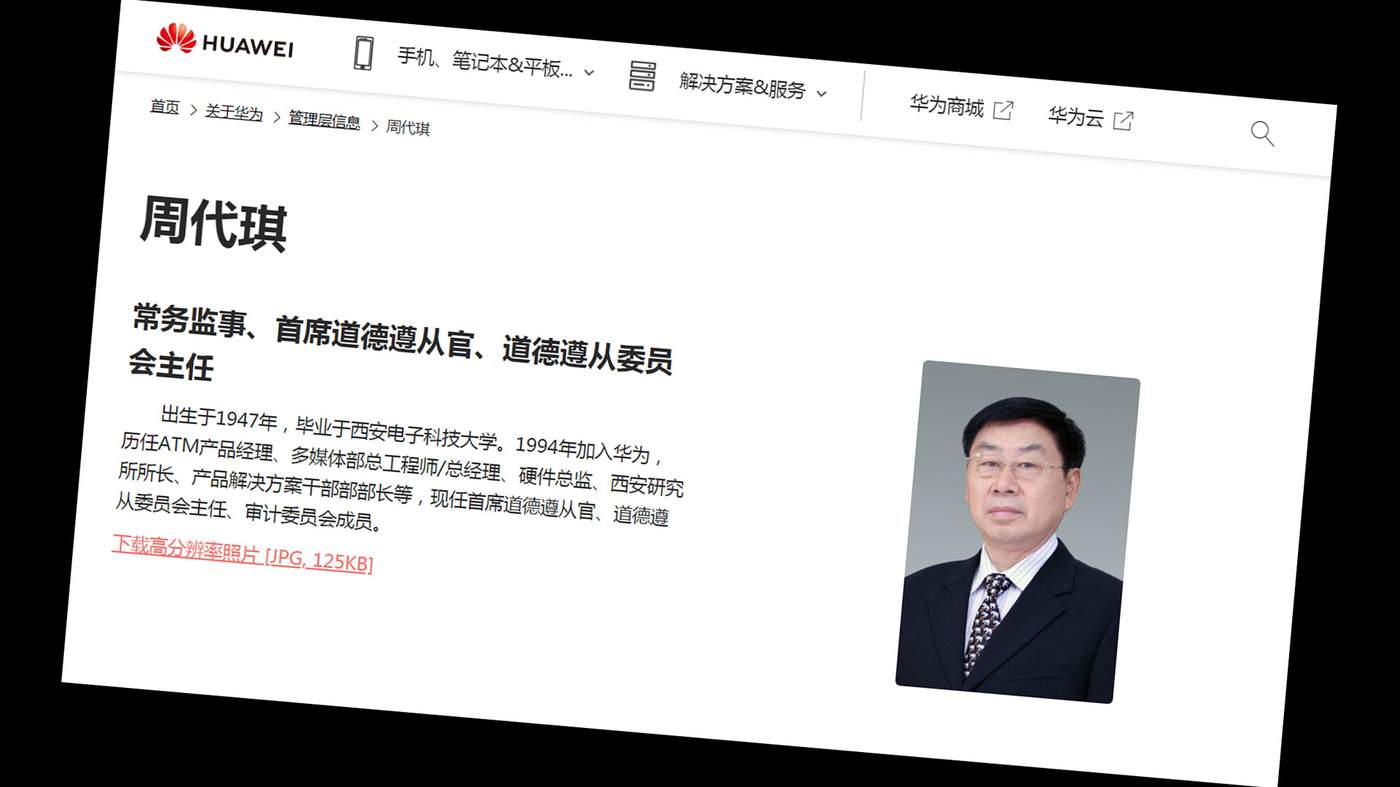
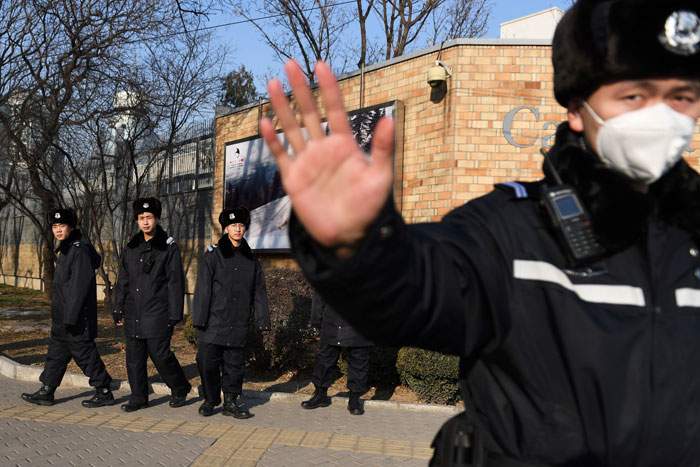
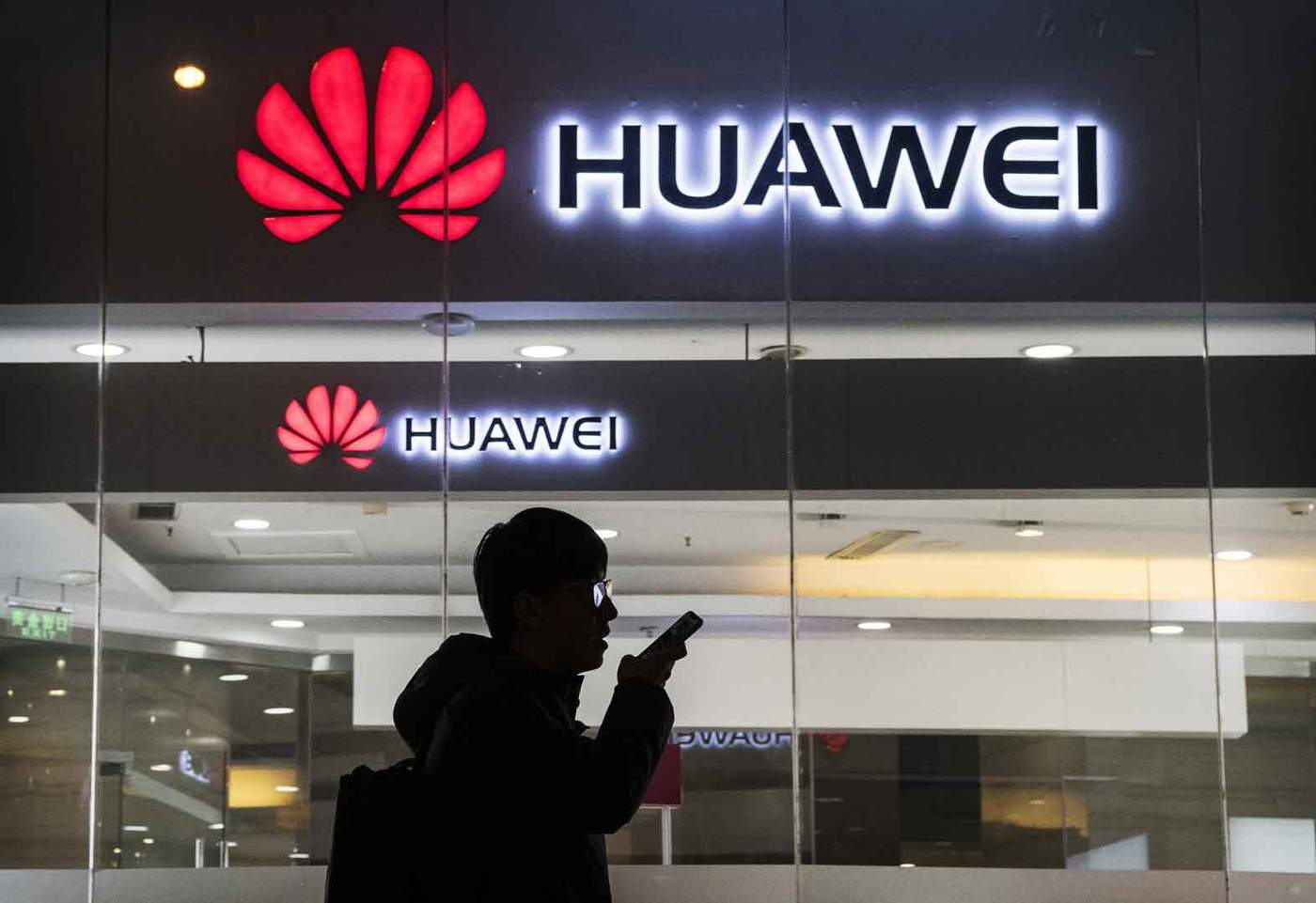
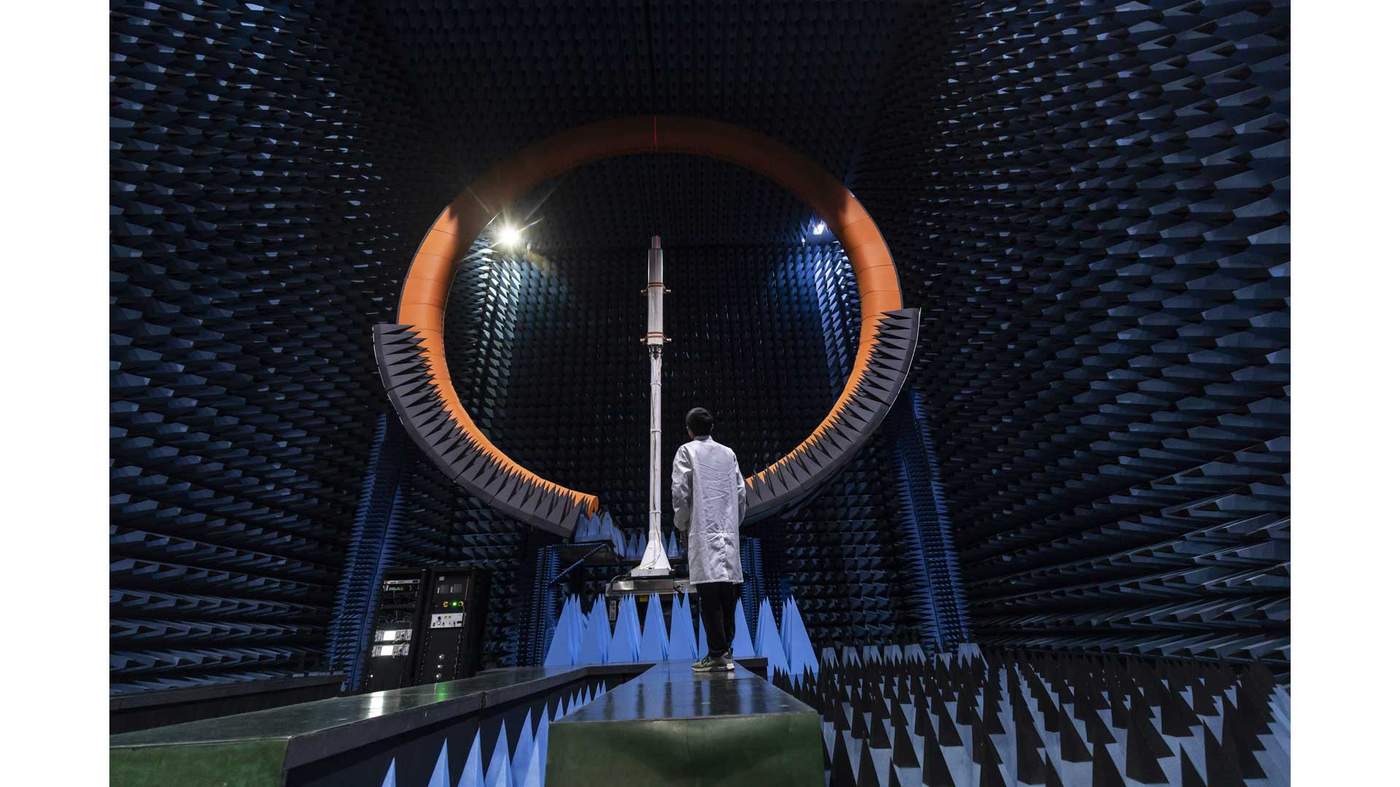
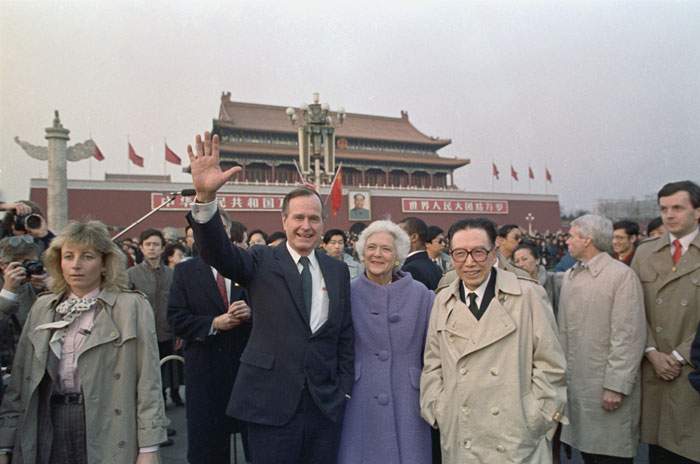
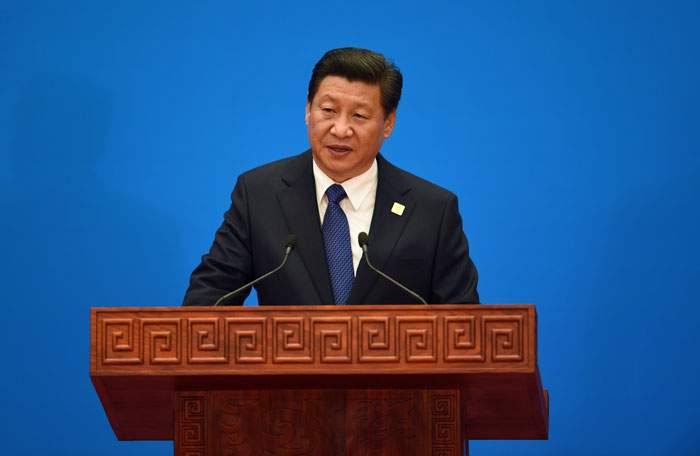
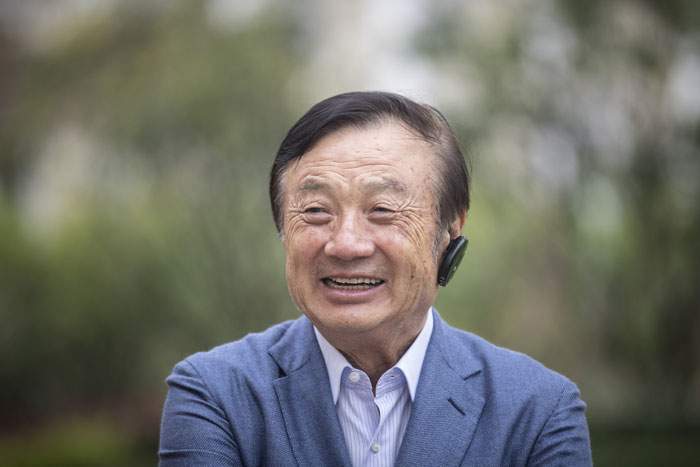
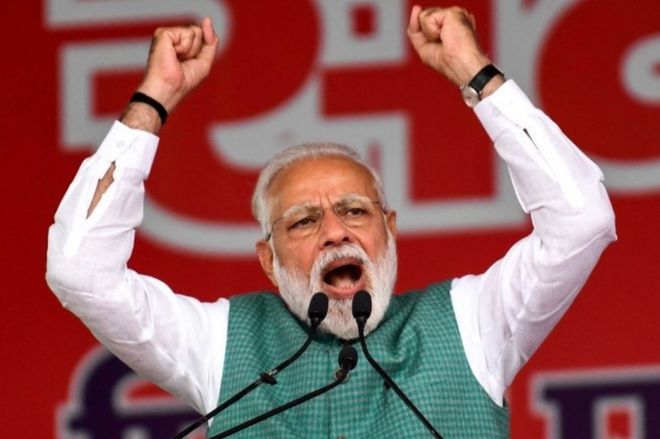
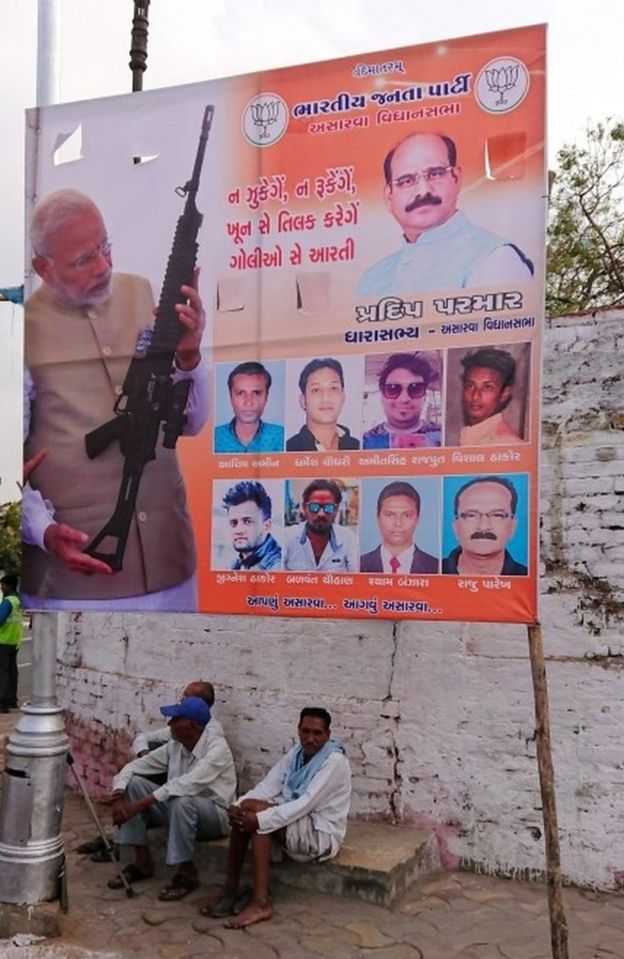
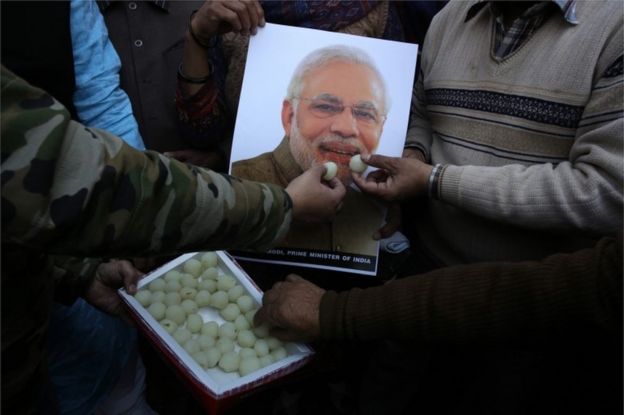

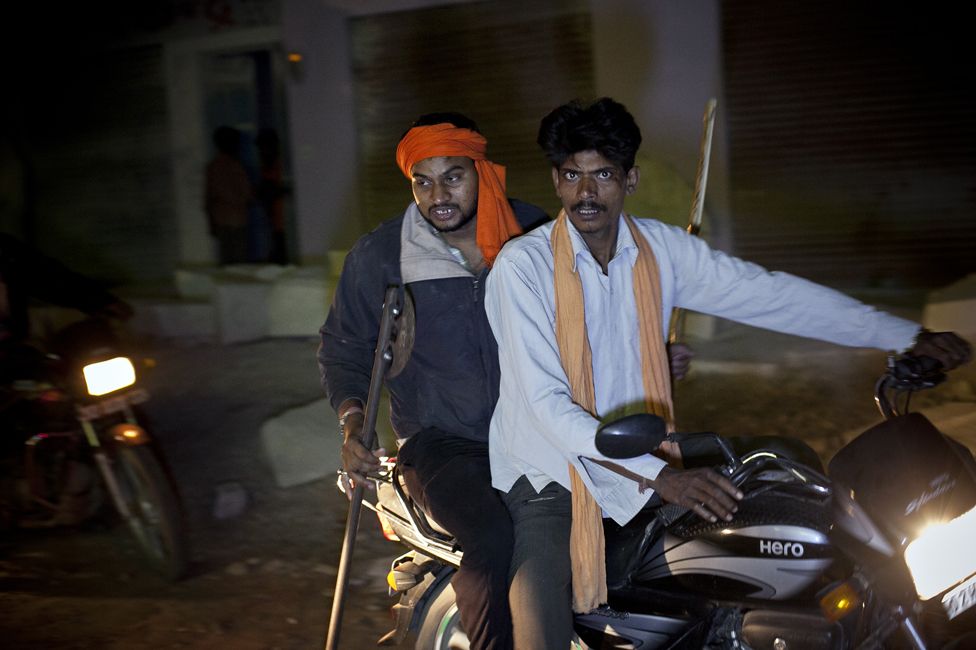

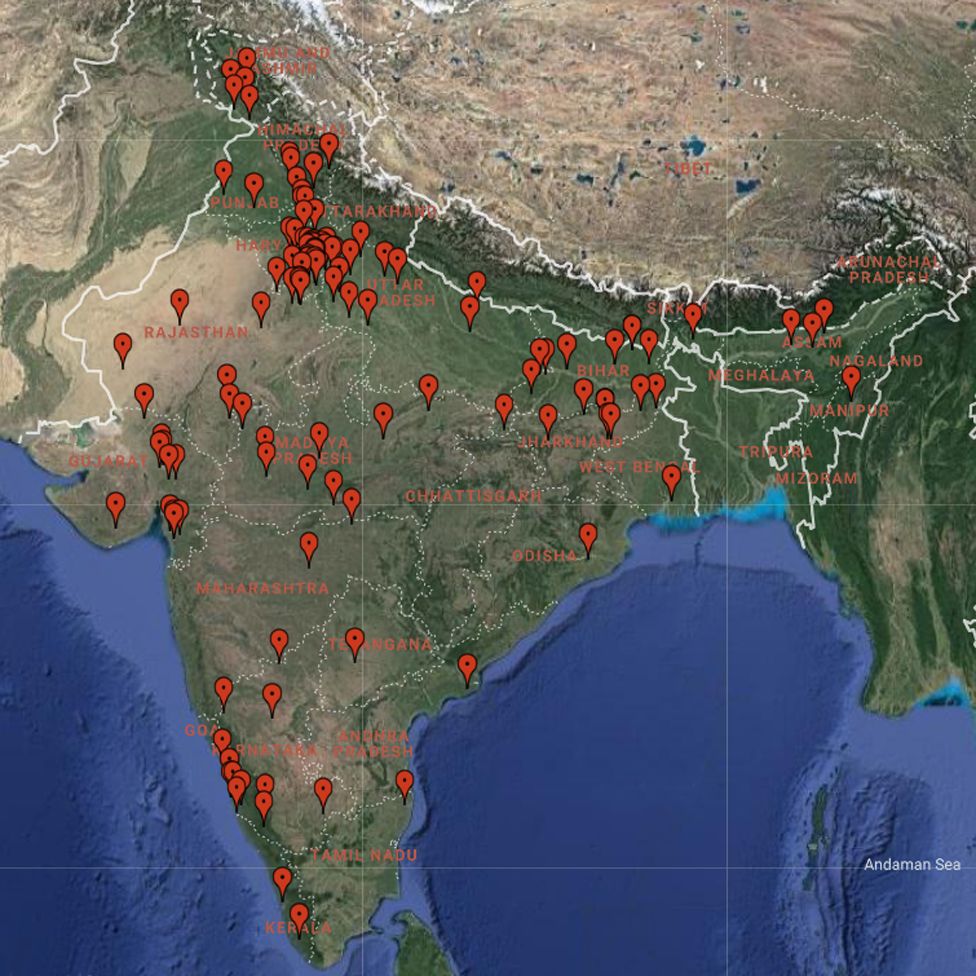
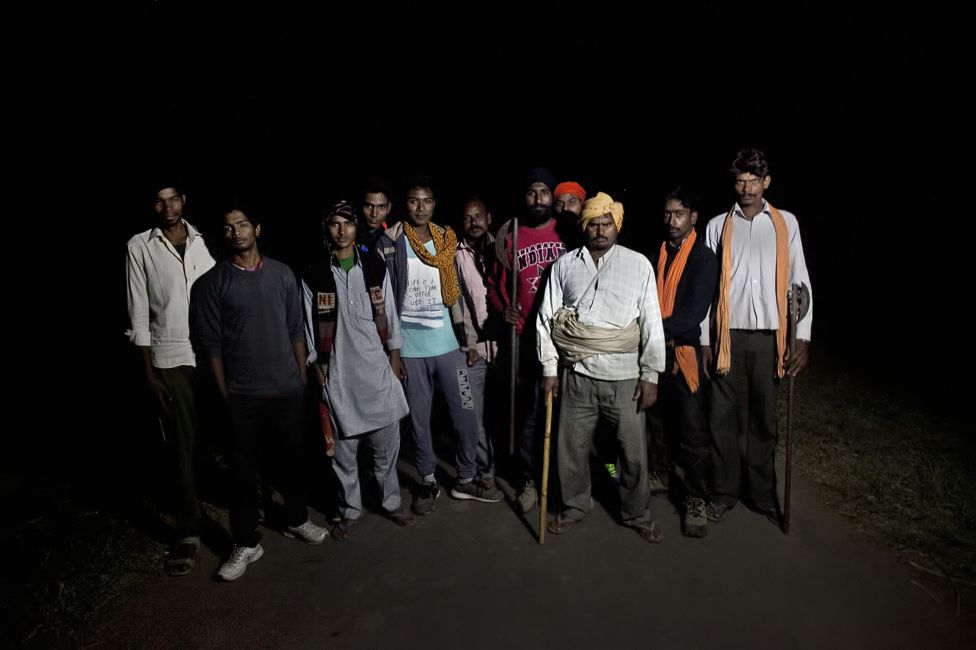

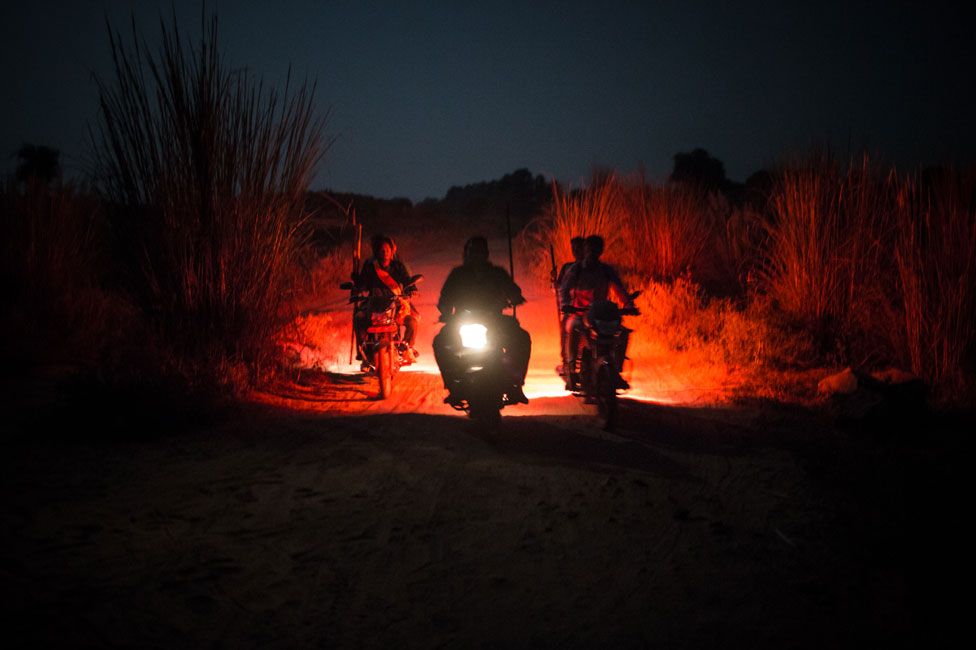
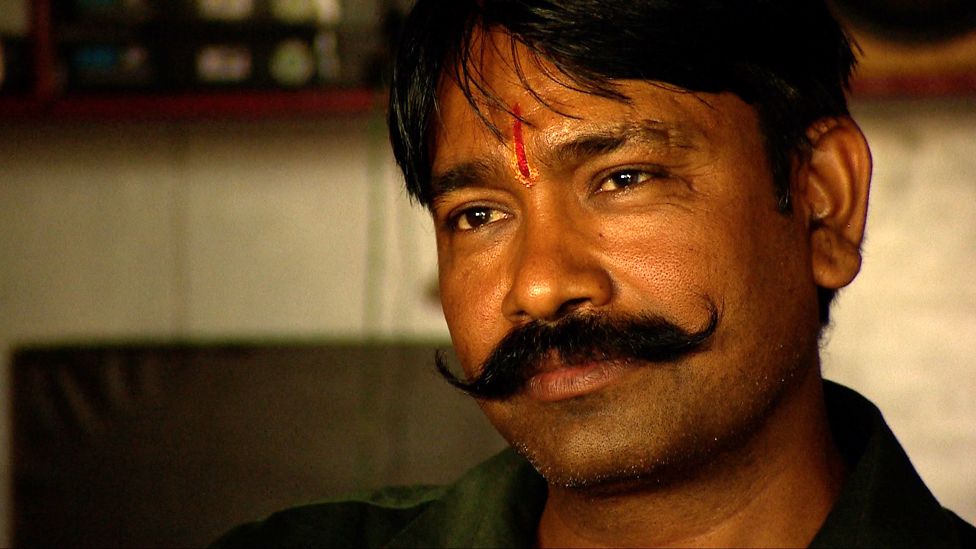
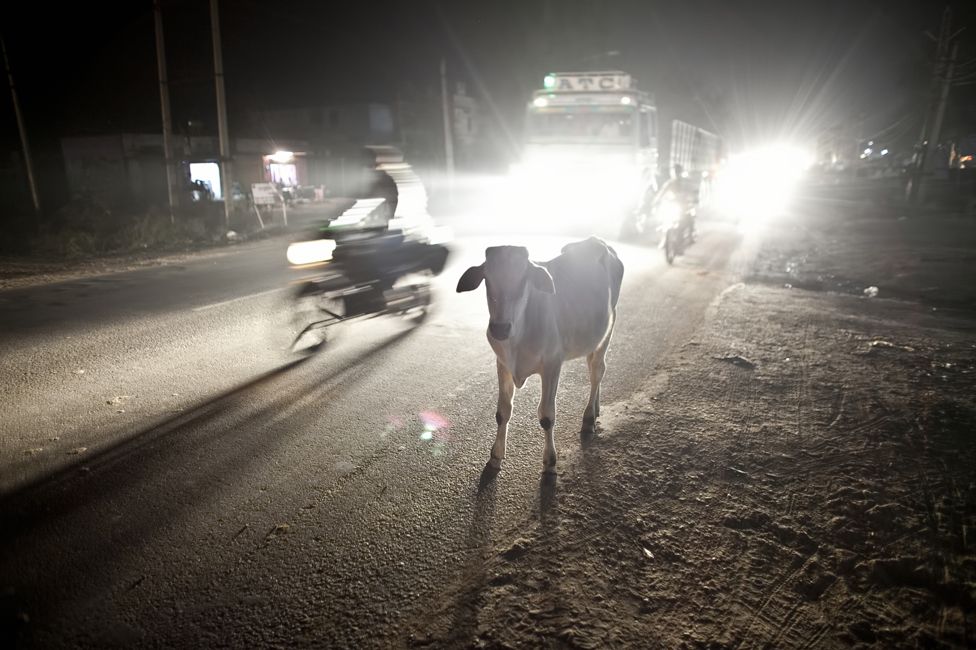
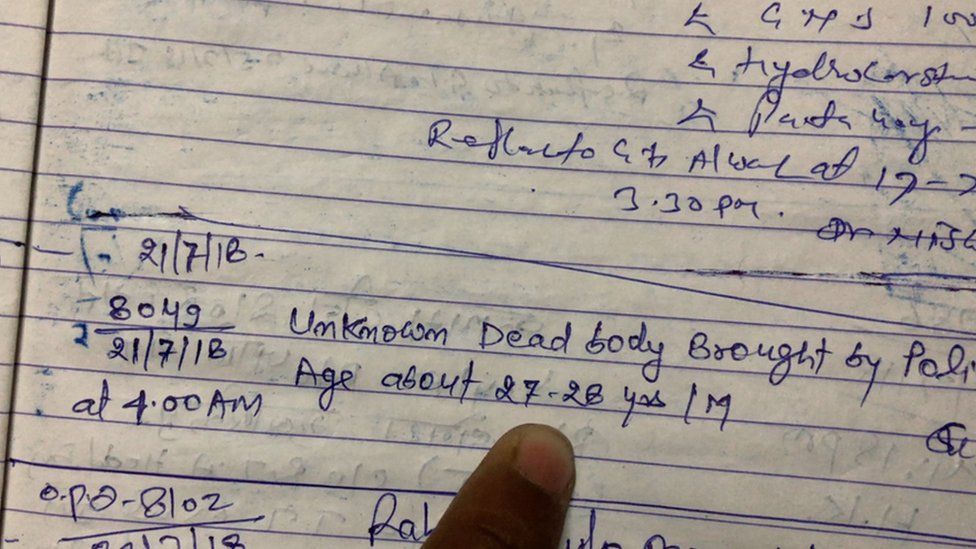
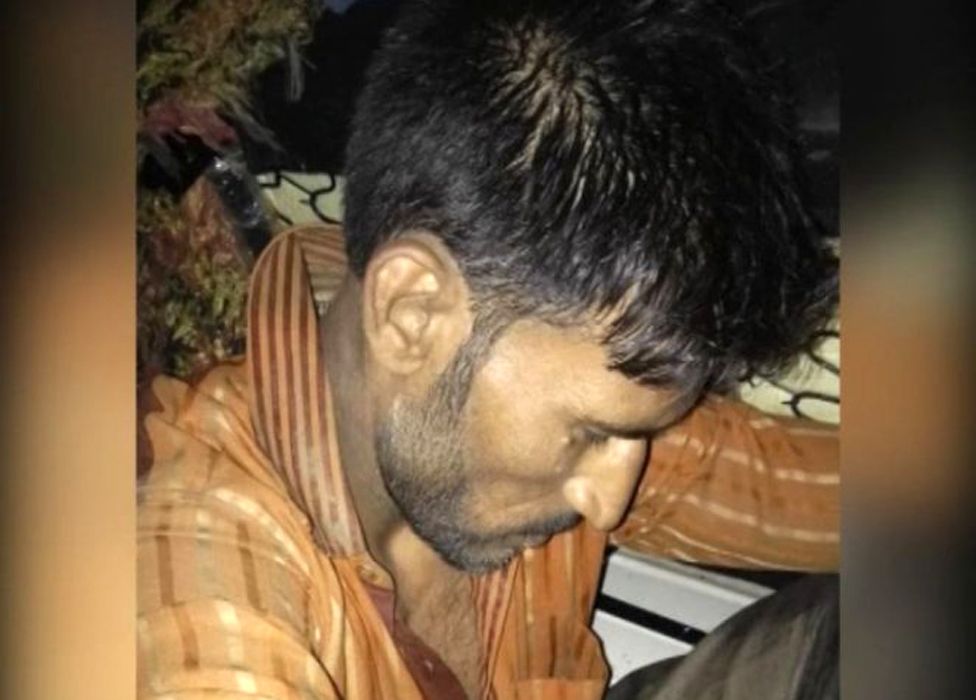
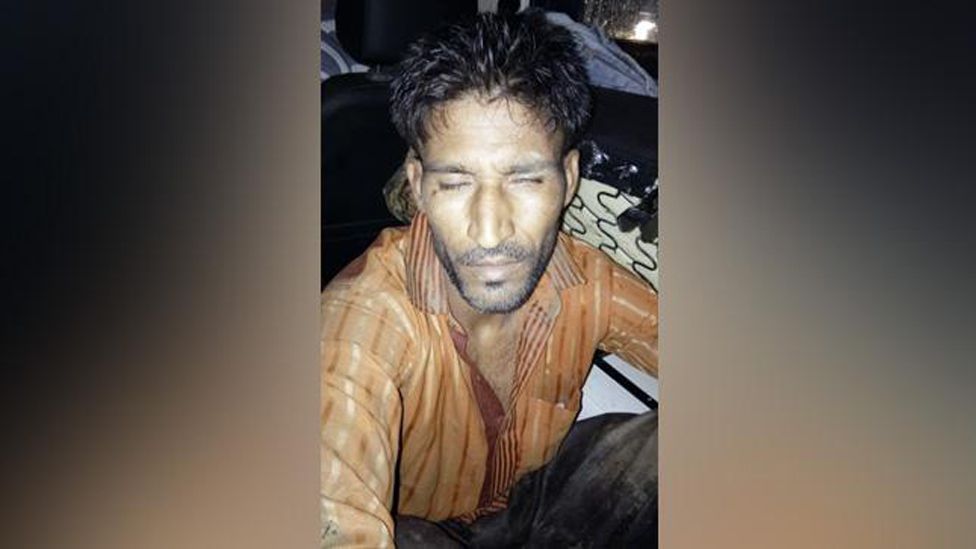
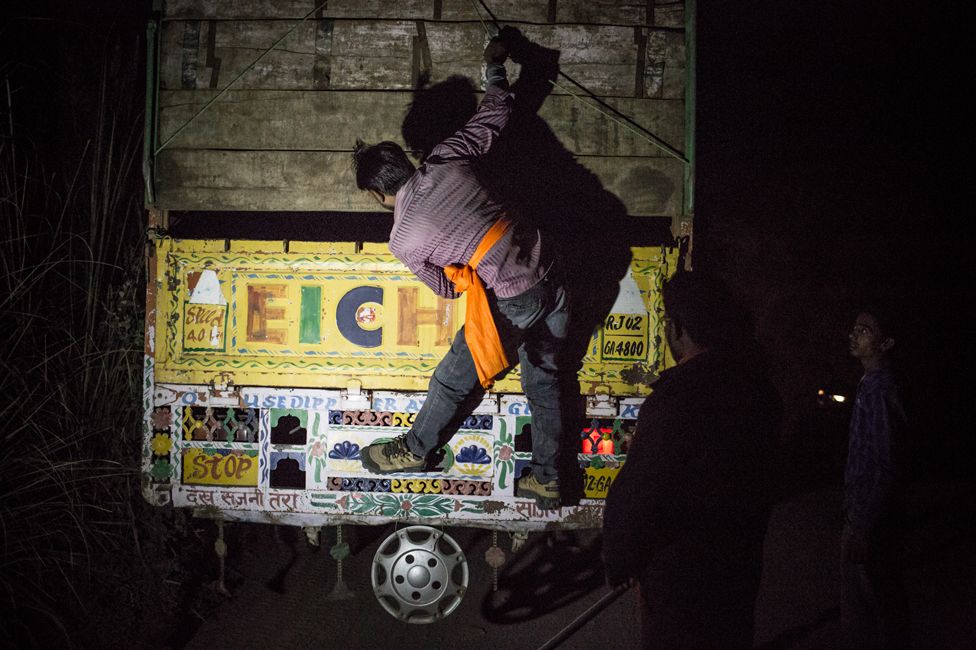
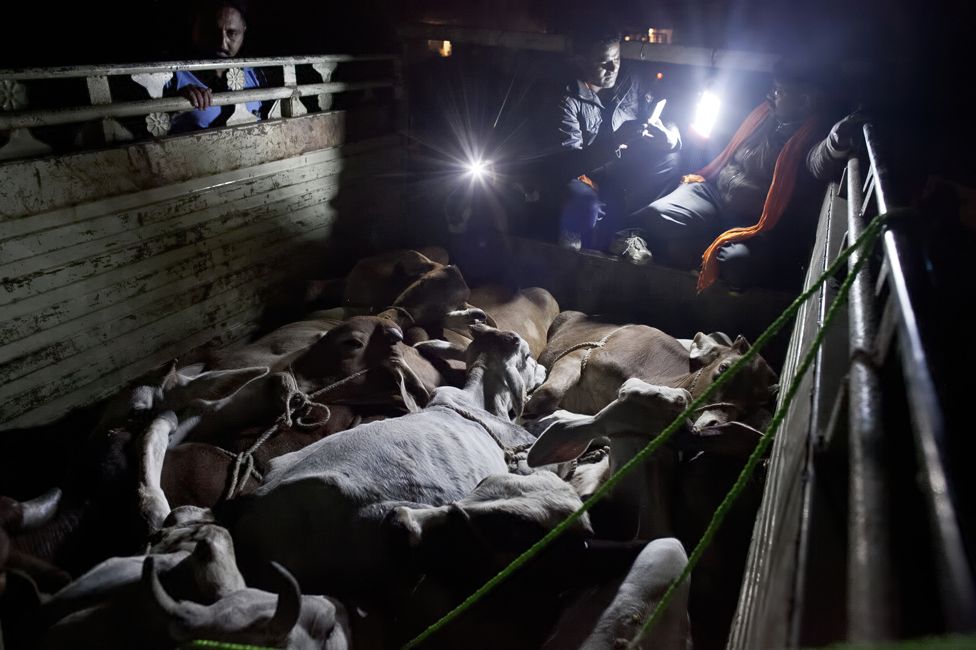
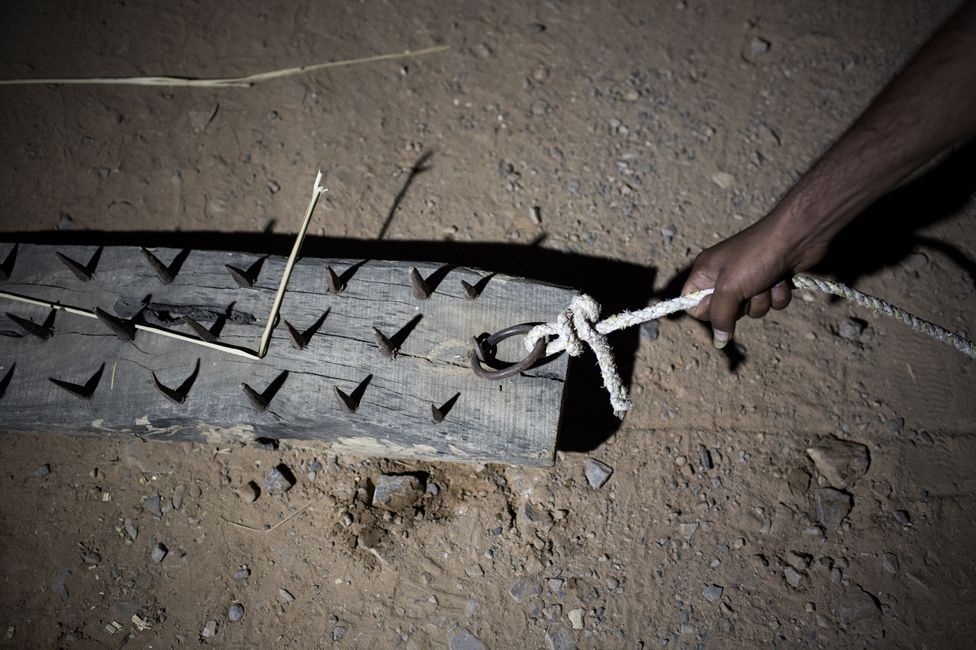
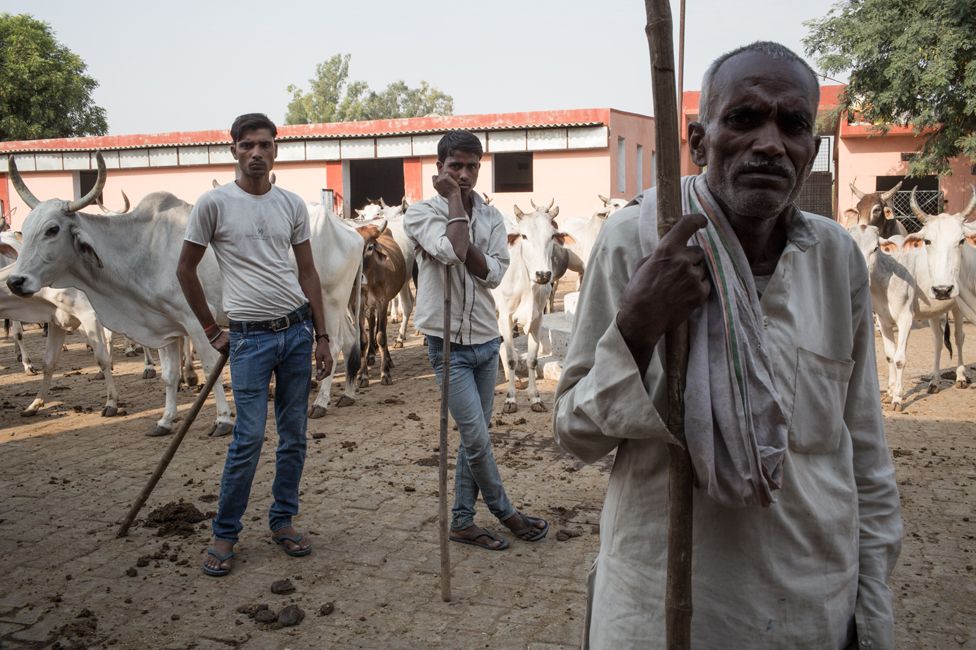
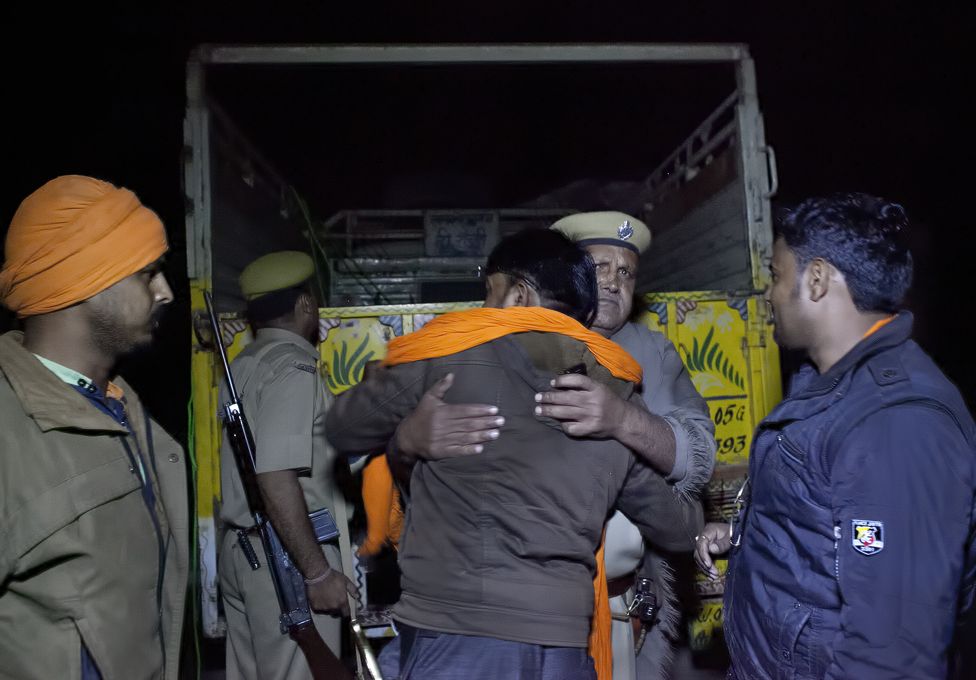
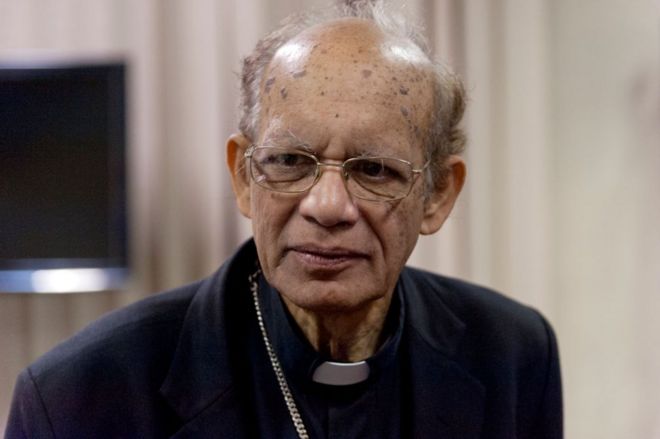
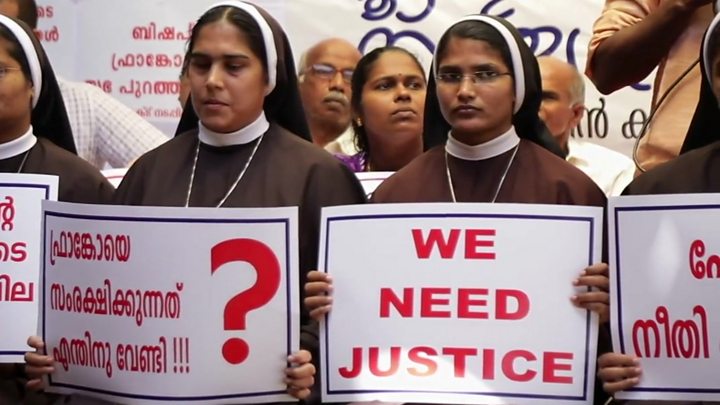




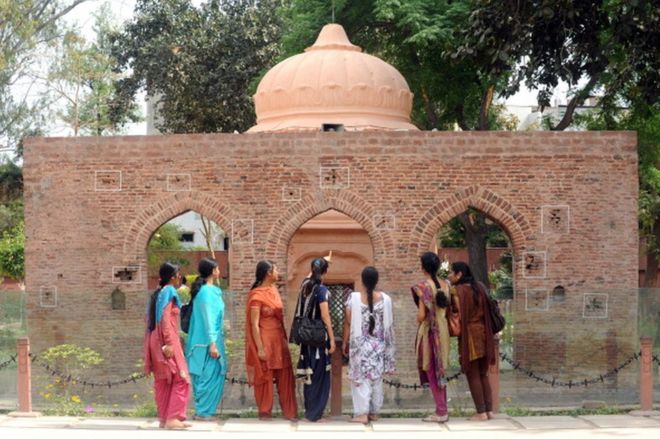
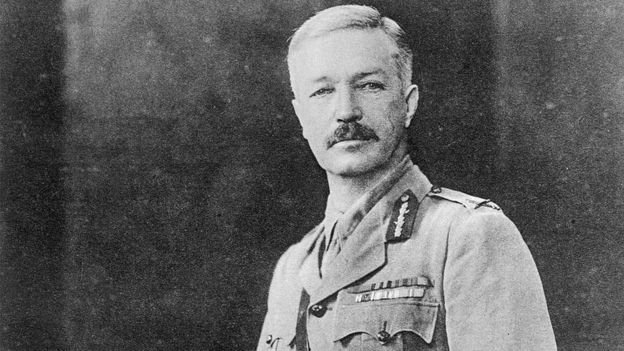

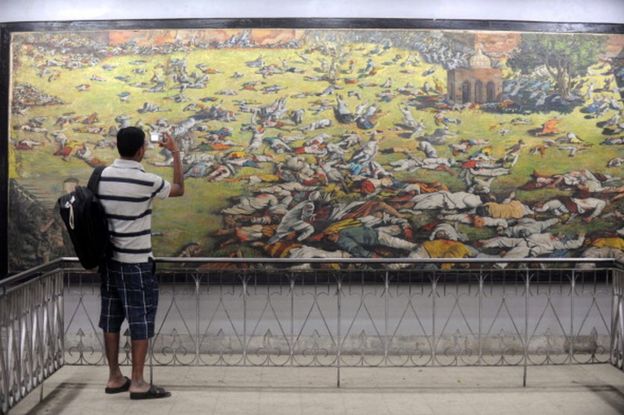
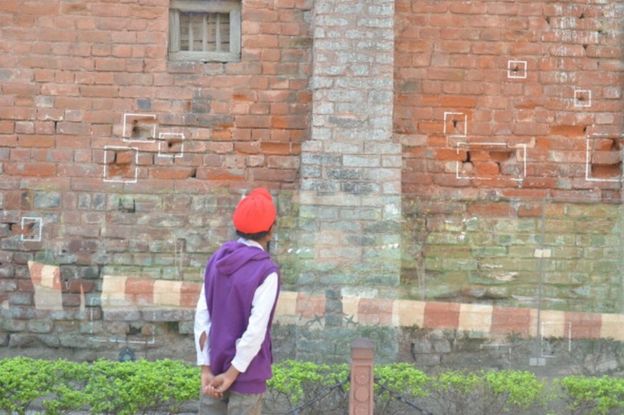
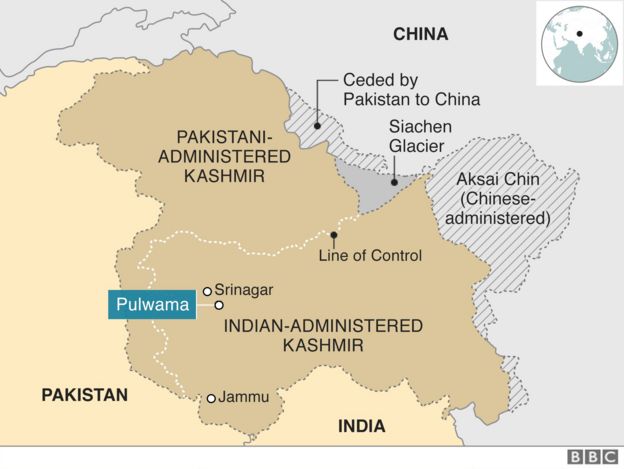
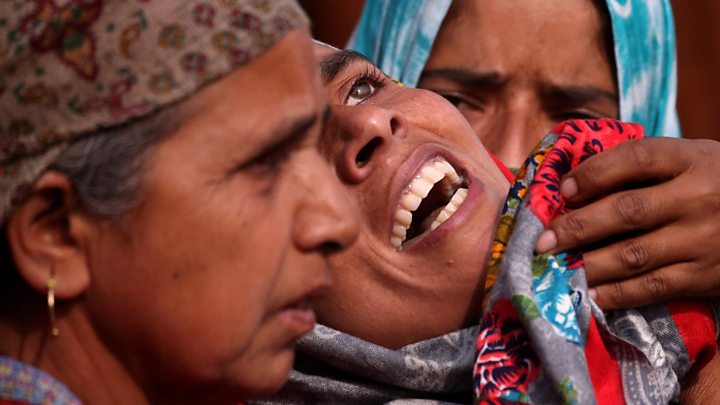

 CHINDIA ALERT: You'll be living in their world, very soon